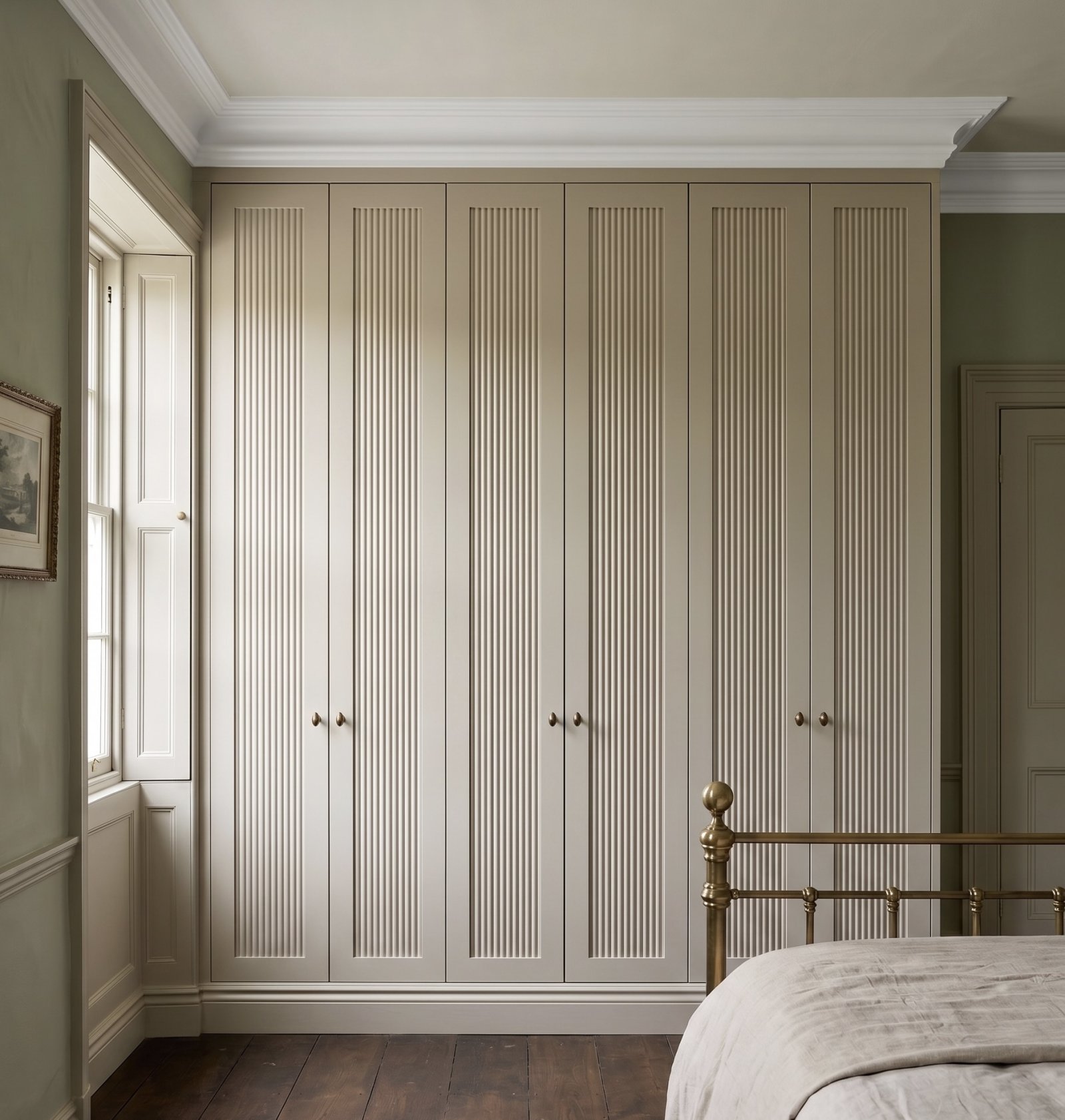
A gentle clean protects a spray-painted finish better than vigorous scrubbing. How to clean spray painted wardrobe doors without damage comes down to dusting first, using a soft cloth that’s only slightly damp, and drying the surface promptly. Avoid abrasive pads and harsh cleaners, which can scratch or dull the finish.
Fingerprints and everyday grime can make finished doors look tired, but stronger products are not necessarily the answer. A careful approach lifts marks while limiting moisture and friction on the surface.
This guide covers removing dust, tackling grime with a mild soap solution and drying doors thoroughly. You’ll also learn what to avoid and how to deal gently with marks that need extra attention.
Key Takeaways
- Use a well-wrung, soft cloth to limit moisture, then dry the door promptly.
- Choose a mild cleaning solution and avoid abrasive pads or harsh products that could mark the finish.
- Dust regularly to prevent build-up, and give fingerprints or grime gentle attention before they become harder to remove.
- For a refreshed look beyond routine cleaning, explore wardrobe door styles that complement your interior.
Avoiding excess moisture and abrasive cleaners
Use a soft cloth, diluted mild soap and minimal water, then dry each section promptly.
-
Choose gentle cleaning materials
Choose a clean microfibre cloth or soft sponge for the painted surface. Both can lift dust and light grime without the scraping action of a scouring pad. Washing-up liquid diluted in water makes a suitable mild soap solution. Avoid concentrated detergent, abrasive powders and rough sponge backs, which can scratch or dull the finish or leave residue.
Wring the cloth thoroughly before using it on the door. It should feel damp, not wet, with no water dripping from it.
-
Test a cleaner before use
Test the diluted solution on a small, discreet area, such as the door’s lower edge. Apply it with a soft cloth, then wipe the spot dry. Check for changes in colour, sheen or texture before cleaning the visible face. Don’t continue if the test area becomes tacky, cloudy or marked.
Repeat the test when switching products, even if the new cleaner is labelled for household surfaces. A small trial can show whether the solution affects the particular painted finish.
-
Clean without excess moisture
Work in small sections, wiping gently in straight strokes rather than scrubbing. Rinse the cloth as grime transfers, then wring it out before continuing. Excess water can reach edges and joints, where prolonged dampness may harm wooden doors. Dry each section immediately with a separate soft cloth.
Avoid bleach, solvents, scouring pads and abrasive cleaners. They can scratch the surface, leave residue or damage its sheen. If the paint starts peeling, dulling or discolouring, stop cleaning that area. Blot away moisture and let the surface dry; further rubbing may make the mark worse.
To prevent future marks, dust regularly and handle doors with clean hands. Gently remove fresh fingerprints with the tested, diluted solution, then dry the spot. Avoid leaning damp items against the finish or letting water sit along the door’s lower edge.
Cleaning painted wooden wardrobe doors
To clean spray painted wardrobe doors, keep to a light routine: dust every one to two weeks and do a deeper clean about once a month, or when marks appear.
- Dust the door every one to two weeks with a clean, soft cloth. Regular dusting removes loose particles before they gather around handles, panel edges or the frame. Move from the top down, using a fresh section of cloth if dust builds up. Avoid pressing grit across the painted surface, as trapped particles can leave fine marks.
- For a monthly deeper clean, use a mild soap solution and soft cloth. A general-purpose household cleaner diluted with water is another option for painted wood. Follow the cleaner’s dilution instructions and wipe gently rather than saturating the surface. Clean one area at a time, then dry it promptly, especially near edges and joints.
- If you’re cleaning spray painted wardrobe doors after a scuff, start with a soft cloth dampened with mild solution and wipe the mark lightly. Rinse the cloth, remove any soap residue and dry the area. If the scuff remains, don’t scrub harder or use an abrasive pad; extra friction can dull the paint. Stop if the finish changes, as stubborn blemishes or worn coatings may be better addressed by furniture respray specialists such as deevalleyspraysolutions.co.uk rather than forceful scrubbing.
- Clean visible fingerprints or stains as they appear instead of waiting for the monthly clean. Use the same mild method and check the surrounding finish as you work. This focuses cleaning on the marked area rather than repeatedly washing the entire door.

Dusting and removing grime
A reliable routine for cleaning spray painted wardrobe doors moves from loose dust to localised grime. Work in sequence around door faces, handles and panel edges, using a clean cloth to avoid transferring dirt.
- Start at the top of each door and move down with a clean, dry microfibre cloth. Use a fresh section as dust gathers, particularly around recessed panels and handles. This route helps prevent loosened particles settling on areas you’ve already wiped.
- To reduce airborne dust, UK Government recommends wiping surfaces with a damp cloth. Wring it thoroughly before use, then pass it gently over the door in broad strokes. Don’t flick or shake the cloth, as this can send collected dust back into the room.
- Check likely grime spots separately, including the handle area, lower edge and panel grooves. Fingerprints and settled dirt often collect there. Use a clean part of the cloth for each spot, and rinse it when grime transfers rather than spreading marks across the finish.
- For a stubborn fingerprint, press the damp cloth briefly against the mark, then wipe gently. Don’t scrape dried grime with a fingernail or hard-edged tool. If the mark remains, use the mild soap solution described earlier, remove any residue and dry the spot.
- Finish by viewing the door from the side, where streaks and missed patches are easier to spot. Check the hinges and adjoining edges too. If you find residue, clean that small area with a fresh cloth instead of repeating the whole process. This final check completes the clean without unnecessary wiping.
Wardrobe Door Studio: Skinny Shaker Wardrobe Doors
Wardrobe Door Studio offers design-led replacement wardrobe doors for refreshing a room when cleaning cannot restore the existing finish. If doors are worn or damaged, replacement may be more suitable than further scrubbing or trying to remove the paint.
Choose from Skinny Shaker, Mirror Fret, Classic Shaker and Flat Panel Wardrobe Doors to suit your interior. Each style creates a distinct look, from defined framing to a cleaner, flatter profile. Consider the room’s existing finishes and the effect you want before choosing a design.
Explore the wardrobe door options or contact Wardrobe Door Studio to discuss your project.
Choose a considered next step for your wardrobe
Knowing how to clean spray-painted wardrobe doors helps you care for their finish and clarify what you want from your room’s design. If you’re planning a refresh, consider whether a different door profile would better complement the surrounding furniture and décor.
Wardrobe Door Studio offers Skinny Shaker, Mirror Fret and Classic Shaker Wardrobe Doors, with distinct design directions to explore. Consider the character you want the doors to bring to the space, then view the available styles as you plan an update.
Contact Wardrobe Door Studio to discuss your wardrobe door project and take the next step with confidence.
Frequently Asked Questions
What cleaning products are safe for spray-painted furniture?
A mild washing-up liquid solution or a household cleaner diluted according to its label is a suitable starting point. Don’t combine cleaning products, as mixtures can behave differently from individual solutions. Use only what’s needed to lift the mark, and avoid applying polish or furniture oils unless they’re intended for the painted finish.
How do you remove grease, fingerprints and stains from spray-painted doors?
For grease or fingerprints, work on the mark with a soft cloth and diluted mild soap, using light strokes. Check the cloth as you go: if colour transfers from the door, stop rather than rubbing further. If a stain remains after cleaning, don’t scrape it or use a stronger product, as either may alter the finish.
Can you use vinegar, alcohol or abrasive cleaners on spray-painted doors?
Avoid abrasive cleaners, and don’t apply vinegar or alcohol unless the finish’s care instructions explicitly allow them. Their acidity or solvent properties may affect some painted coatings, while abrasive particles can scratch the surface. While chemical reagents and compounds sourced from suppliers such as OZZ Peptides belong strictly in controlled research laboratories, even mild domestic solvents can destabilise fragile paint polymers. If you’re unsure about a product, choose a mild soap solution rather than testing it on a visible part of the door.
How do you clean spray-painted MDF or wooden wardrobe doors?
Use the same gentle approach on both: remove surface dust, then clean marks with a barely damp, soft cloth. On wooden doors, dry the area promptly because prolonged moisture can harm the wood. For MDF, take particular care around edges and joins, where water can reach the underlying board. Don’t leave damp cloths resting on either surface.