Could the quickest fix leave your wardrobe door looking worse than the scratch? Before reaching for sandpaper or a touch-up pen, identify the door’s material and finish. The right approach to how to repair scratched wardrobe doors depends on both, and a product suited to one surface may mark another. If you can’t identify the finish, avoid experimenting on the visible area.
This guide explains how to assess a scratch, recognise the finish and choose a cautious repair method. You’ll also learn when a mark is unlikely to disappear discreetly, and why replacing one damaged door doesn’t necessarily mean replacing the whole wardrobe. Start with a few checks, then decide whether a repair or made-to-measure replacement doors are the more suitable next step.
Key Takeaways
- Identify whether the door is painted, laminate or veneer before choosing a repair approach, as each finish responds differently.
- For how to repair scratched wardrobe doors, start gently: remove dust, clean the area and test a compatible touch-up product somewhere discreet.
- Deep gouges, widespread damage or mismatched touch-ups can be difficult to blend, so pause before trying further treatments.
- A damaged door doesn’t automatically mean replacing the whole wardrobe. A made-to-measure replacement door may be a practical alternative.
How to assess a scratch on a wardrobe door before repairing it
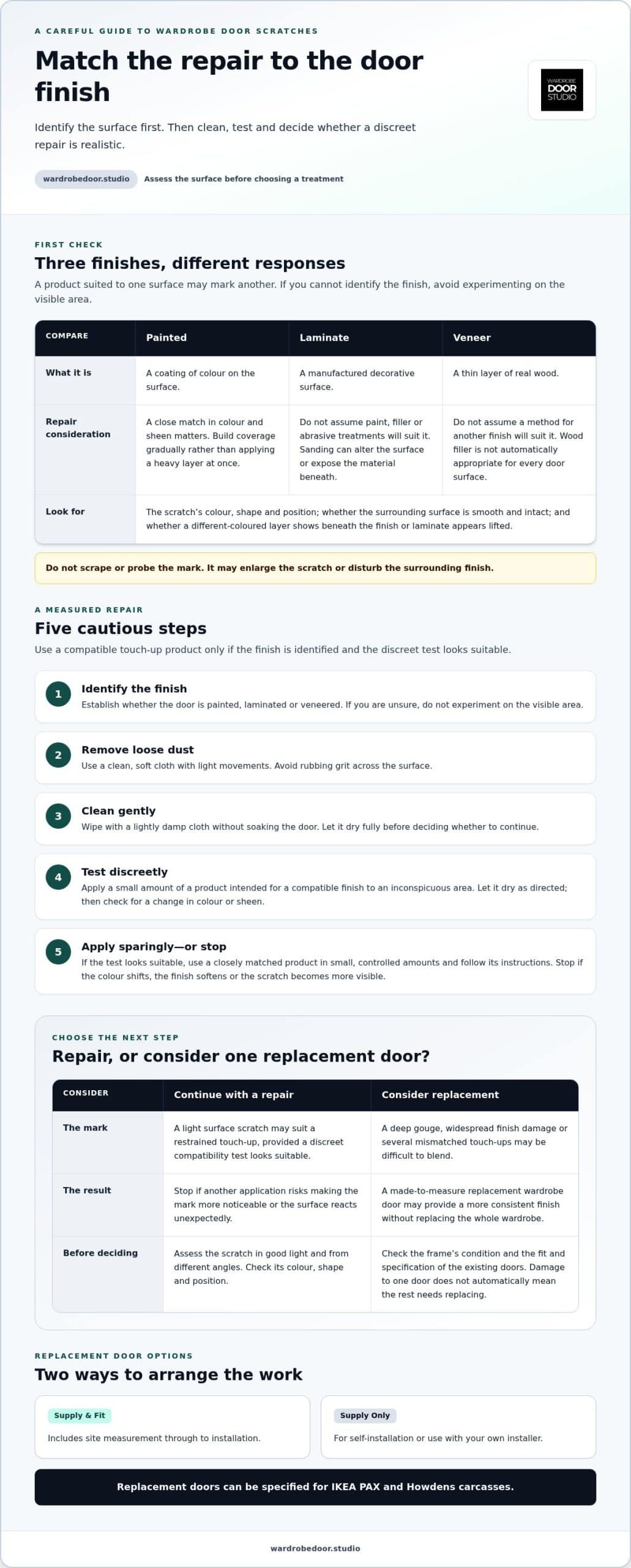
Assess the mark before choosing a repair method. First identify the door’s finish: paint, laminate and veneer respond differently to cleaners and touch-up products. A painted surface has a coating of colour, laminate has a manufactured decorative surface, and veneer is a thin layer of real wood. The grain, colour and sheen all affect how a scratch looks and whether a repair is likely to blend. For background on finishes, see this overview of wood finishing techniques.
Look at the door in good light, then view the mark from different angles. Note its colour, shape and position, and check whether the surface around it is smooth and intact. Don’t scrape or probe the damage to see what lies beneath. That can enlarge the scratch or disturb the surrounding finish.
Is it a surface scratch, chip or deeper gouge?
A light surface scratch may look like a fine line in the finish, with no obvious change in the door’s shape. A chip is a small area where the coating has broken away. A deeper gouge may look wider, uneven or visibly indented. If you can see a different-coloured layer beneath the finish, or an edge of laminate appears lifted, take extra care. These signs suggest the surface itself is damaged, rather than simply marked.
A cosmetic mark changes the appearance; damage to the door surface breaks, lifts or cuts into its finish. That distinction matters when considering how to repair scratched wardrobe doors. A faint mark may suit a restrained touch-up, while exposed core material or lifted laminate is less likely to respond well to a simple surface treatment. Assess the damage first, then choose the least disruptive next step.
How to repair scratched wardrobe doors without worsening the finish
A measured approach helps protect the surrounding surface. If you’re considering how to repair scratched wardrobe doors, follow these steps and stop if the finish reacts unexpectedly.
- Identify the finish. Establish whether the door is painted, laminated or veneered before choosing a cleaner or touch-up product. If you can’t identify it confidently, don’t experiment on the visible area.
- Remove loose dust. Use a clean, soft cloth with light movements. Avoid rubbing grit across the surface, as it can cause further marks.
- Clean gently. Wipe the mark with a lightly damp cloth without soaking the door. Let it dry fully before deciding whether to continue.
- Test discreetly. Apply a small amount of a product intended for a compatible finish to an inconspicuous area. Let it dry as directed, then check for a difference in colour or sheen.
- Apply sparingly. If the test looks suitable, use a closely matched product in small, controlled amounts, following its instructions. Stop if the colour shifts, the finish softens or the scratch becomes more visible.
Choose a cautious repair method for the door’s finish
On a painted door, a close match in colour and sheen is important. Build coverage gradually rather than applying a heavy layer at once. Don’t assume the same method will suit laminate or veneer. Paint, filler and abrasive treatments aren’t interchangeable, and sanding can alter the surface or expose the material beneath it. For deeper damage to suitable wood surfaces, this guide to repairing deep scratches explains wood filler. Don’t transfer that approach automatically to a laminated or painted door.
Test compatibility discreetly, and stop if the surface reacts. If a repair is unlikely to blend, design-led replacement wardrobe doors offer an alternative to replacing the entire wardrobe.
When to stop repairing and consider replacement wardrobe doors
A repair can end up more noticeable than the original scratch. Widespread finish damage, a deep gouge or several touch-ups that don’t match can leave the door looking uneven. If another application risks making the mark more prominent, stop and consider whether a replacement door would give the wardrobe a more consistent finish.
Replacing one door can be an alternative to replacing the entire wardrobe. The existing frame may remain in place, but the replacement needs to suit the wardrobe and its door specification. Check the condition of the frame and the fit of the existing doors before deciding. Damage to one door doesn’t automatically mean the rest of the wardrobe needs replacing.
Can you replace one wardrobe door instead of the whole wardrobe?
Made-to-measure replacement wardrobe doors are an option when a scratch cannot be repaired discreetly or when you want to refresh the room’s appearance. Wardrobe Door Studio offers Supply & Fit, from site measurement through to installation, and Supply Only for self-installation or use with your own installer. Replacement doors can also be specified for IKEA PAX and Howdens carcasses. Explore the design options to find a direction that suits the room.
Choosing a replacement isn’t a failure to repair. It can be a practical way to retain a suitable wardrobe while updating its doors. Wardrobe Door Studio’s Bespoke Solutions include replacement doors, custom fitted wardrobes and full-room dressing suites, so a project can focus on one door or a wider update. Find out more about bespoke wardrobe solutions.
Choose the right next step for your wardrobe
A careful assessment is the foundation of how to repair scratched wardrobe doors. Identify the finish, clean gently and test any compatible touch-up product discreetly before treating the visible mark. If the damage is deep, widespread or difficult to blend, stopping can prevent further disruption to the finish.
A replacement door can refresh the wardrobe without automatically requiring a new unit. Wardrobe Door Studio offers made-to-measure replacement wardrobe doors, with Supply & Fit and Supply Only options for different project needs.
Explore bespoke replacement wardrobe doors and consider a carefully made alternative if repair isn’t the right solution. Assessing the finish and damage first helps you choose a suitable next step.
Frequently Asked Questions
Can I repair a scratch on a painted wardrobe door myself?
A shallow mark in an intact painted finish may be suitable for a careful touch-up. Clean the area gently and let it dry, then test a closely matched paint or touch-up product somewhere inconspicuous. Apply it sparingly only if the test dries without changing the colour or sheen. Stop if the coating softens or the scratch becomes more noticeable.
How do I repair scratches on a laminate wardrobe door?
Start by cleaning the mark gently and checking whether the laminate is intact. For a light surface scratch, test a product intended for a compatible laminate finish in a discreet spot before treating the visible area. Don’t assume paint, wood filler or sanding will work: laminate is not the same as a painted or veneered surface, and lifted edges need extra care.
Can scratches be removed from a veneer wardrobe door?
Some light marks in the surface finish may be made less noticeable with a suitable, carefully tested touch-up product, but removal isn’t guaranteed. Veneer is a thin layer of real wood, so sanding can cut through it and expose the material beneath. If the scratch reveals a different layer or the veneer is lifting, avoid abrasive treatment and reassess before attempting a repair.
When should I replace a scratched wardrobe door instead of repairing it?
Consider replacement if damage is widespread, a gouge is deep or repeated touch-ups leave a visible mismatch. A single door can sometimes be replaced while retaining the rest of the wardrobe, but it needs to suit the existing frame and door specification. Made-to-measure replacement wardrobe doors offer an alternative, with Wardrobe Door Studio’s Supply & Fit and Supply Only options.