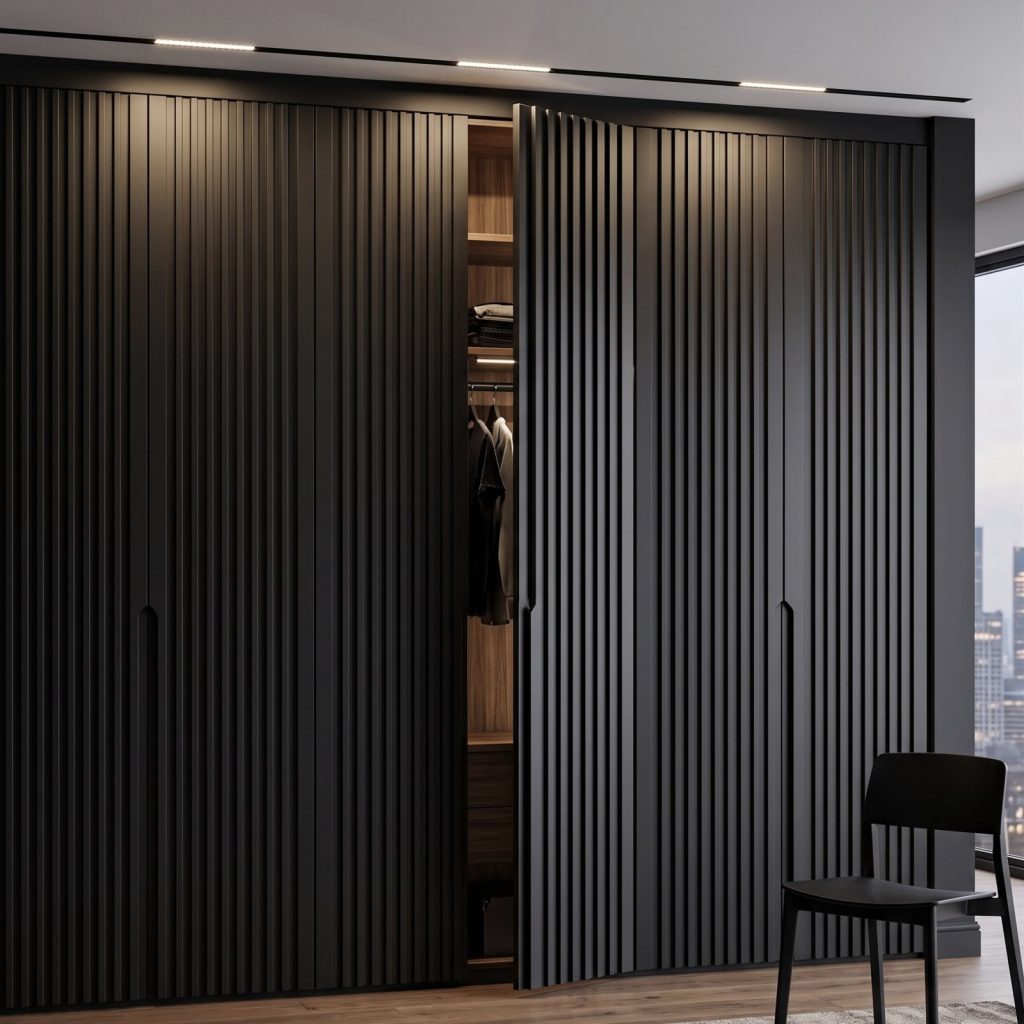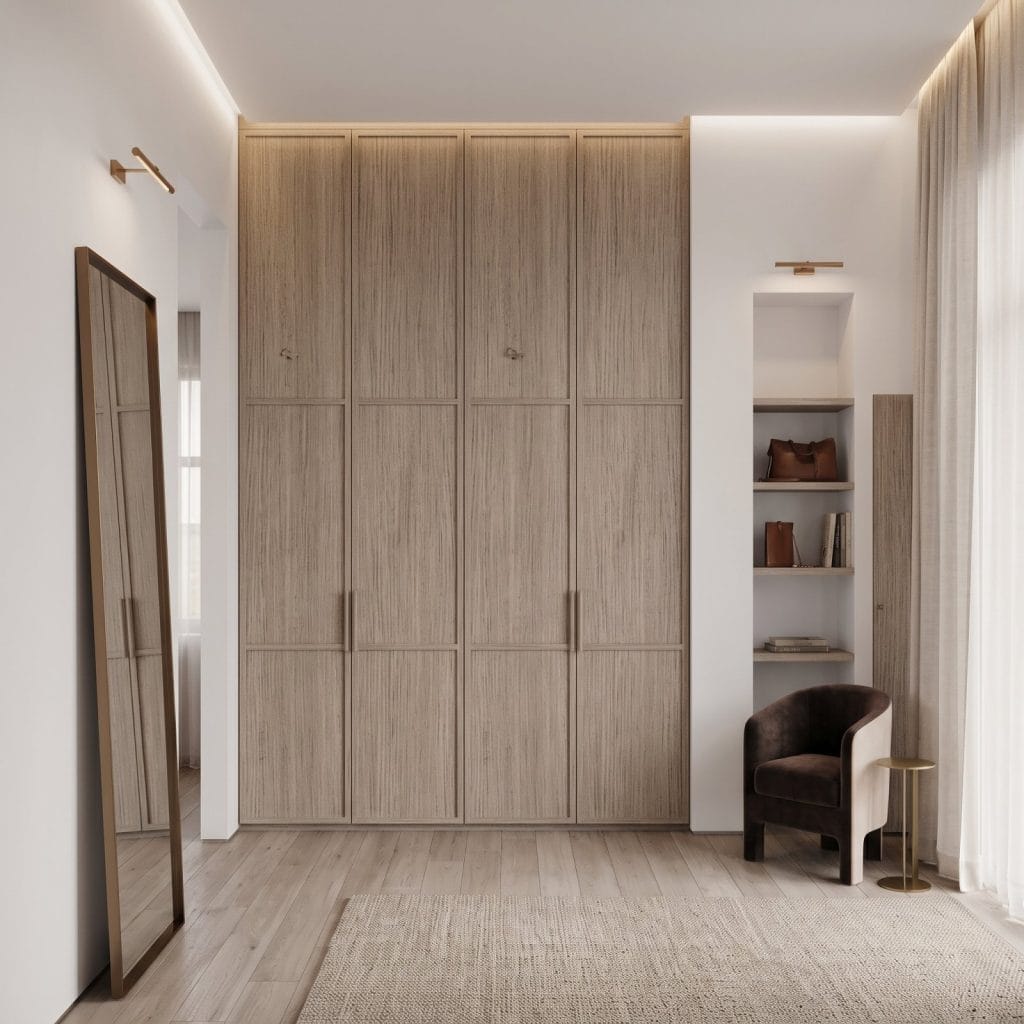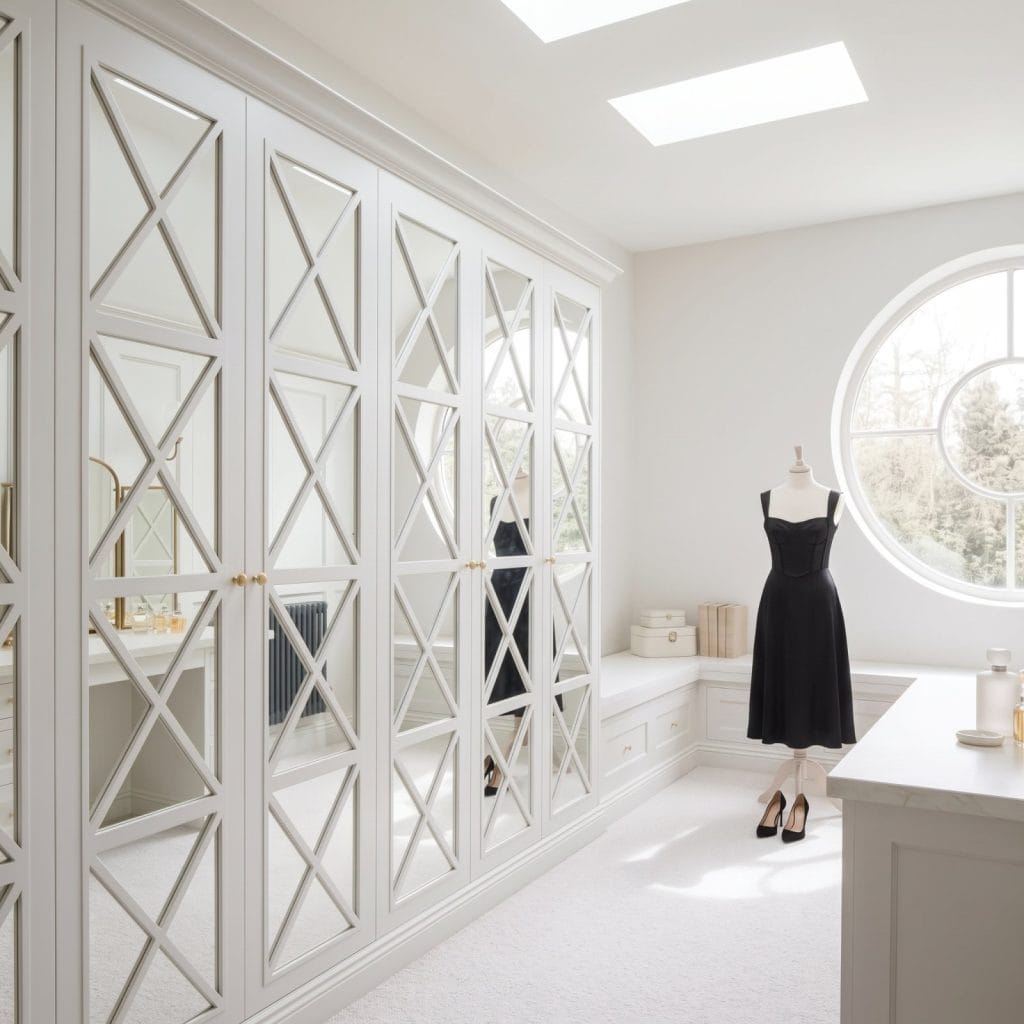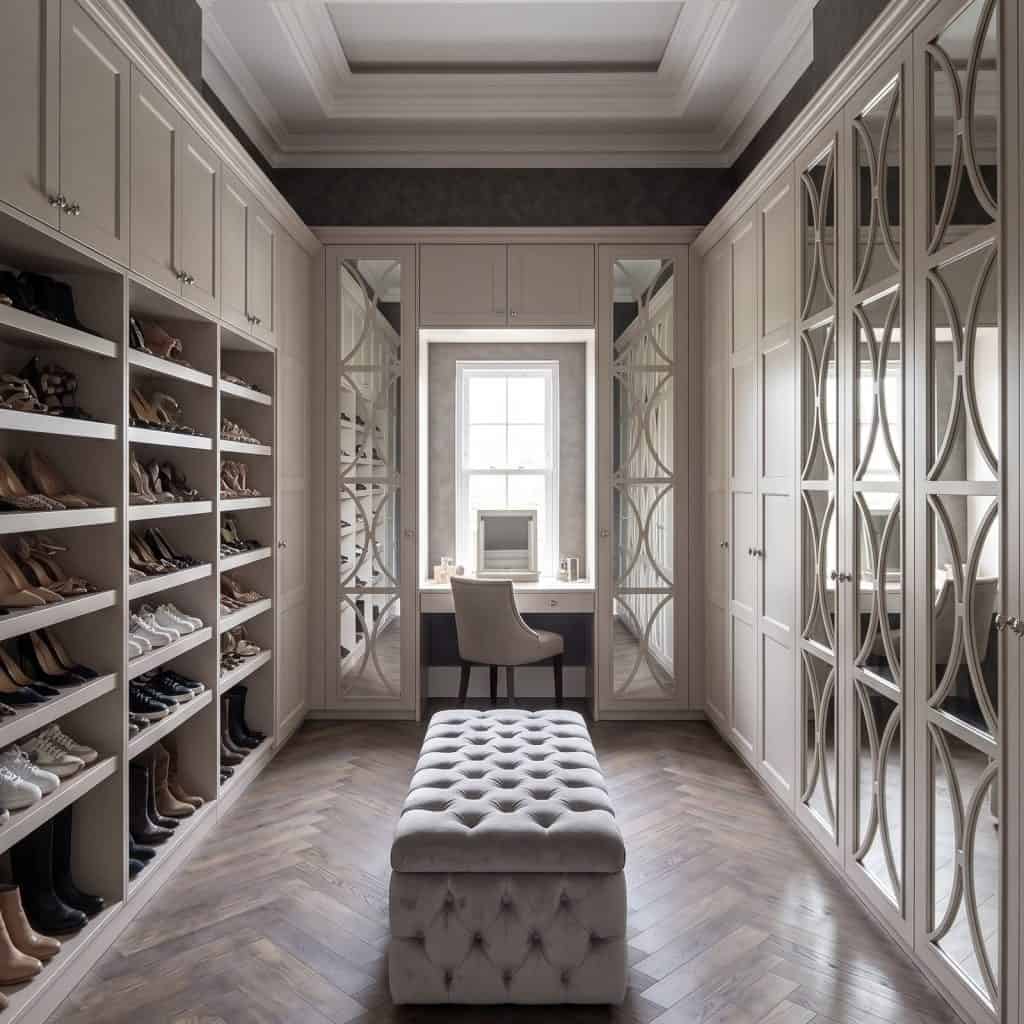
Adjusting the soft-close mechanism may be the wrong first move. If your wardrobe door sits unevenly, rubs against the frame or closes with a thud, the cause may be alignment rather than the damper. Knowing how to adjust soft close wardrobe hinges starts with identifying the problem before turning a screw and making the gap worse.
A door that won’t close smoothly is frustrating, especially when the hinge screws aren’t labelled. This guide explains how to check for loose fixings, identify common alignment adjustments and test each change carefully. You’ll also learn why instructions vary by hinge model, how to tell a damper problem from an alignment issue, and when adjustment may not help. If the door itself is damaged or unsuitable, replacement wardrobe doors may be a more appropriate next step.
Key Takeaways
- Separate door-alignment symptoms from a soft-close damper that no longer slows the door.
- Before learning how to adjust soft close wardrobe hinges, support the door and check fixings for looseness or visible damage.
- Identify the adjustment points carefully, and check the hinge manufacturer’s guidance before making changes.
- Know when to stop: persistent misalignment or damaged hardware may need hinge-specific help, whilst a damaged or unsuitable door may call for a replacement.
How soft-close wardrobe hinges work, and what may be causing the problem
A soft-close wardrobe hinge uses a damping mechanism to slow the door as it approaches the closed position, reducing the abrupt impact of an ordinary closing action. The mechanism may be built into the hinge or attached to it, depending on the design. For a useful overview of the underlying hardware, see concealed hinge mechanics.
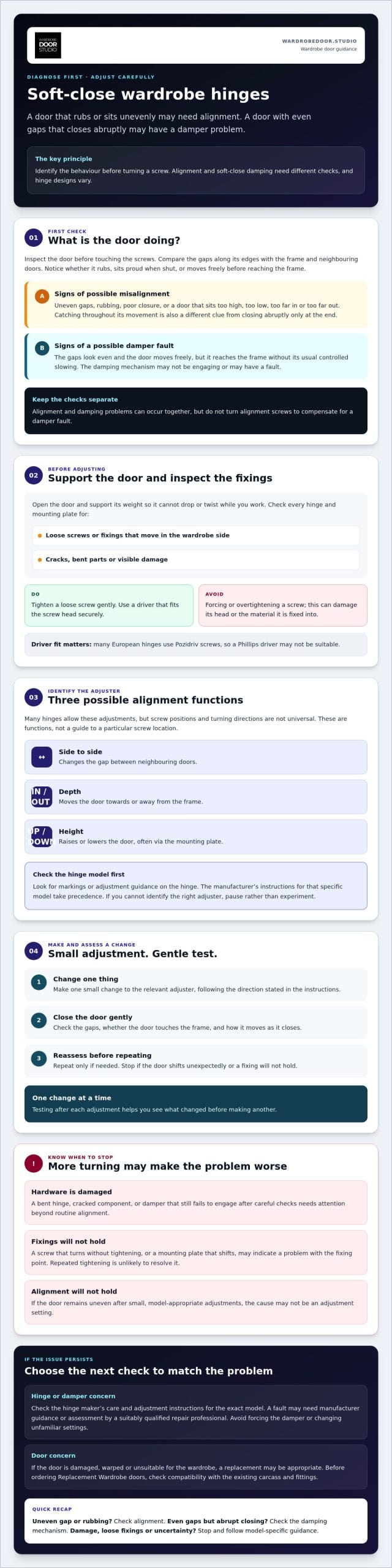
Before considering how to adjust soft close wardrobe hinges, work out whether the door is out of alignment or the soft-close action has stopped working. These problems can occur together, but they need different checks.
Is the door misaligned, or is the soft-close action failing?
Inspect the door before touching the screws. Compare the gaps along its edges with the frame and any neighbouring doors. Check for rubbing, whether the door sits proud when shut, and whether it moves freely before reaching the frame.
- Uneven gap, rubbing or poor closure: These signs can point to an alignment issue. The door may sit too high, too low, or too far in or out.
- Even gaps, but no slowing near closure: If the door reaches the frame without the usual controlled movement, the damping mechanism may not be engaging or may have a fault.
Pay attention to when the problem occurs. A door that catches throughout its movement needs a different check from one that moves freely but closes abruptly at the end. Don’t turn alignment screws to compensate for a damper fault. First identify which behaviour needs attention.
Hinge designs differ, so the manufacturer’s instructions for your specific model take precedence over general guidance. Adjustment points, their functions and the direction they turn can all vary.
How to adjust soft-close wardrobe hinges without damaging the door
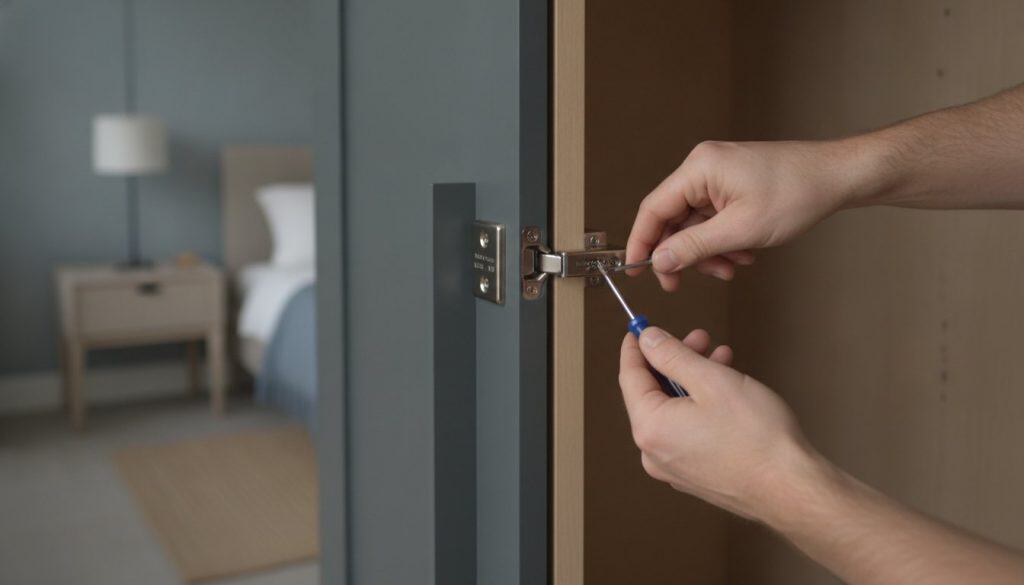
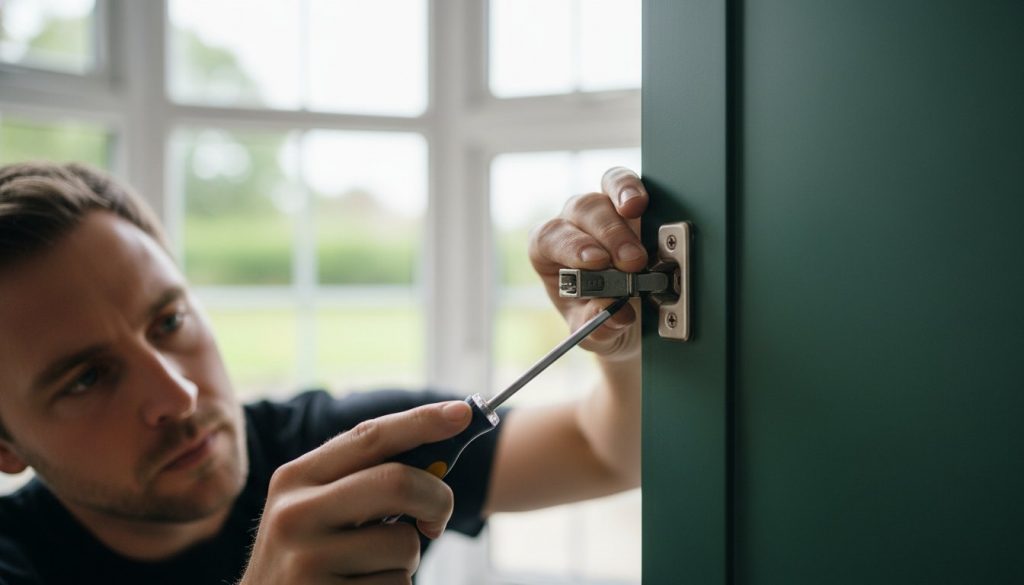
Before making an adjustment, open the door and support its weight so it cannot drop or twist while you work. Check every hinge and mounting plate for loose screws, cracks, bent parts or fixings that move in the wardrobe side. Tighten a loose screw gently, but don’t force it. Overtightening can damage the screw head or the material it is fixed into. Use a driver that fits the screw head securely. Many European hinges use Pozidriv screws, so a Phillips driver may not be suitable.
Which hinge screw should you adjust?
Many hinges allow three alignment functions, but there is no universal screw position. Side-to-side adjustment changes the gap between neighbouring doors. Depth adjustment moves the door towards or away from the frame. Height adjustment raises or lowers it, often via the mounting plate. These describe the functions, not a guarantee that a particular screw in a particular place controls them.
Look for markings or adjustment guidance on the hinge, then check the manufacturer’s instructions for its model before turning an unfamiliar screw. If you cannot identify the right adjuster, pause rather than experiment.
- Make one small change to the relevant adjuster, following the direction stated in the instructions.
- Close the door gently and check the gaps, whether it touches the frame, and how it moves as it closes.
- Repeat only if needed, reassessing after each change. Stop if the door shifts unexpectedly or a fixing will not hold.
Adjust in small increments, then test the door after each change so you can see what helped before making another. If the door itself is damaged or unsuitable, explore replacement wardrobe doors as a separate next step.
When hinge adjustment is not enough: checks, next steps and replacement doors
Knowing when to stop is part of learning how to adjust soft close wardrobe hinges safely. Further turning will not fix a damaged hinge or a door that remains out of line, and forcing screws can make the problem worse.
- Stop if hardware is damaged. A bent hinge, cracked component or damper that still fails to engage after careful checks needs attention beyond routine alignment.
- Stop if fixings will not hold. A screw that turns without tightening or a mounting plate that shifts may indicate a problem with the fixing point. Repeated tightening is unlikely to resolve it.
- Stop if alignment will not hold. If the door remains uneven after small, model-appropriate adjustments, the cause may not be an adjustment setting.
What to do if the door still will not close softly
Check the hinge maker’s care and adjustment instructions for the exact model before attempting anything further. Hinge mechanisms differ, and a fault may need manufacturer guidance or assessment by a suitably qualified repair professional. Avoid forcing the damper or changing unfamiliar settings.
If the hinge appears intact but the door itself is damaged, warped or unsuitable for the wardrobe, consider whether a replacement door is appropriate. Before ordering, check that the replacement is compatible with the existing carcass and fittings. Explore the available wardrobe door options if a new door is the relevant next step. This is a door-replacement option, not a hinge repair service.
Restore a smooth close, or choose a considered replacement
A wardrobe door that closes unevenly may need careful alignment, whilst one that still shuts abruptly after adjustment could have a separate hinge fault. Before deciding how to adjust soft close wardrobe hinges, check the instructions for the hinge model, make small changes and test the door after each one. Stop if hardware is damaged, fixings will not hold or the door remains out of line.
If the door itself is damaged or unsuitable, replacement wardrobe doors may be a more appropriate next step. Wardrobe Door Studio offers replacement doors through Supply & Fit and Supply Only options. Explore replacement wardrobe door options and consider a design and finish suited to your space.
A careful diagnosis helps you decide whether the issue calls for a small adjustment, hinge-specific help or a replacement door.
Frequently Asked Questions
How do you adjust soft-close wardrobe hinges?
To adjust soft-close wardrobe hinges, first support the door and check for loose or damaged fixings. Identify the hinge model and follow its manufacturer’s instructions, as adjustment points and directions differ. Make one small change to the relevant adjuster, then close the door gently and check its position and movement. Don’t keep turning screws if the door shifts unexpectedly or a fixing will not hold.
Which screw adjusts a wardrobe door hinge?
It depends on the hinge model. Common adjustment functions include side-to-side movement to even the gap, depth adjustment to bring the door closer to or further from the frame, and height adjustment to raise or lower it. These functions do not correspond to universal screw positions. Check the maker’s instructions before turning an unfamiliar screw, and use a driver that fits securely.
Why is my soft-close wardrobe door not closing properly?
An uneven gap, rubbing edge or door that sits proud of the frame can point to misalignment or loose fixings. If the door is aligned but closes abruptly, the soft-close damper may not be engaging or may be faulty. Check the hinge for visible damage and consult its model-specific care guidance. Don’t try to correct a damping fault by changing alignment screws.
Can you adjust soft-close hinges without removing the wardrobe door?
Often, alignment adjustments can be made with the door still attached, provided the hinge instructions allow it and the door is supported while you work. You’ll need clear access to the relevant adjuster, and the door must remain stable. If a hinge is damaged, fixings will not hold or the instructions call for removal, stop and seek suitably qualified help rather than forcing the adjustment.