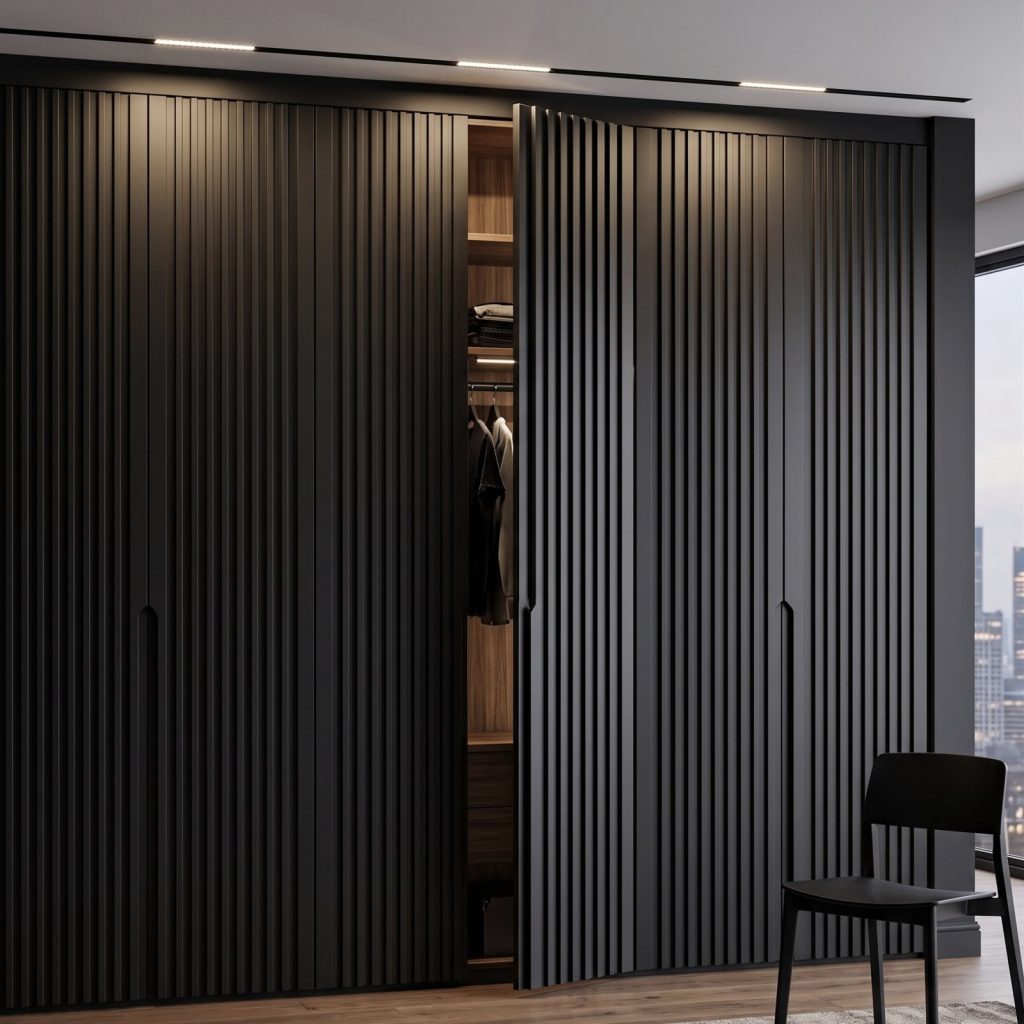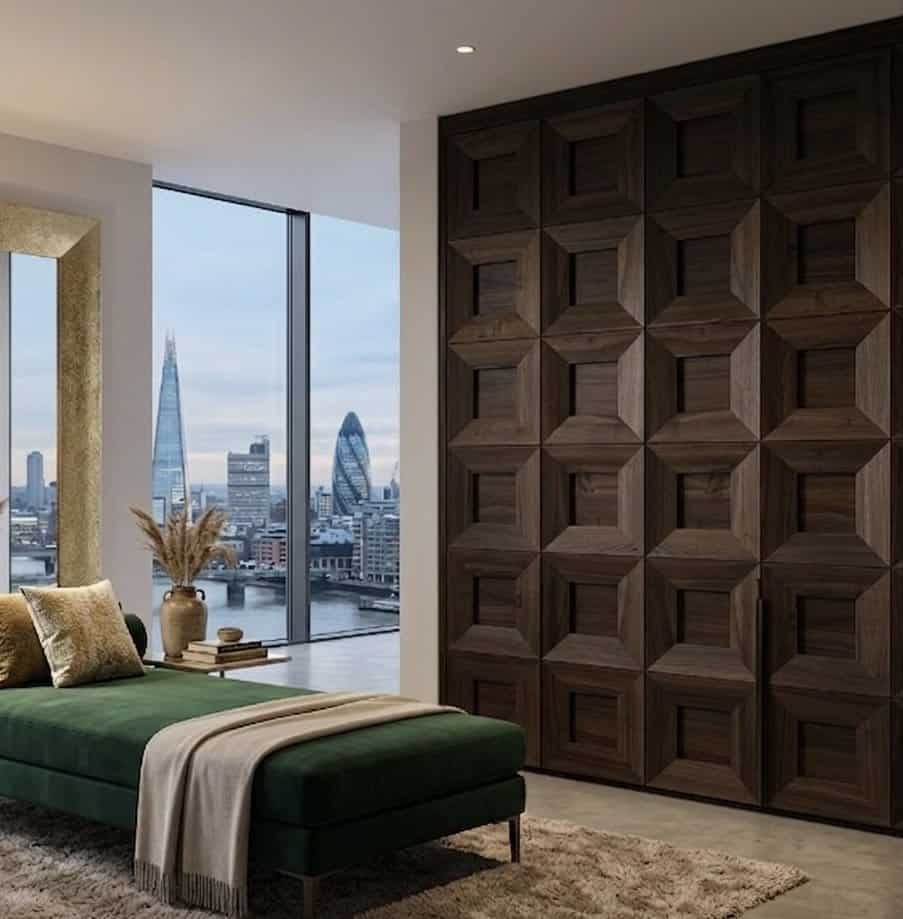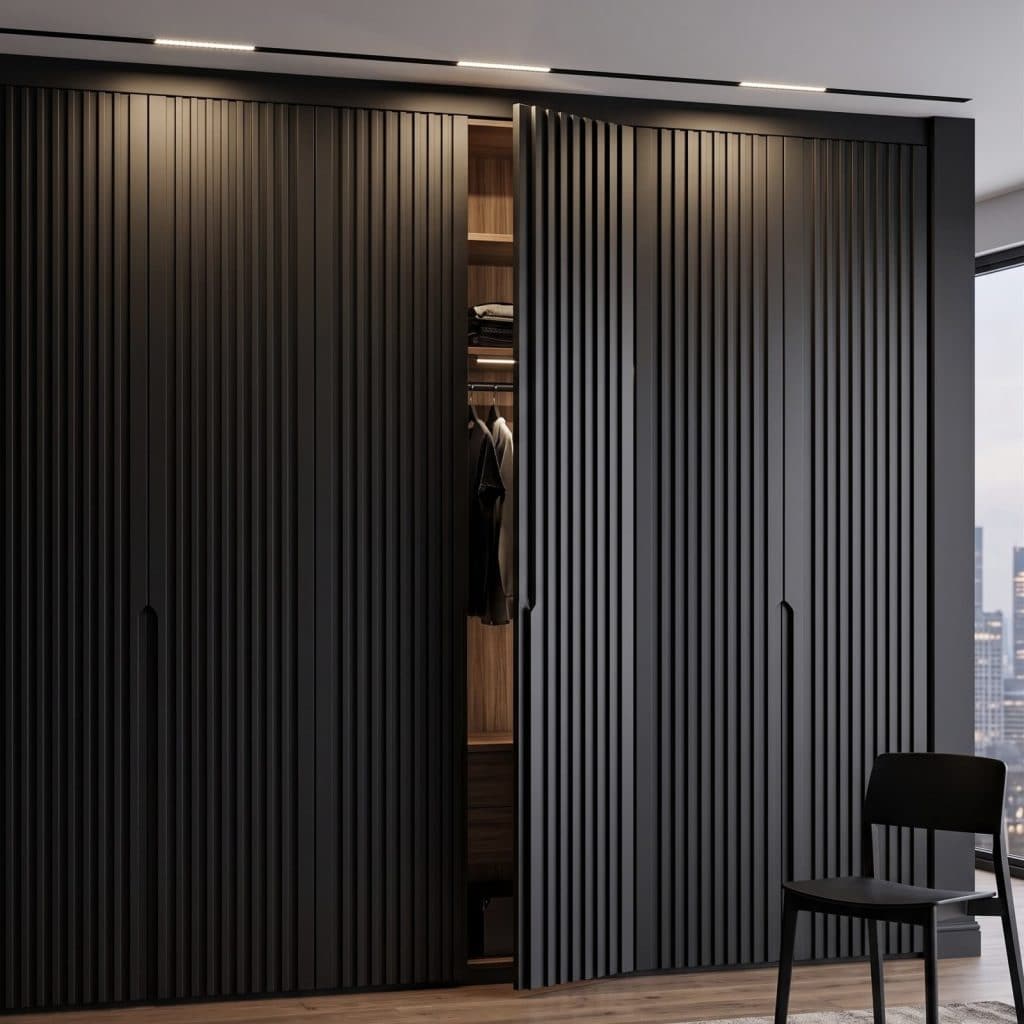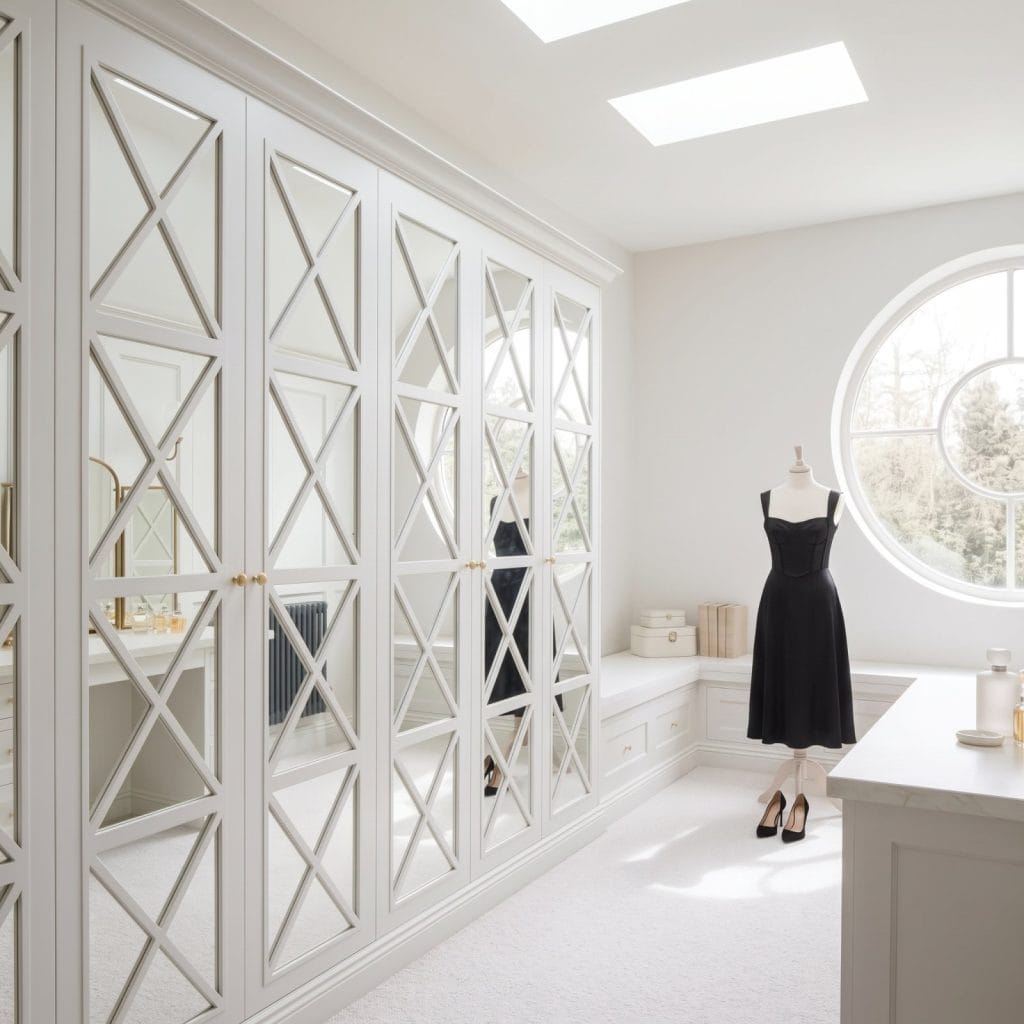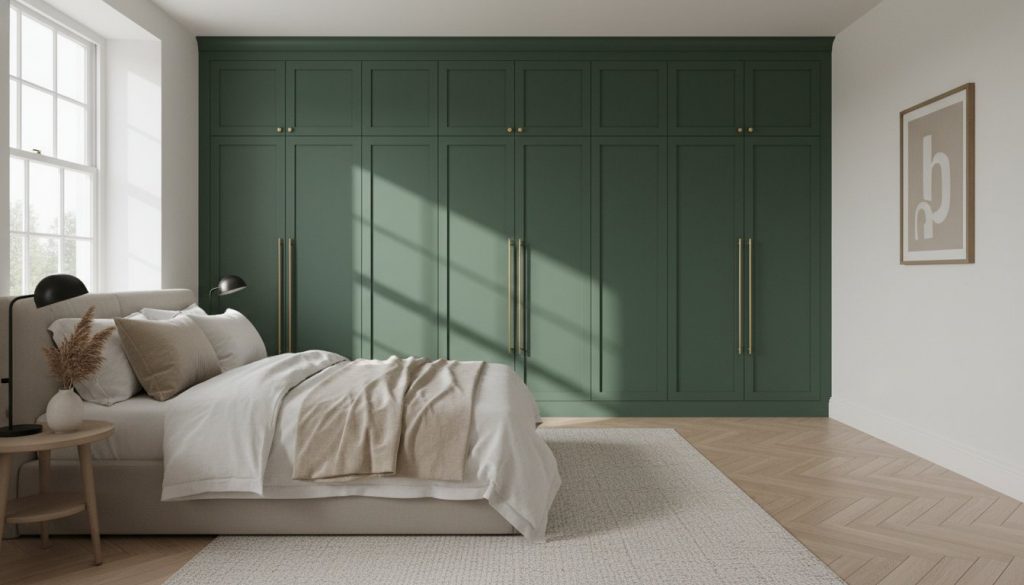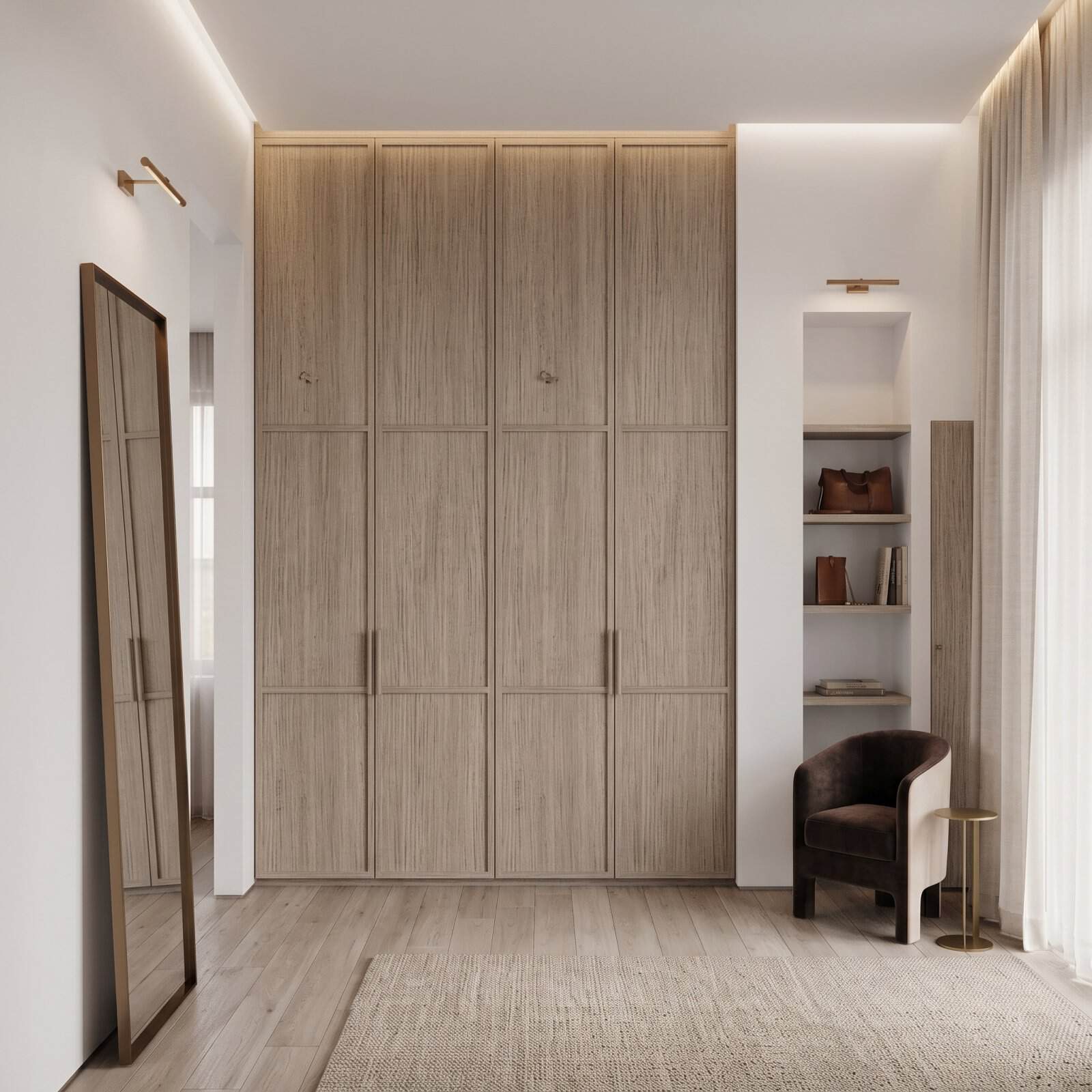
The most discreet wardrobe lighting is not automatically the most useful. Placement around what you store matters more. You want to see clothes and accessories clearly without glare, visible cables or fittings that distract from the finished design. Integrated lighting for wardrobes works best when it is planned alongside the storage layout, rather than added as an afterthought.
This guide compares LED strips, linear fittings and automatic controls, with practical considerations for hanging space, shelves and drawers. You will also learn how to plan lighting positions around your daily routine and coordinate the brief with a bespoke wardrobe design. Whether you are considering replacement wardrobe doors or a complete dressing room, a considered plan can help make the lighting purposeful and the overall design cohesive.
Key Takeaways
- Plan integrated lighting for wardrobes around the clothes, shelves and drawers you use most.
- Compare strips, linear fittings and discreet profiles to see which options suit different storage areas.
- Choose between manual and sensor-operated controls based on your routine and preferred level of convenience.
- Coordinate light positions and technical requirements with the wardrobe layout, whether you are planning replacement doors or a complete dressing room.
Integrated lighting for wardrobes: what it does and where it helps
Integrated lighting is planned into a wardrobe or positioned discreetly around its storage, rather than relying only on the room’s main light. It can make it easier to see the contents of a hanging section, find items on shelves and check what is in drawers. The aim is practical visibility that sits comfortably within the wardrobe design.
There is no single position that suits every layout. The best choice depends on what you store, how the doors open and where you stand when choosing clothes. To plan integrated lighting for wardrobes around your routine, identify the storage areas that are hardest to see and consider how their doors and fittings affect access.
Which parts of a wardrobe benefit most from planned lighting?
Consider each storage zone separately. Light within the wardrobe can improve general visibility, while lighting near shelves, hanging rails or drawers can focus on the areas you use most. For example, note whether clothes at the back of a hanging section are difficult to see, or whether shelves cast shadows on the items below. Match the fitting and position to the specific task instead of assuming one arrangement will suit every part of the wardrobe.
Door movement and sightlines matter too. An open door can change your view into the wardrobe or affect where a fitting can sit. Stand where you usually choose clothes and check whether the proposed light source would be in your direct line of sight. Also consider how the doors, shelves and hanging space relate to one another, so the lighting does not obstruct access or draw attention away from the design.
For an introduction to lighting types used in cabinetry, see Under-cabinet lighting options. Use this as background, then assess placement against your own storage plan. Lighting positions can be considered alongside a bespoke wardrobe layout, replacement doors or a complete dressing room before the design is finalised.
Comparing integrated wardrobe lighting options, positions and controls
The right fitting depends on the area to illuminate and how discreet you want it to appear. Use these distinctions to shape the brief, then compare the options against the wardrobe layout, door movement and intended appearance.
| Option | Potential fit | Consideration |
|---|---|---|
| Strip lighting | Can follow a shelf edge or wardrobe side to provide light along a storage zone. | Consider the viewing angle and position the strip so the light source does not become a visual distraction. |
| Linear fittings | A defined fitting can suit a longer area, such as a hanging section. | Check that its size and position work with the wardrobe proportions and door movement. |
| Discreet profiles | A profile can house a strip and create a more integrated appearance. | Plan its location and finish alongside the wardrobe design. |
Thoughtful placement helps integrated lighting for wardrobes feel like part of the design, rather than its visual focus. For further positioning context, see closet lighting placement guidance.
Should wardrobe lights switch on automatically?
Manual switching gives you direct control, which may suit a routine where you use the lights selectively. Sensor-operated controls can make access more immediate when you open the wardrobe. Their behaviour depends on the components and setup, so consider how the wardrobe is used before choosing. Think about who uses the storage, whether the doors stay open while you select clothes and whether you prefer direct control or automatic operation.
Include wiring, component compatibility and installation requirements in the technical specification. These details affect the final arrangement, so record them alongside the lighting positions rather than treating appearance as the only decision. To see how different wardrobe designs handle proportion and storage, explore completed wardrobe designs.
Planning wardrobe lighting alongside a bespoke wardrobe project
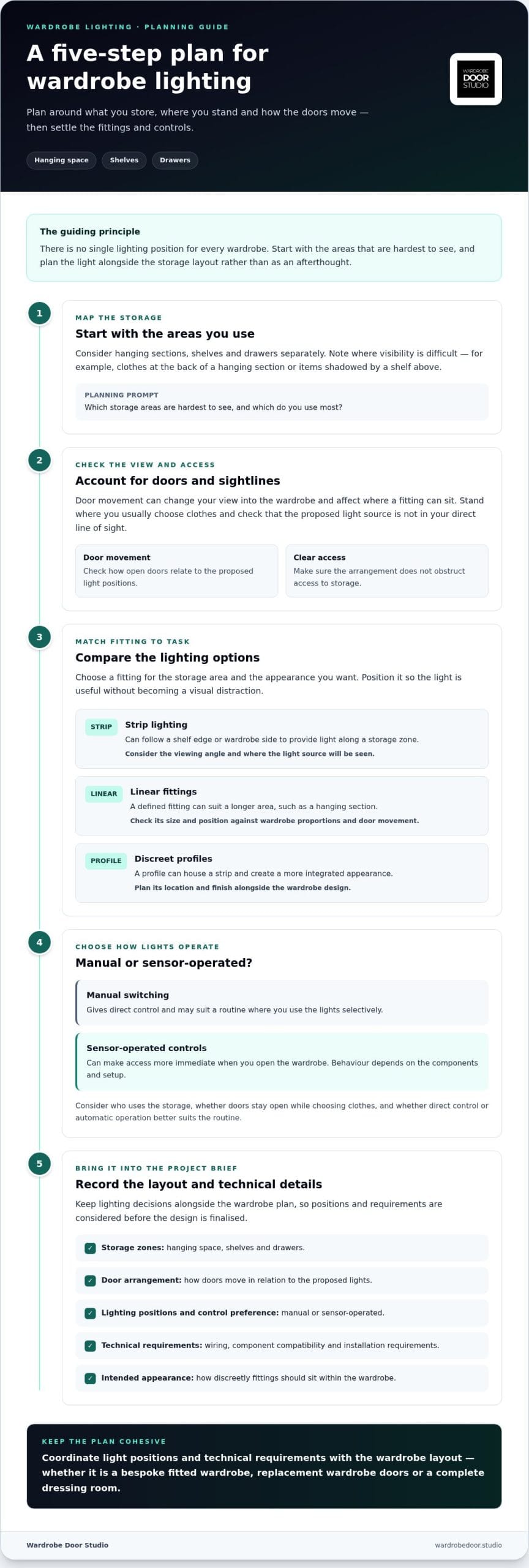
Plan integrated lighting for wardrobes in sequence. Start with the storage tasks, mark the areas where light would be useful, then agree the preferred controls and technical requirements. This gives the wardrobe layout and lighting brief a shared starting point, rather than leaving positions to be decided after the design is settled.
Include the details that shape the design:
- Storage zones, such as hanging space, shelves and drawers.
- Door arrangement and how doors move in relation to the proposed light positions.
- Preferred control behaviour, whether manual or sensor-operated.
- The intended visual effect, including how discreetly fittings should sit within the wardrobe.
These decisions can inform a bespoke fitted wardrobe, replacement wardrobe doors or a complete dressing room. The wardrobe design portfolio offers visual context for considering proportions and storage. For further planning inspiration, explore our bespoke wardrobe designs.
What should homeowners and trade teams include in the lighting brief?
Set out the storage plan and door configuration, then record your control preference and desired appearance. Add the lighting positions, component requirements and any wiring considerations to the project specification. Keeping these decisions alongside the wardrobe plan makes it easier to consider how the lighting relates to the finished layout.
Supply & Fit covers the wardrobe project from initial site measurement to final installation. With Supply Only, the wardrobe specification can inform the wider project plan. Trade teams can explore trade project registration for custom specification and CAD support, while customers considering bespoke options can view the wardrobe door shop.
Make lighting part of the wardrobe plan
Choose wardrobe lighting around the storage you use, then consider fitting positions and controls alongside the layout. This helps integrated lighting for wardrobes support everyday routines without competing with the design. Include technical requirements in the lighting specification so they can be considered with the wardrobe plan.
Wardrobe Door Studio creates design-led bespoke wardrobes manufactured in England, with Supply & Fit and Supply Only project routes. Whether you are refreshing a single wardrobe or planning a complete dressing room, a clear brief can bring storage and design decisions together.
Explore bespoke wardrobe designs and take the next step towards a wardrobe shaped around your space and routine.
Frequently Asked Questions
Can integrated lighting be added to an existing wardrobe?
Integrated lighting can sometimes be added to an existing wardrobe, but feasibility depends on its construction, available space, door arrangement and the lighting components selected. A shelf or hanging zone may offer different positioning options from a drawer area. Assess the proposed arrangement and technical requirements for the specific wardrobe rather than assuming that every existing design will accommodate the same solution.
What type of lighting works best inside a wardrobe?
There is no single best option for every wardrobe. Strip lighting may suit a shelf edge or longer storage area, while linear fittings can provide a defined line of light near hanging space. Discreet profiles can house lighting as part of the design. Let the wardrobe layout, storage tasks and intended visual effect guide the choice.
Do wardrobe lights need a motion sensor?
No. Sensor-operated controls can switch lights on as you access the wardrobe, which may suit a routine where you want hands-free operation. Manual switching gives you direct control and may be preferable if you use lighting selectively. Consider how the wardrobe is used each day, then include your control preference and component requirements in the project specification.
How do you plan integrated lighting for a bespoke wardrobe?
Start by mapping storage zones, such as hanging areas, shelves and drawers. Identify useful light positions in relation to the doors and how you use each section, then decide whether you prefer manual or sensor-operated controls. Include wiring and component requirements in the technical brief, and coordinate these decisions with the bespoke wardrobe layout before the design is finalised.