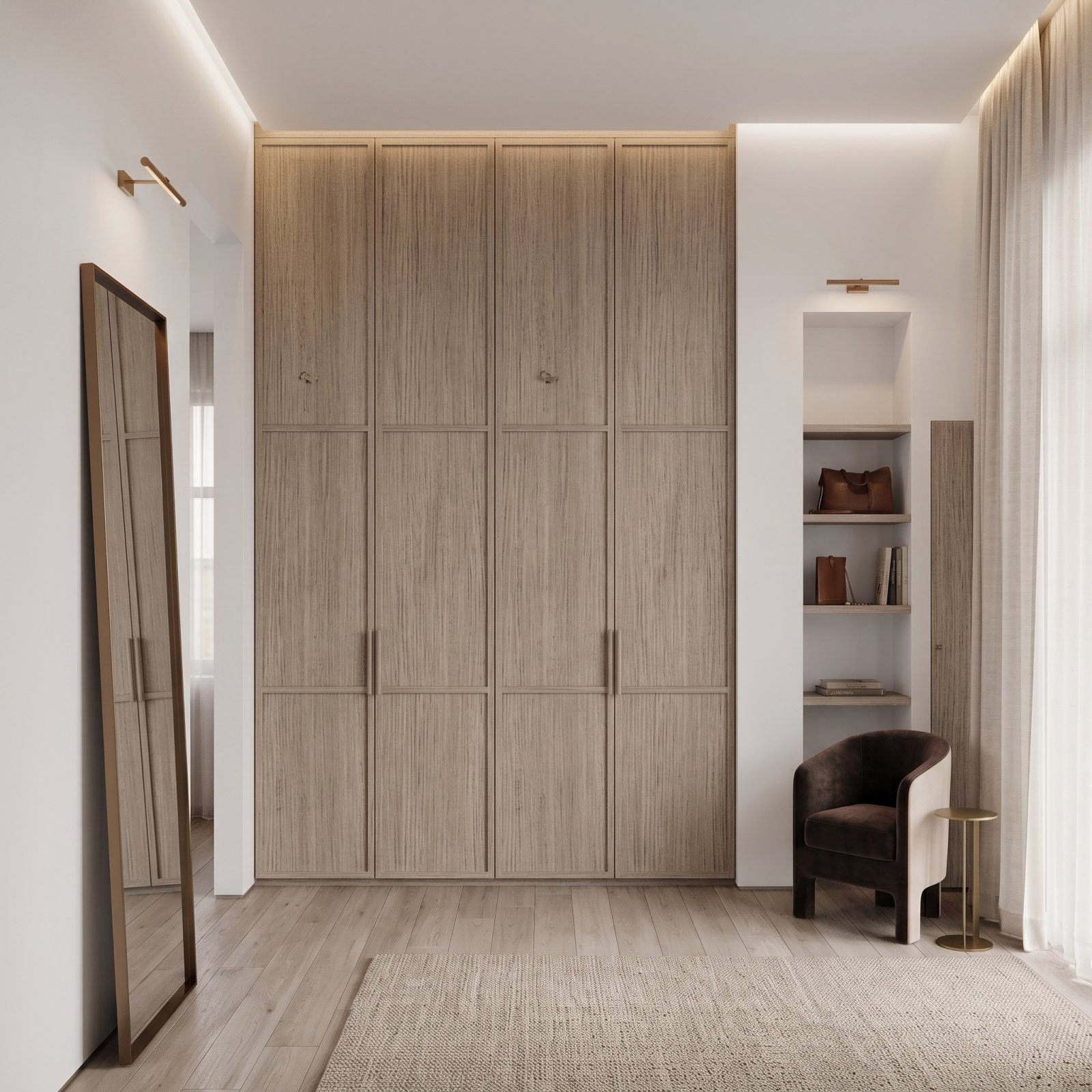
A wardrobe can make a small bedroom feel larger, but only when its colour and footprint work with the room. The practical answer to how to make a small bedroom look bigger with wardrobes is to choose a light or wall-matching finish, use mirrored doors to reflect light, and favour fitted storage that keeps floor space clear. Avoid oversized furniture and doors that obstruct the walkway; visual continuity and usable clearance matter as much as the shade.
It’s easy to focus on the bed or the room’s dimensions, but a wardrobe takes up a large area of wall and can shape how open the whole space feels. This guide covers how to choose colours that blend with the walls and ceiling, where mirrored doors work best, and which furniture choices can make a compact bedroom feel crowded. Use these practical points to balance storage with a calmer, more spacious-looking room.
Key Takeaways
- Use fitted storage to conceal belongings and make better use of awkward spaces, rather than leaving gaps around freestanding furniture.
- Choose a wardrobe finish that blends with the walls and ceiling to create a calmer, more continuous look.
- Consider mirrored doors where they can reflect natural light and add a sense of depth.
- Keep walkways clear and avoid bulky furniture that takes up floor space; bespoke fitted wardrobes can help make storage work with the room.
1. What Furniture Should You Avoid in a Small Bedroom?
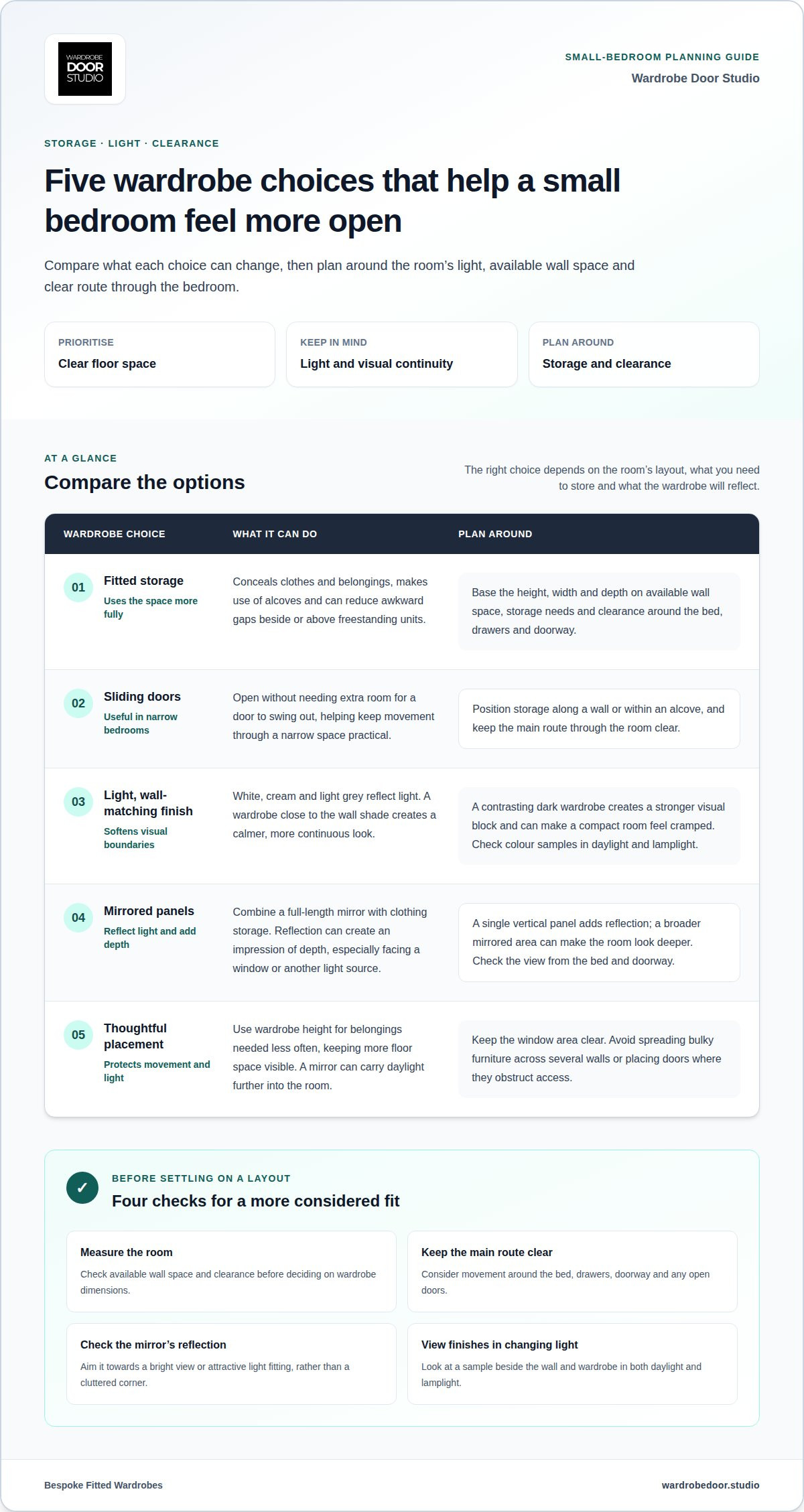
Avoid oversized wardrobes, bulky chests and furniture that blocks the main walkway. These pieces use valuable floor space and can make a room feel crowded. Choose fitted storage to conceal clothes and belongings, make use of alcoves, and reduce awkward gaps beside or above freestanding units.
Sliding wardrobe doors suit narrow bedrooms because they don’t need room to swing open. Fitted wardrobes with mirrored doors can reflect light and create a greater sense of depth. Both are practical options when deciding how to make a small bedroom look bigger with wardrobes.
There’s no single ideal wardrobe size for every UK bedroom. Base the height, width and depth on the available wall space, what you need to store, and clearance around the bed, drawers and doorway. Measure the room and keep the main route clear before deciding on a layout. The cost of fitted or freestanding wardrobes depends on materials, dimensions, door style and installation; pricing is provided after a quote request.
Place storage along a wall or within an alcove, rather than where open doors interrupt movement. In a long, narrow room, a divider can combine shelving on one side with wardrobe space on the other. A wardrobe built into a half-height dividing wall can also separate connected areas.
Use height for clothes and belongings you need less often, keeping more floor space visible. Position a large mirror to reflect a window or light fitting, and keep the window area clear to preserve natural light. Avoid spreading bulky furniture across several walls, leaving gaps above wardrobes, or choosing doors that obstruct access.
2. Matching wardrobe colour to walls and ceiling
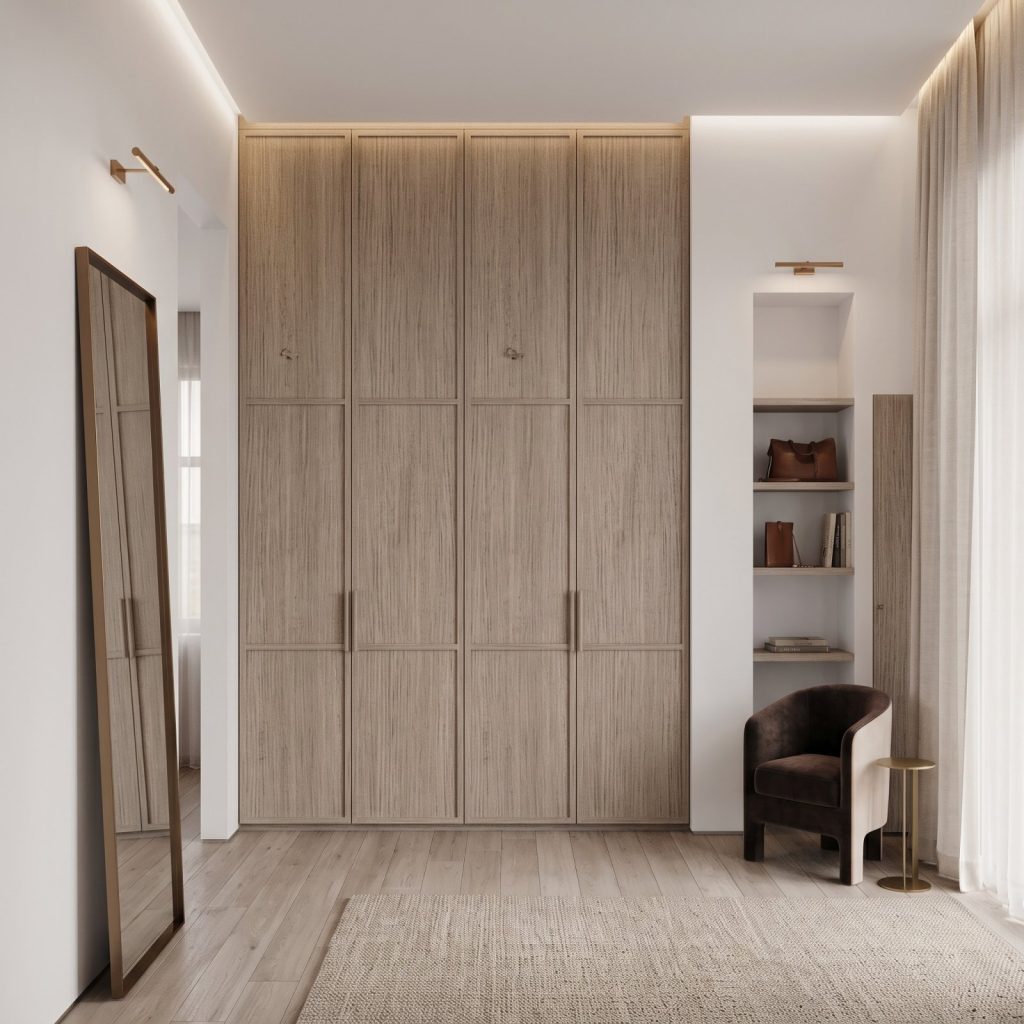
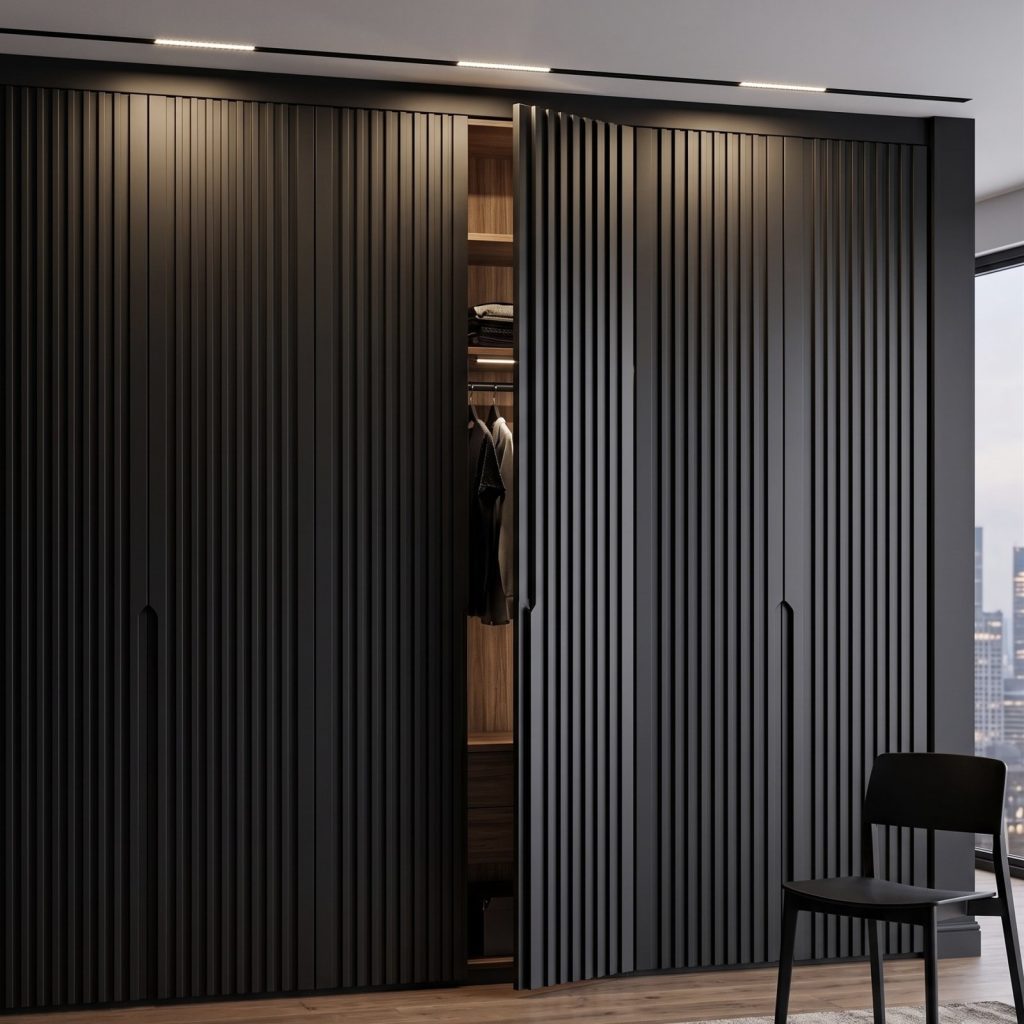
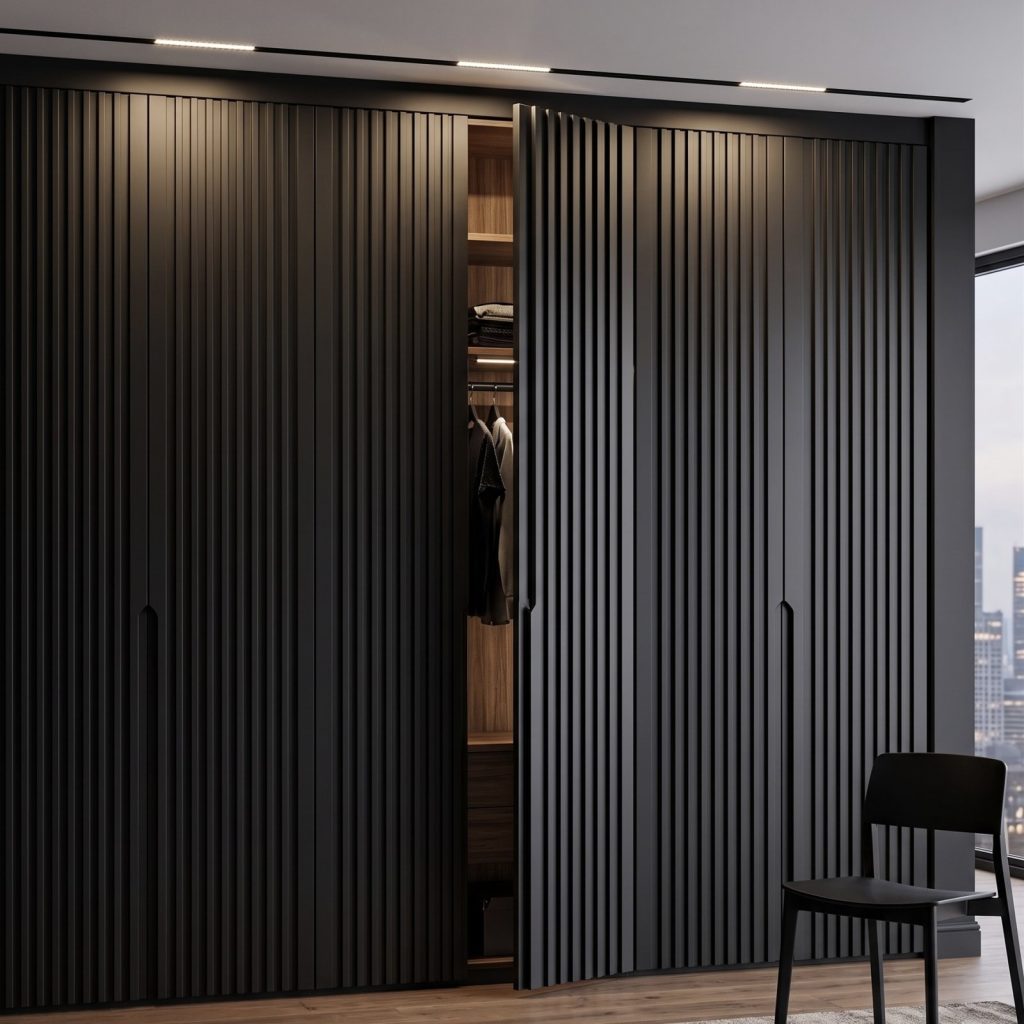
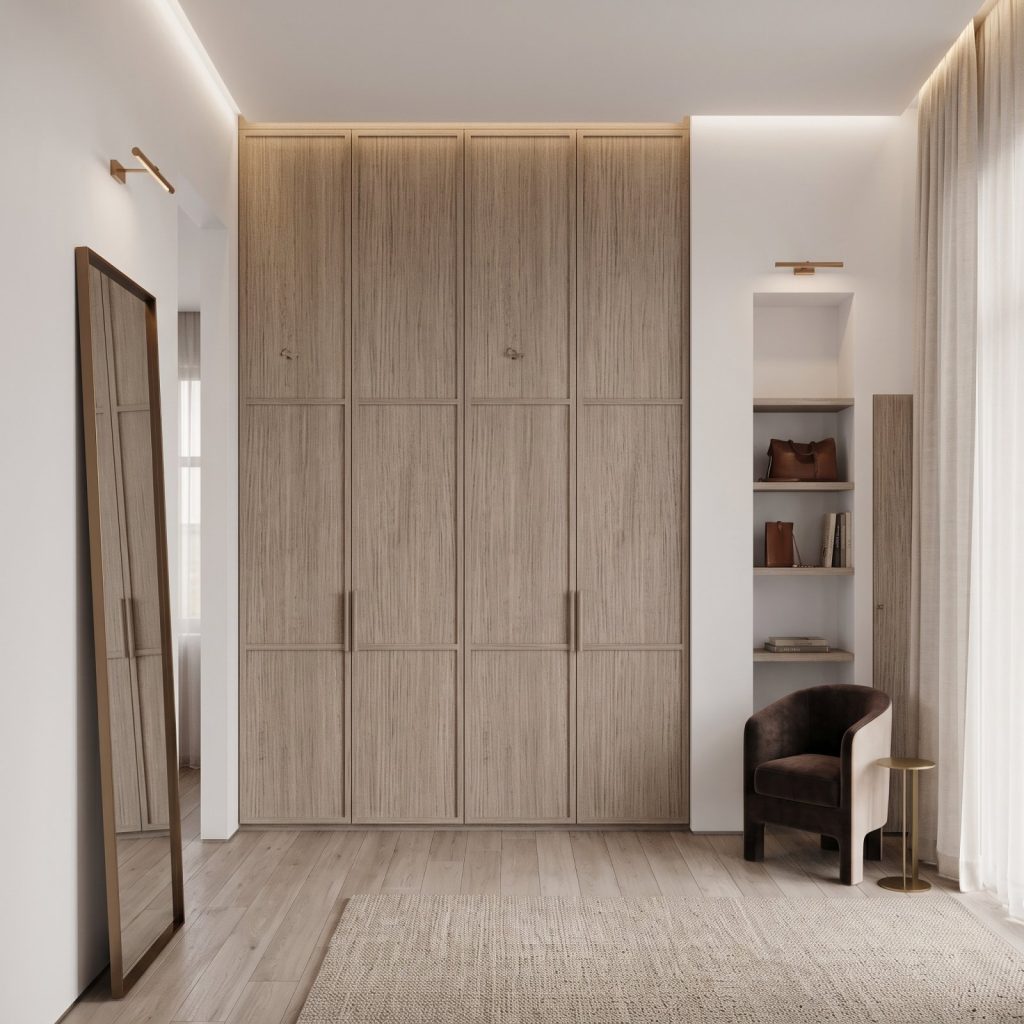
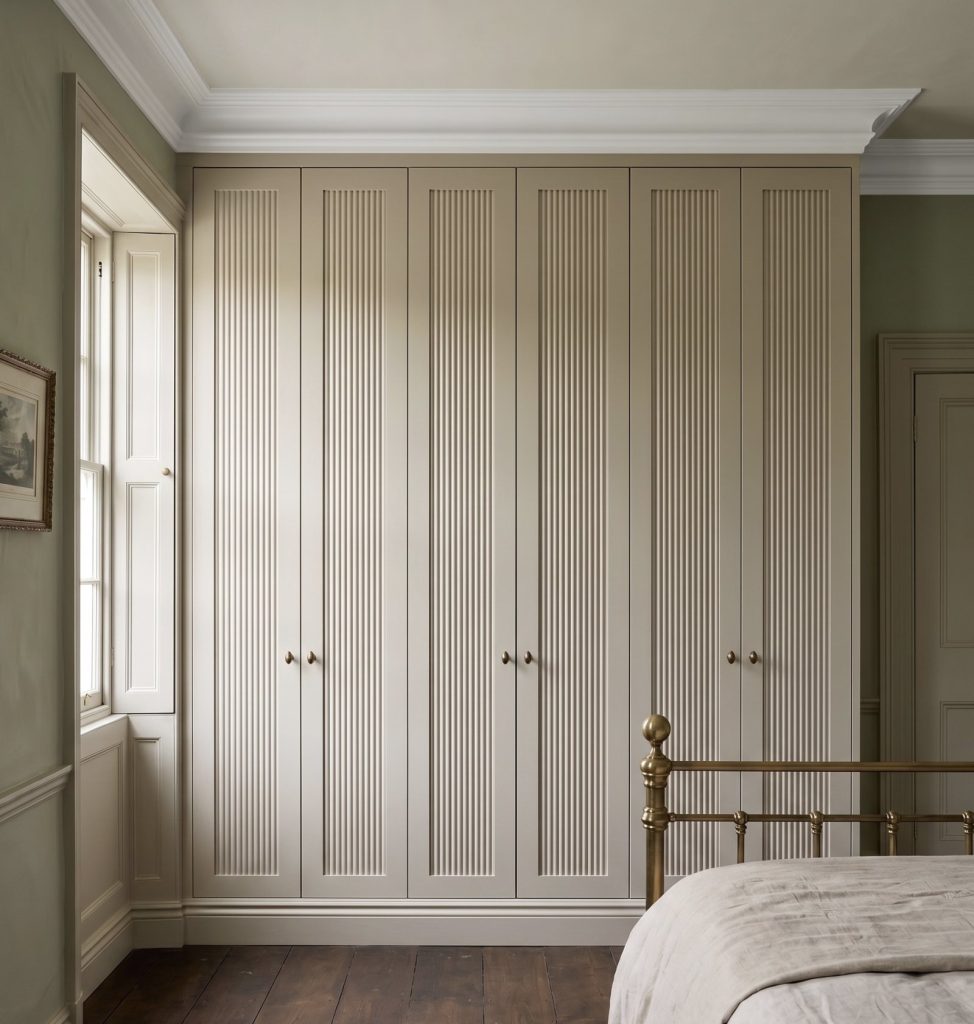
Choose a wardrobe colour close to the wall shade to soften the boundary between furniture and room. White, cream and light grey reflect light and can help the bedroom feel more open. For example, pair warm white walls with a pale grey wardrobe and neutral bedding. A contrasting dark wardrobe creates a stronger visual block and can make a compact room feel cramped.
Carry a light colour across the walls and ceiling to blur their edges and draw the eye upwards. This can make the ceiling feel higher, especially when the wardrobe finish belongs to the same palette. A pale floor also helps maintain visual continuity. If the floor is darker, repeat a similar tone in a smaller piece, such as a bedside table, rather than adding several competing colours.
Light-coloured fitted furniture creates a quieter surface across a wall. Handleless doors reduce visual interruptions, while matching the finish of wardrobe doors and nearby shelving makes separate elements feel more unified. Keep decorative details restrained: a simple combination of warm white, pale grey and muted bedding is easier to take in than multiple bold colours and contrasting finishes.
Consider the room’s lighting before choosing a paint shade. Natural light changes throughout the day, while bedside lamps and ceiling lights affect how colours appear after dark. Look at a sample beside the wardrobe and wall in both daylight and lamplight. Matching these surfaces doesn’t mean every item must be identical: keep the largest areas light, then introduce texture through bedding or a small accent.
3. Mirrored wardrobe doors
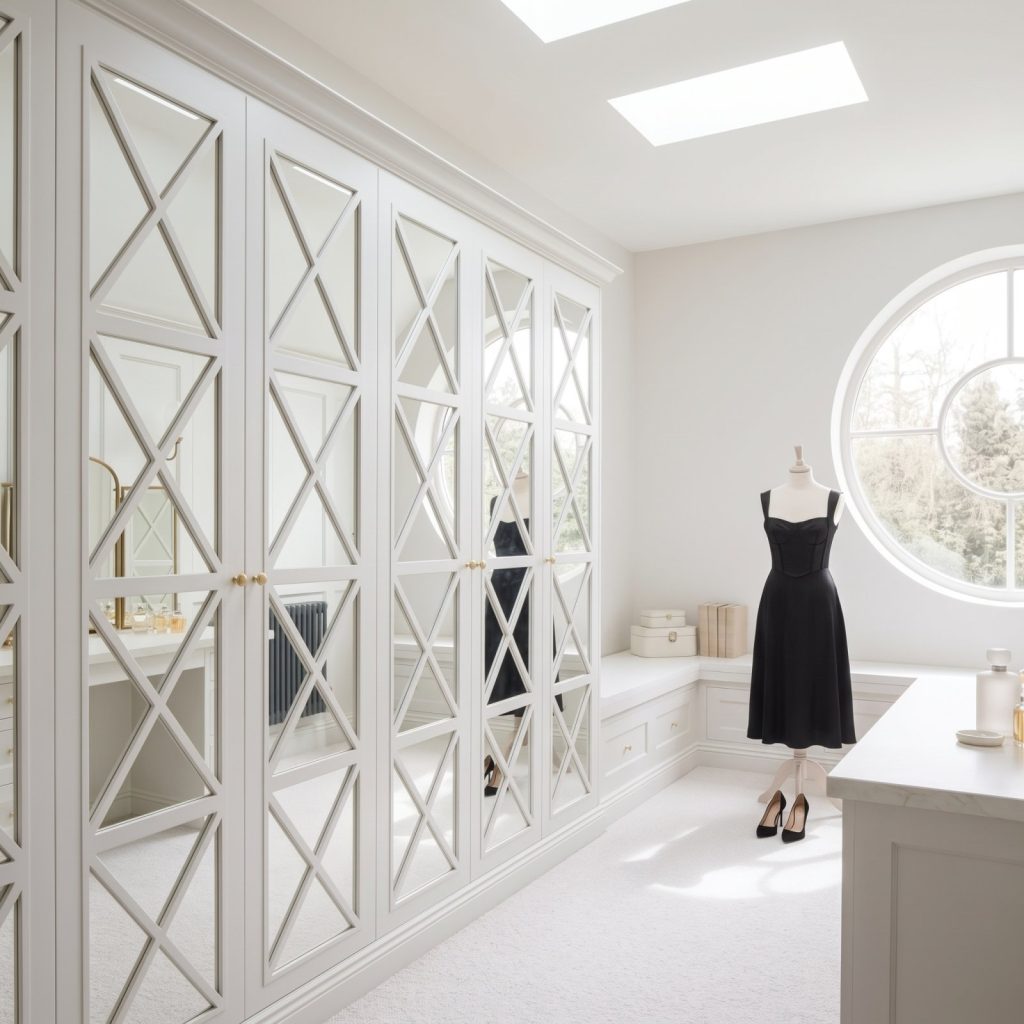
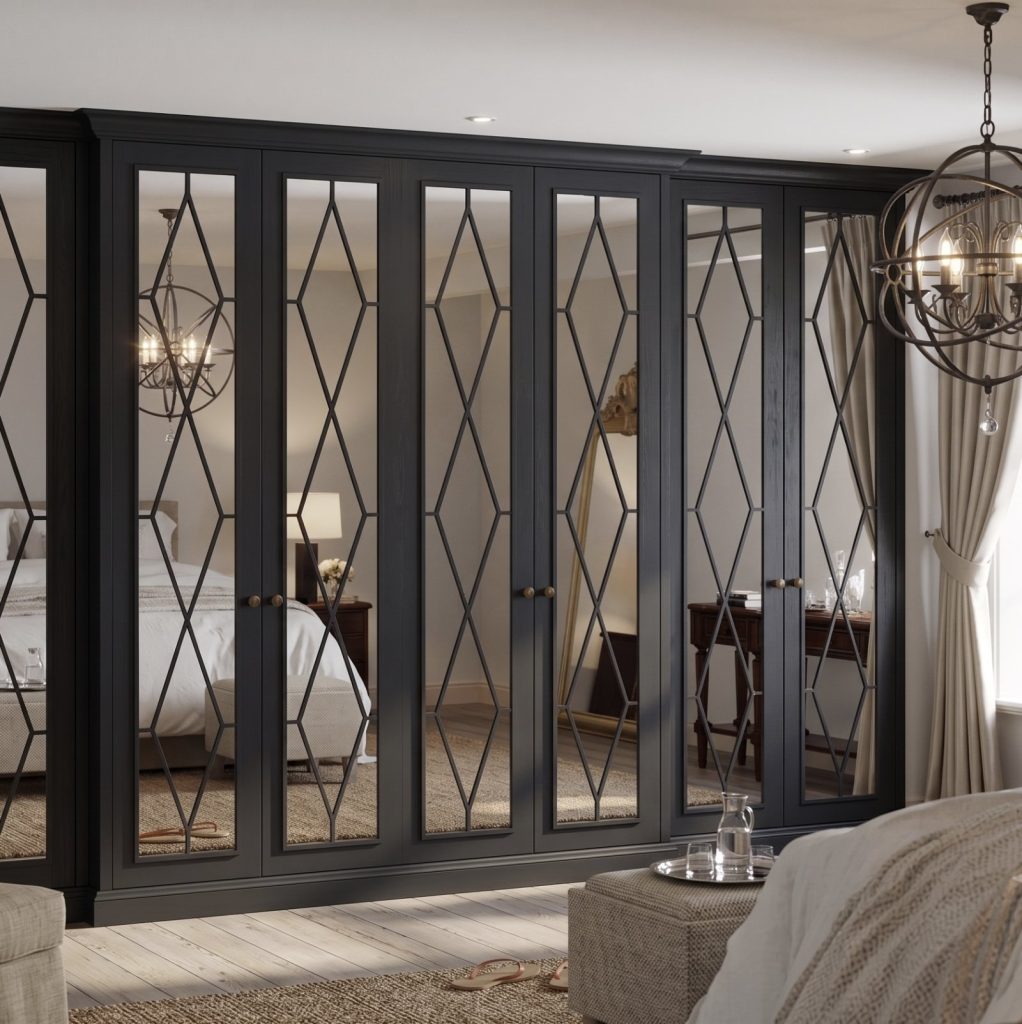
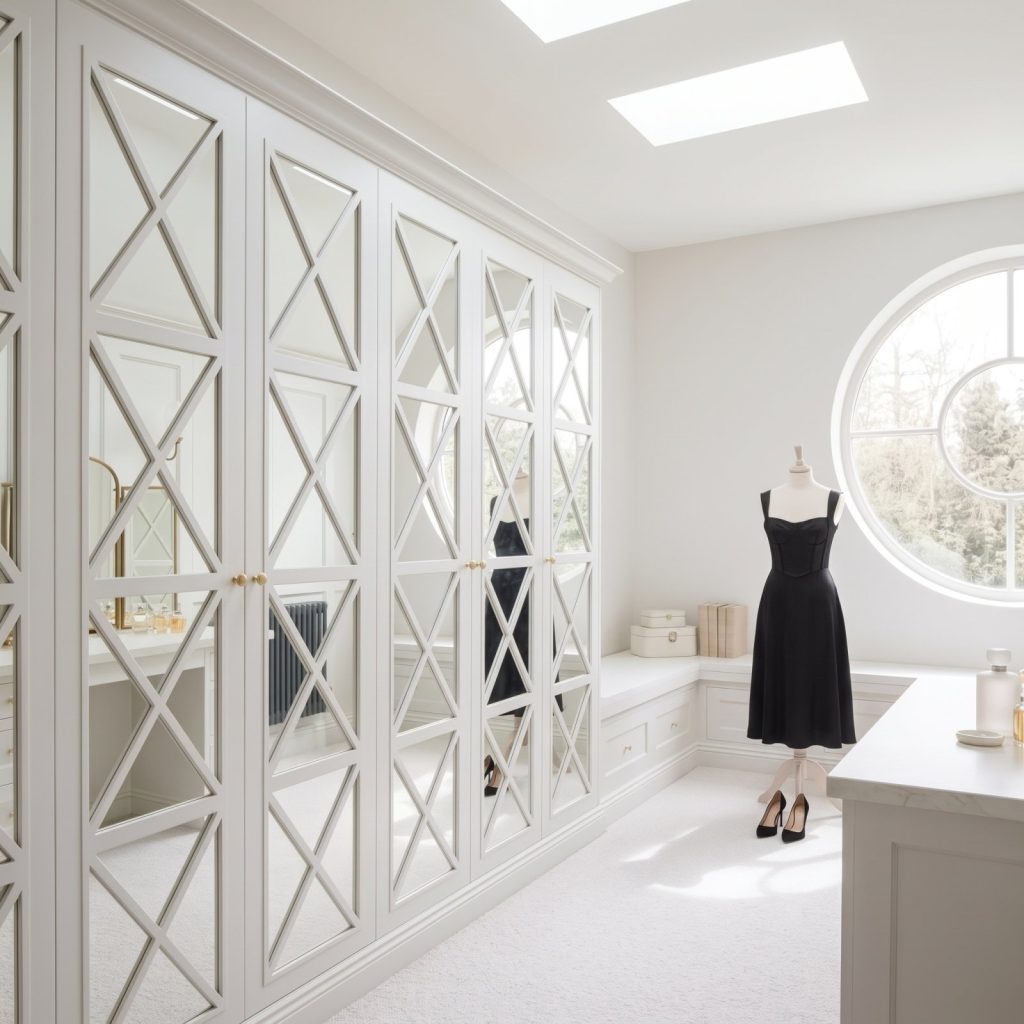
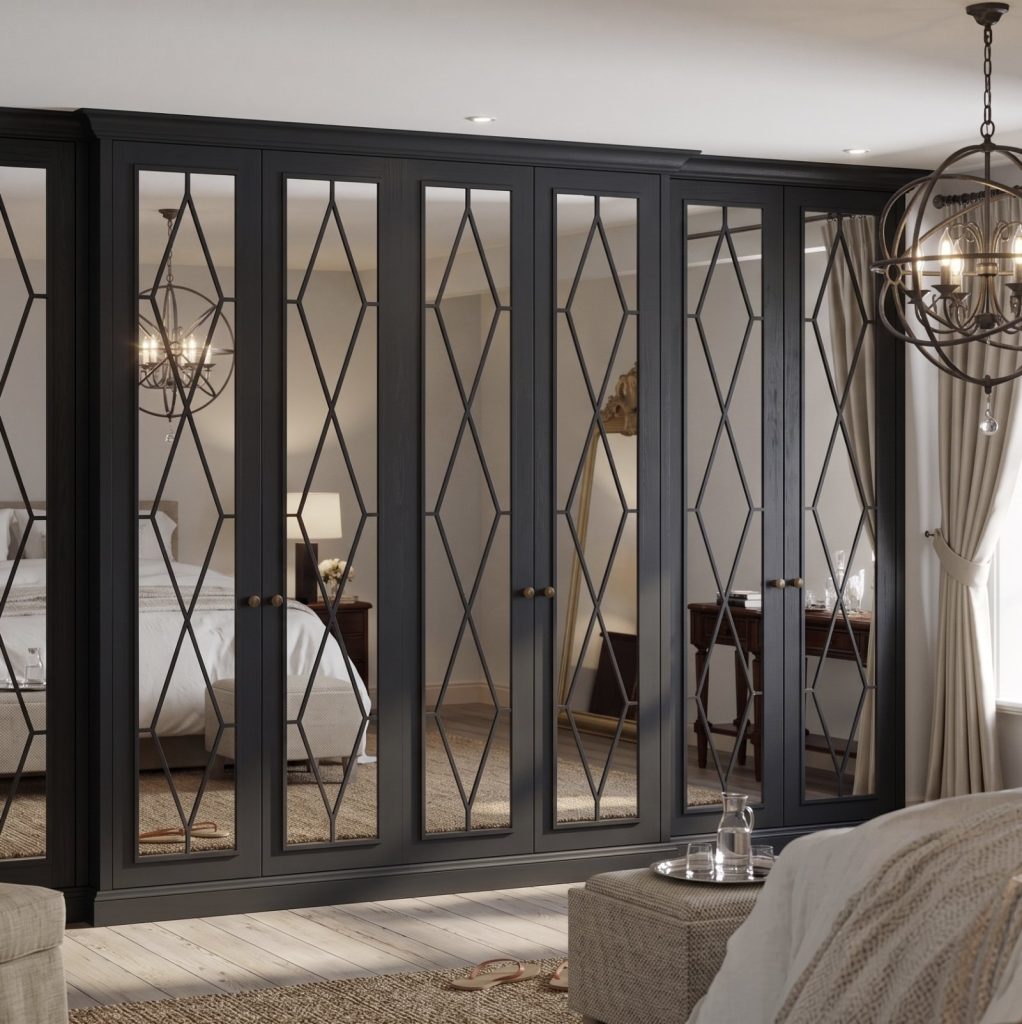
A mirrored wardrobe door combines a full-length mirror with clothing storage, avoiding the need for a separate dressing mirror. Its reflection can create an impression of depth, particularly when the door faces a window or another light source. Position it to reflect a bright view or attractive light fitting, rather than a cluttered corner or an unmade bed.
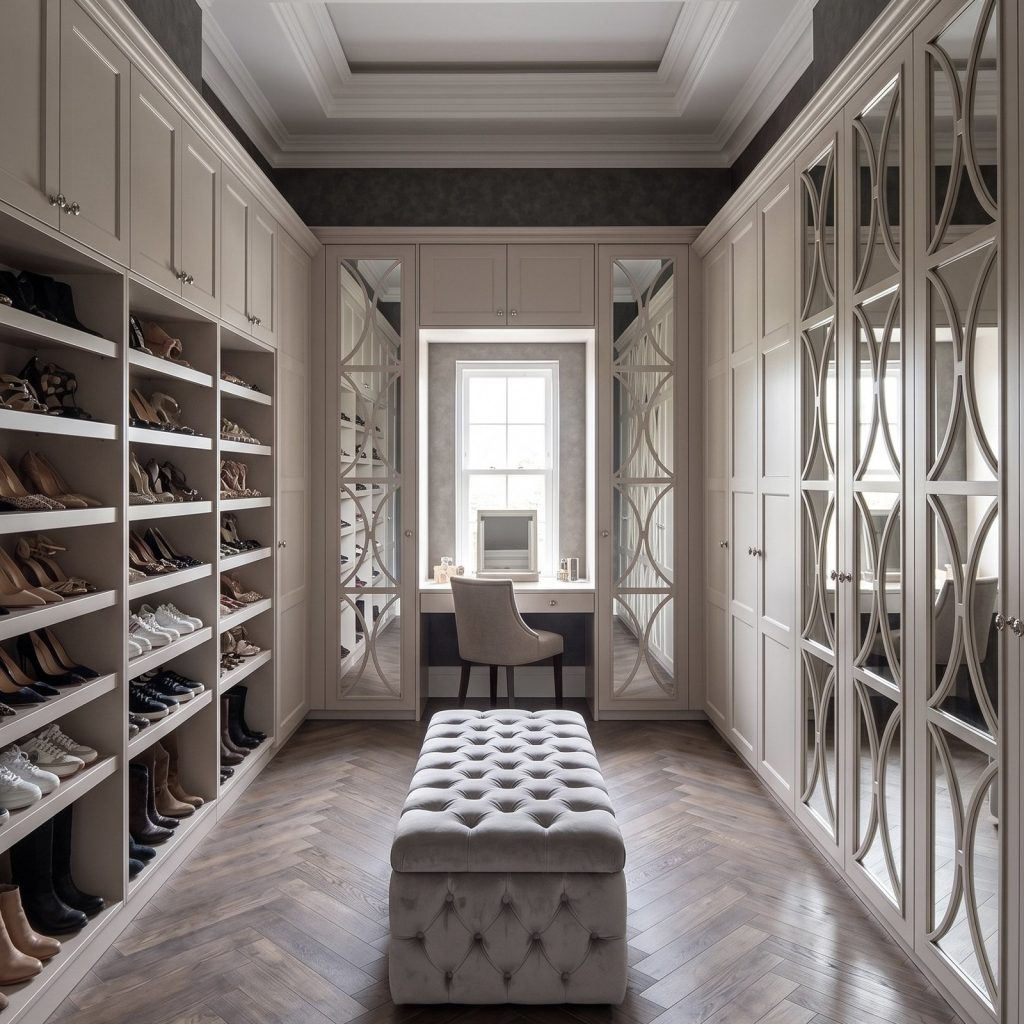
Mirrored panels can cover one door or form part of a wider wardrobe front. A single vertical panel adds reflection without making every surface mirror-bright, while a broader mirrored area can make the room look deeper. Consider what the mirror will show from the bed and doorway: the repeated view becomes part of the room’s overall composition.
Keep the area opposite the mirror uncluttered and considered. A clear bedside surface, restrained artwork or neat dressing area gives the reflection a calmer focus. If curtains sit opposite, choose a simple treatment that doesn’t break up the reflected view. A mirror can also carry daylight further into the room, while a well-placed lamp adds brightness after dark.
Use vertical lines around the wardrobe to draw the eye upward. Long mirror panels, full-height curtains and uncluttered door fronts can reinforce that sense of height without adding more furniture. For a cohesive finish, explore wardrobe design options that incorporate mirrored panels. This is a clever way to combine dressing convenience and visual openness, provided the reflection shows parts of the bedroom you want to see.
Wardrobe Door Studio: Bespoke Fitted Wardrobes
Wardrobe Door Studio designs Bespoke Fitted Wardrobes for bedrooms where standard furniture leaves awkward gaps or takes up valuable floor space. A tailored design can make better use of the available wall and storage area, while wardrobe colour and door style help create visual continuity.
For a refined look, consider Skinny Shaker Wardrobe Doors or Classic Shaker Wardrobe Doors. Mirror Fret Wardrobe Doors add a mirrored detail, combining wardrobe storage with a reflective surface. The right choice depends on the room’s layout, existing finishes and the effect you want.
Planning a small-bedroom redesign? Contact Wardrobe Door Studio to discuss storage shaped around your space.
Plan a wardrobe that suits your room
Turn the room’s proportions and your preferred finish into a clear design direction. A considered approach to making a small bedroom look bigger with wardrobes can create a space that feels personal, not just less crowded. Think about the atmosphere you want: a crisp, streamlined finish, a classic framed detail or a reflective feature that brings light into the design.
Wardrobe Door Studio offers Skinny Shaker Wardrobe Doors, Classic Shaker Wardrobe Doors and Mirror Fret Wardrobe Doors, each with a distinct design character. Choose according to how you want the wardrobe to sit within your bedroom and complement its interior.
Contact Wardrobe Door Studio to discuss your bedroom and the wardrobe design you have in mind. A carefully considered choice can bring the room together beautifully.
Frequently Asked Questions
So, how do you actually make a bedroom look bigger?
Keep the largest visual elements calm and movement through the room unobstructed. Start with the wardrobe, then consider how its finish works with the bed, window coverings and floor. Try standing in the doorway: if the wardrobe dominates the view, simplify nearby patterns and clear small items from sight to create a more defined focal point.
Can these ideas work in a rented bedroom?
Yes. Choose changes that can move with you, such as a freestanding mirror, pale bedding and compact storage that doesn’t need fixing to walls. Avoid painting, drilling or installing permanent fittings without the property owner’s permission. You can still improve the room’s visual balance by keeping surfaces orderly and arranging furniture to preserve a clear route from the door.
Is it better to use fitted or freestanding storage in a small bedroom?
Fitted storage suits a room with alcoves, uneven walls or a layout that leaves awkward gaps around standard furniture. Freestanding pieces may be more suitable if you rent, expect to move or want to rearrange the room later. Decide based on the room’s shape and the flexibility you need, not appearance alone.
Are mirrored wardrobe doors effective in making a small bedroom look larger?
Mirrored doors can make a room seem deeper by extending the view across a wall. Their effect depends on what they reflect: an open doorway or uncluttered part of the room feels more expansive than a close-up view of furniture. Consider how the mirror looks from the bed as well as from the entrance.
Are sliding wardrobe doors better than hinged doors in a small bedroom?
Sliding doors are often more practical when a bed or bedside furniture sits close to the wardrobe, because they don’t swing into the room. Hinged doors provide access across the wardrobe opening but need clear space in front. Choose according to the available clearance and how you use the storage, including access to drawers or hanging sections.