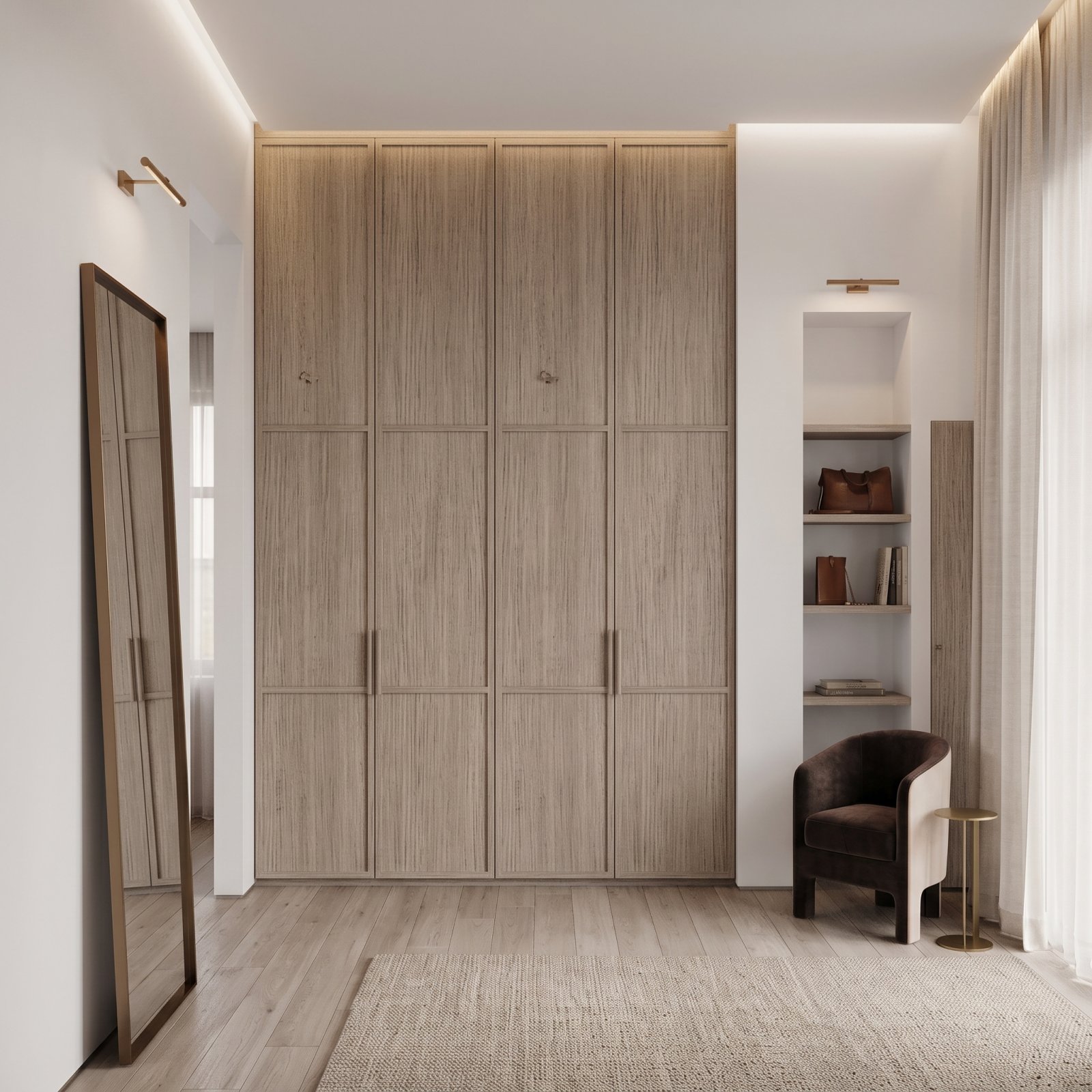
The thickest board isn’t automatically the best choice for every wardrobe. For painted bedroom projects, 18mm moisture-resistant MDF is a popular option; some recommendations specify 25mm for wardrobe doors. The right thickness depends on whether you’re choosing doors or carcasses, as well as the design you want to achieve with moisture-resistant MDF wardrobe doors.
It’s sensible to consider durability in rooms where humidity can be an issue. Moisture-resistant MDF is more resistant to damp than standard MDF, but it isn’t waterproof. It’s intended for indoor use, not exposure to water.
This guide covers how to assess MDF thickness for doors and carcasses, then compares Shaker profiles with period-inspired detailing. It also explains how door style, finish and setting shape a wardrobe design, so you can balance practical performance with the character of your home.
Key Takeaways
- Match board thickness to the role of each component: door construction and carcass requirements are not necessarily the same.
- Choose between Shaker profiles and period-inspired detailing by considering how the wardrobe should complement your room.
- Moisture-resistant MDF offers greater resistance to indoor humidity than standard MDF, but it is not waterproof.
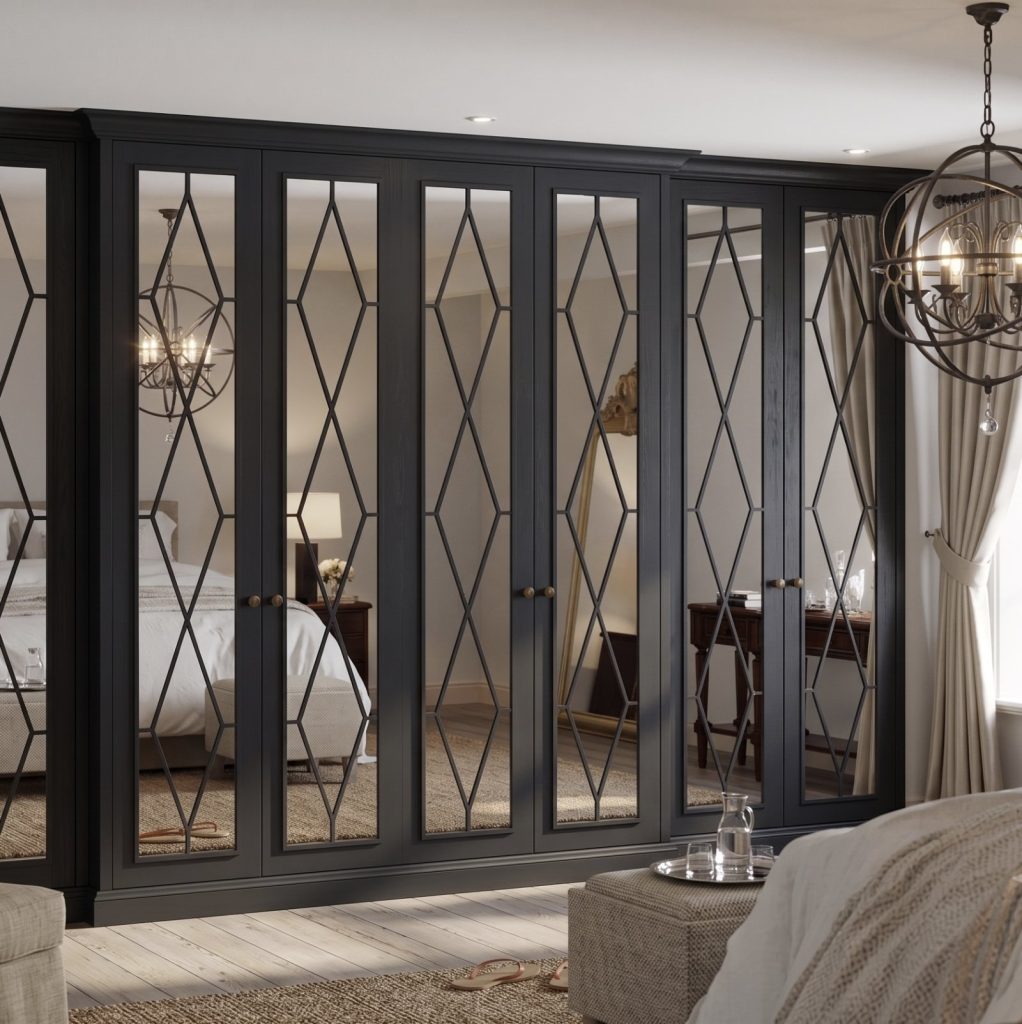
- Explore bespoke fitted wardrobes and styles such as Skinny Shaker, Mirror Fret and Classic Shaker doors to shape a cohesive design.
Door styles, including Shaker and period designs
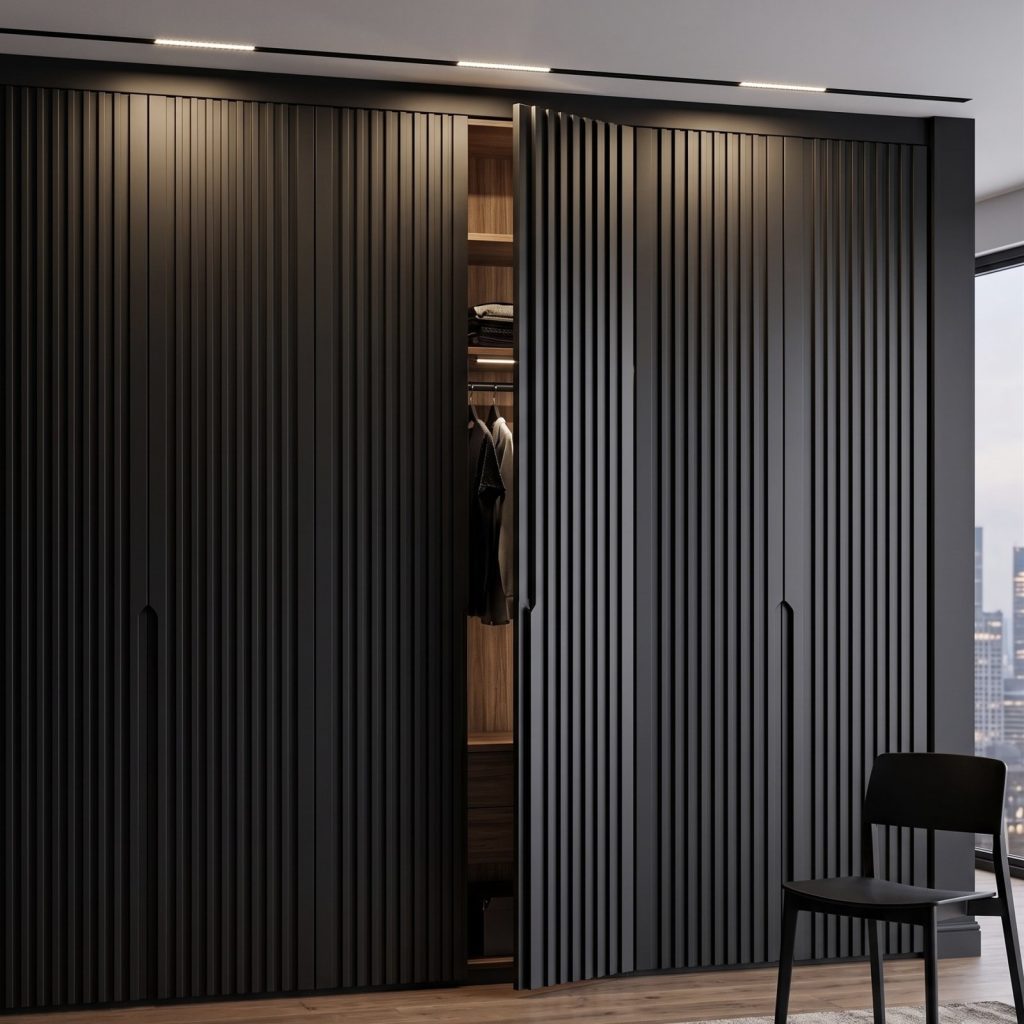
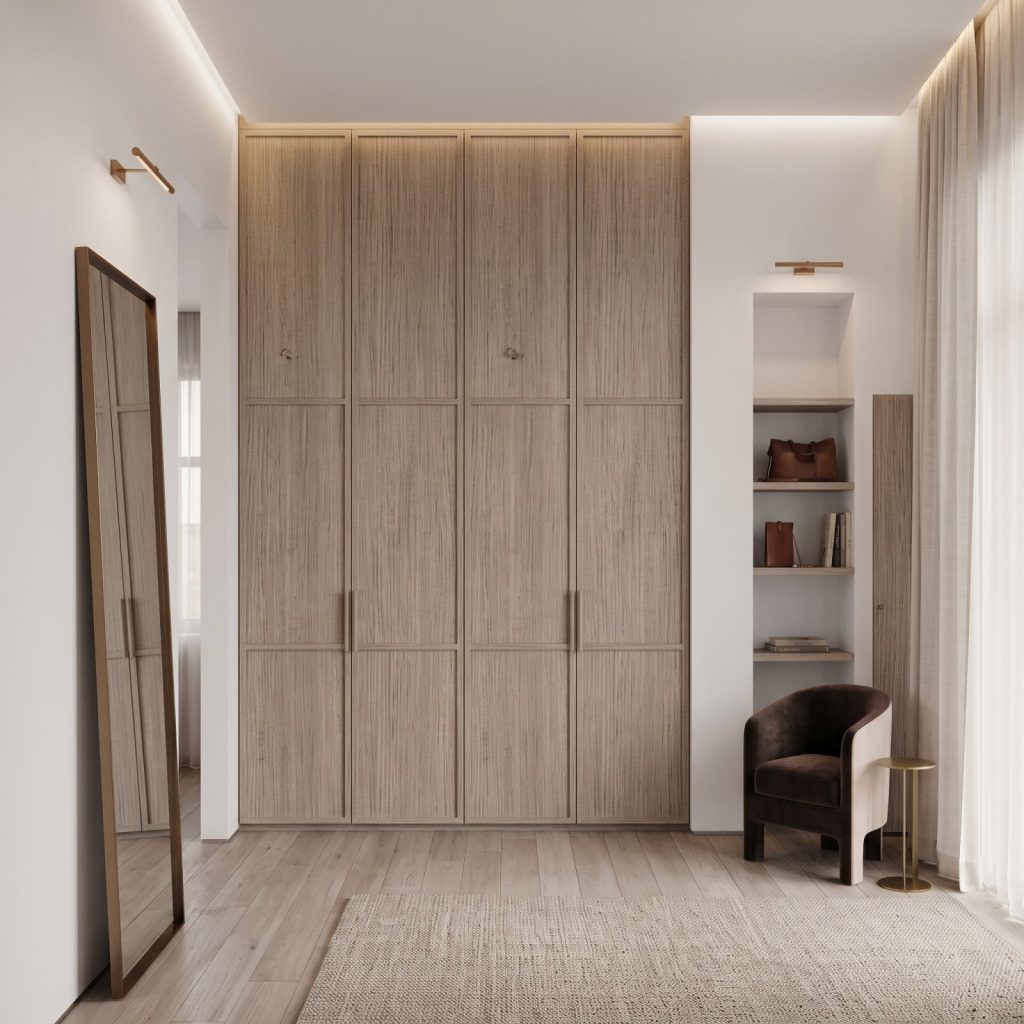
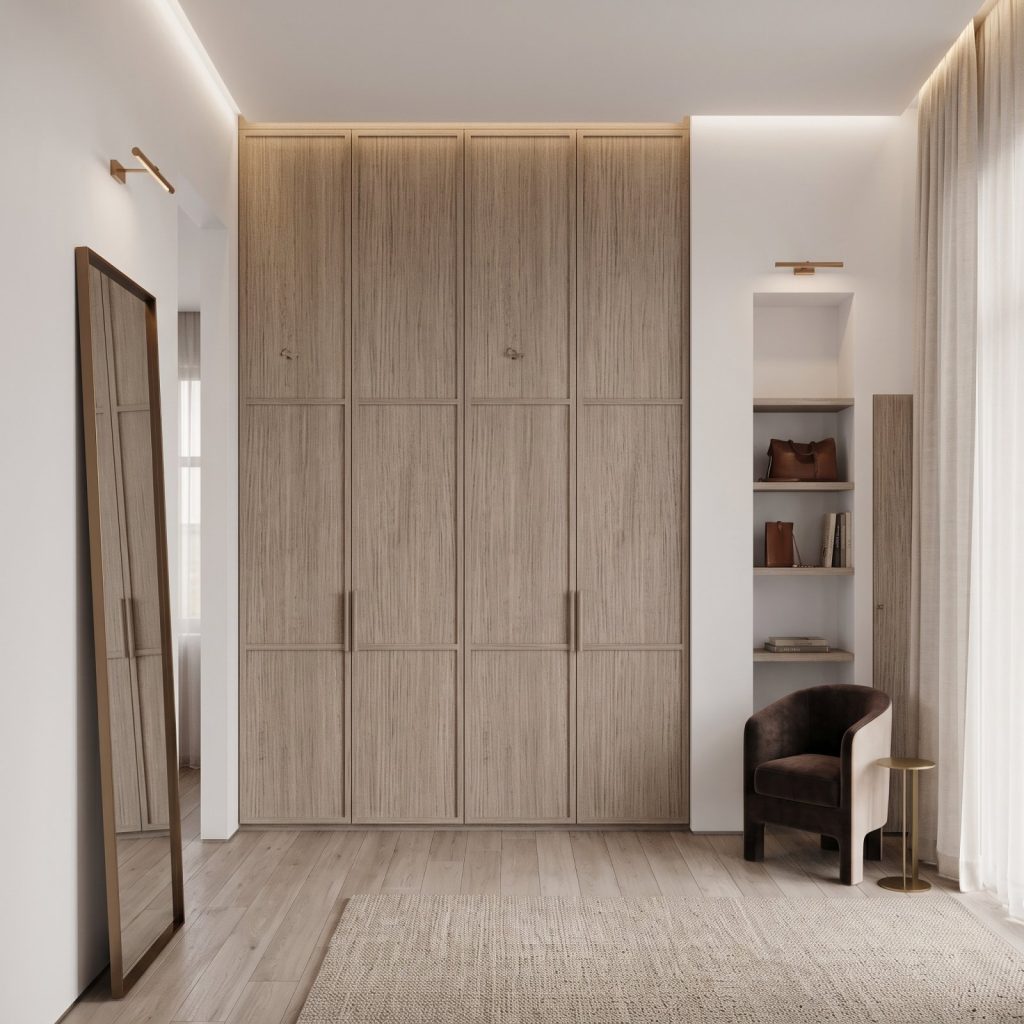
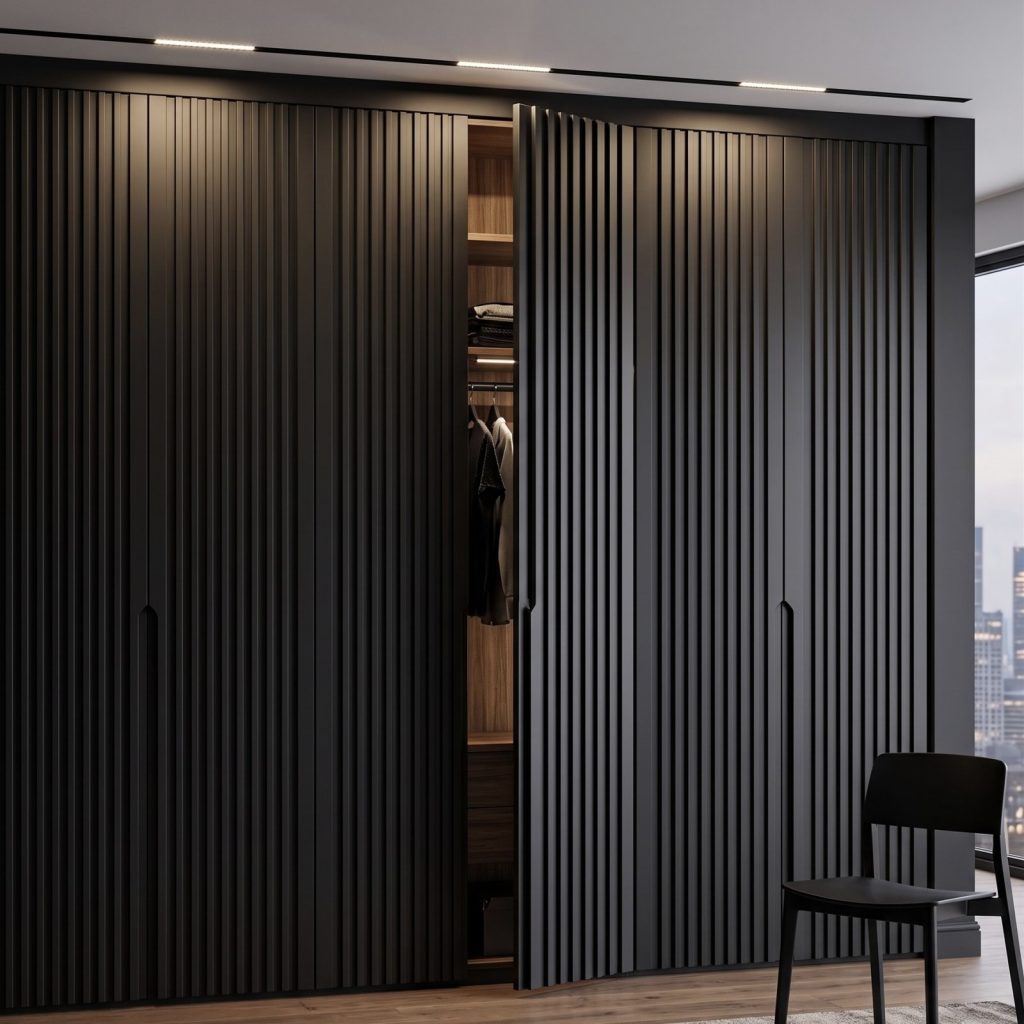
A wardrobe door’s profile sets the room’s visual tone before colour or hardware comes into play. A flat panel suits a pared-back bedroom, while a framed design adds definition. Consider the existing details: a plain, modern interior can suit a slim profile, while decorative skirting or panelling may work well with a more traditional door.
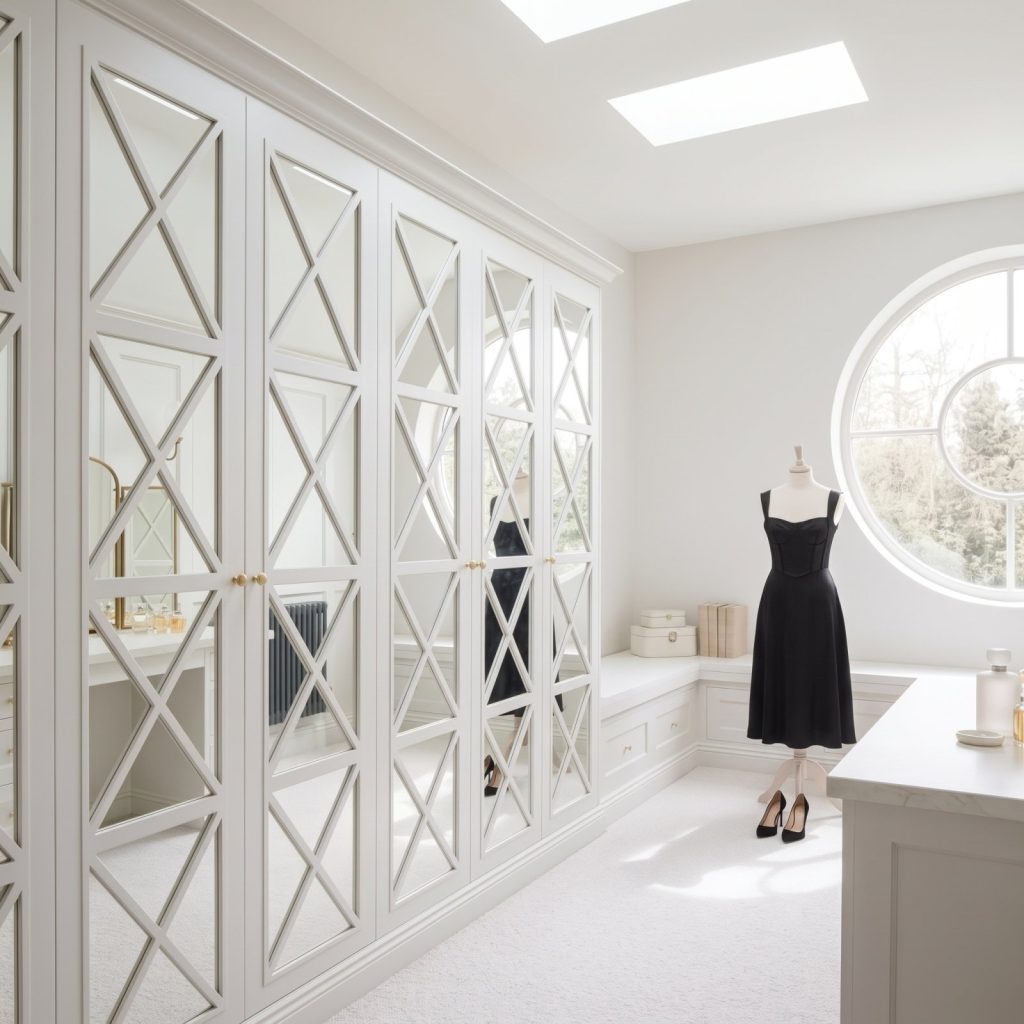
Shaker doors pair a flat centre panel with a surrounding frame. Classic Shaker gives the frame a more pronounced presence, while Skinny Shaker keeps the lines visually lighter. Both add structure without elaborate ornament, making them adaptable to contemporary and traditional schemes. Explore Shaker wardrobe door designs to compare their profiles and character.
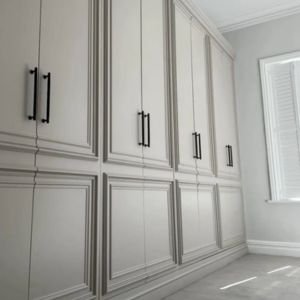
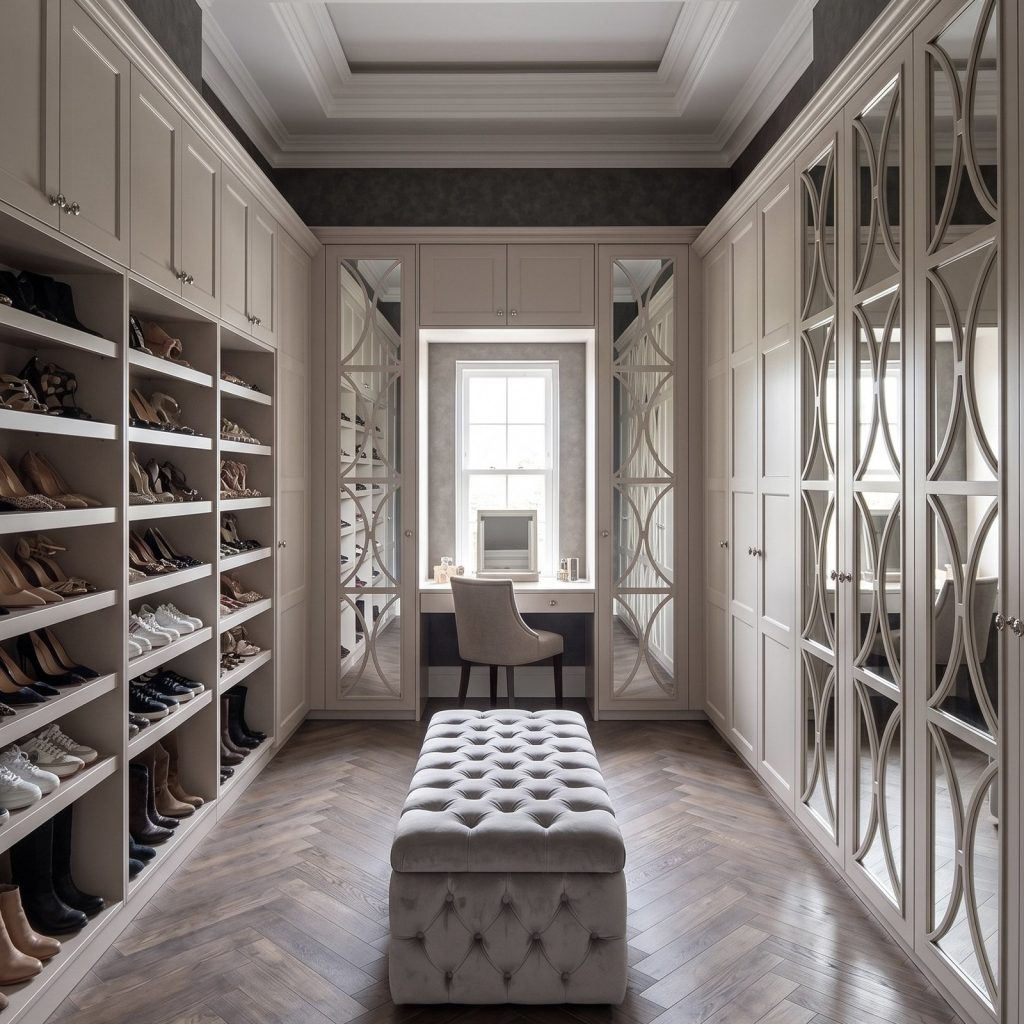
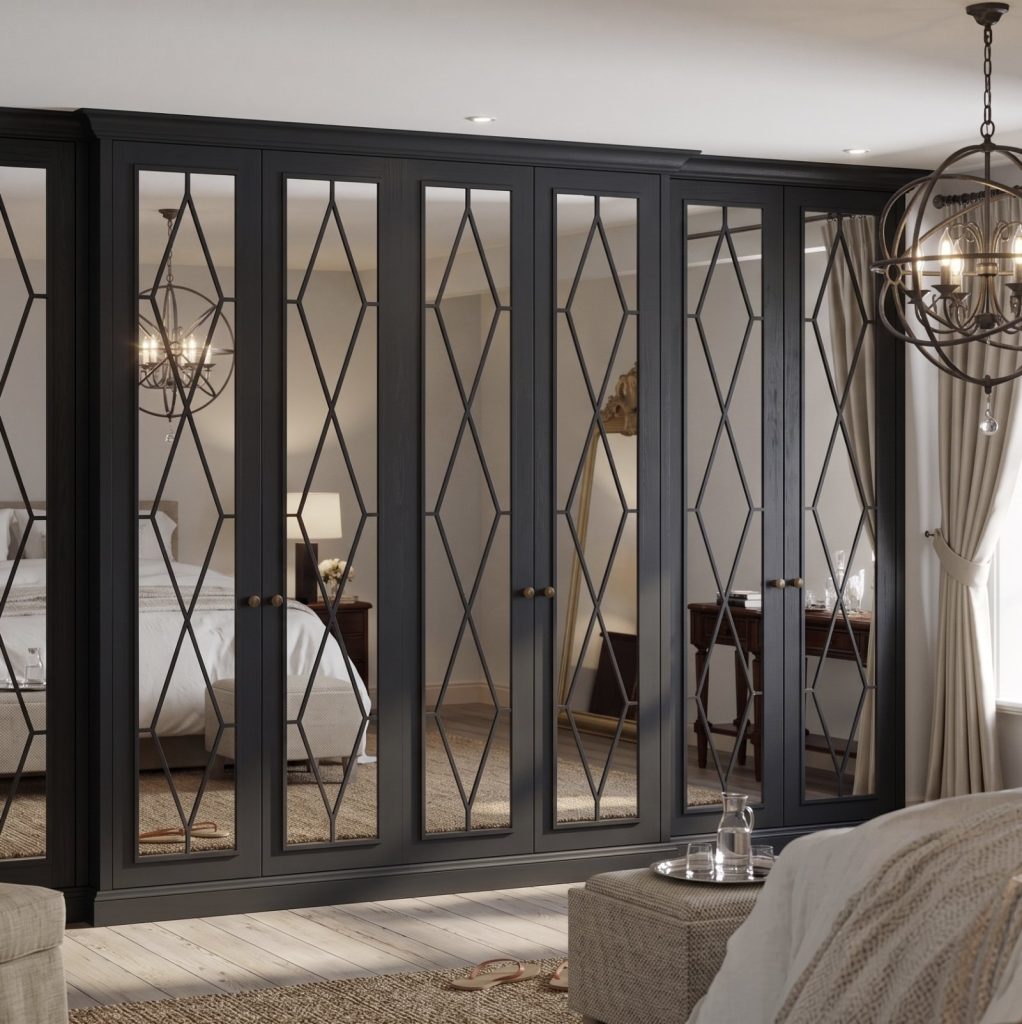
For a period-inspired look, consider framed panels, moulded edges or stepped detailing. These features echo Georgian and Victorian interiors, especially alongside traditional furniture and decorative cornices. Keep the profile consistent across adjoining doors for a composed run, or use contrasting details to make one section a focal point.
The finish brings the profile into focus. Moisture-resistant MDF has a smooth, grain-free face that takes spray paint well, making it suitable for crisp Shaker lines and more detailed designs. A neutral colour can emphasise panel geometry; a deeper shade gives the same profile greater visual weight. Assess the frame, panel and finish together, and consider how they relate to the room’s architecture.
Recommended MDF thickness for wardrobe doors and carcasses
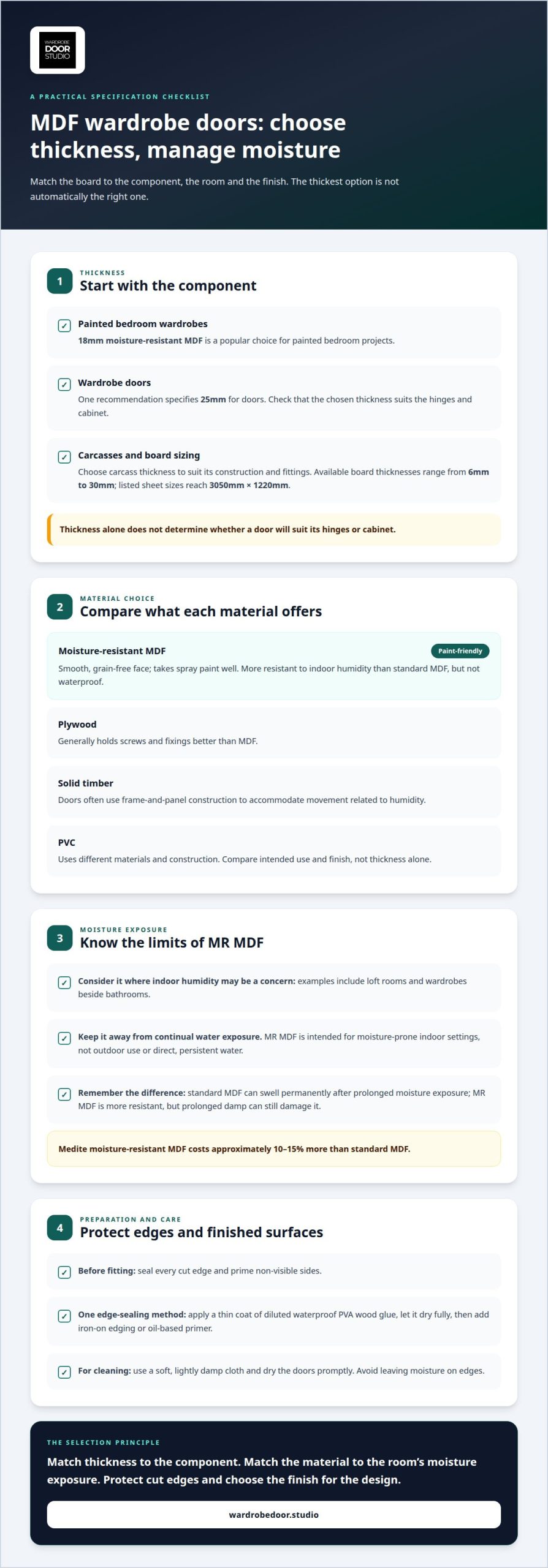
For painted bedroom wardrobes, 18mm moisture-resistant MDF is a popular choice. One recommendation uses 25mm for wardrobe doors, while carcass thickness should suit its construction and fittings. Available board thicknesses range from 6mm to 30mm, and listed sheet sizes reach 3050mm x 1220mm. Thickness alone doesn’t determine whether a door will suit its hinges or cabinet.
Compared with plywood, MDF has a smooth, grain-free face for painted finishes, while plywood generally holds screws and fixings better. Solid timber doors often use frame-and-panel construction to accommodate movement related to humidity. PVC doors use different materials and construction, so compare their intended use and finish, not just their thickness.
Moisture-resistant MDF handles indoor humidity better than standard MDF, but it isn’t waterproof. Persistent damp can still cause problems, and standard MDF can swell permanently with ongoing moisture exposure. Keep these doors away from direct, persistent water, and factor the level of moisture exposure into your material choice.
Before fitting, seal every cut edge and prime non-visible sides. One method is to apply a thin coat of diluted waterproof PVA wood glue, let it dry fully, then add iron-on edging or oil-based primer. Accurate measurements and suitable fixings also help the doors sit correctly.
Clean finished doors with a soft, lightly damp cloth, then dry them promptly; avoid leaving moisture on edges. MDF can be machined into plain, Shaker or period-style profiles, with board thickness selected separately from the design. For a cohesive room scheme, explore wardrobe design options alongside the practical requirements.
What is moisture-resistant MDF and how does it differ from standard MDF?
Moisture-resistant MDF, often labelled MR MDF, is an engineered board for indoor areas where humidity may be a concern. Its formulation gives it greater resistance to damp than standard MDF. It’s still a wood-based panel, not a waterproof material, which matters when choosing wardrobe components.
The difference starts with the binder used to hold the fibres together. According to the UK Government, MDF boards needing improved moisture resistance generally use binders such as melamine urea-formaldehyde, phenolic resins or PMDI. These formulations help the board tolerate humid indoor conditions better than standard MDF.
Standard MDF can swell permanently after prolonged exposure to moisture. MR MDF is more resistant, but prolonged damp can still damage it. It’s intended for moisture-prone indoor settings, not outdoor use or areas with continual water exposure.
For example, MR MDF may suit a loft room or a wardrobe beside a bathroom, where humidity can fluctuate. Bathrooms, kitchens and utility rooms are also common indoor applications. Good ventilation and protected cut edges help limit moisture reaching the board’s vulnerable core.
Choose MR MDF for improved humidity resistance, not as a substitute for waterproof material. For a wardrobe in a damp-prone room, consider the exposure and the door’s finish together. Explore wardrobe design options to develop a considered solution for your home.
MR MDF suits loft rooms and bathroom-adjacent installations for its greater humidity resistance. Medite moisture-resistant MDF is intended for damp-prone internal areas and costs approximately 10-15% more than standard MDF.
Wardrobe Door Studio: Design-Driven Wardrobe Doors
Wardrobe Door Studio offers design-driven wardrobe doors, from a single replacement door to bespoke dressing rooms. Choose a bespoke design when you want the wardrobe’s layout and door style to feel cohesive, rather than treating thickness and finish as separate decisions. The specification should reflect the room’s conditions and how each component will be used.
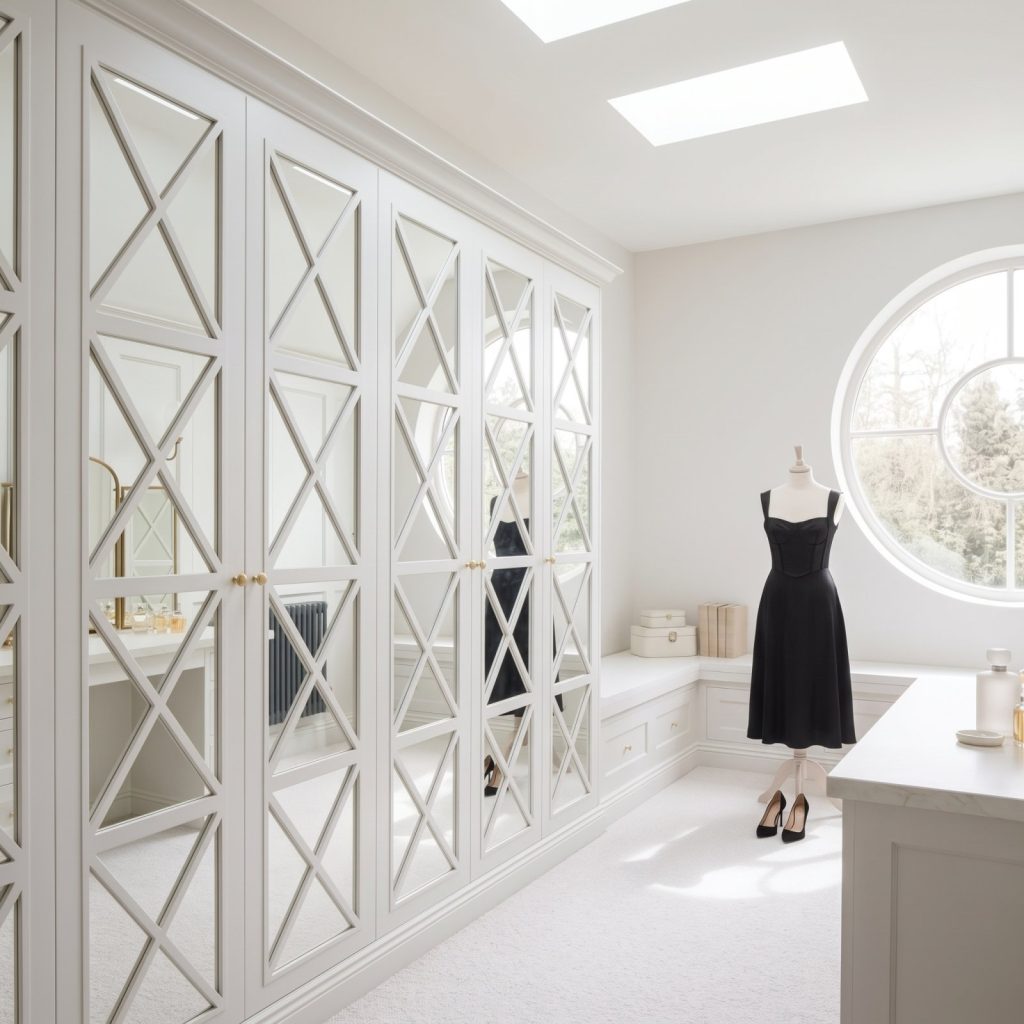
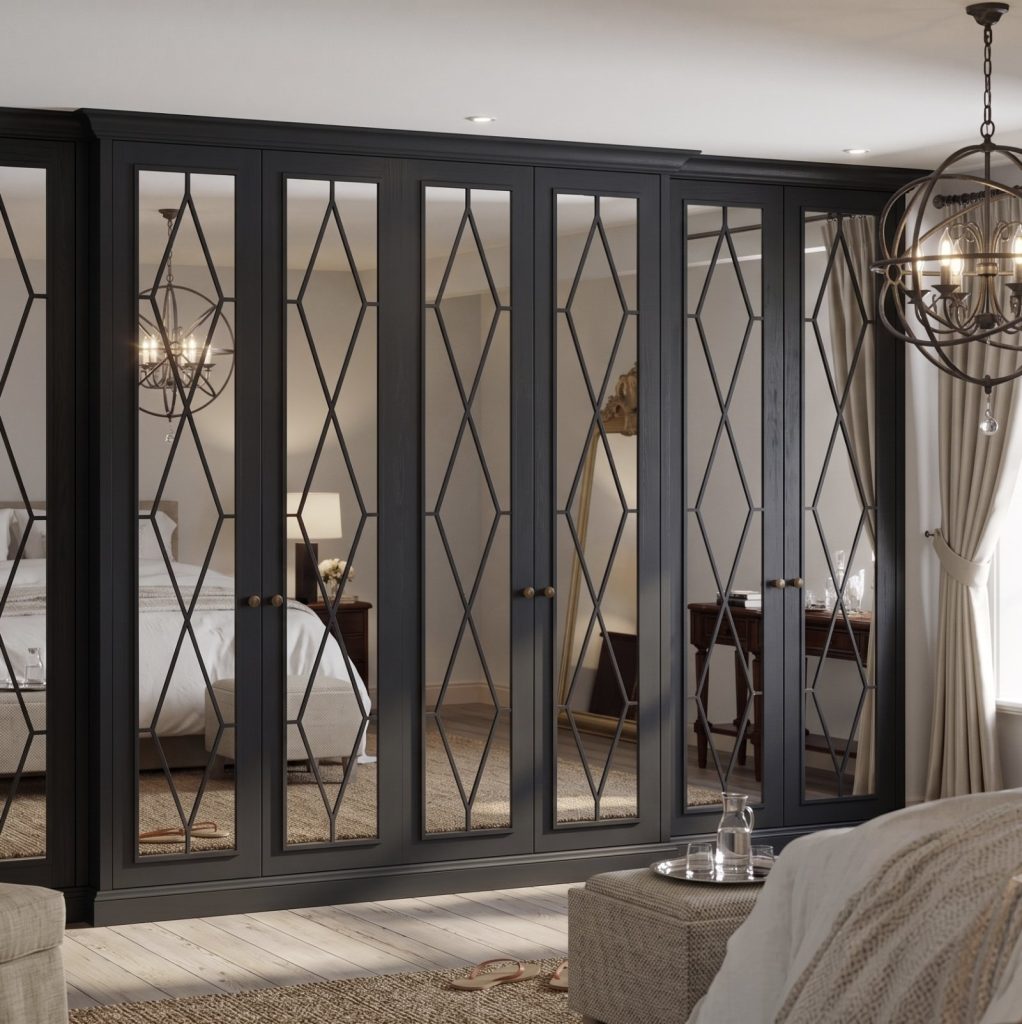
For a defined profile, Skinny Shaker and Classic Shaker doors offer two interpretations of framed detailing. Mirror Fret doors add a distinctive decorative character. These styles bring practical choices together in a wardrobe design that sits naturally within your home.
If you’re ready to discuss wardrobe doors or a door style, contact Wardrobe Door Studio.
Shape a wardrobe design around your home
Let the wardrobe respond to the room, not just the opening it fills. Consider how it will sit alongside the flooring, wall colour and handles, then choose a profile that carries those details through. This gives the design direction and helps it feel considered rather than like an isolated addition.
Moisture-resistant MDF wardrobe doors are one part of the decision. Bring the material choice together with the room’s proportions and visual character to create a cohesive, personal scheme. A bespoke design can make practical storage feel integral to the interior, whether you’re refreshing a bedroom or planning a larger transformation.
Discuss your wardrobe design with Wardrobe Door Studio and take the next step towards a space that feels distinctly yours.
Frequently Asked Questions
What MDF thickness is recommended for wardrobe doors?
For painted bedroom wardrobes, 18mm moisture-resistant MDF is a popular choice, while one recommendation specifies 25mm for wardrobe doors. The appropriate board also depends on the door’s size, design and fittings. For a carcass, consider how its panels will be joined and supported, rather than assuming the door thickness should be used throughout.
Where is moisture resistant MDF applied?
Moisture-resistant MDF is used indoors where humidity may be higher, including kitchens, bathrooms and utility rooms. It may also suit a loft wardrobe or an installation beside a bathroom. For example, a built-in cupboard in a humid utility room may benefit from its greater resistance than standard MDF, provided its surfaces and edges are finished appropriately.
Are moisture-resistant MDF wardrobe doors suitable for bathrooms and humid rooms?
Moisture-resistant MDF doors can suit humid indoor rooms, including bathrooms, if they aren’t exposed to continual water. The material isn’t waterproof, so a door beside a shower or bath needs careful consideration. Good ventilation, a protective finish and sealed edges help limit moisture reaching the board, but don’t make it suitable for outdoor use.
What finishes and coatings protect MDF wardrobe doors from moisture?
Apply primer to exposed edges and non-visible sides, then paint the face. First, seal cut edges with a thin, even coat of diluted waterproof PVA wood glue and let it dry fully. Then fit iron-on edging or use oil-based primer on the edges. Sand between coats of paint for an even finish.