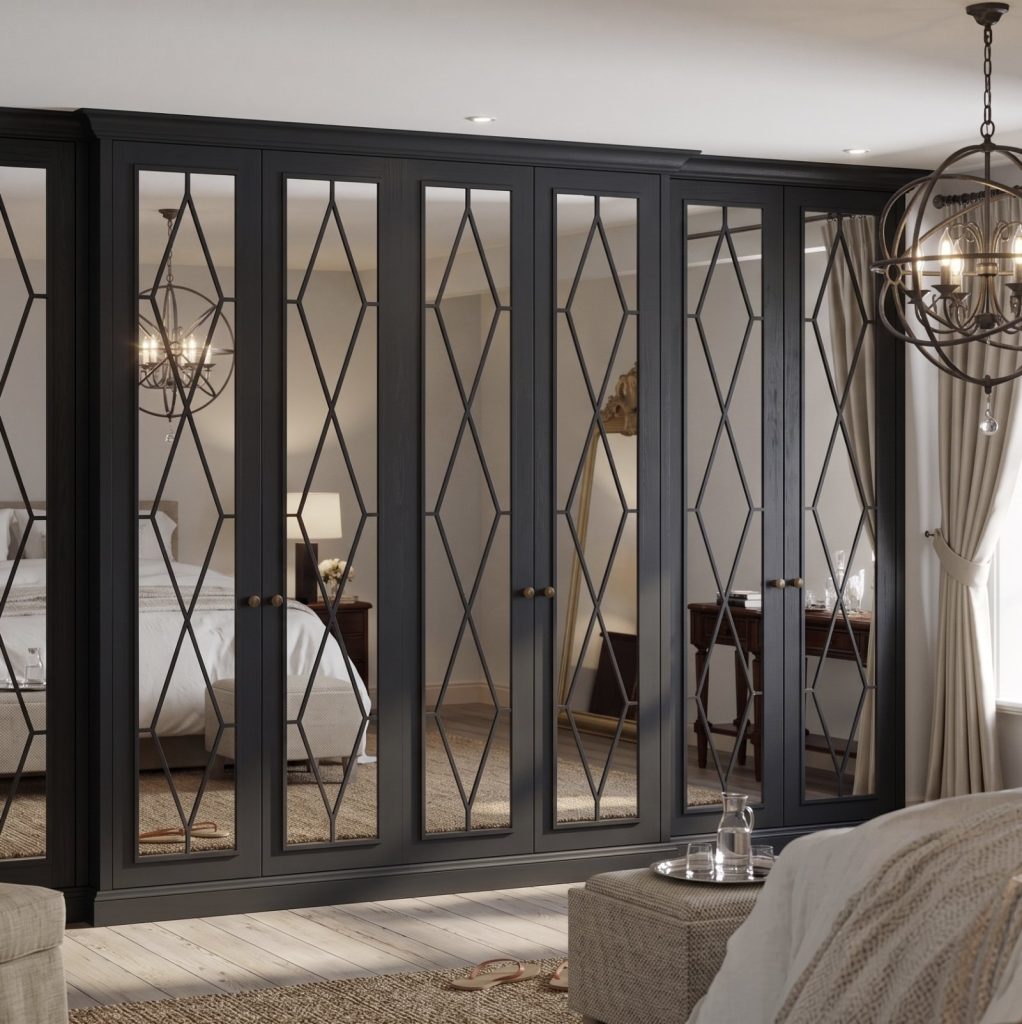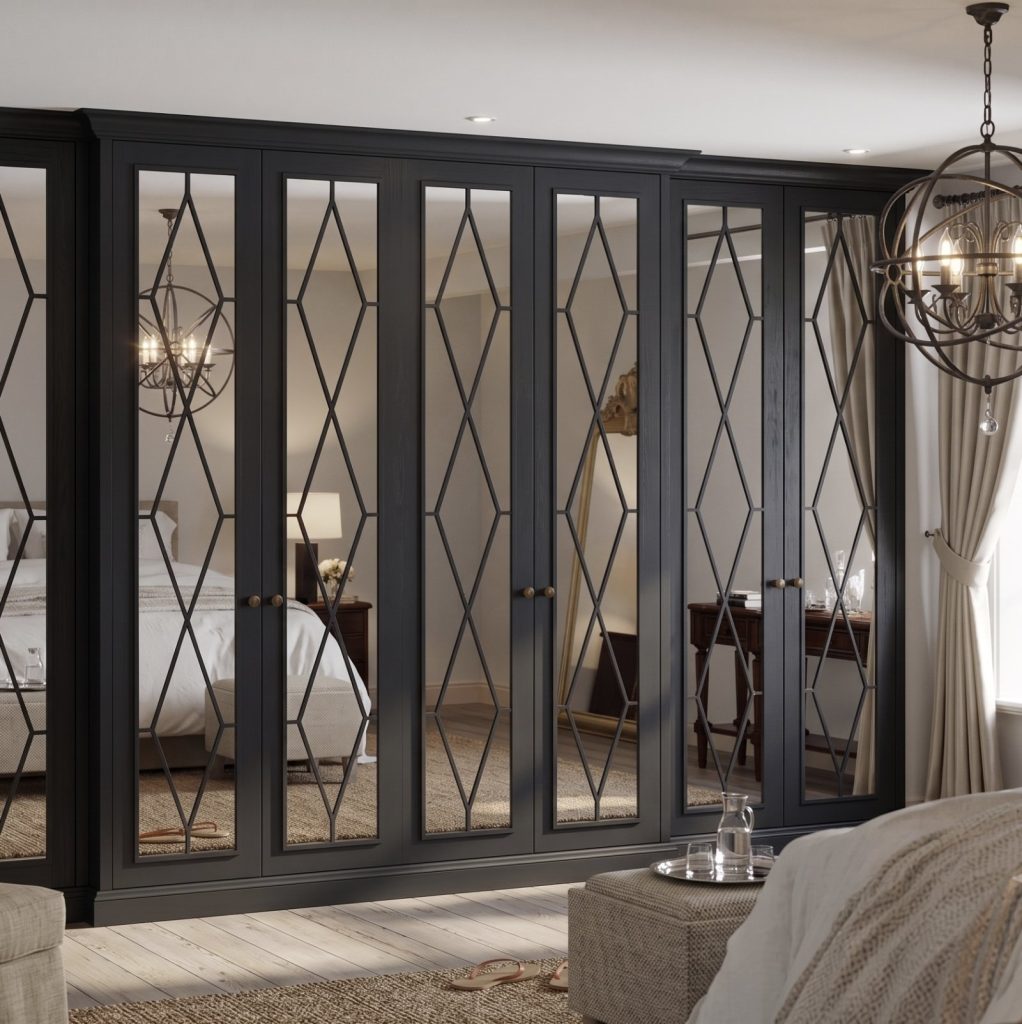
Mirror fret wardrobes can make a bedroom feel more open, but their storage capacity depends on the layout behind the doors, not the mirror. Plan the interior around what you need to store and make thoughtful use of the available space. These wardrobes pair a decorative mirrored front with practical bedroom storage.
It’s natural to focus on the finish first: fretwork adds character, while the mirrored surface can reflect light around the room. For a successful choice, appearance and function need to work together.
This guide explains how to plan storage around your belongings, what to consider when choosing made-to-measure dimensions, and how materials and finishes affect the overall look. You’ll also learn which details shape a tailored wardrobe choice, so you can weigh the design against the practical needs of your bedroom.
Key Takeaways
- Plan the internal layout around what you need to store; the mirrored front affects the room’s look, not the wardrobe’s capacity.
- Consider how mirrored doors can reflect light and complement the bedroom’s proportions.
- Compare made-to-measure options by looking at dimensions, materials and finish choices together.
- Explore different door styles to find a design that suits your bedroom, from decorative fretwork to clean, simple panels.
What makes fretwork door wardrobes ideal for modern bedrooms?
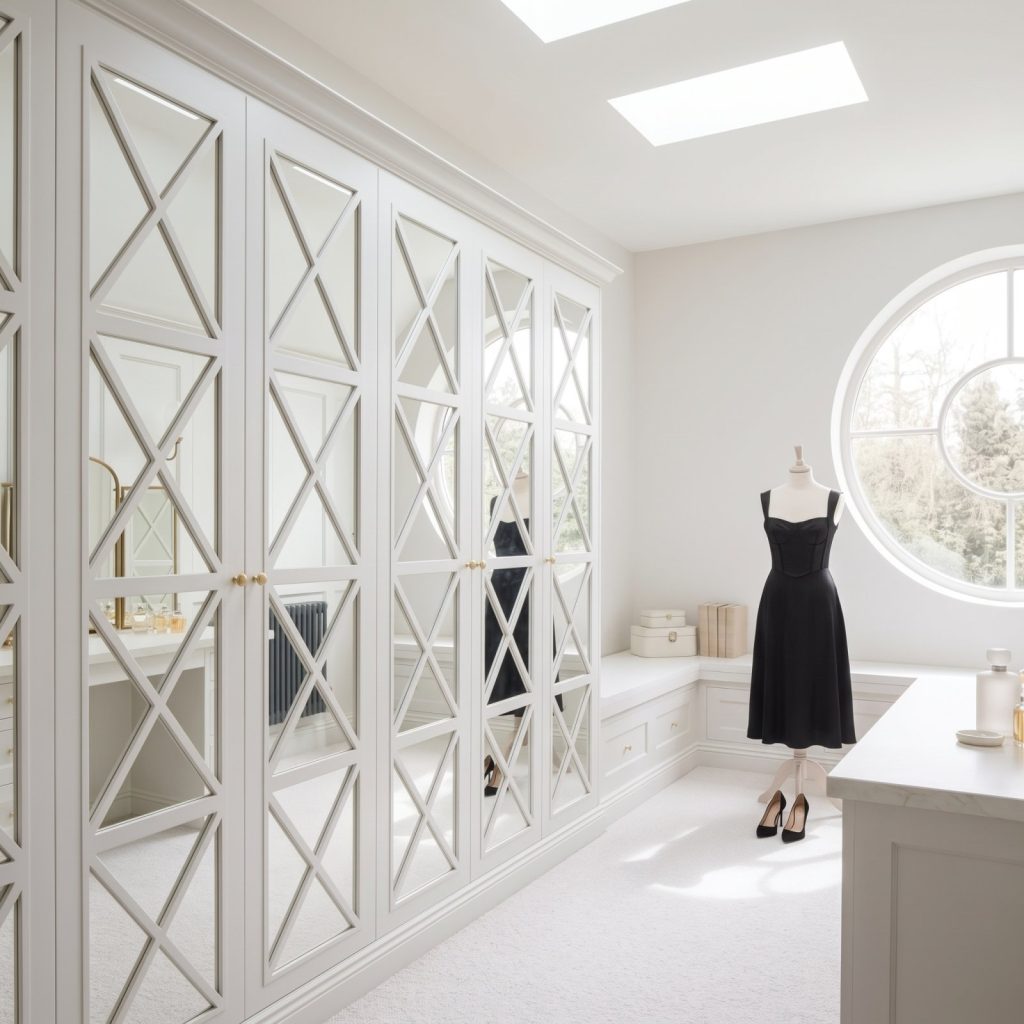
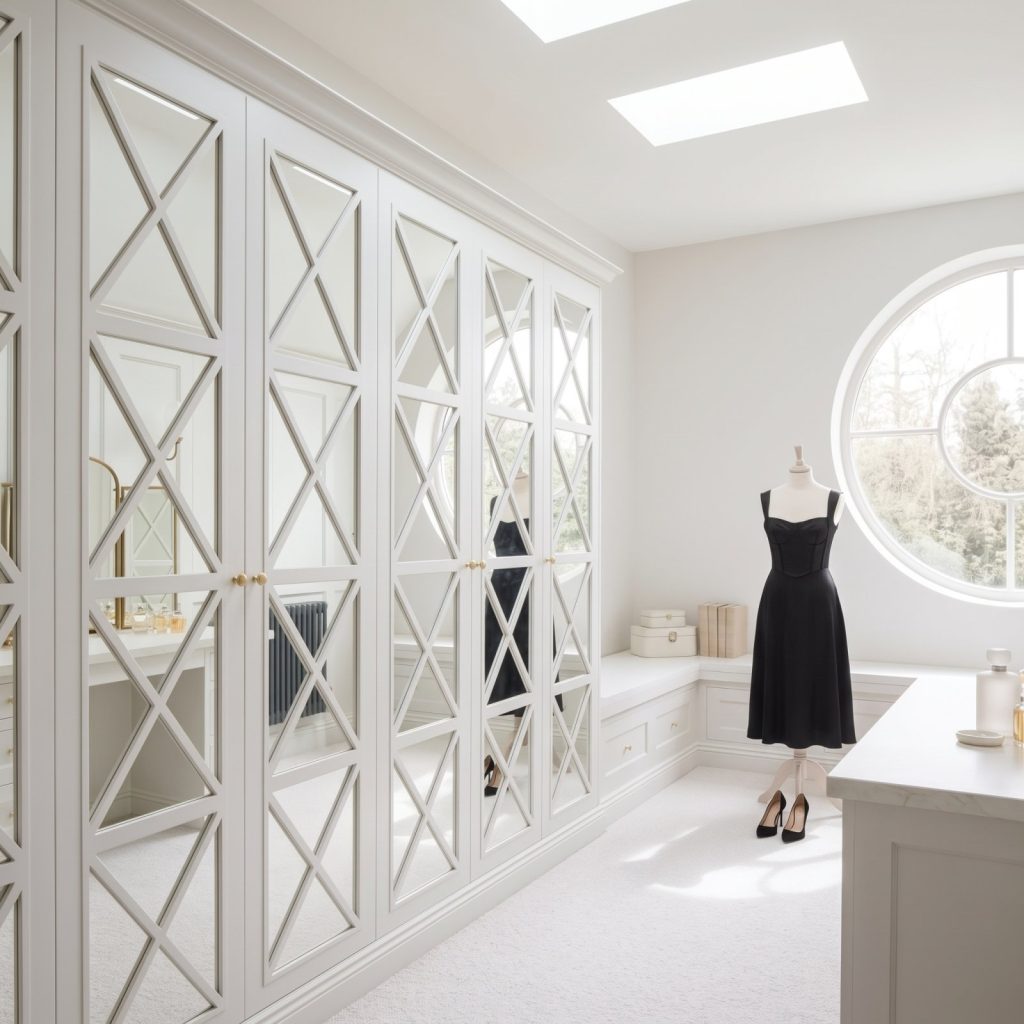
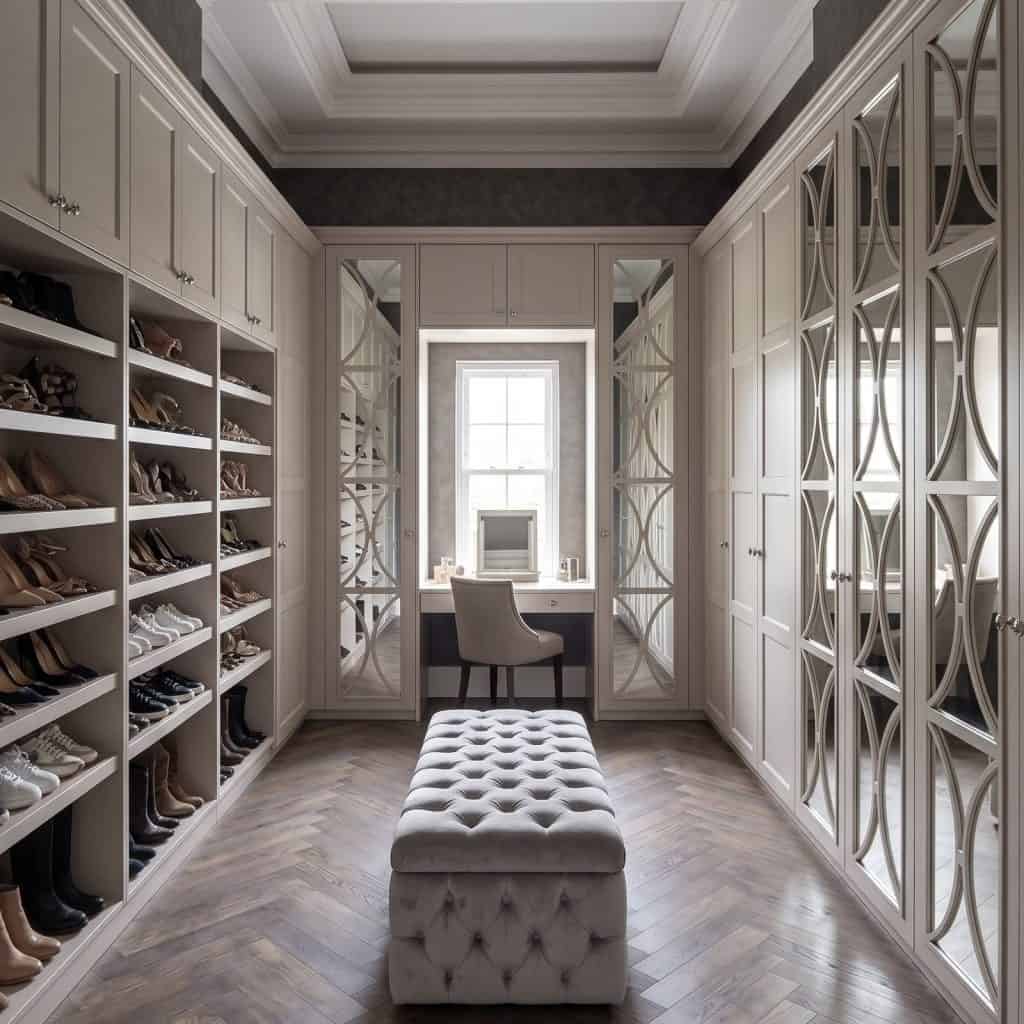
A mirror fret door combines a decorative design with a reflective surface. Its effect depends on where the wardrobe sits and how the room is arranged.
Brightness from Mirrored Doors
A mirrored door can reflect daylight from a window or light from a bedside lamp, helping spread brightness around the bedroom. Position the wardrobe to face a useful light source rather than a cluttered corner. Compared with plain mirrored doors, fretwork adds a patterned frame, while a plain mirror offers a simpler, uninterrupted reflection.
Consider what the mirror will reflect from the bed and doorway. A view of a window can make the room feel brighter, while a busy shelving unit may make the reflection feel crowded.
Sliding Mirrored Door Options
Sliding doors run along a track instead of swinging out into the room, which can suit a narrow bedroom where a hinged door might meet a bed, chest of drawers or walkway. Measure the opening and the space in front, then check that the sliding panels provide access to the sections you use most.
Fretwork and mirror detailing create a more decorative look than a plain mirrored sliding panel. Choose the configuration to suit the room layout, not the finish alone.
Sizes and configurations: Door dimensions and layouts depend on the wardrobe opening and bedroom plan. A made-to-measure design can be planned around the available width and height, with the number and arrangement of doors suited to the space.
Assembly and installation: Follow the fitting instructions and prepare the area before lifting or positioning a door. Use suitable support during fitting, keep the route clear, and secure the wardrobe as instructed to reduce the risk of movement.
Cleaning and care: Remove dust with a soft cloth, then clean the mirror with a fresh, lint-free cloth. Avoid abrasive pads on the glass and fretwork, as they can mark delicate finishes.
Delivery, returns and warranty: These terms depend on the seller and listing. One private-seller listing states that returns aren’t accepted and includes a 10-year warranty, so read the specific terms before ordering.
Made-to-measure pricing
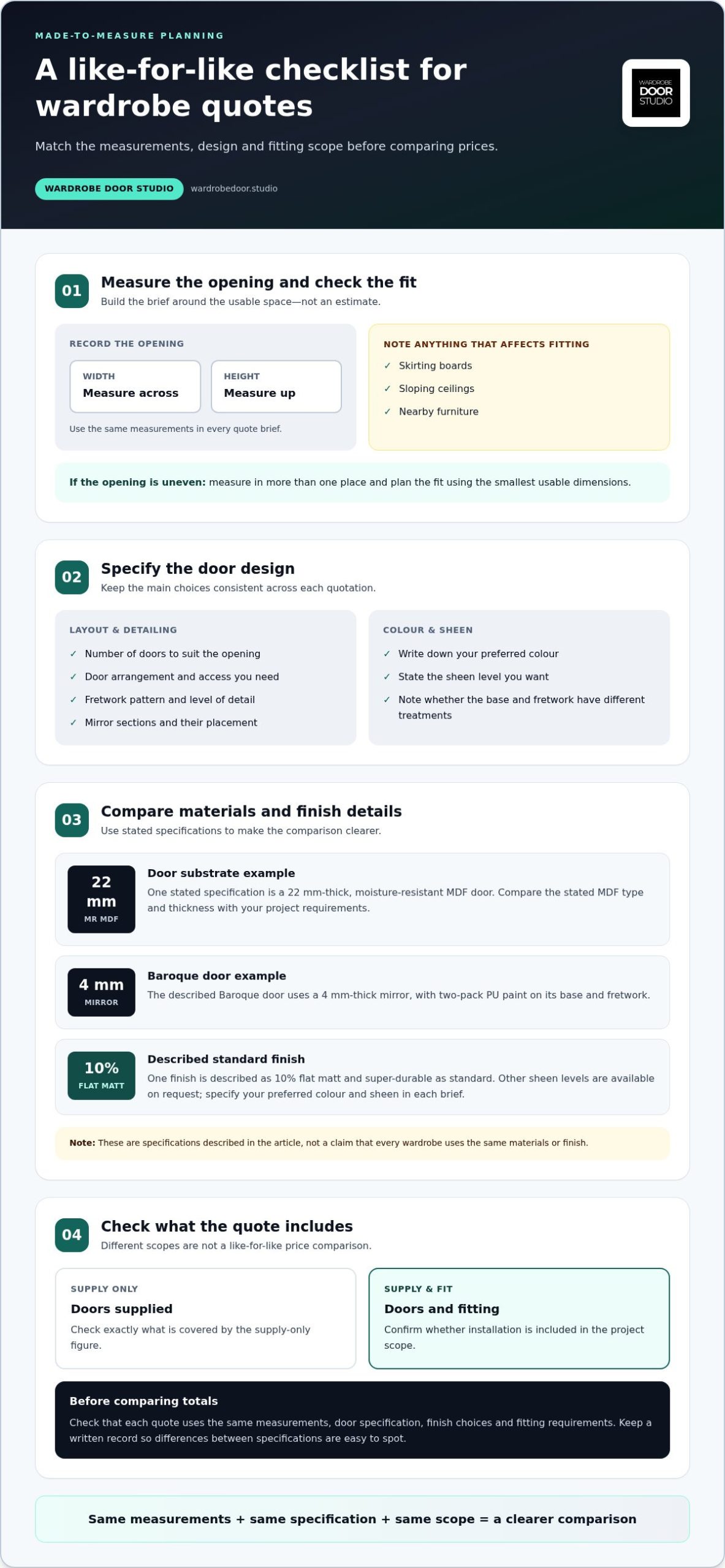
A made-to-measure quote reflects the wardrobe’s dimensions, design and finish. Compare like with like by making sure each quotation uses the same measurements and specification.
The price depends on the project and is provided after a quote request. Key cost factors include the number and dimensions of the doors, fretwork detail, mirror sections, chosen finish and whether installation is included. A wide opening, for example, may need a different door arrangement from a narrow alcove.
Prepare measurements before requesting a quote. Record the opening’s width and height, and note anything that could affect fitting, such as skirting boards, sloping ceilings or nearby furniture. If the opening appears uneven, measure it in more than one place and use the smallest usable dimensions when planning the fit.
- Door quantity: Match the proposed number of doors to the opening and the access you need.
- Design detail: Compare the fretwork pattern and mirror placement, as these shape the specification.
- Finish: Include your preferred colour and sheen in the same brief for each quote.
- Installation: State whether you need doors supplied only or fitting as part of the project.
Before comparing totals, check that each quote covers the same scope. A Supply Only figure and a Supply & Fit quotation cover different work. Keep a written record of dimensions, finish choices and fitting requirements to identify differences between specifications and decide which details matter most for your bedroom.
Wardrobe finishes and materials
Start with the door’s construction. The described wardrobe doors are CNC-produced from a single slab of high-density, moisture-resistant MDF. One specification gives a thickness of 22 mm MR MDF, providing a clear material and thickness to compare against your project requirements.
Mirror thickness and fretwork finish also shape the specification. A Baroque wardrobe door uses a 4 mm-thick mirror, while its base and fretwork receive two-pack PU paint. These details help you assess how the reflective panel and decorative framework are finished together.
Colour and sheen affect how the doors sit within the bedroom. One described finish is a 10% flat matt, super-durable finish as standard, with spray finishing matched to a mainstream paint supplier’s colour. Other sheen levels are available on request. Compare a matt finish with the room’s existing surfaces, such as painted walls or gloss furniture, before settling on your preferred look.
- Check the substrate: Compare the stated MDF type and thickness, including the 22 mm MR MDF specification.
- Review the mirror: Note the 4 mm mirror thickness in the Baroque example and consider its proportion within the fretwork.
- Specify the finish: Record the colour and sheen you want, plus whether the base and fretwork use different treatments.
Wardrobe Door Studio’s doors are crafted and hand-sprayed in England, offering a made-to-measure way to coordinate colour and finish choices. For a bedroom scheme, consider the material, mirror detail and finish together rather than choosing each in isolation. Explore wardrobe door finish options to plan the details for your project.
Wardrobe Door Studio: Skinny Shaker Wardrobe Doors
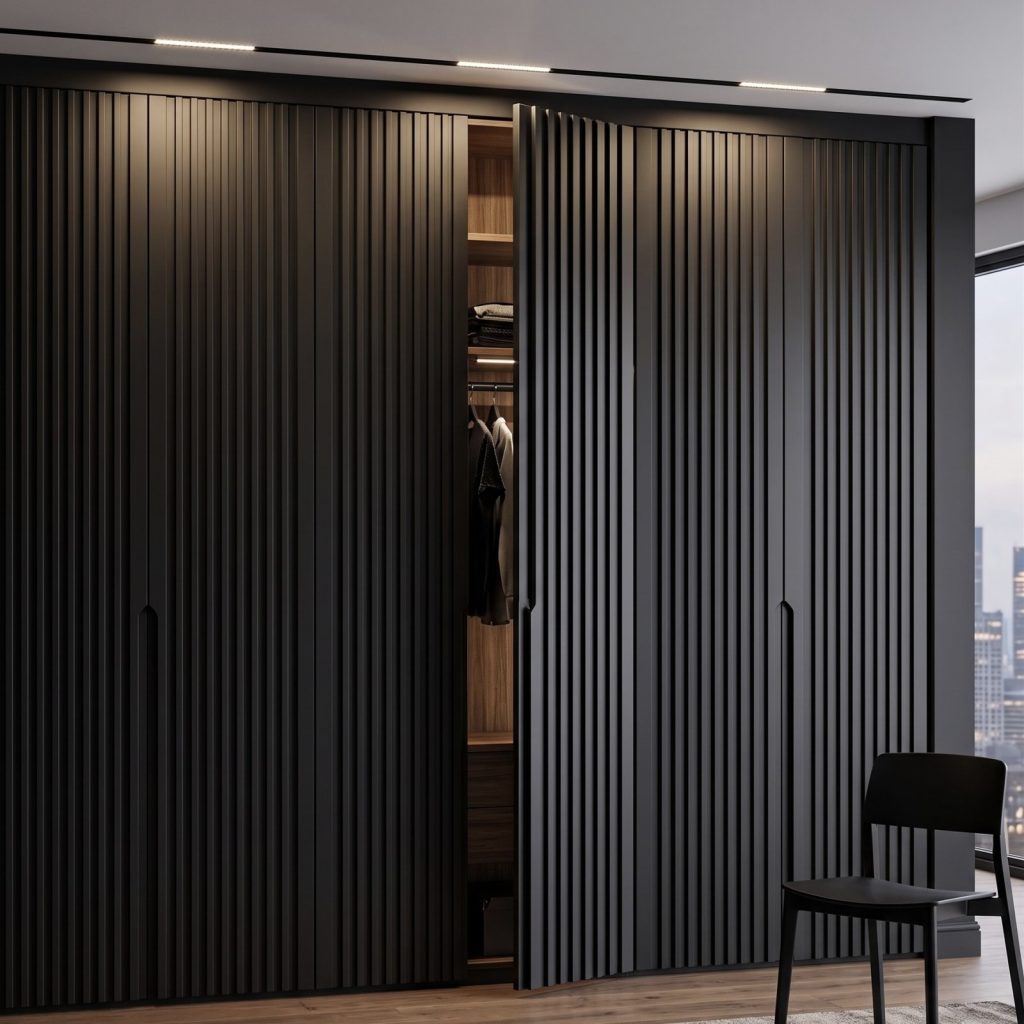
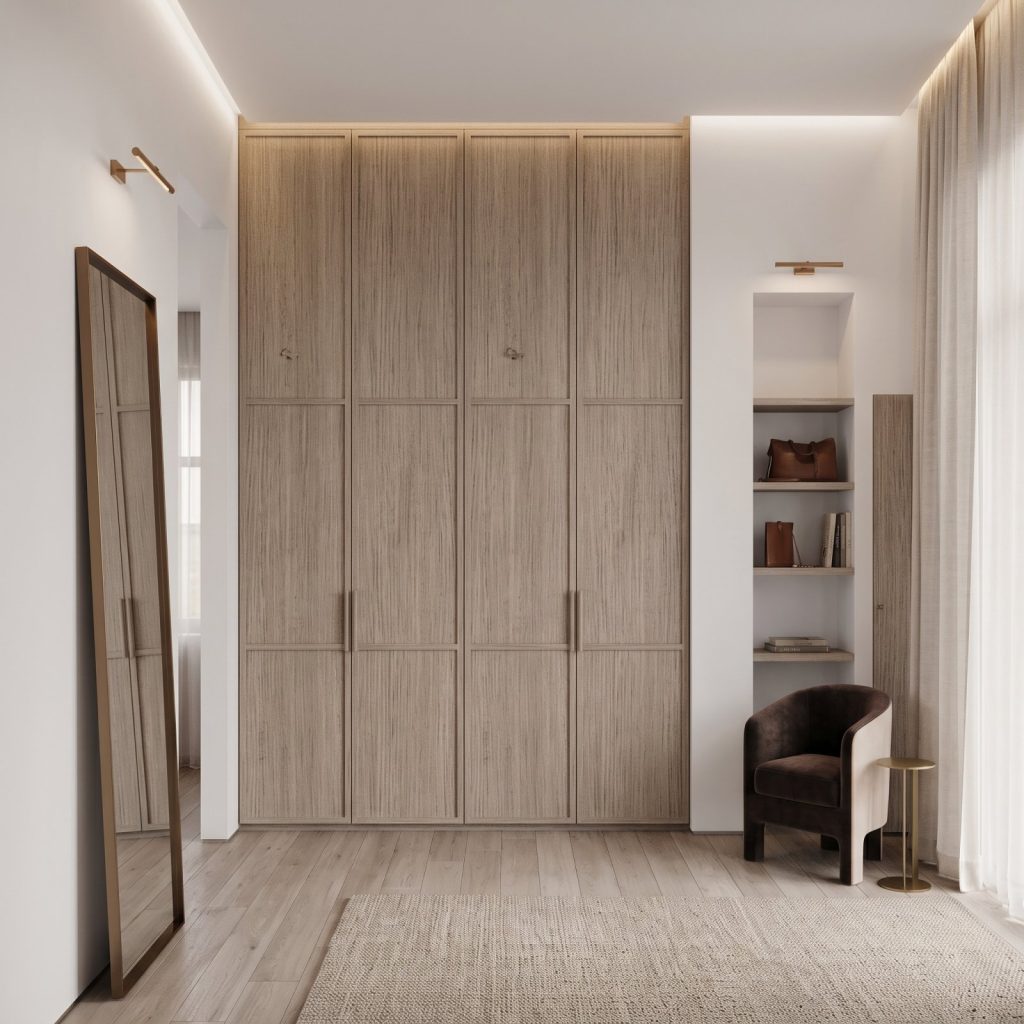
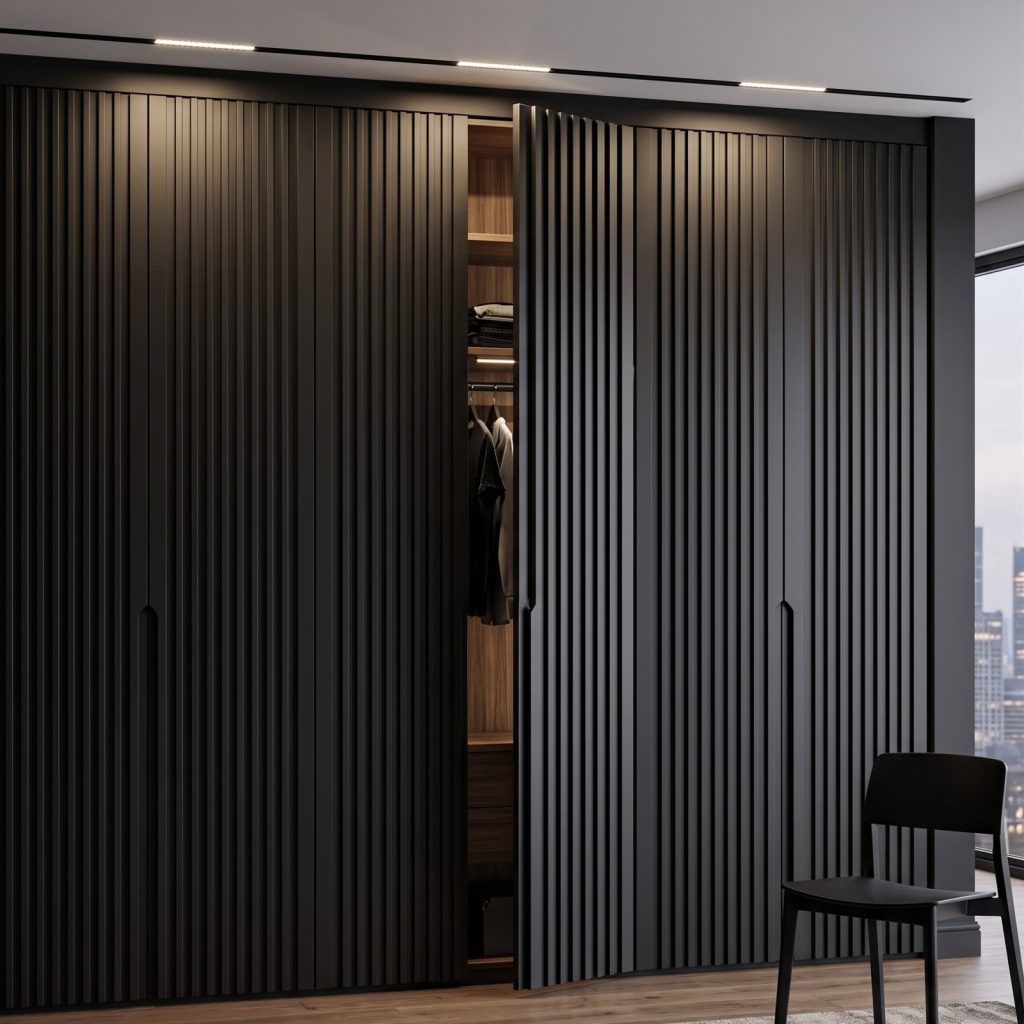
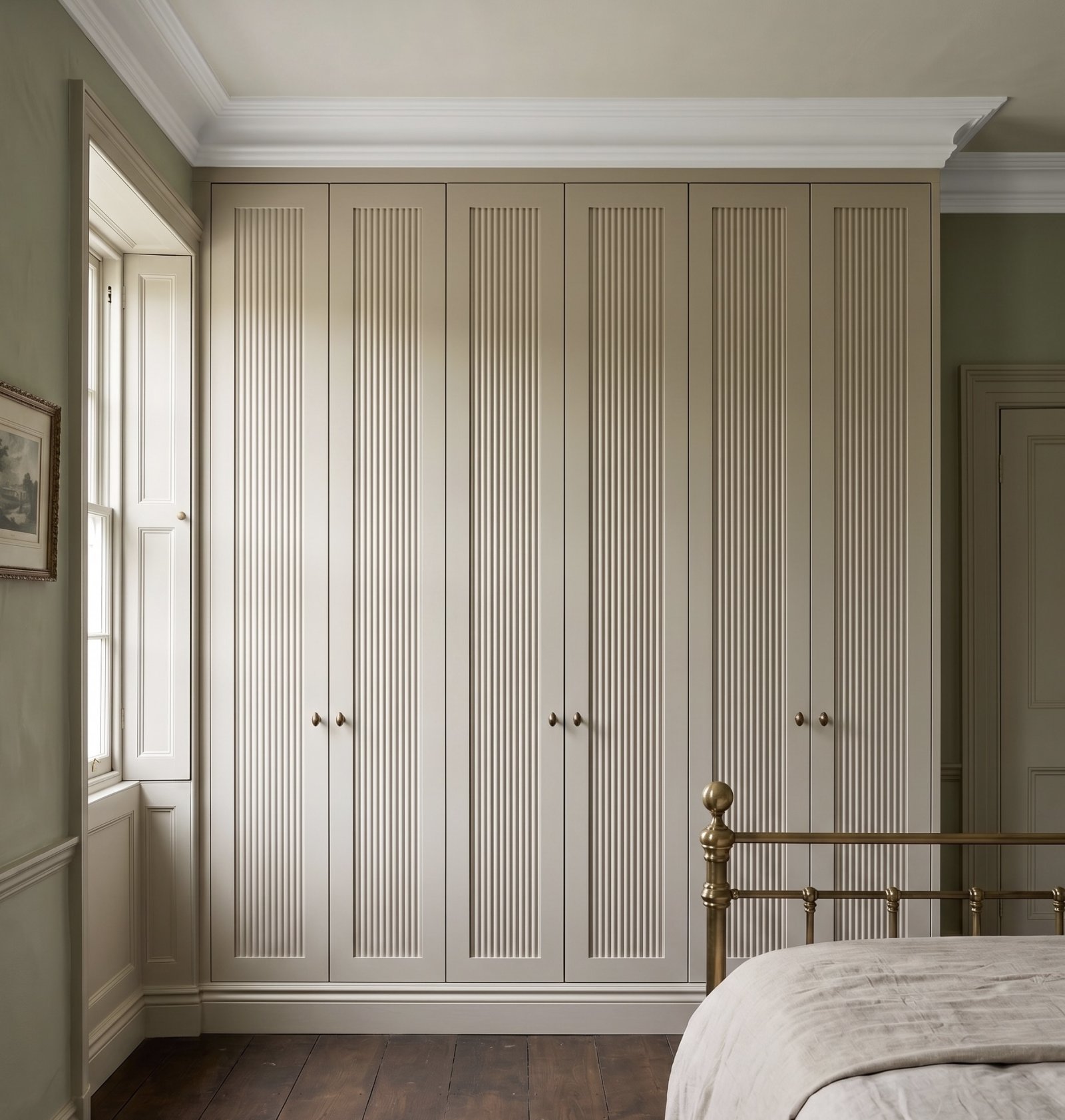
Wardrobe Door Studio offers Mirror Fret Wardrobe Doors for bedrooms where you want mirrored detail with a decorative frame. The range also includes Skinny Shaker, Classic Shaker and Flat Panel Wardrobe Doors, giving you distinct styles to consider alongside your room’s proportions and existing finishes.
Turn to Wardrobe Door Studio when you’re ready to move from comparing styles to choosing wardrobe doors for your project. The doors are crafted and hand-sprayed in England, with options for individual retail customers and trade professionals. Whether you’re refining a single bedroom or planning a broader interior scheme, consider which style best balances the look you want with the storage layout you’ve planned.
Explore the options and contact Wardrobe Door Studio to discuss your project.
Shape a bedroom scheme that feels considered
Treat the wardrobe as part of the room’s wider design, not an isolated feature. Consider how the door style will work with your bed, lighting and other furniture, then decide which details should draw attention and which should remain understated. This can help you choose mirror fret wardrobes that feel balanced in your bedroom, not simply striking on their own.
Wardrobe Door Studio offers Skinny Shaker, Mirror Fret and Classic Shaker Wardrobe Doors. Each creates a distinct design direction, so your choice can reflect the character you want the room to express. Think about the atmosphere you want, then let that guide your selection.
A well-resolved scheme begins with a clear design choice. Contact Wardrobe Door Studio to discuss the wardrobe style you’re considering and take the next step towards a bedroom that feels distinctly yours.
Frequently Asked Questions
How can fretwork wardrobes help maximise storage?
Choose the internal arrangement around the garments you own, rather than assuming a standard layout. Long coats need uninterrupted hanging space, while shirts and jackets can share a shorter rail. If you store accessories in the wardrobe, set aside a drawer or shelf so they don’t displace folded clothes. This makes the finished layout more useful day to day.
How do I choose the right finish for my fretwork wardrobe?
Consider how the wardrobe will be used as well as how it looks. A bedroom door that is handled often may need more regular wiping than one in a guest room, so ease of care can guide your finish choice. Think about nearby door furniture and bedroom fittings too, keeping the scheme coherent without making every surface match.
What are mirror fret wardrobes?
The term describes wardrobe doors that combine mirror panels with decorative fretwork. It refers to the door’s appearance, not a particular interior or storage layout. If you’re considering replacement doors, identify the existing wardrobe carcass and record its door dimensions first. These details help establish how the new design can suit the existing installation.
What styles and finishes are available for mirrored fretwork wardrobes in the UK?
Fretwork details and finishes can be chosen to suit the intended scheme. Decide whether the doors should blend with existing joinery or become a distinct feature. For a coordinated room, use the same design direction across adjoining wardrobe doors rather than mixing contrasting patterns without a clear reason.
What affects the cost of a made-to-measure mirrored wardrobe in the UK?
The price depends on the individual project and is provided after a quote request. Start by deciding whether you need replacement doors or a complete wardrobe project, then set out the dimensions and finish you want. This gives the quotation a clear scope and helps you compare proposals covering equivalent work.