MDF wardrobe doors can be painted successfully with the right preparation and primer. To learn how to paint MDF wardrobe doors for a smooth finish, seal the porous edges, apply an MDF primer and build up the colour with even coats. The same care applies to shelves and the wardrobe frame, where light sanding between coats can help reduce texture.
Painting MDF can feel daunting because its exposed edges absorb paint differently from its smooth faces, and uneven preparation may show through the finish. This guide explains each step, from cleaning and sanding to choosing a suitable primer and paint. You’ll also learn how to handle doors, shelves and the wardrobe structure, and when to paint each part for a more consistent result.
Key Takeaways
- MDF wardrobe doors can be painted; prepare exposed edges carefully so they take the finish more evenly.
- Choose a primer made for MDF, then select a topcoat and sheen to suit the look you want.
- Plan the order for painting doors, shelves and the wardrobe frame to make the work more controlled.
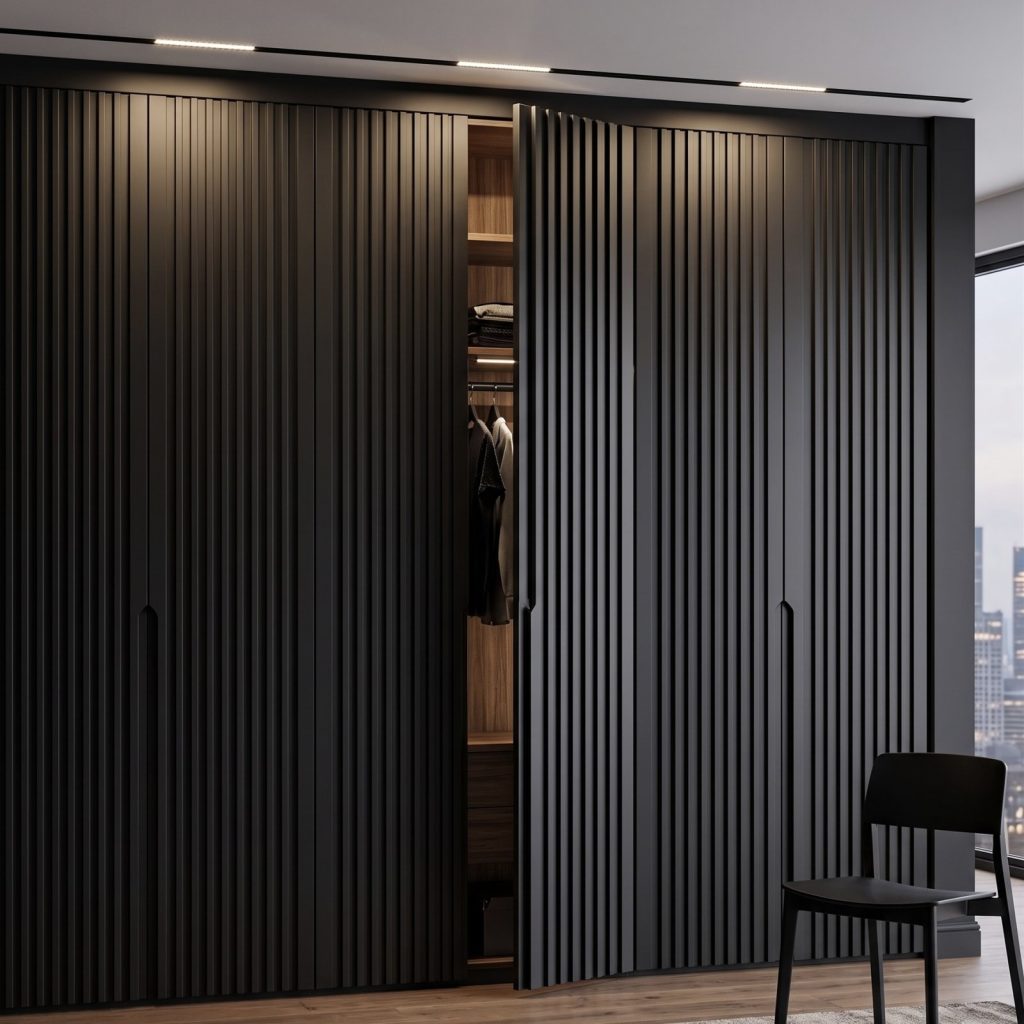
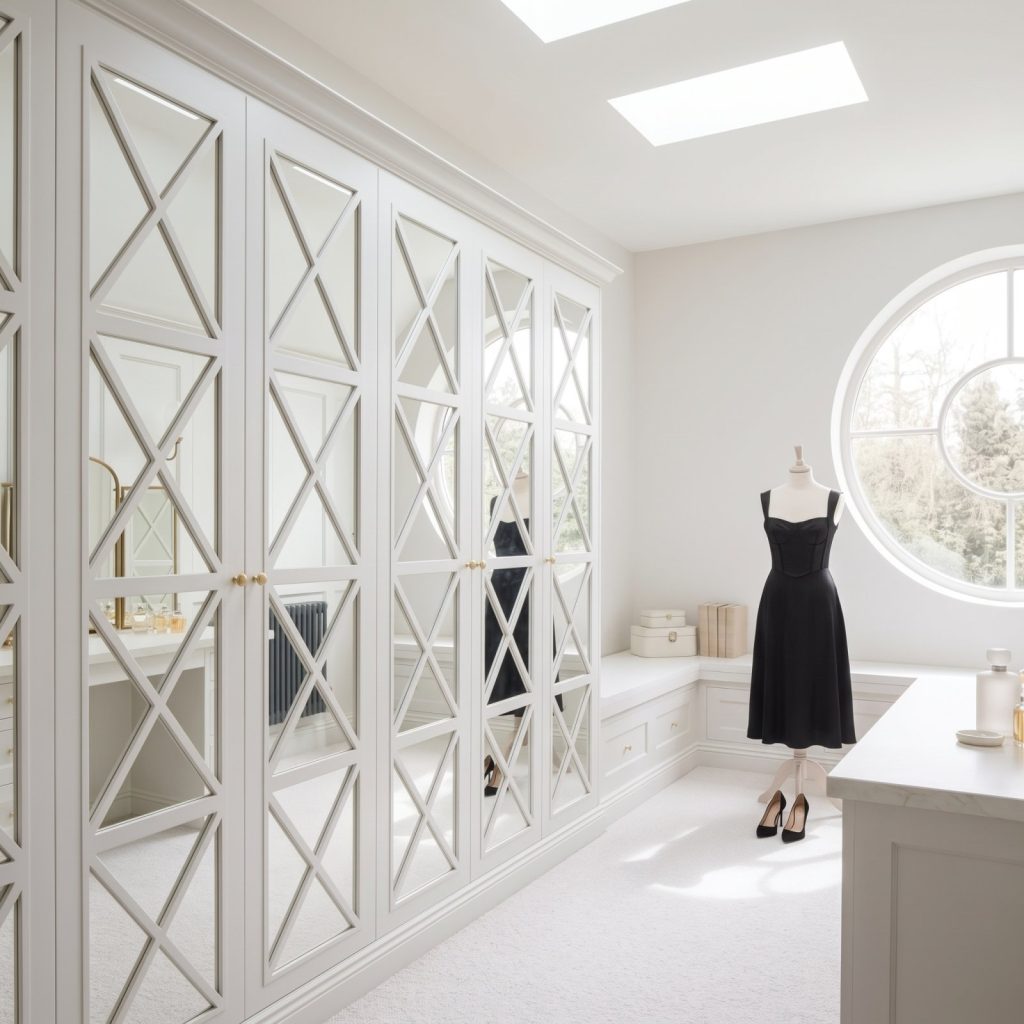
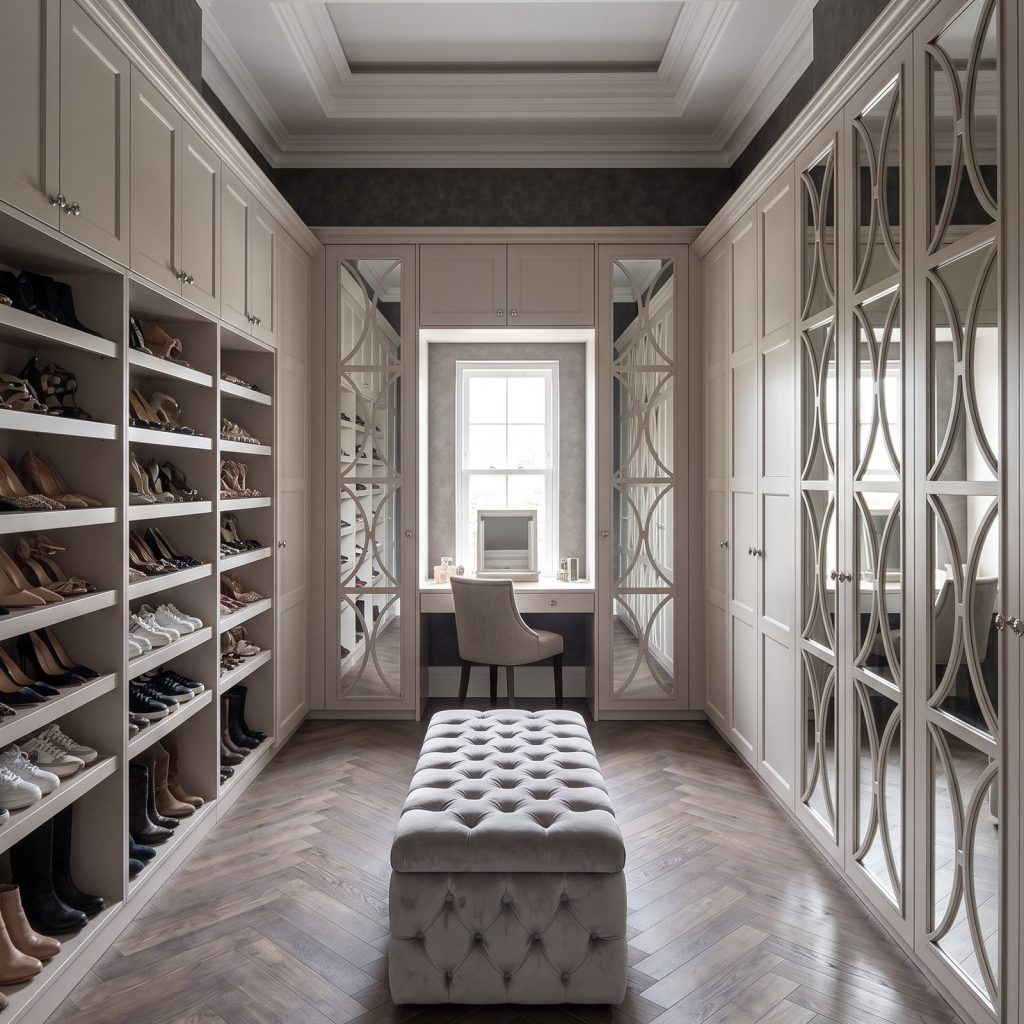
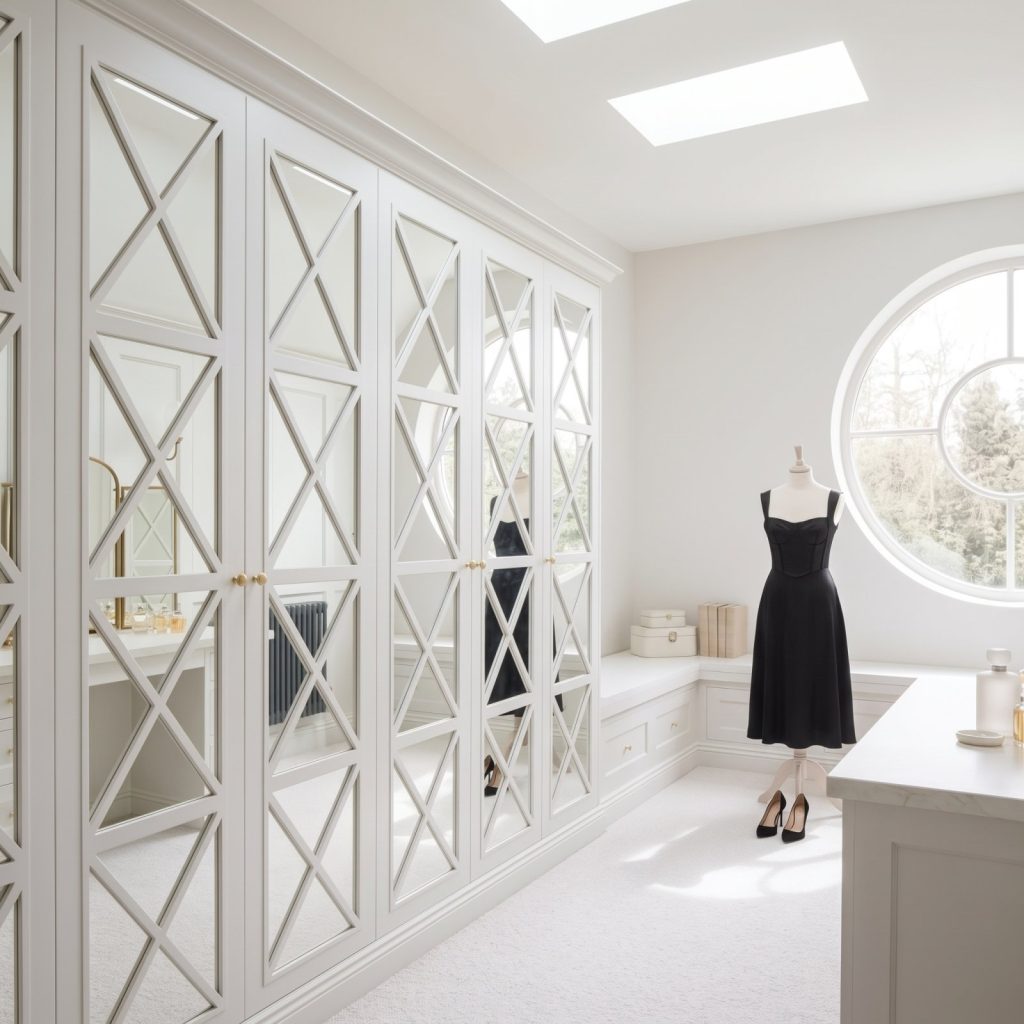
- If replacement doors suit your project better, explore Wardrobe Door Studio’s Skinny Shaker, Mirror Fret, Classic Shaker and Flat Panel designs.
Sanding and sealing porous MDF edges
Seal the edges before painting, then remove dust so it won’t spoil the finish. Follow the steps in order.
-
Work Safely When Sanding MDF
Wear a dust mask and eye protection before sanding or cutting MDF. Use dust extraction where possible, and keep the work area ventilated to limit airborne dust. Support each wardrobe door securely so it cannot shift under your sanding block or cutting tool. Avoid brushing dust into the air. Collect it carefully before moving on.
-
Sand Porous MDF Edges
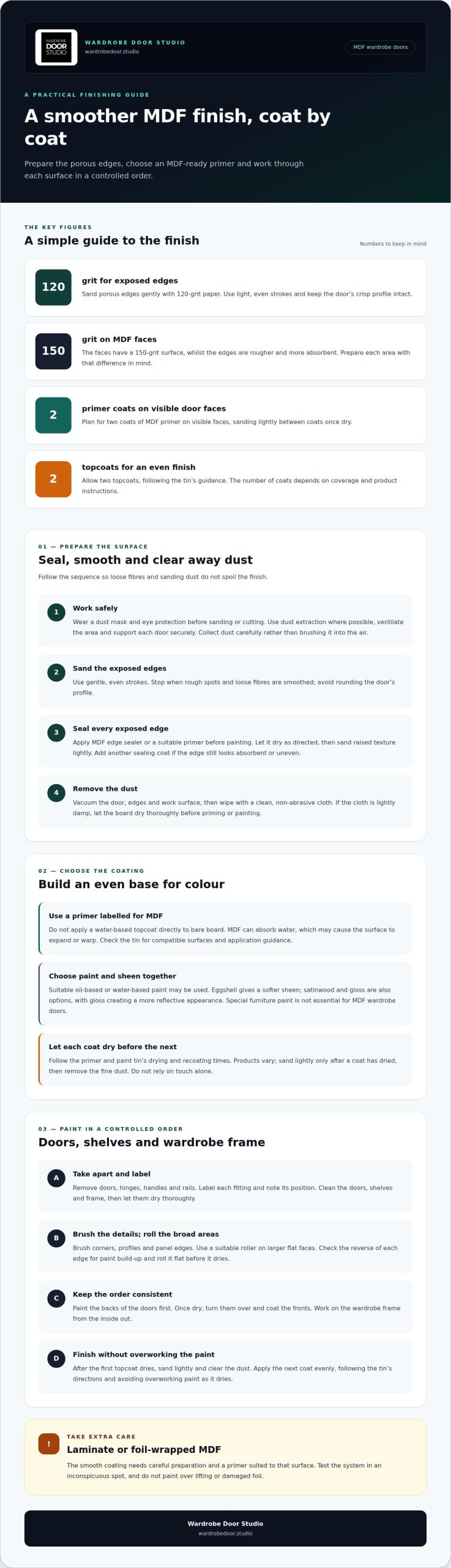
Sand each exposed edge gently with 120-grit sandpaper before sealing. MDF faces have a 150-grit surface, while the edges are rougher and more porous, so use light, even strokes rather than aggressive pressure. Work along the edge and inspect it from different angles. Stop when loose fibres and rough spots are smoothed, without rounding the door’s crisp profile.
-
Seal the MDF Edges
Apply an MDF edge sealer or suitable primer to every exposed edge before painting. The fibres can absorb paint unevenly, so don’t rely on the topcoat alone for a consistent finish. Let the sealing coat dry as directed, then lightly sand any raised texture. Apply another coat if the edge still looks absorbent or uneven. Keep MDF protected from moisture, which can cause swelling.
-
Remove Sanding Dust
Vacuum the door, edges and surrounding work surface, then wipe the MDF with a clean, non-abrasive cloth. If you use a lightly damp cloth, let the board dry thoroughly before applying primer or paint. Between primer and topcoats, sand lightly only after each coat has dried, then remove the fine dust. This smooths the texture without cutting through the fresh finish.
Choosing an MDF primer and paint
Choose a primer and topcoat suited to MDF, and follow each product’s instructions. The right combination creates an even base for the colour and helps the finish look consistent.
-
Choose an MDF Primer
Choose a primer labelled for MDF rather than applying a water-based topcoat directly to bare board. MDF can absorb water-based paint, which may cause the surface to expand or warp. Primer creates a more even base for the colour and prepares the surface for its topcoat. Check the tin for compatible surfaces and application guidance before you begin.
-
Choose Paint for the Wardrobe
Choose a suitable oil-based or water-based paint, then select a sheen to suit the room. Eggshell, satinwood and gloss are all options: eggshell gives a softer sheen, while gloss creates a more reflective appearance. Special furniture paint isn’t essential for MDF wardrobe doors. Choose the colour and sheen together, as light can make the same colour appear different across a large door or frame.
-
Plan the Primer and Paint Coats
Plan for two coats of MDF primer on visible door faces, sanding lightly between coats once dry. Allow two topcoats for an even colour and finish, following the tin’s guidance between applications. The number of coats depends on coverage as well as the product instructions.
For drying time, follow the primer and paint tin’s stated drying and recoating times. Products vary, and each coat must dry before sanding or applying another. Don’t rely on touch alone.
Painting doors, shelves and wardrobe structure
Work methodically across each wardrobe part, keeping the sequence consistent. This makes it easier to spot missed edges and achieve an even finish.
-
Apply Paint to Wardrobe Surfaces
Remove the doors, hinges, handles and rails first. Label each fitting and note its position. Clean the doors, shelves and frame, then let them dry thoroughly. Brush paint into corners and along panel edges, then roll the larger flat areas for a smooth finish. Paint the backs of the doors first. Once dry, turn them over and coat the fronts. Work on the wardrobe frame from the inside out.
In the UK, the cost depends on whether you do the work yourself or pay for labour, as well as the number and condition of the doors, preparation and materials. For paid work, the price is set after a quote request.
For a step-by-step approach, prepare and prime each part, apply the first topcoat, let it dry, sand lightly and remove the dust before applying the final coat. Follow the tin’s drying and recoating directions.
-
Avoid Brush Marks and Peeling
Use a suitable roller on broad faces and a brush for corners, profiles and edges. Apply paint in even strokes, then check the reverse of each edge for paint build-up and roll it flat before it dries. Once the first coat has dried, sand lightly and clear the dust. Apply the next coat without overworking paint as it dries.
Laminate or foil-wrapped MDF can be painted, but its smooth coating needs careful preparation and a primer suited to that surface. Test the preparation and paint system in an inconspicuous spot; don’t paint over lifting or damaged foil. For a different finish without repainting, explore replacement wardrobe door options.
Wardrobe Door Studio: Skinny Shaker Wardrobe Doors
Wardrobe Door Studio offers design-led replacement wardrobe doors for homeowners who would rather replace their doors than prepare and repaint them. Skinny Shaker Wardrobe Doors have a defined profile, while Flat Panel Wardrobe Doors offer a simpler, clean-lined look. Mirror Fret and Classic Shaker designs provide further options for shaping a room’s character.
Replacement doors can be a practical next step if the current finish is damaged, the surface is difficult to prepare, or you want to change the wardrobe’s appearance. Consider the door style alongside the room’s existing details, such as handles, cabinetry and overall interior scheme, for a considered result. Wardrobe Door Studio offers options for updating individual doors or planning a wider wardrobe project.
Visit Wardrobe Door Studio to explore its wardrobe door designs.
Choose the finish that suits your wardrobe
Deciding how to paint MDF wardrobe doors is also a chance to consider whether repainting is the right long-term choice. If the doors are sound and you want to refresh their colour, careful preparation gives you a clear route forward. If you’re planning a broader change, consider how the wardrobe will sit within the room, from its proportions to its overall design character.
Wardrobe Door Studio can help you explore replacement wardrobe doors when a new look matters more than refinishing the existing surfaces. A considered door choice can shape the feel of the whole interior, whether you’re updating one feature or planning a more complete wardrobe scheme.
Contact Wardrobe Door Studio to discuss your wardrobe plans and take the next step with confidence.
Frequently Asked Questions
Can You Paint MDF?
Yes, MDF can be painted once its surface is properly prepared and primed. If you’re learning how to paint MDF wardrobe doors, first identify whether the surface is bare, sealed or already painted, as this affects preparation. Painting can help protect the board from some moisture, but it doesn’t make MDF waterproof.
How to prepare MDF wardrobe doors for painting
Remove the doors and take off the hinges and handles so you can work across each surface. Label the hardware and note which door it belongs to, making reassembly easier. Fill holes and cover embedded nail heads, then clean away grease and dust. Check hinge positions before sanding, as fixings close to MDF edges need careful handling.
How to seal MDF edges before painting
Sand exposed edges with 120-grit paper, then apply MDF edge sealer or a suitable primer before the topcoat. The cut fibres absorb paint differently from the faces, so pay particular attention to corners and any freshly cut areas. Once dry, inspect the edge under good light and lightly sand raised fibres before continuing.
What primer is best for MDF wardrobe doors UK
Choose a primer specifically labelled for MDF and check that it’s compatible with your chosen topcoat. This matters particularly before applying water-based paint, which bare MDF can absorb. Apply primer evenly across the door, including its edges and corners. Previously painted and sealed MDF generally doesn’t need another primer coat if its existing surface is sound.
What paint is best for MDF wardrobe doors UK
Both oil-based and water-based paints can be used on primed MDF. To decide how to paint MDF wardrobe doors for your preferred look, choose eggshell, satinwood or gloss based on the sheen you want and the room’s existing finishes. Special furniture paint isn’t essential. Check the tin’s instructions for surface compatibility, application method and drying time before starting.
How long does MDF primer and paint take to dry
Drying and recoating times vary by product, so follow the primer and paint tin’s instructions. Let each coat dry before sanding or applying another.