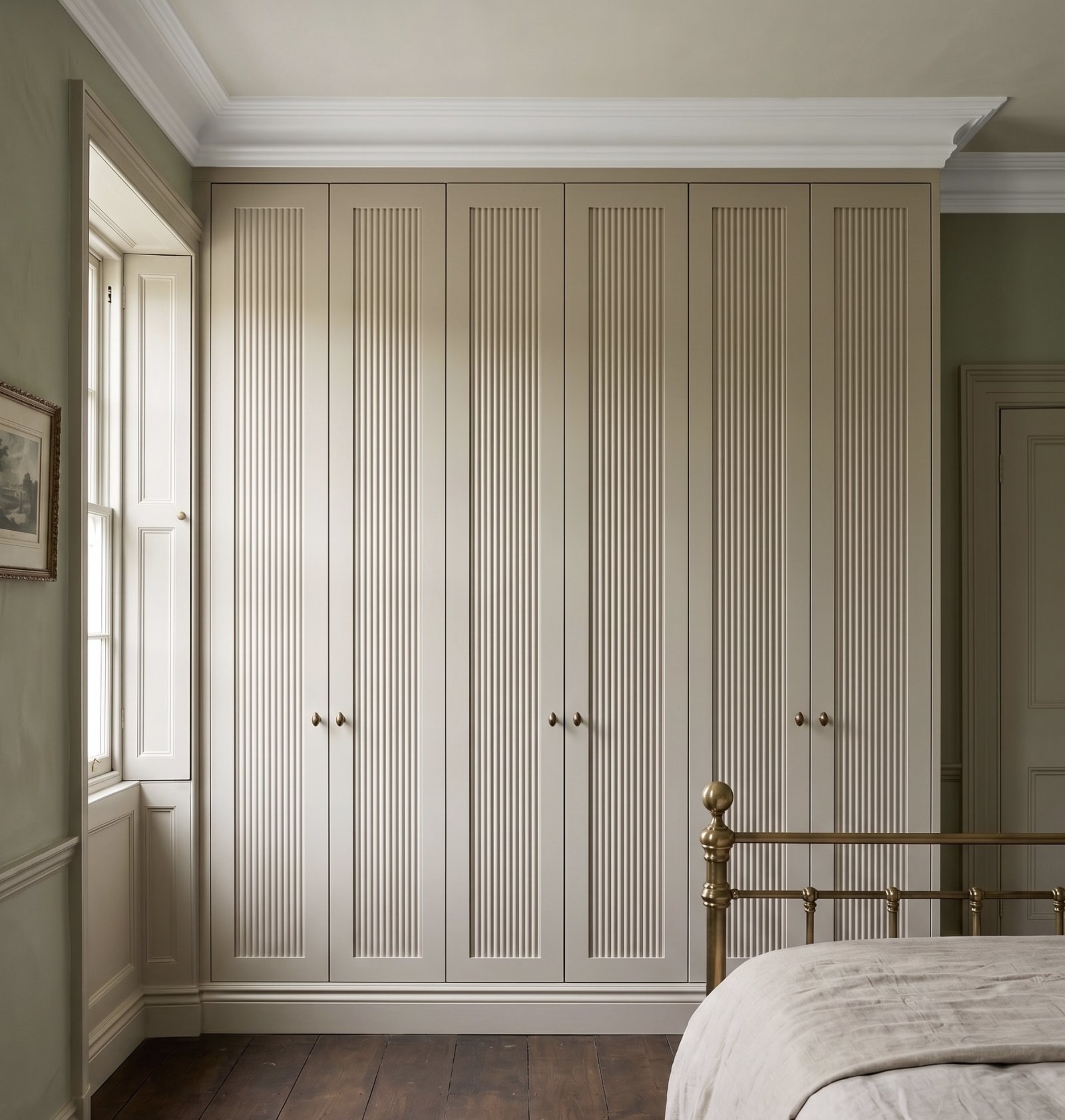
The best choice for bespoke fitted furniture may not be a carpenter. A joiner often suits workshop-made pieces, while a wardrobe company focuses on wardrobes, from design to installation. In the joiner vs wardrobe company decision, the right option depends on your room and storage requirements.
These trades can seem similar, and their skills sometimes overlap. This guide explains how joiners, carpenters and wardrobe companies differ, including who typically designs and makes fitted furniture and who installs or adjusts it on site. You’ll learn which option suits a bespoke project, a straightforward wardrobe or a room with awkward spaces, so you can choose a service that matches the result you want.
Key Takeaways
- Match the trade to the work: workshop-made bespoke furniture often calls for a joiner, while a carpenter commonly fits or adjusts items on site.
- Plan wardrobes around your belongings, access needs and room features to make the design work for daily use.
- Consider how workshop craftsmanship and on-site installation fit together when deciding who should make and fit your furniture.
- Identify whether you need a complete fitted wardrobe or dressing room, or a particular wardrobe-door style, before choosing your next step.
Do I need a joiner or a carpenter for bespoke fitted furniture?
For bespoke fitted furniture, the right choice depends on the work involved. The joiner vs wardrobe company decision comes down to whether you need broader workshop-made pieces or a wardrobe-focused service.
Joiners, carpenters and cabinet makers
Joiners usually make bespoke furniture and interior fittings in workshops; carpenters commonly build or adjust timber structures on site. Cabinet makers focus on fitted and freestanding furniture, and their skills overlap with joinery. For an awkward alcove, a joiner can make a cabinet to fit; a carpenter may be better suited to fitting a kitchen unit.
| Option | Typical focus | Useful for |
|---|---|---|
| Joiner | Workshop craft | Bespoke furniture |
| Carpenter | On-site work | Fitting or adjustment |
| Cabinet maker | Furniture making | Fitted or freestanding pieces |
Bespoke wardrobes and big-brand options
Bespoke joinery is designed around a room’s measurements and features, such as sloping ceilings or structural frames. Modular fitted furniture uses units made to preset sizes, sometimes with filler panels to bridge gaps. A fitted wardrobe describes the storage solution; bespoke joinery describes how it is designed and made. Big-brand options can suit straightforward rooms, while made-to-measure work can accommodate unusual layouts.
Joiner-built and fitted wardrobe costs
A joiner’s charge depends on the wardrobe’s dimensions, materials, internal layout and whether fitting is included. Fitted wardrobe costs, including installation, depend on the design and scope of the work; pricing is provided after a quote request. Costs and availability can vary across the UK, reflecting local labour rates and schedules.
Joiner wardrobe-building and fitting work
A joiner can measure a space, plan storage, make wardrobe components in a workshop and fit them at home. The work may include adapting frames to uneven walls or incorporating an alcove into the design. In a joiner vs wardrobe company comparison, a joiner suits broader workshop craft, a carpenter suits on-site fitting, and a wardrobe company suits a wardrobe-focused project. For homeowners seeking dedicated carpentry and home improvement expertise, specialists such as customcarpentrysolutions.uk provide practical examples of on-site fitting and custom timber work.
Design choices and customer involvement
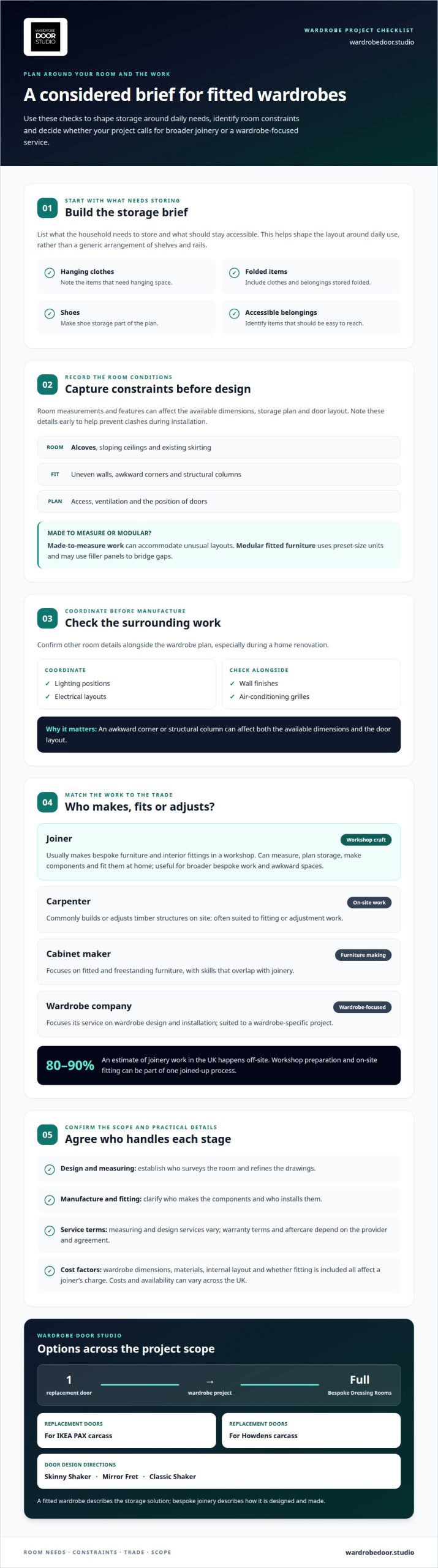
A useful wardrobe brief starts with what the household needs to store. List hanging clothes, folded items, shoes and belongings that should stay accessible. Then note room features that may affect the design, such as an alcove, sloping ceiling or existing skirting. These details help shape bespoke joinery around daily use, rather than a generic arrangement of shelves and rails.
Coordinate the design with other work before manufacture. Confirm lighting positions, electrical layouts, wall finishes and air-conditioning grilles alongside the wardrobe plan. In a home renovation, an awkward corner or structural column can affect both the available dimensions and the door layout. For full-scale property upgrades, integrated design-and-build specialists such as Projeco Contracting LLC | Villa Construction | Apartment Interiors Fit Out demonstrate how custom joinery must align with wider structural finishes and services. Measuring the room and noting constraints early helps prevent clashes during installation.
Design, manufacture and fitting can happen as one joined-up process or in separate stages. A joiner may survey the room, refine drawings with the customer, make timber components in a workshop and fit them on site. A wardrobe company focuses its service on wardrobe design and installation. The right arrangement depends on whether your project needs broader bespoke joinery or a wardrobe-specific design.
Do joiners or wardrobe companies provide design, measuring, warranties and aftercare? These services vary: some include measuring and design, whilst warranty terms and aftercare depend on the provider and agreement. Clarify the project scope before work begins, including who measures, manufactures and handles fitting. If a wardrobe-specific design suits your plans, explore a tailored wardrobe design approach.
Joinery and workshop-made items
A joinery workshop produces individual pieces before they reach the home. Making and fitting happen separately: components can be prepared in controlled conditions, then assembled or adjusted on site. Joiners also make cabinetry, doors and stairs, while carpenters more often handle structural timber and installation work. The distinction is practical, not absolute, because the trades’ skills overlap.
An estimated 80-90% of joinery work in the UK happens off-site. For fitted wardrobes, workshop preparation can include cutting and joining components to the design, while site work accounts for the room’s actual conditions. A joiner may also provide installation, bringing manufacture and fitting together rather than treating them as unrelated tasks.
Consider a bedroom where a wardrobe sits beside a structural column. A workshop-made design can be planned around that feature, with the joiner accounting for access, ventilation and natural timber movement where relevant. Those details matter because fitted furniture must work as part of the room, not simply occupy floor space. The same thinking applies to cabinetry fitted around services or controls.
A wardrobe-focused company concentrates on storage design and its installation; a joiner can undertake wider bespoke work, such as a dressing area alongside fitted furniture. Choose based on the scope: a wardrobe alone calls for focused storage planning, while several coordinated timber elements may suit a broader joinery brief. Explore a fitted wardrobe design approach for a storage-led project.
Wardrobe Door Studio: Replacement Doors and Bespoke Dressing Rooms
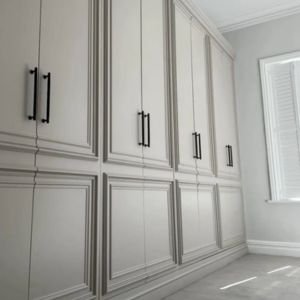
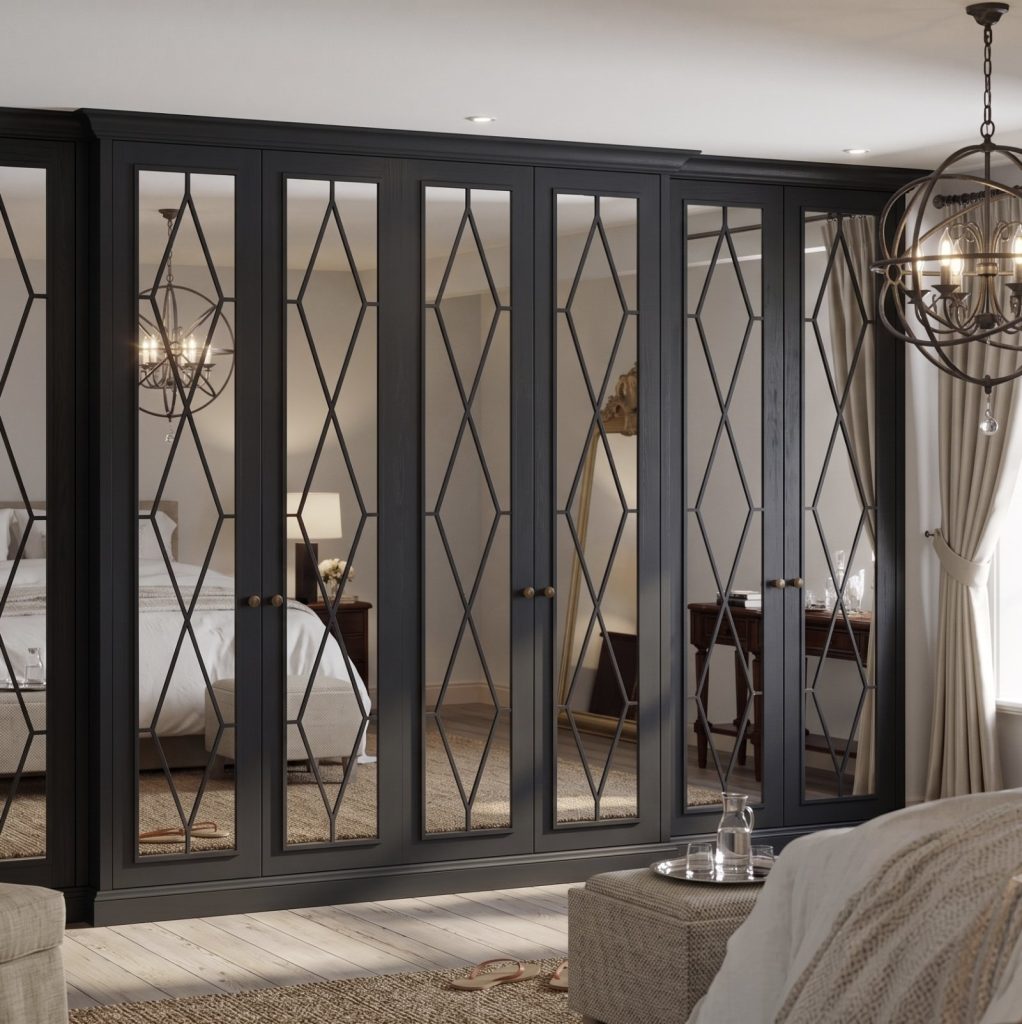
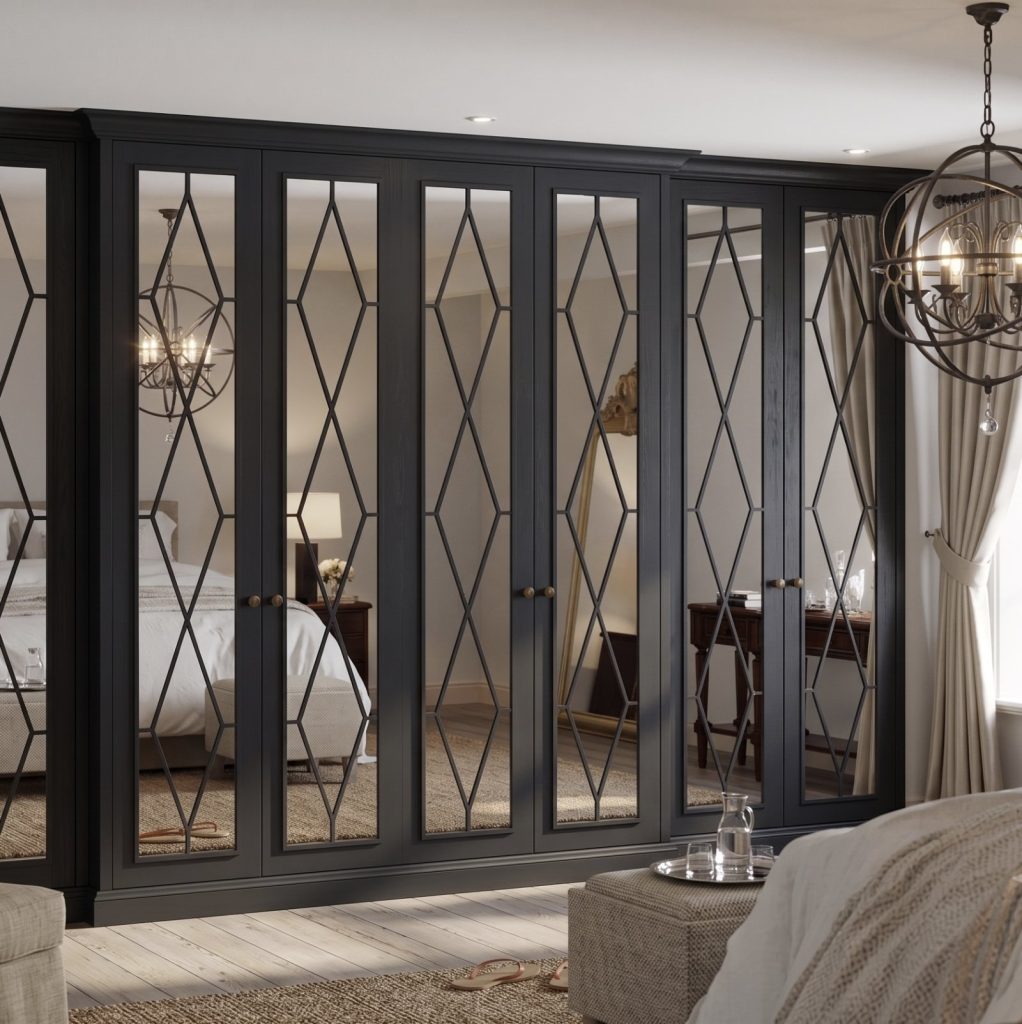
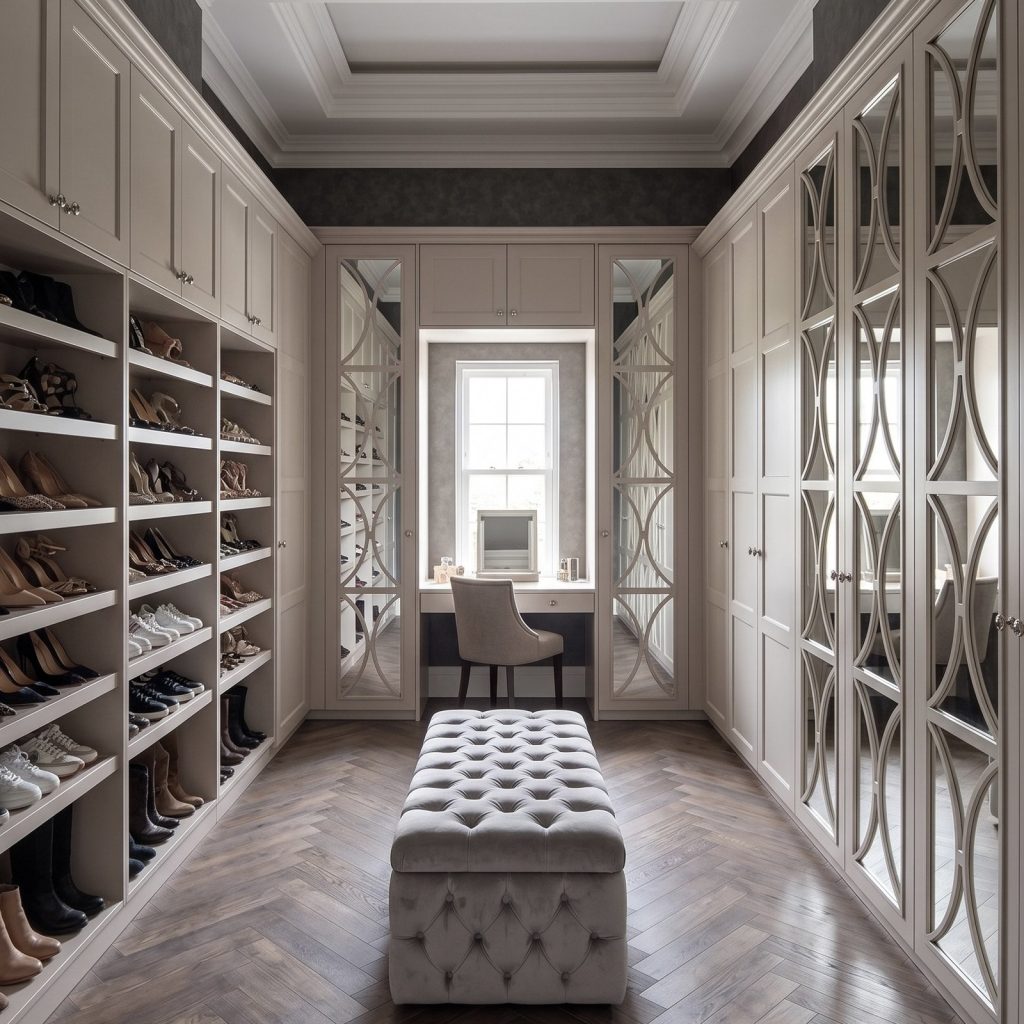
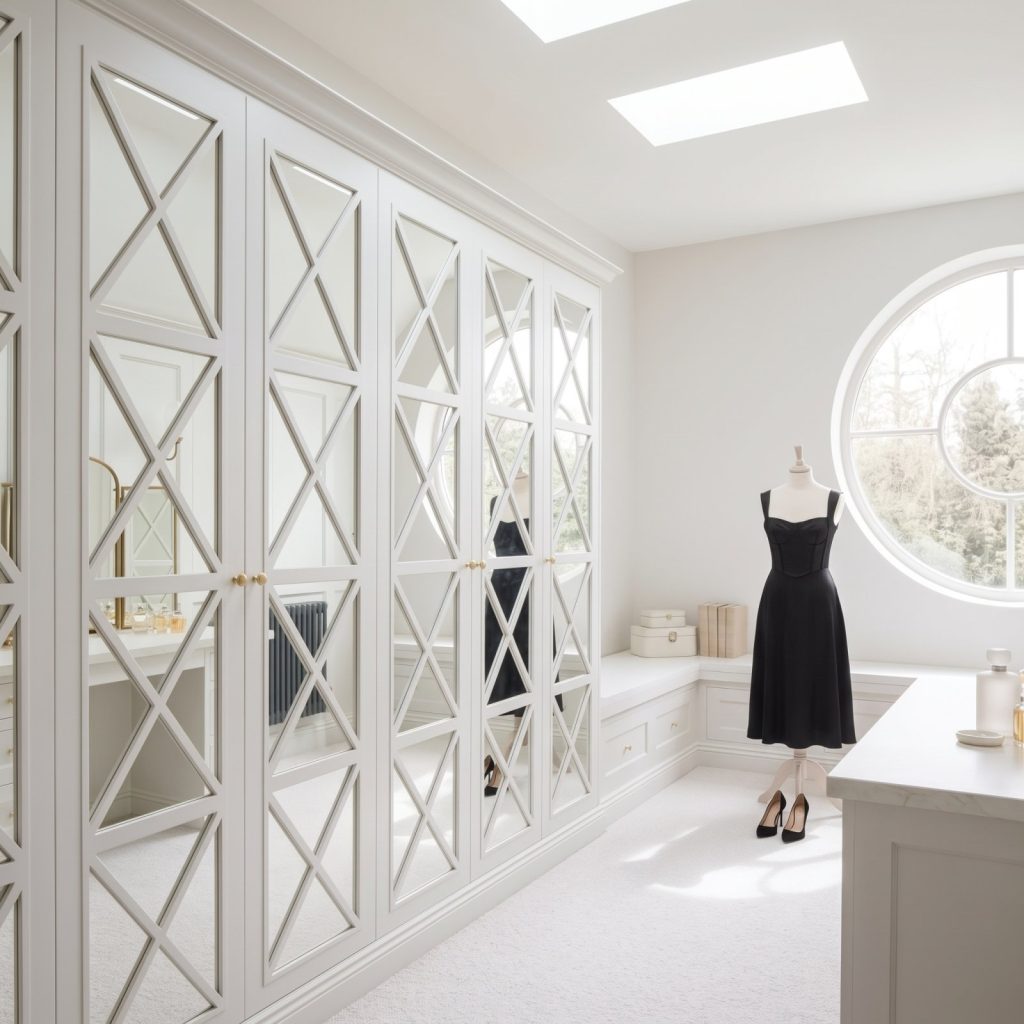
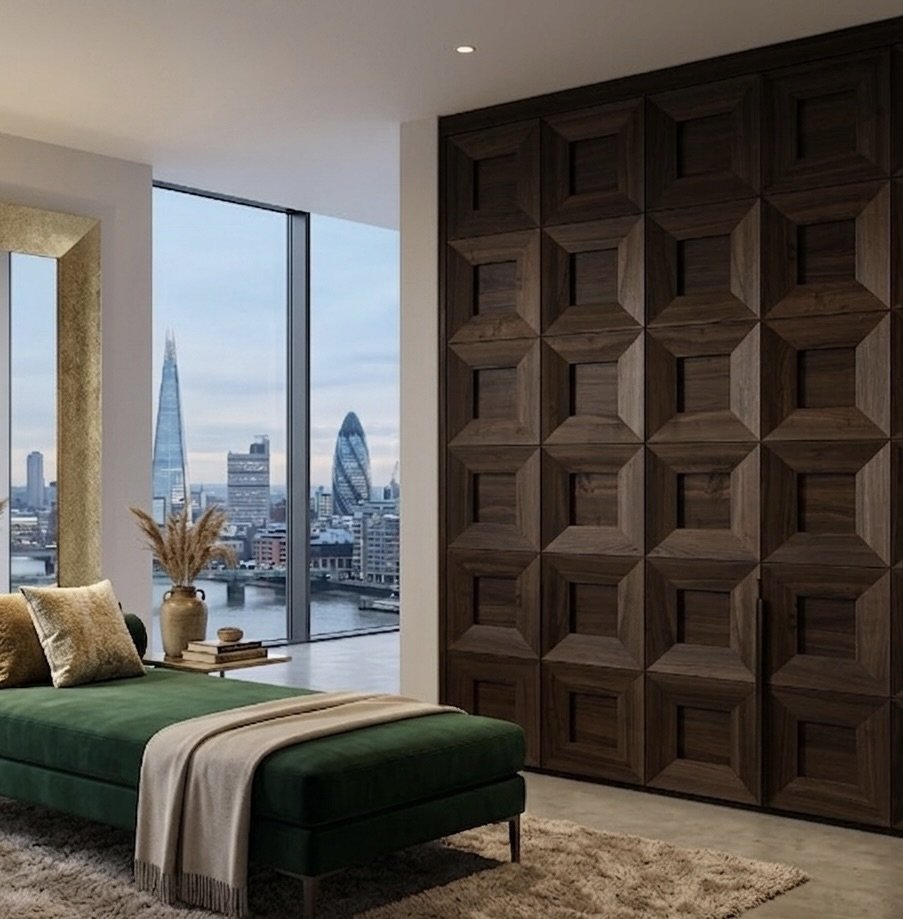
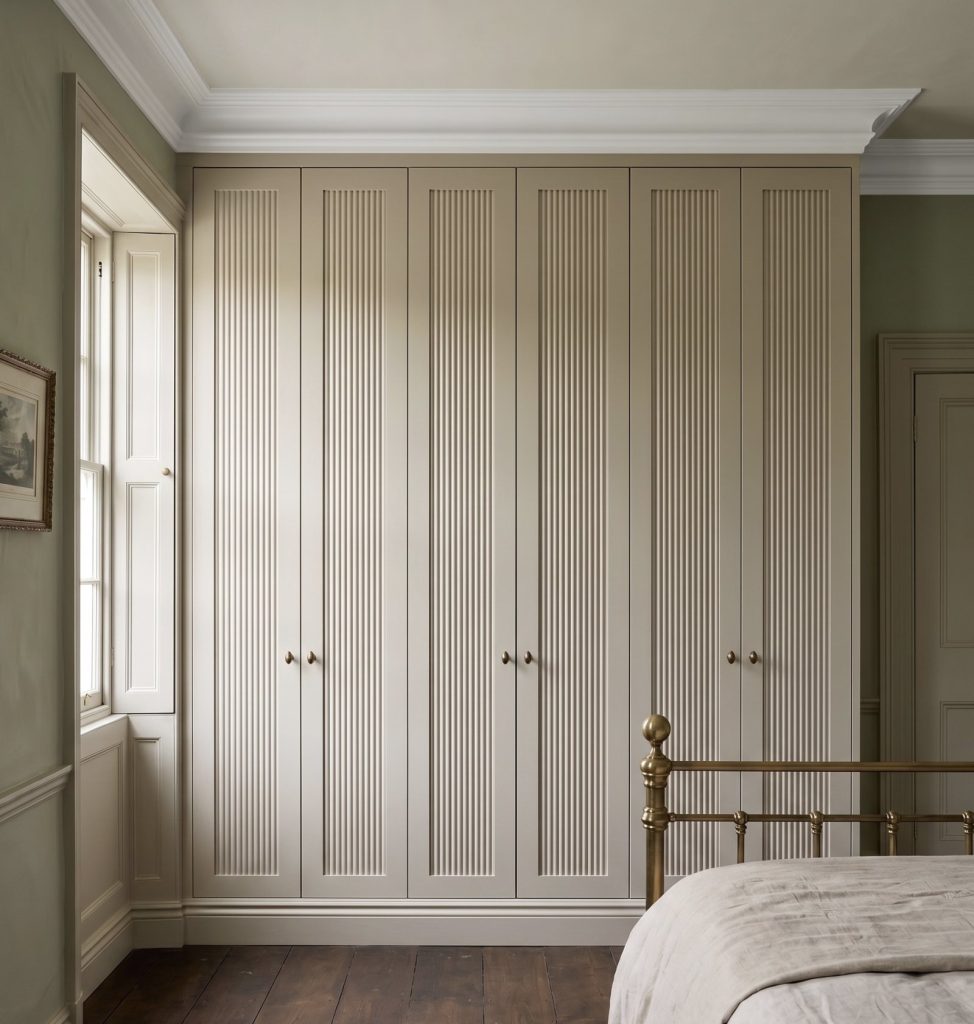
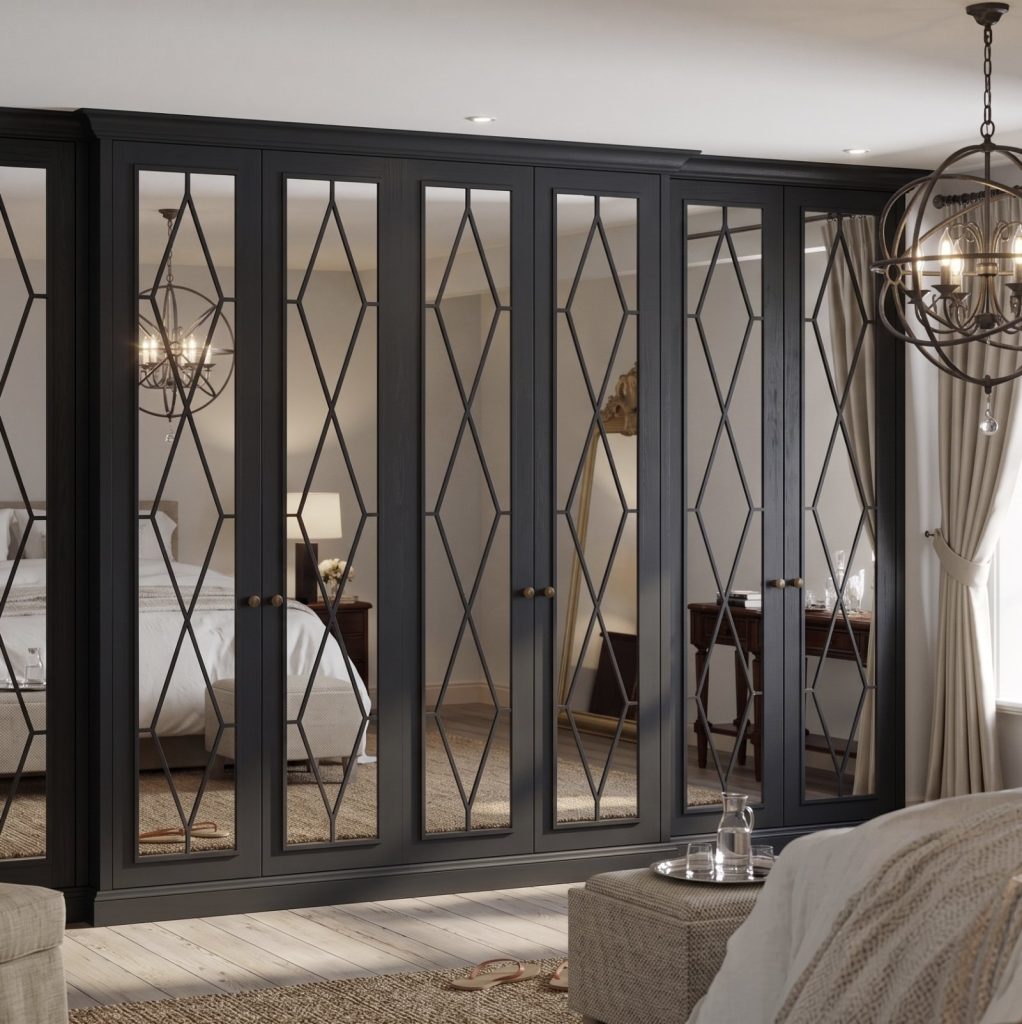
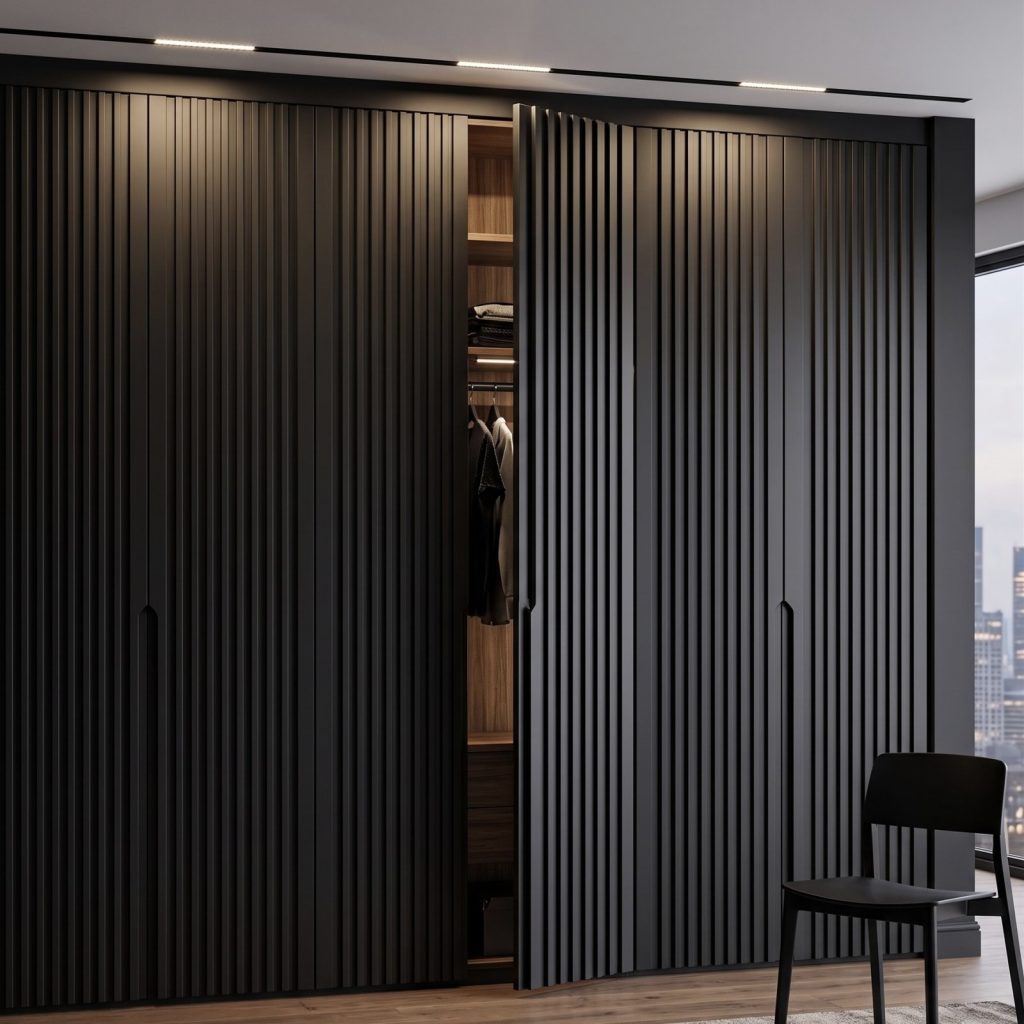
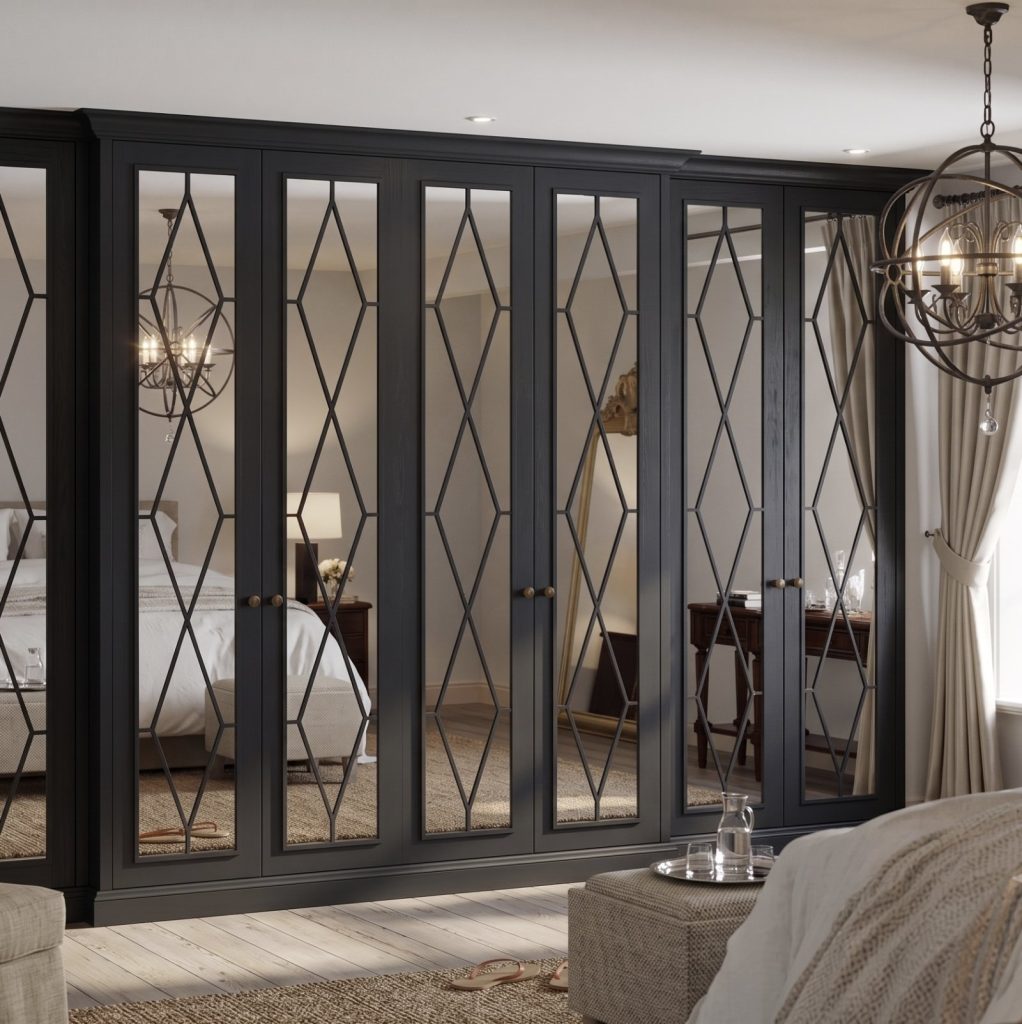
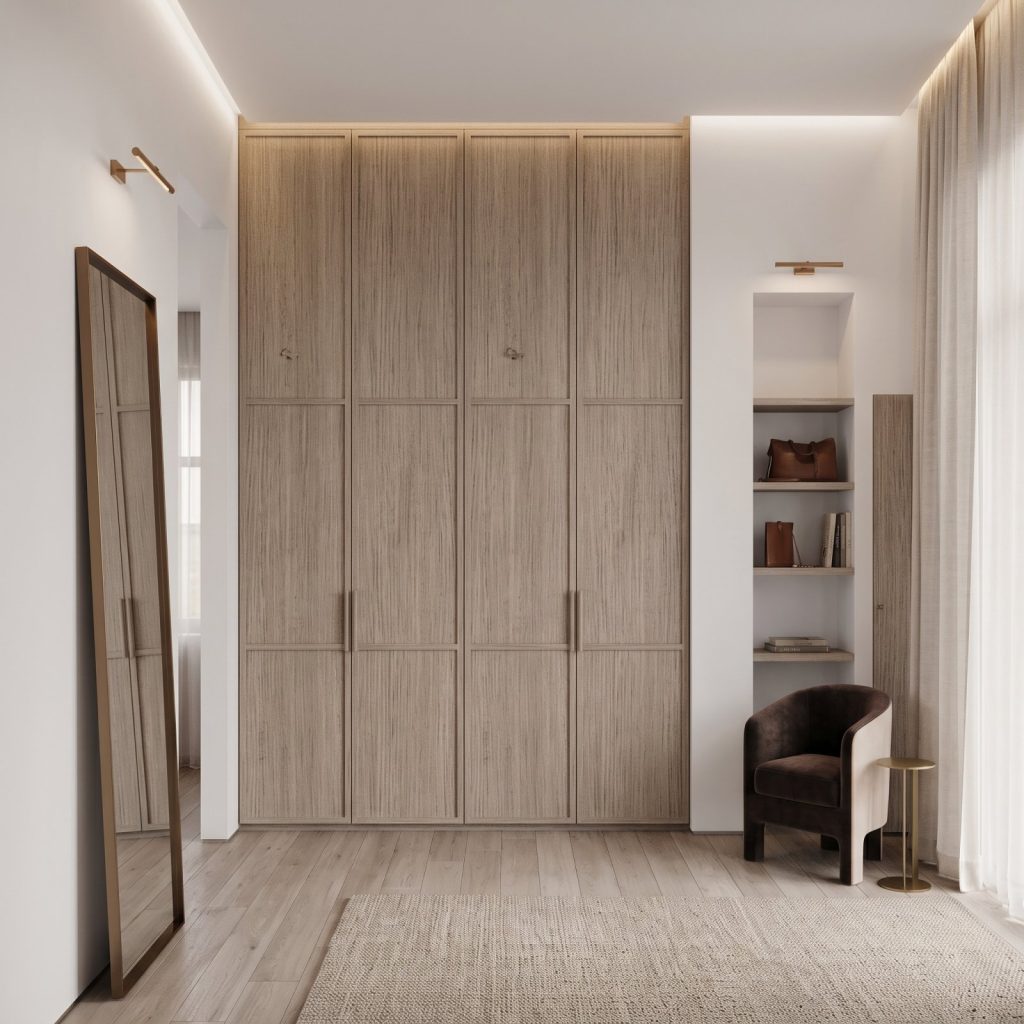
Wardrobe Door Studio offers a range from a single replacement wardrobe door to a full dressing room. Options include replacement doors for IKEA PAX and Howdens carcasses, as well as Skinny Shaker, Mirror Fret and Classic Shaker doors, offering distinct design directions for a considered interior.
Choose a wardrobe-focused service for a single replacement door or storage designed as a feature of a bedroom or dressing space. The range includes replacement doors for IKEA PAX and Howdens carcasses, as well as Bespoke Dressing Rooms. The right choice depends on your project’s scope and the finish you want.
For a wardrobe project, contact Wardrobe Door Studio to discuss your requirements.
Shape your next wardrobe project
Let the room’s purpose guide your next design decision. Consider how the wardrobe should sit within the interior, what you want its doors to contribute, and whether you need a complete fitted solution or a more focused design. The joiner vs wardrobe company choice can help define the project’s scope before you settle on details.
Door style can set the character of the space, from the defined lines of Skinny Shaker and Classic Shaker doors to the detail of Mirror Fret doors. Revisit the joiner vs wardrobe company distinction as your brief takes shape, keeping the desired finish and scope of work in view.
Explore the possibilities for your project and contact Wardrobe Door Studio to discuss your wardrobe requirements. A well-planned design is a confident next step towards a room that feels distinctly yours.
Frequently Asked Questions
Do joiners install the items they make?
Yes, many joiners make items in a workshop and install them at the property. The arrangement depends on the project: a joiner may make wardrobe components, fit them and adjust them to suit the room. With supply-only work, installation may be handled separately, so the project scope should make clear who takes care of each stage.
How do I choose the right joinery company?
Choose a service that matches your project’s size and requirements. For wardrobes, Wardrobe Door Studio offers full design and installation, as well as supply-only options for self-installation or use by your own installer. This distinction helps you decide whether you need a complete service or made-to-measure components for a project you are managing.
So do I need a joiner, a carpenter or a cabinet maker?
Choose based on the main task: a joiner for workshop-made interior pieces, a carpenter for on-site timber work or a cabinet maker for furniture-focused work. The titles can overlap, and trade terminology varies across the UK. Focus on the work involved and the skills needed, rather than relying on the job title alone.
Are bespoke fitted wardrobes worth it?
Bespoke wardrobes can be worthwhile when a room’s shape or storage needs call for a tailored solution. A custom design may make better use of an awkward layout or combine wardrobe storage with other room functions. If the bedroom has standard dimensions and straightforward storage needs, a simpler fitted arrangement may meet the brief without the same level of custom design.
What is the difference between a joiner and a fitted wardrobe company in the UK?
A joiner typically makes bespoke pieces and may also fit them, while a fitted wardrobe company focuses on wardrobe design and related services. The distinction is mainly the project scope: a joinery brief can include different interior features, whereas a wardrobe-focused service centres on storage. Consider which parts of the project need designing and completing.