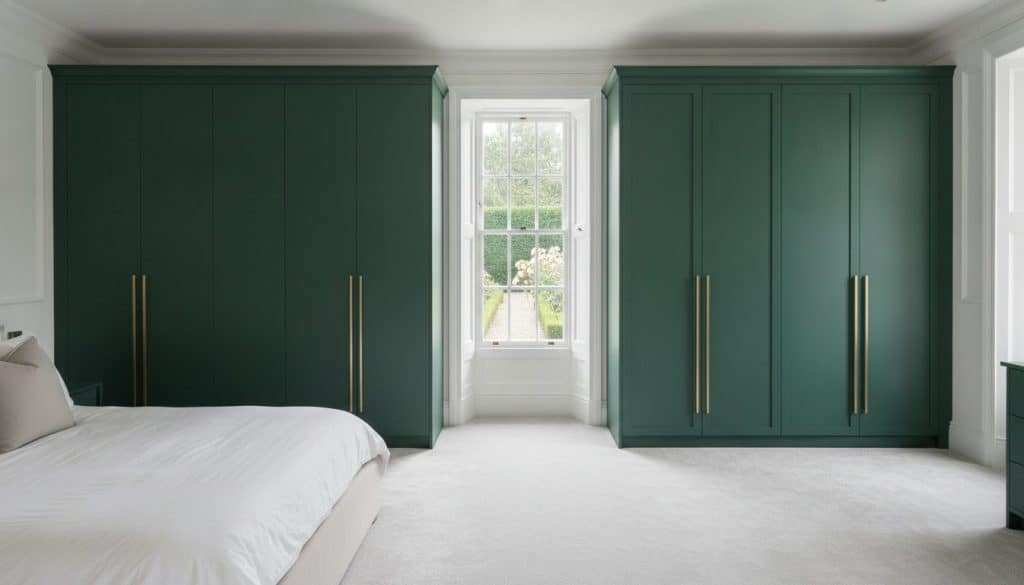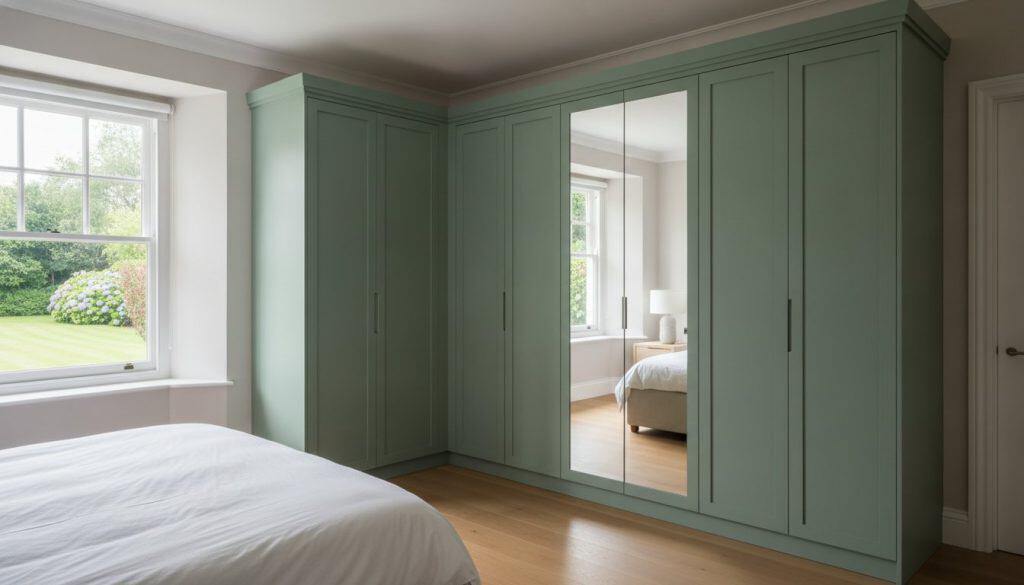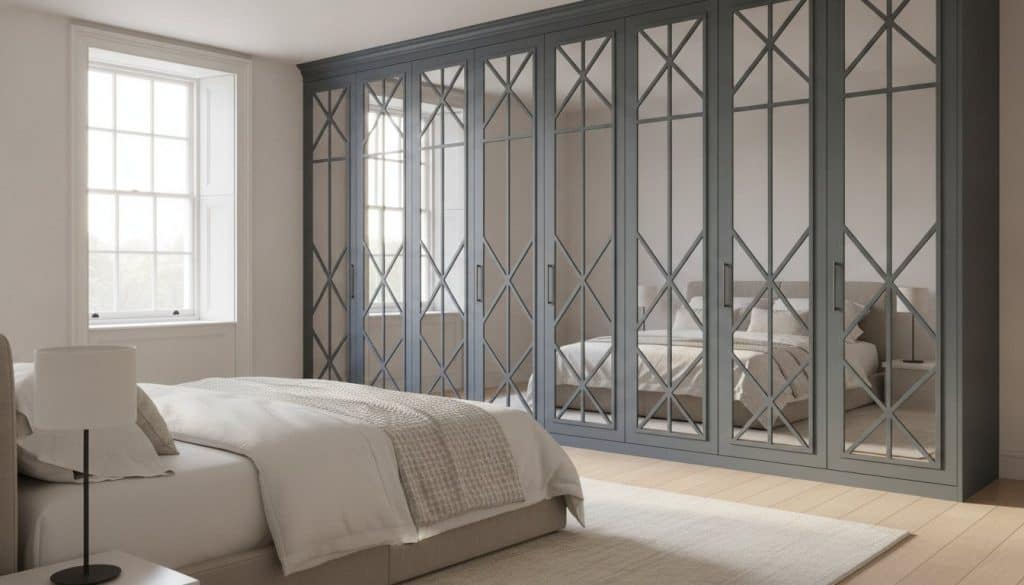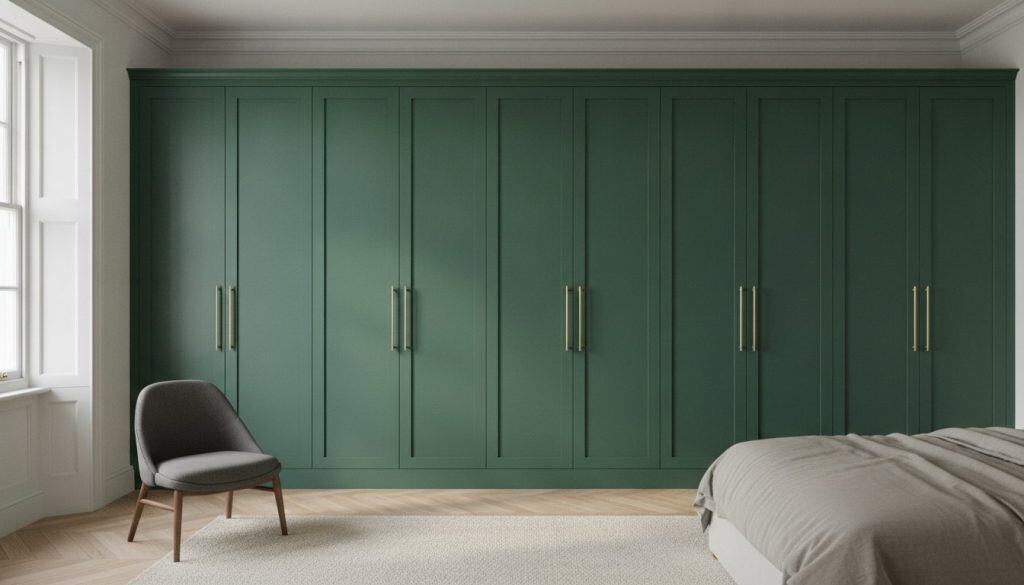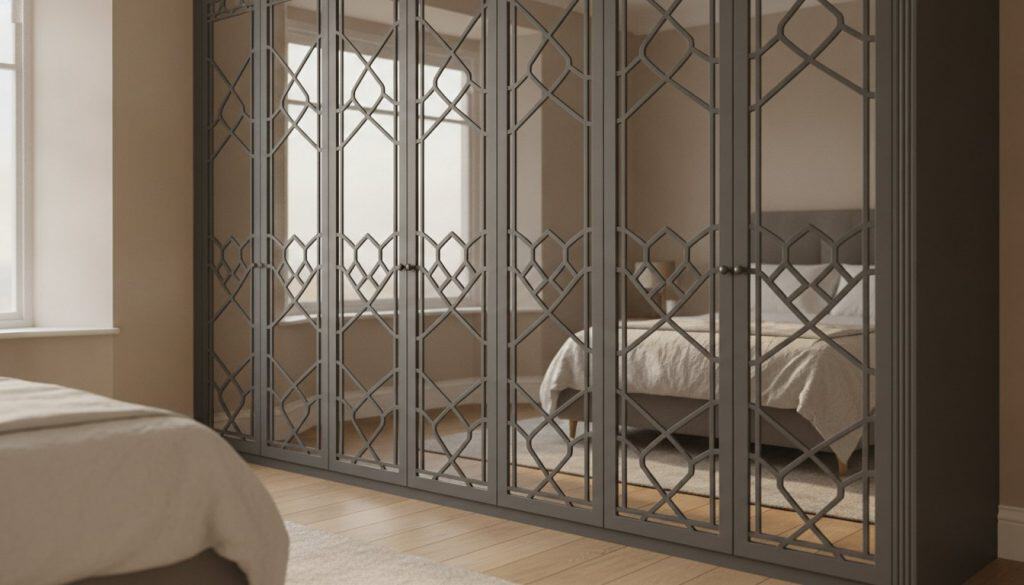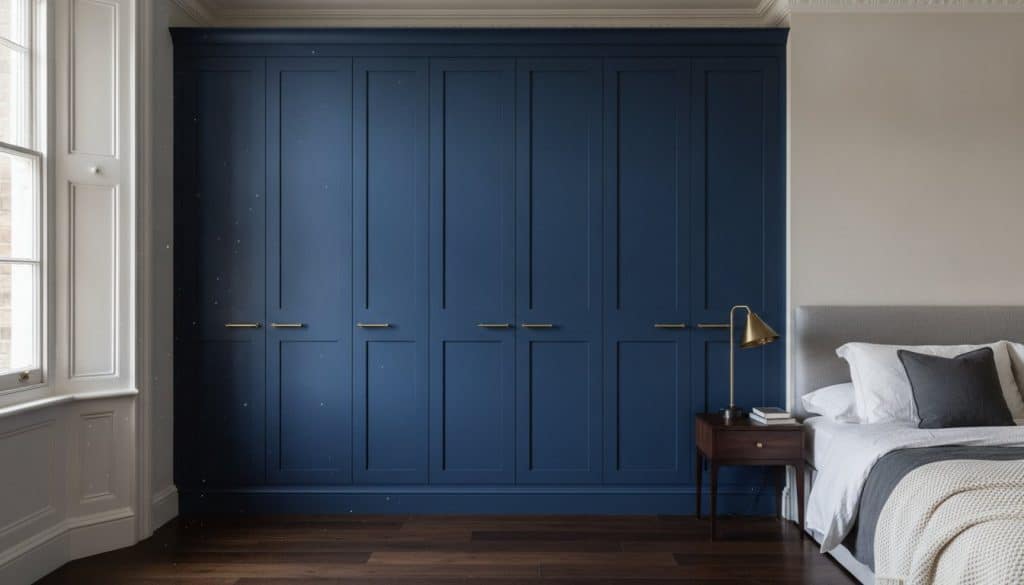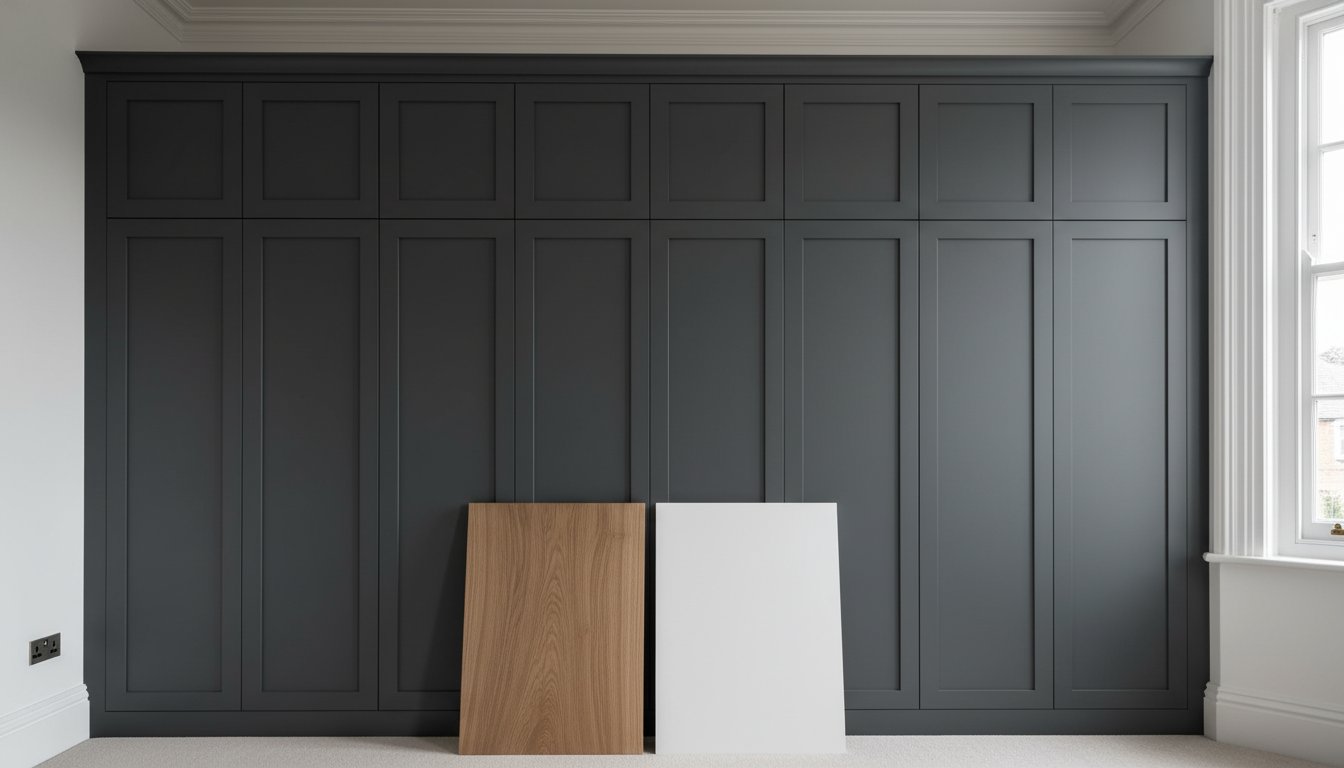
The most expensive material is not always the superior foundation for a luxury finish. Whilst solid timber carries a certain traditional prestige, it is often the incorrect choice for a bespoke commission that requires a perfectly smooth, hand-sprayed surface. When debating mdf vs wood wardrobes, many homeowners fear that choosing an engineered board means sacrificing quality or settling for a “cheap” aesthetic. However, for those seeking the crisp lines of a Skinny Shaker or a contemporary Flat Panel design, high-density moisture-resistant fibreboard provides a level of structural stability that natural timber simply cannot match.
It is natural to worry about expensive wardrobes warping or paint cracking at the joints as the seasons change. You deserve a furniture piece that remains as flawless in a decade as it does on the day of professional installation. This guide demonstrates why high-density engineered board often outperforms solid timber for luxury painted wardrobes, ensuring your investment maintains its premium feel without the risk of movement. We will examine how different materials react to humidity, which surfaces hold paint most effectively, and how to achieve a bespoke result that offers genuine value for money without compromising on craftsmanship.
Key Takeaways
- Understand the technical differences between natural timber and high-density fibreboard to select the most appropriate substrate for your bespoke furniture.
- Discover why structural stability is the primary factor in preventing paint from cracking at the joints during seasonal temperature changes.
- Evaluate how a hand-sprayed finish on a grain-free surface achieves the mirror-smooth aesthetic required for high-end interior design.
- Analyse the long-term durability of mdf vs wood wardrobes to ensure your fitted cabinetry maintains its integrity and appearance for decades.
- Learn to match specific door styles, such as Skinny Shaker or Mirror Fret, with the material that best preserves their intricate details and sharp lines.
The Material Debate: Understanding MDF vs Wood for Modern Wardrobes
Selecting the foundational material for bespoke furniture requires a balance between traditional prestige and technical performance. The ongoing debate regarding mdf vs wood wardrobes often centres on a misconception that “natural” always equates to “premium”. In reality, the choice between these materials dictates the entire aesthetic trajectory of a bedroom. Whilst solid timber offers a unique, tactile charm, high-density engineered boards provide the structural precision required for modern, hand-sprayed finishes. The decision you make at the specification stage will influence everything from the longevity of the door hinges to the crispness of the paint finish.
Manufacturing shifts in 2026 have redefined the landscape of high-end cabinetry. With the implementation of stricter EU formaldehyde emission limits of 0.062 mg/m³, and the February 2026 EPA updates to composite wood standards, engineered materials have reached a new benchmark of safety and environmental responsibility. These advancements mean that modern bespoke-grade boards are no longer just a cost-effective alternative; they are a technically superior substrate for specific luxury applications. This comparison will explore why the stability of your wardrobe’s core is just as important as its external beauty.
What is Solid Wood in Cabinetry?
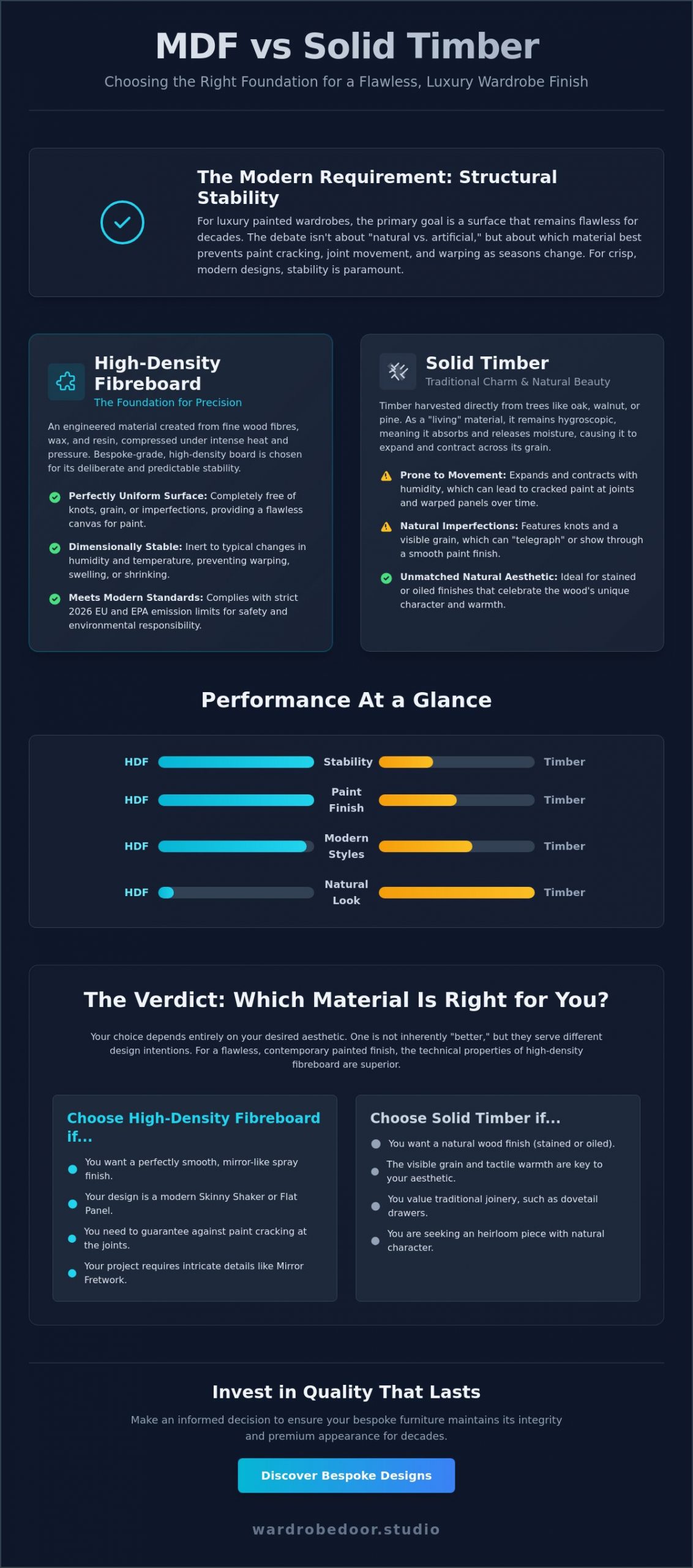
Solid wood refers to timber harvested directly from trees, categorised into hardwoods like oak and walnut, or softwoods such as pine. It is a “living” material; it remains hygroscopic, meaning it absorbs and releases moisture based on the room’s environment. This characteristic causes timber to expand and contract across the grain, which can lead to warping if not managed correctly. To accommodate this movement, traditional joinery techniques are essential. Whilst this movement is a hallmark of natural beauty, it can pose significant challenges for wardrobes that require a seamless, painted appearance where joints must remain invisible over time.
What is High-Density MDF?
High-density Medium-density fibreboard (MDF) is an engineered product created by breaking down wood residuals into fine fibres. These fibres are combined with wax and a resin binder, then formed into panels by applying intense heat and pressure. It’s vital to distinguish bespoke-grade, high-density board from the standard versions found in DIY outlets. The high-density variant is far more compact, offering a stable, uniform surface that is entirely free from knots or grain. In the context of luxury furniture, “engineered” signifies a deliberate choice for stability. It ensures that intricate designs like Mirror Fret or Skinny Shaker doors remain perfectly aligned and don’t suffer from the “telegraphing” of grain through the paint as the seasons change.
The Allure of Solid Wood: Traditional Aesthetics and Natural Traits
Solid timber possesses an inherent character that engineered materials cannot replicate through artificial means. The unique grain patterns, knots, and tactile warmth of species such as European Oak or American Black Walnut provide a sensory experience that defines a room’s atmosphere. For many homeowners, the choice of solid wood is a reaction against throwaway culture; it represents an investment in a piece of furniture intended to last for generations. This “heirloom” factor is a significant driver in the mdf vs wood wardrobes debate, particularly for those who value the prestige of natural materials.
Sustainability remains a cornerstone of the luxury furniture market. Responsibly sourced timber from FSC-certified forests ensures that your commission supports ethical forestry practices. Beyond the environmental credentials, solid wood excels in specific functional areas where its structural integrity is a distinct advantage. It’s the ideal material for internal drawer boxes, where dovetail joinery showcases craftsmanship, and for any surface where a stained or oiled finish is desired. These finishes allow the natural growth rings of the tree to remain visible, celebrating the organic origins of the piece. If your vision for bespoke fitted wardrobes includes the rich, dark tones of stained timber, solid wood is the peerless choice.
The Challenge of Seasonal Movement
The primary technical hurdle with solid timber is its status as a hygroscopic material. It never truly stops “breathing”. As central heating is toggled during winter or humidity rises in summer, the wood expands and contracts across its width. In the context of mdf vs wood wardrobes, this movement can be problematic for painted finishes. Even the most expertly applied paint can develop hairline cracks at the joints where stiles and rails meet. For tall wardrobe doors, which often exceed two metres in height, this internal tension poses a significant risk of bowing or twisting over time, potentially causing doors to catch on the carcass or sit unevenly.
Maintenance Requirements for Timber
Preserving the integrity of solid wood requires a commitment to long-term care. To prevent the timber from drying out or fading, natural finishes must be periodically replenished with specialist oils or waxes. Before the manufacturing process even begins, the timber must undergo rigorous kiln-drying and seasoning to reach an optimal moisture content, usually between 8% and 10% for indoor use. Failure to properly season the wood can lead to catastrophic splitting once the furniture is installed in a temperature-controlled home. Solid wood requires more environmental control than engineered alternatives.
High-Density Fibreboard: The Modern Choice for Bespoke Designs
High-density fibreboard is frequently misunderstood as a mere budget alternative. Within the context of luxury cabinetry, it is actually a deliberate technical choice for achieving a superior painted finish. When evaluating mdf vs wood wardrobes, the primary advantage of high-density board lies in its isotropic nature. Unlike solid timber, which possesses a directional grain that reacts to humidity, engineered board remains dimensionally stable. It won’t bow, twist, or shrink. This stability is essential for the longevity of skinny shaker wardrobe doors, where the slender proportions require a material that stays perfectly flat over time.
We utilise Moisture-Resistant (MR) MDF to ensure peak performance in varied home environments. This specific grade of board contains a higher resin content; it provides a robust defence against the subtle fluctuations in atmospheric moisture found in modern bedrooms. It offers a dense, uniform core that is ideal for precision machining. This ensures that every component remains structurally sound regardless of the weather outside.
Achieving the Perfect Painted Finish
Natural timber is inherently porous. It often contains resins and tannins that can migrate to the surface, causing unsightly yellowing or “bleed” through light-coloured paints. High-density fibreboard eliminates this risk entirely. Its surface is exceptionally smooth and non-porous, serving as the ideal substrate for professional hand-sprayed finishing techniques that deliver a flawless, durable surface impossible to achieve on natural timber. This process ensures a molecular bond between the paint and the board. The result is a durable, eggshell-smooth texture that feels cool and substantial to the touch. It provides a level of visual perfection that is difficult to replicate on the uneven surface of oak or pine. For homeowners seeking the ideal sheen level for their cabinetry, understanding the benefits of satin finish wardrobe doors is an essential next step in specifying a truly refined result.
Versatility in Style and Design
Precision is the hallmark of bespoke manufacturing. Engineered board allows for millimetre-perfect detailing that is often impossible to achieve with natural wood without risking structural failure. This versatility is particularly evident when producing replacement wardrobe doors made to measure. Whether the design calls for intricate Mirror Fret patterns or minimalist, handleless Flat Panels, the material maintains its integrity under the pressure of CNC machining. It allows for crisp edges and deep profiles that remain sharp for the life of the furniture. This structural reliability supports modern design trends that demand clean lines and flawless surfaces.
Performance Comparison: Durability, Movement, and Finish
A direct analysis of mdf vs wood wardrobes reveals that durability is not a binary choice. Whilst solid oak possesses a natural hardness, high-density fibreboard offers superior resistance to the surface delamination often seen in painted timber. Impact resistance is comparable between premium grades of both materials. However, engineered board provides a more uniform density throughout the panel. This prevents the soft spots sometimes found in natural softwoods or lower-quality timber cuts. When you invest in british made wardrobe doors, you are securing a product designed for 20+ year longevity, regardless of the core material chosen.
Weight is a critical factor in the engineering of bespoke furniture. High-density board is often heavier than many softwoods, which places greater demand on the internal hardware. We specify heavy-duty, soft-close hinges to manage this mass, ensuring that doors remain perfectly aligned over decades of daily use. From a cost-effectiveness perspective, using engineered board for the doors and carcass allows you to allocate more of your budget towards professional installation and premium hand-sprayed wardrobe finishes that elevate the overall aesthetic. This creates a luxury result that often exceeds the visual quality of a fully solid wood wardrobe at a similar price point.
The “Joint-Crack” Problem
Interior designers frequently specify high-density board for a “modern classic” look to avoid the inevitable “joint-crack” problem. Traditional timber shaker doors are constructed from five separate pieces. As the wood expands, the paint film at the joints is forced to stretch. Eventually, it snaps. This creates visible hairline fractures or “stepped” joints that disrupt the clean lines of the cabinetry. Because high-density board can be machined from a single solid sheet, it remains entirely stable. The paint surface stays intact for years, maintaining that flawless, showroom appearance without the need for constant touch-ups.
Repairability and Refurbishment
The ability to refurbish furniture is a hallmark of quality. Whilst deep gouges in solid oak can be sanded out, the process often requires stripping the entire door to ensure a consistent stain. In contrast, a scratch on a sprayed MDF surface can be local-sanded and professionally re-sprayed with ease. This material supports a “future-proof” design approach. If you decide to update your bedroom’s palette in five years, the stable surface of the board allows for a clean colour change. High-quality MDF is easier to colour-match during repairs than natural timber because it lacks the unpredictable underlying grain tones that can bleed through new coats. Explore our range of bespoke fitted wardrobes to see how these materials perform in high-end settings.
Investing in Quality: Making the Right Choice for Your Home
The conclusion of the mdf vs wood wardrobes debate depends entirely on your design objectives and the functional requirements of your space. If your vision centres on a pristine, contemporary aesthetic with a hand-sprayed finish, high-density fibreboard is the technically superior substrate. Its stability is essential for the sharp lines of Skinny Shaker Wardrobe Doors or the seamless surface of Flat Panel Wardrobe Doors. Conversely, solid timber remains the peerless choice for those who desire the organic warmth of a stained or oiled finish where the natural grain is the primary feature. Choosing the right material ensures your furniture complements the architectural character of your home whilst providing lasting utility.
To further refine the character of your home through both heritage materials and thoughtful palettes, you can discover Nicholas Wells Antiques and their exploration of how colour symbolism can enhance a room’s atmosphere.
Many of the most successful luxury commissions adopt a hybrid approach. This strategy utilises solid timber for high-traffic internal elements, such as dovetail drawer boxes or structural accents, whilst employing moisture-resistant engineered board for the large external door panels. This combination leverages the prestige of real wood with the paint-holding capabilities of high-density fibreboard. Before commissioning your bespoke project, consider this final checklist:
- Desired Finish: Will the doors be hand-sprayed in a specific colour or finished to reveal the natural grain? If a sprayed result is your goal, exploring the distinction between gloss, matt, and satin finish wardrobe doors will help you arrive at the ideal specification.
- Design Complexity: Does the style involve intricate fretwork or slender shaker rails that require maximum structural stability?
- Room Environment: Is the space prone to humidity fluctuations that might cause natural timber to move?
- Maintenance: Are you prepared for the periodic oiling required by solid wood, or do you prefer the “wipe-clean” durability of a sprayed finish?
The Wardrobe Door Studio Approach
We prioritise the use of high-density, moisture-resistant substrates because they provide the most reliable foundation for our premium hand-sprayed finishing. Our manufacturing process takes place entirely in England. This allows us to maintain rigorous quality control over every component, from the initial CNC machining to the final coat of paint. By anchoring our production in a tradition of British craftsmanship, we ensure that every set of Classic Shaker Wardrobe Doors meets a standard of excellence that off-the-shelf alternatives cannot match. Our design service is structured to help you navigate these material choices, ensuring the final specification aligns with your lifestyle and property needs.
Next Steps for Your Project
Selecting the right material is a tactile process that benefits from physical comparison. We encourage homeowners and trade professionals to order samples to experience the weight, density, and finish of our doors firsthand. Once you have narrowed down your preferences, booking a design consultation allows us to tailor the material selection to your specific space. Every commission for Bespoke Fitted Wardrobes concludes with a professional installation. This final stage ensures that your investment is perfectly aligned, structurally sound, and ready to serve your home for decades.
Elevating Your Bedroom with Precision Craftsmanship
Selecting the right foundation is the most critical step in commissioning bespoke furniture. The technical stability of high-density fibreboard prevents the joint-cracking common in natural timber, ensuring your investment remains flawless for decades. Whilst solid wood is the traditional choice for stained finishes, engineered board is the professional preference for a mirror-smooth, hand-sprayed aesthetic. When you weigh up the benefits of mdf vs wood wardrobes, it’s clear that the superior material is the one that best serves your specific design vision and environmental needs.
Our collection is meticulously hand-sprayed in England using luxury high-density materials to ensure a durable, premium feel. We provide bespoke sizes for a perfect fit, allowing you to transform your space with absolute precision and confidence. Explore our range of bespoke wardrobe doors and request a consultation to begin your journey towards a more refined home. You’re one step away from a wardrobe that perfectly balances heritage craftsmanship with modern performance and enduring beauty.
Frequently Asked Questions
Is MDF or solid wood better for painted wardrobe doors?
High-density fibreboard is the superior choice for a painted finish because it provides a perfectly uniform, non-porous substrate. Unlike natural timber, it lacks knots and grain patterns that can “telegraph” through the paint or cause tannin bleed. This stability ensures that the hand-sprayed surface remains flawless without the risk of hairline cracks appearing at the joints as the material settles into your home environment.
Do MDF wardrobes last as long as solid wood ones?
Modern wardrobes constructed from premium moisture-resistant board are designed for a lifespan exceeding 20 years. Whilst solid wood is often regarded as an heirloom material, high-density engineered boards offer better structural integrity for fitted cabinetry. They don’t suffer from the drying or splitting that can affect natural timber over time, provided they are finished with a professional, high-quality spray coating.
Why do architects often prefer MDF for built-in furniture?
Architects specify engineered board primarily for its dimensional stability and precision. Built-in furniture is often scribed tightly to walls and ceilings where airflow is restricted and temperature fluctuations occur. In these environments, MDF remains perfectly square and stable. This prevents the gaps or binding doors that often occur when natural wood expands and contracts against the fixed architectural elements of a room.
Can you tell the difference between painted wood and painted MDF?
The difference is usually visible in the surface texture and the behaviour of the joints. Painted wood often reveals subtle grain outlines and may develop small cracks where the stiles and rails meet. In the debate of mdf vs wood wardrobes, the engineered option is chosen specifically for its “liquid-smooth” appearance. It provides a contemporary, high-end look that remains uniform across the entire door surface.
Does solid wood warp more than MDF in a bedroom environment?
Solid wood is significantly more prone to warping because it is a hygroscopic material that reacts to changes in humidity and central heating. It expands and contracts across the grain, which can cause tall doors to bow or twist. High-density fibreboard is isotropic, meaning it has the same properties in all directions. This makes it far more reliable for maintaining a perfectly flat profile in a temperature-controlled bedroom.
Is high-density MDF eco-friendly compared to natural timber?
Engineered board is a highly sustainable choice as it utilises wood residuals, ensuring that almost 100% of the tree is used during production. New European Commission regulations taking effect in August 2026 establish a strict formaldehyde emission limit of 0.062 mg/m³, making modern boards exceptionally safe for home use. When sourced from responsibly managed forests, both materials offer strong environmental credentials, but MDF excels in waste reduction.
What is the best material for tall, floor-to-ceiling wardrobe doors?
High-density fibreboard is the only material recommended for floor-to-ceiling doors exceeding 2.4 metres in height. The internal tensions within a single piece of solid timber are too great at this scale, leading to a high risk of catastrophic bowing. An engineered substrate allows for these grand proportions whilst remaining perfectly light and stable, ensuring the doors hang correctly and operate smoothly for the life of the wardrobe.
How does the cost of bespoke MDF wardrobes compare to solid wood?
Bespoke wardrobes using engineered substrates are generally more cost-effective, allowing you to invest a larger portion of your budget into luxury finishes and professional installation. Solid wood carries a significant price premium due to the cost of the raw timber and the complex joinery required to manage its movement. Choosing high-density board provides a luxury aesthetic and superior technical performance without the prohibitive expense associated with solid oak or walnut.