The most expensive wardrobe door in your home isn’t the one with the highest initial price tag; it’s the mass-produced import you are forced to replace when the edges begin to peel. You likely want a bedroom that feels like a sanctuary, yet many homeowners find themselves settled for standard sizes that leave awkward gaps or finishes that lose their lustre within months. It is frustrating to invest in your home only to see materials warp under the weight of daily use.
This article explores why british made wardrobe doors offer superior engineering and long-term value in 2026. We will debunk five common myths surrounding bespoke manufacturing, from the solid wood fallacy to the reality of hand-sprayed finishes versus vinyl wrapping. You will discover how British craftsmanship accommodates the unique architectural quirks of UK homes while providing a high-end, tailored aesthetic that stands the test of time. By the end, you’ll have the confidence to choose materials that ensure your investment remains as beautiful in a decade as it is on the day of installation.
Key Takeaways
- Understand why modern engineered materials often outperform solid timber in the unique climate of a centrally heated British home.
- Discover why british made wardrobe doors provide a chemically bonded, hand-sprayed finish that far outlasts standard vinyl-wrapped alternatives.
- Learn to distinguish between artisanal studio production and mass-produced imports to ensure long-term value for your investment.
- Realise how a bespoke, made-to-measure approach can simplify your project by focusing on precision door replacement rather than a full cabinetry overhaul.
- Identify the key markers of quality that allow a wardrobe to maintain its “quiet luxury” aesthetic for decades.
The “Made in England” Label: More Than Just a Geographic Marker
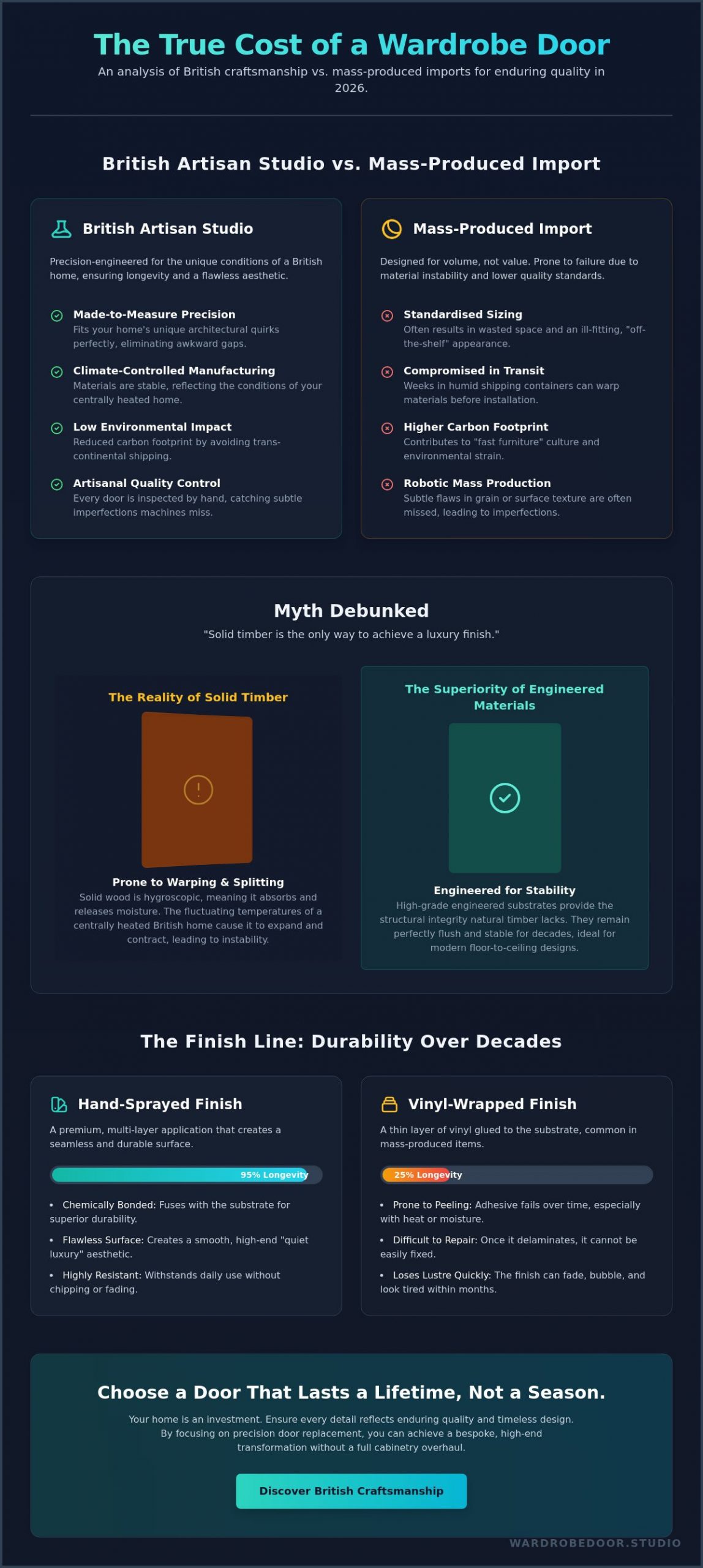
The “Made in England” label represents a commitment to precision that transcends simple patriotism. When you invest in british made wardrobe doors, you aren’t just buying a product; you are supporting a supply chain that prioritises durability over shipping volume. Mass-produced imports often spend weeks in humid shipping containers; this can compromise material stability before the doors even reach your home. In contrast, local workshop production ensures that components are manufactured in a climate-controlled environment, mirroring the conditions of your own bedroom. This proximity allows for a level of quality control that is impossible to replicate across continents.
Choosing locally manufactured furniture also addresses the growing demand for sustainability. With the built environment responsible for approximately 40% of total UK carbon emissions, reducing the distance materials travel is a practical way to lower your home’s environmental impact. This alignment with the “Quiet Luxury” movement suggests that true value lies in items that are built to last, moving away from the disposable culture of “fast furniture” that populates many high-street showrooms. It is an investment in the history of English furniture, where longevity and aesthetic restraint take precedence over fleeting trends. By choosing a Studio that manufactures amongst the local community, you ensure that your bedroom remains a sanctuary of enduring quality.
Quality Control and British Standards
British manufacturers adhere to rigorous technical requirements that ensure every component functions perfectly. We apply strict testing to hinge holes and structural points to prevent the sagging often seen in modular units. Because the workshop is nearby, we can maintain much tighter tolerances for made-to-measure orders. If a door needs to fit a specific alcove, a millimetre matters. By sourcing high-grade raw materials within the UK, we ensure that the base substrate meets the density required for a professional, long-lasting finish. This meticulous approach to british made wardrobe doors ensures they remain stable even as the seasons change.
The Artisan Element in Modern Manufacturing
While modern precision machinery provides the accuracy needed for bespoke cabinetry, the human eye remains irreplaceable. Robotic mass-production lines often miss subtle imperfections in grain or surface texture that a Master Artisan would catch instantly. In a dedicated Studio environment, every door is inspected by hand before it moves to the spraying booth. We integrate traditional joinery techniques with advanced CNC technology to create products that are both technically perfect and visually soulful. This hybrid approach ensures that your wardrobe doors don’t just look standard; they feel like a tailored piece of architecture designed specifically for your home.
Myth: Solid Timber is the Only Way to Achieve a Luxury Finish
Many homeowners assume solid timber is the pinnacle of luxury cabinetry. Whilst the idea of “real wood” carries a certain prestige, it is often a technical misfit for the modern British bedroom. Solid wood is a hygroscopic material, meaning it constantly absorbs and releases moisture from the air. In a country where we rely heavily on central heating during damp winters, the internal environment of our homes fluctuates significantly. These changes cause solid timber to expand and contract, which inevitably leads to warping, twisting, or panels splitting over time. For large-scale british made wardrobe doors, this instability is a significant risk that can ruin a high-end aesthetic within a single season.
Engineered substrates have redefined the standards of luxury by providing the structural integrity that natural timber lacks. Research into the future of UK manufacturing suggests that technical innovation in material science is a key driver of quality in the domestic furniture industry. By using high-grade engineered materials, manufacturers can create floor-to-ceiling designs that remain perfectly flush for decades. If you are considering a bedroom upgrade, viewing the material samples for bespoke fitted wardrobes will reveal how these modern substrates provide a far more stable foundation than traditional timber ever could.
The Stability Factor in British Homes
The temperature fluctuations in UK homes are particularly demanding on furniture. When solid wood moves, it puts immense pressure on the joints, often causing the paint to crack where the rails meet the stiles. High-grade MDF or HDF eliminates this “movement gap” because the material is uniform in every direction. High-Density Fibreboard (HDF) is the professional standard for bespoke painted furniture. By choosing these stable materials, you ensure that the crisp lines of a Shaker door or the minimalist edge of a flat panel remain intact regardless of the weather outside. For a detailed breakdown of how engineered board compares to natural timber in real-world conditions, our guide on MDF vs wood wardrobes explains why high-density fibreboard is the superior choice for a luxury painted finish.
Achieving the Perfect Paint Surface
Luxury is defined by the finish, and engineered wood provides the ultimate canvas for hand-spraying. Unlike solid timber, which has an open grain that can “telegraph” through the paint, HDF offers a smooth, non-porous surface. This density is crucial for preventing “furring” on the profiled edges of the door, where lesser materials often absorb paint and become rough to the touch. Our british made wardrobe doors utilise moisture-resistant grades of these materials, ensuring that even in houses with older architecture or varying humidity levels, the finish remains pristine and the doors remain perfectly aligned.
Hand-Sprayed vs. Vinyl Wrapped: The Truth About Longevity
The durability of a wardrobe door is determined by how the surface is treated. Vinyl wrapping involves heat-shrinking a thin plastic “skin” over an MDF core; it is a method designed for speed and mass production. Whilst this might look acceptable in a showroom, the bond is purely mechanical. In contrast, a hand-sprayed finish creates a chemical bond between the paint and the substrate. This distinction is vital for british made wardrobe doors manufactured in a Studio setting, where the goal is a finish that ages gracefully rather than one that eventually fails. A sprayed surface becomes part of the door itself, whereas a vinyl wrap remains a separate layer waiting to detach.
Repairability is perhaps the most significant advantage of a professional paint finish. Life happens. Doors get scratched, or interior trends shift. A hand-sprayed door can be sanded back and resprayed in a new colour, effectively resetting its lifespan. If a vinyl-wrapped door is damaged, the plastic often tears or bubbles, making a seamless repair impossible. You are then forced to replace the entire door, which is rarely a perfect match due to the way plastic discolours under UV light. Choosing a Studio-quality finish is an investment in a product that can be maintained for decades.
The Hand-Spraying Process Explained
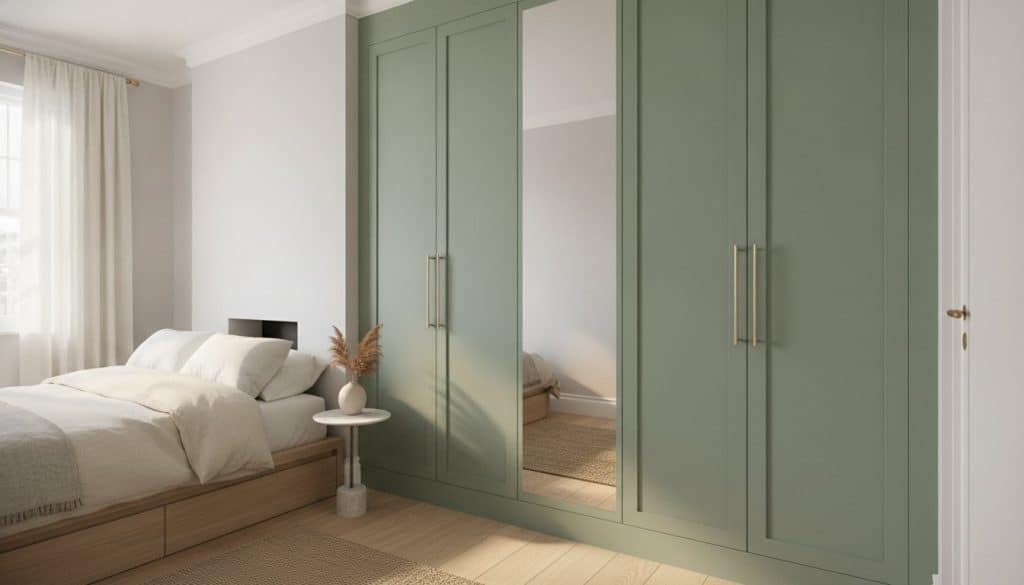
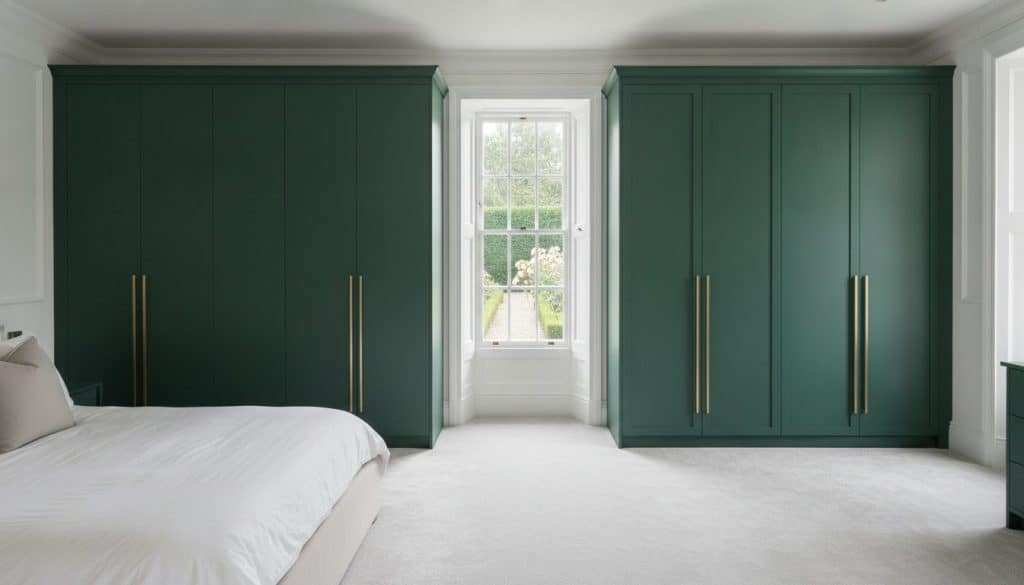
Achieving a high-end finish requires a meticulous multi-stage programme. It begins with a dedicated primer coat followed by intensive hand-sanding to ensure the surface is perfectly level. We then apply multiple top-coats of specialist furniture paint. For British interiors, an eggshell or satin finish is the standard for sophisticated design; it offers a soft sheen that diffuses light beautifully without the harsh glare of high-gloss plastic. If you want to understand why this particular sheen level has become the definitive choice for luxury bedrooms, our comprehensive guide to satin finish wardrobe doors explores the practical and aesthetic advantages in detail. This process also grants you total creative freedom. You aren’t limited to a factory catalogue of foils; you can specify any colour, including heritage shades from Farrow & Ball, to ensure your british made wardrobe doors perfectly complement your room’s palette.
The Problem with Mass-Produced Wraps
The primary weakness of vinyl is delamination. Over time, the adhesive used in mass-produced wraps can break down, especially when exposed to the heat of a radiator or the UV rays from a south-facing window. This causes the plastic to peel away at the edges, a problem that is rampant amongst cheaper imported units. There is also a tactile difference. Vinyl always feels like plastic. A hand-sprayed finish has a tactile, organic quality that feels substantial and high-end. By avoiding synthetic wraps, you are choosing a more sustainable path. Sprayed doors have an almost infinite lifespan, whereas delaminated vinyl doors contribute to the cycle of furniture waste that plagues the modern industry.
Navigating the Made-to-Measure Process Without the Stress
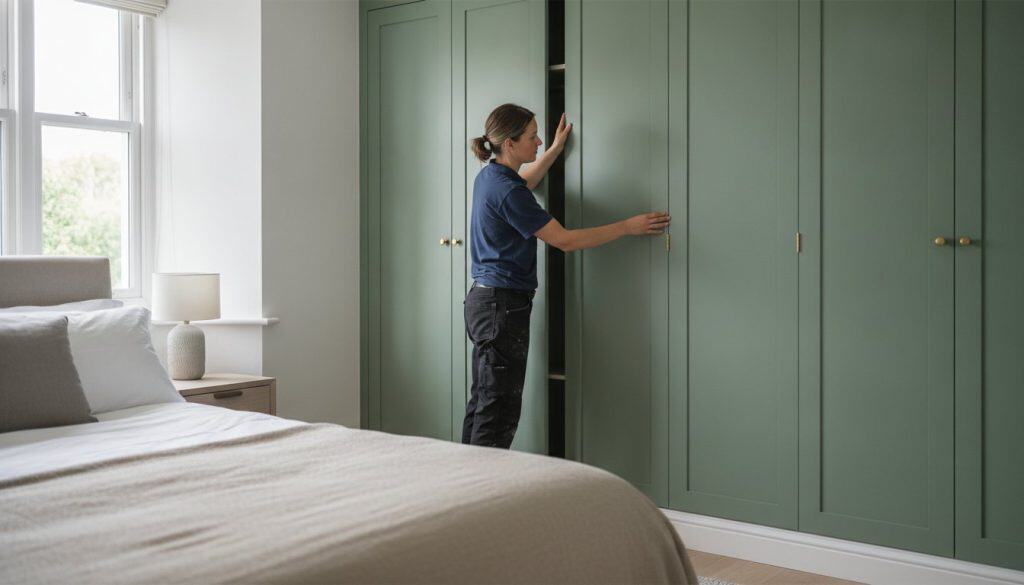
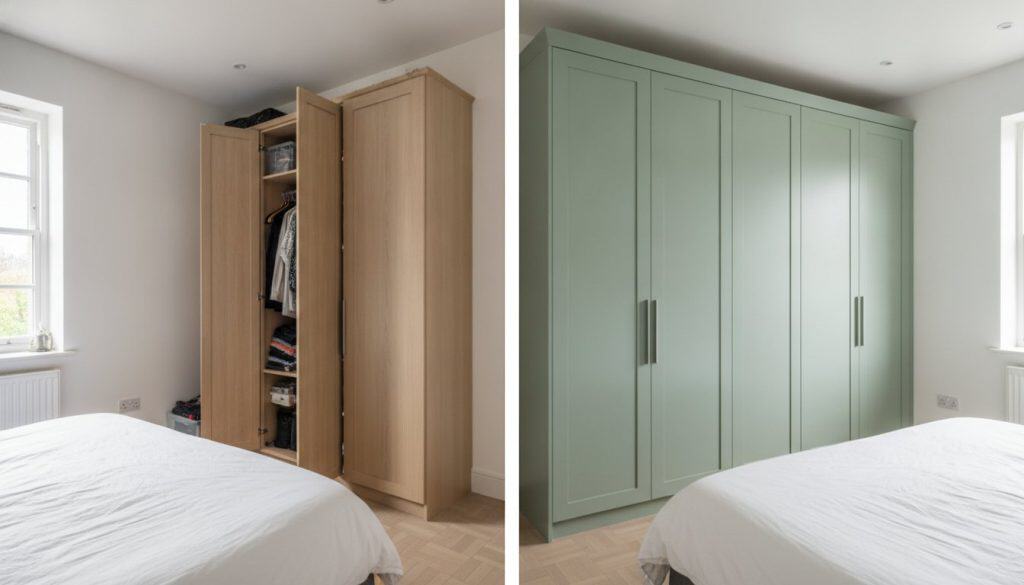
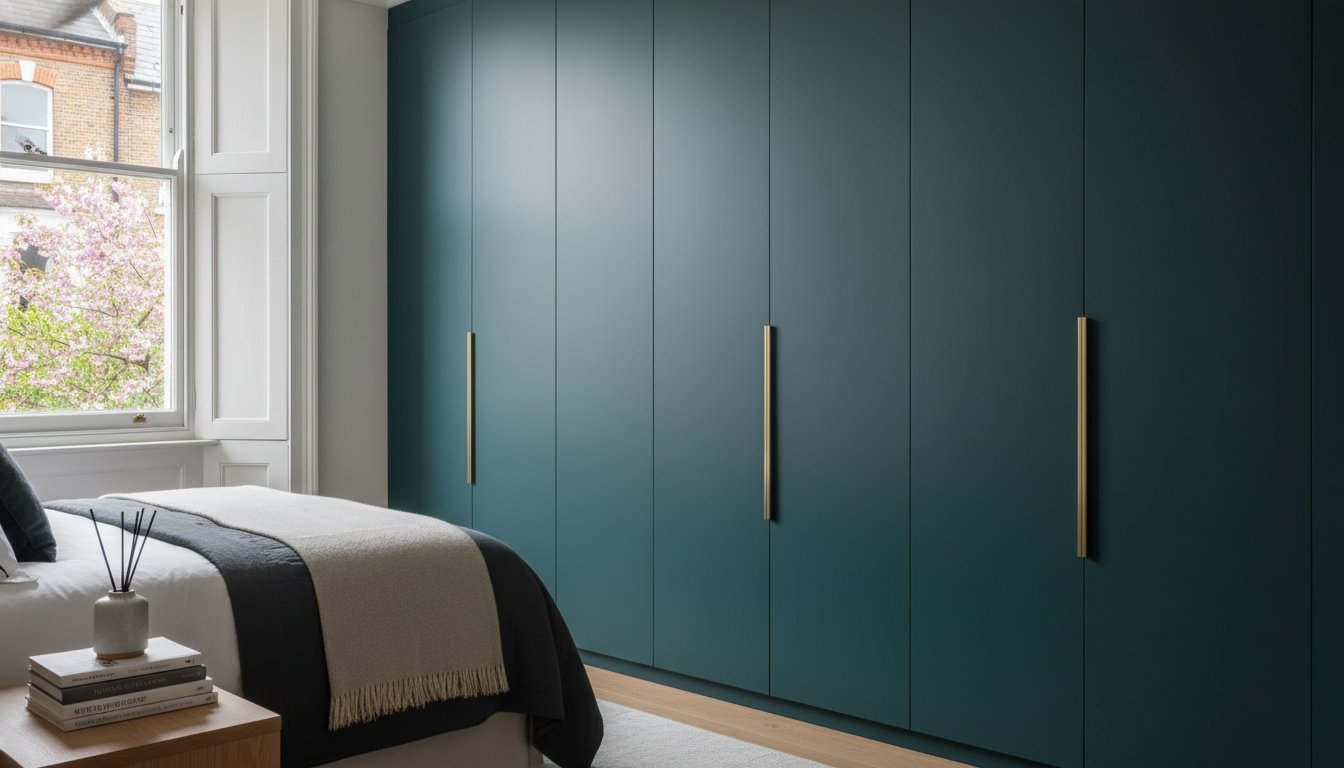
The idea that bespoke furniture is inherently difficult or prohibitively expensive is a misconception that often prevents homeowners from achieving their ideal bedroom design. In reality, a strategic wardrobe refresh can be far more efficient than a full cabinetry overhaul. If your existing carcasses are structurally sound, simply replacing the fronts with high-quality british made wardrobe doors can transform the room’s aesthetic at a fraction of the cost of a complete rebuild. This modular approach allows you to focus your budget on the visible elements that define luxury, such as hand-sprayed finishes and precision-milled profiles.
To achieve a professional “built-in” look, attention must be paid to the architectural details. Trim kits and plinths are essential components that bridge the gap between your new doors and the ceiling or floor. They mask the uneven lines often found in British homes, ensuring the final installation looks like a deliberate part of the room’s structure. You can now explore these possibilities through a Virtual Showroom, which allows you to visualise different styles and configurations from the comfort of your home. This digital convenience, combined with traditional craftsmanship, makes the design phase both inspiring and organised.
Measuring Like a Professional
Precision is the foundation of any made-to-measure project. We recommend a three-point check when measuring existing openings: take dimensions at the top, middle, and bottom of the frame to account for any structural settling. You must also consider the placement of hinges and handles to ensure the new doors operate flawlessly within the space. Whilst some homeowners prefer the supply-only route for DIY projects, others opt for our Full Design to Installation service for complete peace of mind. If you are ready to begin, you can book a design consultation to ensure every millimetre is accounted for before manufacturing begins.
Choosing Your Style: Beyond the Basics
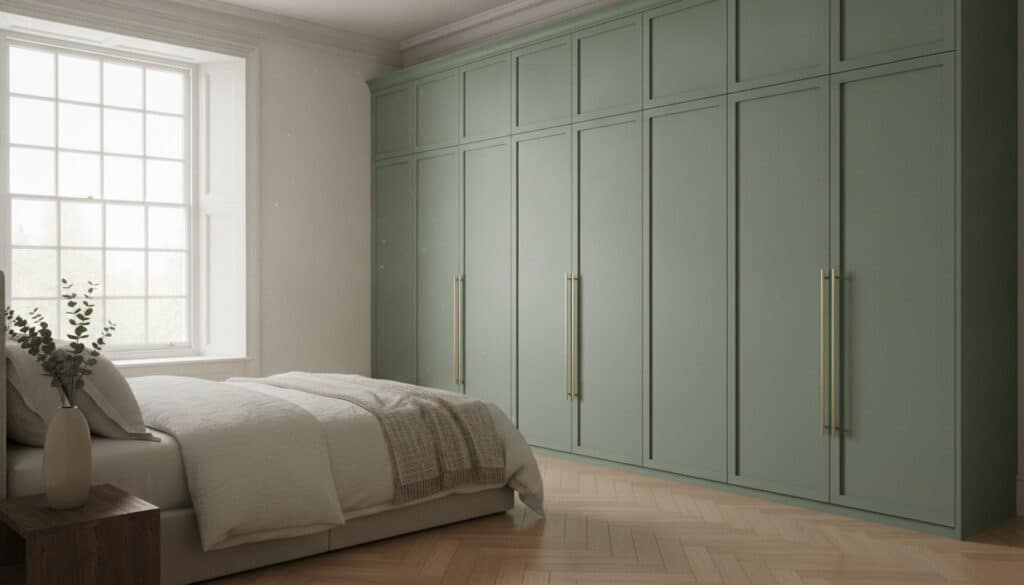
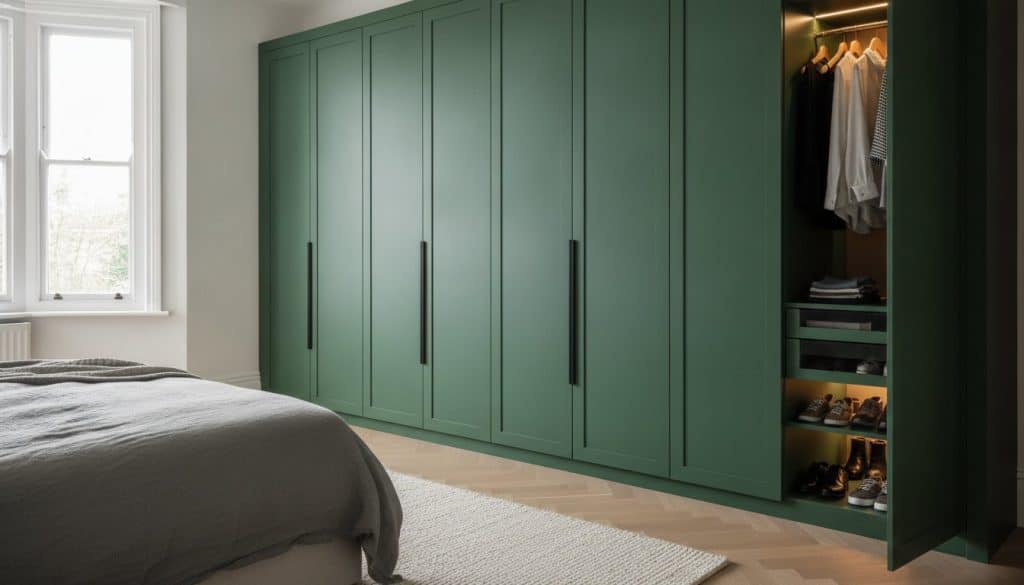
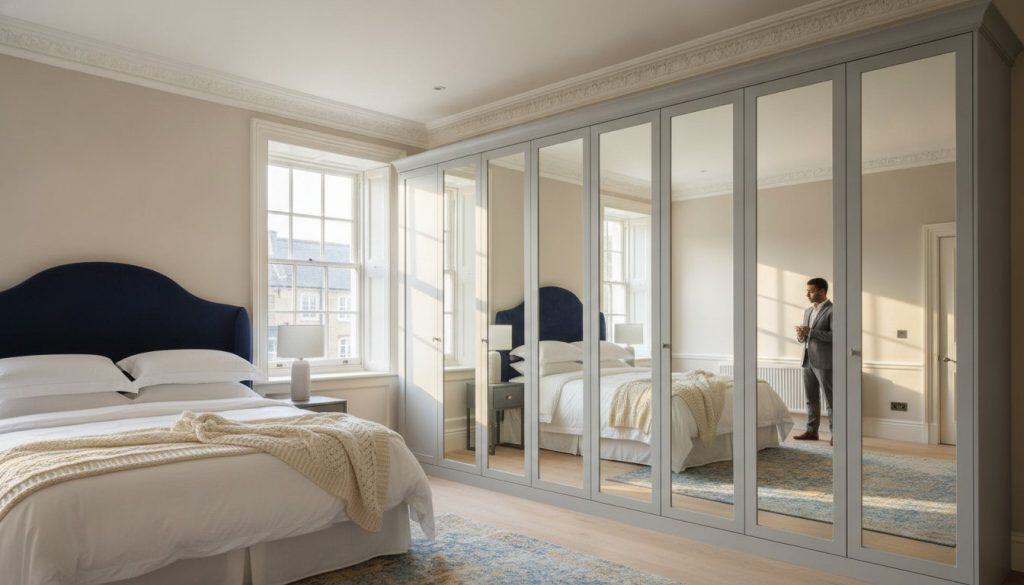
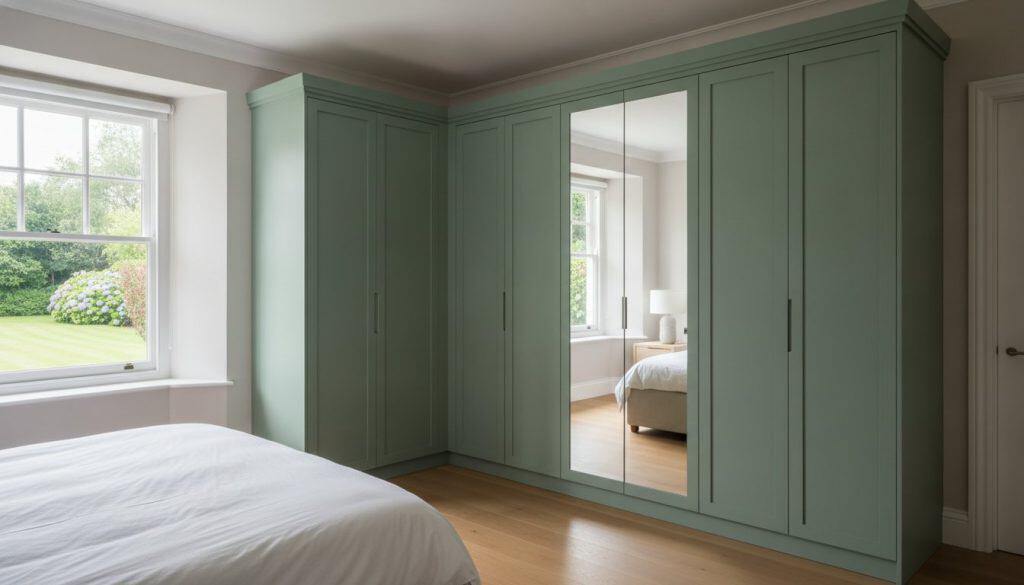
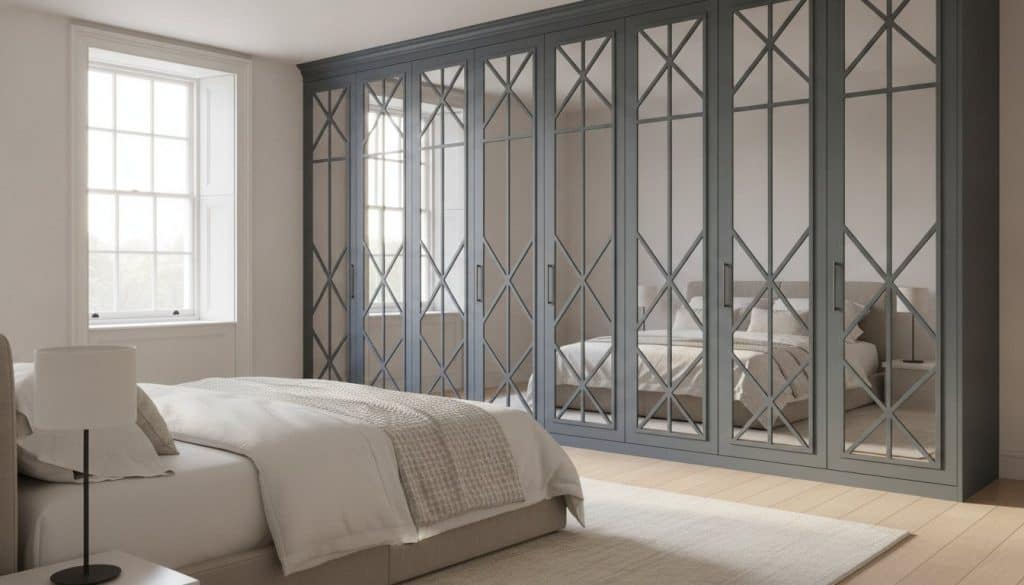
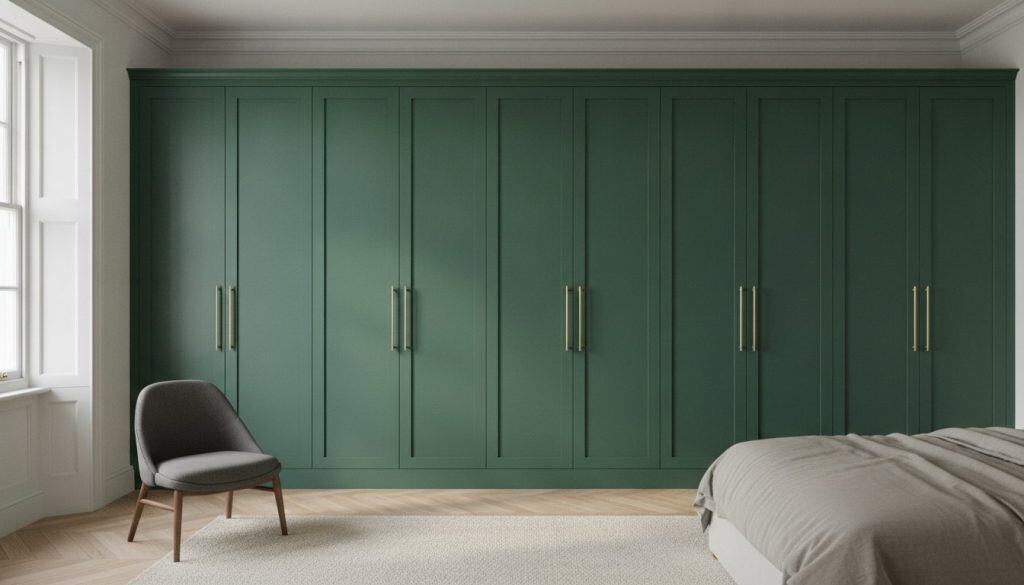
The design trends for 2026 show a clear preference for refined, slimline aesthetics. skinny shaker wardrobe doors have become the top choice for those seeking a modern twist on a classic design; they offer a minimalist profile that suits both contemporary and period properties. If you want to add light and the illusion of space, integrating mirror fretwork can make even the smallest dressing room feel expansive. Choosing a colour palette that complements your existing furniture is the final step. Whether you select a soft neutral or a bold graphite, the goal is to create a cohesive environment that reflects your personal style whilst maintaining the “quiet luxury” of the Studio standard. british made wardrobe doors provide the versatility needed to accommodate these bespoke requirements without the stress of a traditional renovation.
The Wardrobe Door Studio Standard: British Craftsmanship Defined
At Wardrobe Door Studio, our deep-rooted British heritage is the foundation of our meticulous approach to cabinetry. We don’t just manufacture components; we preserve a tradition of excellence that has been modernised for the contemporary home. Every set of british made wardrobe doors we produce is a testament to this commitment. By keeping our entire production process within England, we maintain absolute authority over the quality of every hinge hole, profile, and hand-sprayed surface. This local oversight is what allows us to offer a level of precision that global supply chains simply cannot guarantee.
We take immense pride in our role as a partner to both homeowners and industry professionals. Our Trade Counter serves as a dedicated resource for UK contractors and interior designers who require reliable, high-specification products for their own clients. This collaborative environment ensures that we stay at the forefront of technical requirements whilst supporting the broader British manufacturing sector. Choosing to work with a local Studio is more than a purchase. It is an investment in a heritage of skill that ensures your furniture remains a functional piece of art for decades.
Bespoke Solutions for Every Project
High-street retailers often struggle with the architectural realities of British housing. They rely on standard modular sizes that frequently leave unsightly gaps in alcoves or under sloped ceilings. We specialise in the non-standard. Our Studio can accommodate any dimension, from intricate mirror fretwork designs that add light to a room to minimalist flat-panel looks for a modern aesthetic. Every order is hand-sprayed and checked in our English facility. This ensures that every door meets the “quiet luxury” standard we are known for. You gain the peace of mind that comes from knowing your wardrobe was built specifically for your space, not plucked from a shipping container.
Your Next Steps to a Luxury Wardrobe
Transforming your bedroom begins with a conversation. You can book a design consultation to explore our full range of styles or request a supply-only quote if you already have your measurements ready. Whilst our craftsmanship is deeply rooted in British tradition, our nationwide delivery service ensures that trade and retail customers across the UK can access our premium british made wardrobe doors. It is often tempting to prioritise temporary savings with cheaper imports. However, the enduring value of British craftsmanship always proves to be the wiser investment. Prioritise quality and precision today to ensure your home reflects the high-end finish it deserves. Make the choice to invest in furniture that is built to last.
Elevate Your Home with Enduring British Craftsmanship
Investing in your home requires a shift from the temporary to the permanent. We have explored how modern material science prioritises stability over tradition and why a hand-sprayed finish offers a lifespan that mass-produced vinyl simply cannot match. True luxury is found in the precision of a bespoke fit that accommodates the unique character of your space. By choosing british made wardrobe doors, you aren’t just selecting a style; you are securing a standard of engineering that protects your investment for decades.
Our Wimbledon Studio specialises in refined skinny shaker and mirror fret designs, ensuring every project benefits from our full design to installation service. Every component is manufactured and hand-sprayed in England to meet our rigorous quality benchmarks. Whether you are a trade professional or a homeowner seeking a sanctuary, the path to a high-end finish is built on artisanal expertise. The decision to prioritise quality over temporary savings results in a wardrobe that remains as flawless as the day it was installed.
Book your design consultation or request a bespoke quote today to begin your journey. Your bedroom deserves the enduring quality of a master craft.
Frequently Asked Questions
Are British made wardrobe doors more expensive than those from big retailers?
British made wardrobe doors represent a higher initial investment than mass-produced high-street alternatives; however, they provide superior long-term value. This is due to the use of higher-density substrates and hand-sprayed finishes that outlast modular units. Whilst a budget retailer focuses on volume, a British Studio focuses on durability and precision, which reduces the need for costly replacements in the future.
What is the best material for replacement wardrobe doors?
Moisture-resistant High-Density Fibreboard (HDF) is the professional standard for luxury replacement doors. Unlike solid timber, which is prone to warping in centrally heated UK homes, HDF provides a perfectly stable, non-porous surface. This stability is essential for maintaining the crisp lines of a painted finish and ensuring the doors remain perfectly aligned over many years of use.
Can I replace the doors on my IKEA Pax wardrobe with bespoke ones?
You can certainly upgrade an IKEA Pax carcass with bespoke, made-to-measure doors to achieve a high-end, custom look. This is a highly efficient way to elevate your bedroom without the disruption of a full cabinetry overhaul. We specialise in manufacturing doors that accommodate standard hinge placements whilst providing a tailored exterior that looks like a permanent architectural feature of your home.
How long does it take to manufacture and deliver British made doors?
Typical lead times for british made wardrobe doors range from 10 working days to four weeks depending on the complexity of the design. This timeline reflects the deliberate nature of artisanal manufacturing, including the necessary drying time for hand-sprayed finishes. Choosing a UK-based Studio ensures more reliable delivery schedules compared to imports that are subject to international shipping delays.
Is it better to have doors hand-sprayed or vinyl wrapped?
Hand-spraying is the superior choice for longevity because it creates a chemical bond with the door surface. Vinyl wrapping is a plastic skin that is susceptible to delamination, especially near heat sources or in humid environments. A sprayed finish provides a more sophisticated, tactile feel and allows for future repair or colour changes that vinyl simply cannot accommodate. For a deeper understanding of how to choose the ideal sheen level for your bedroom, our guide to satin finish wardrobe doors provides expert advice on achieving the perfect balance between practicality and luxury.
Do you provide a professional installation service across the UK?
We offer a comprehensive Full Design to Installation service for clients in London and the surrounding areas, including our Wimbledon base. For customers further afield, we provide nationwide delivery of our bespoke doors for local installation by your own contractor. Our Trade Counter also supports professionals across the UK with high-specification components for their specific project requirements.
What is the difference between a skinny shaker and a traditional shaker door?
The primary difference lies in the width of the surrounding frame, known as the stiles and rails. A traditional Shaker door typically features a wider frame for a classic, period-appropriate look. In contrast, skinny shaker wardrobe doors utilise a much narrower profile, creating a minimalist and contemporary aesthetic that has become a dominant trend for 2026 British interiors.
Can I choose any colour for my hand-sprayed wardrobe doors?
You have total creative freedom to choose any colour for your hand-sprayed finish. We can match popular heritage palettes, such as those from Farrow & Ball or Little Greene, to ensure your wardrobe integrates seamlessly with your existing decor. Unlike factory-foiled doors, our hand-spraying process allows for a tailored colour match that reflects your personal style and the “quiet luxury” of your home.