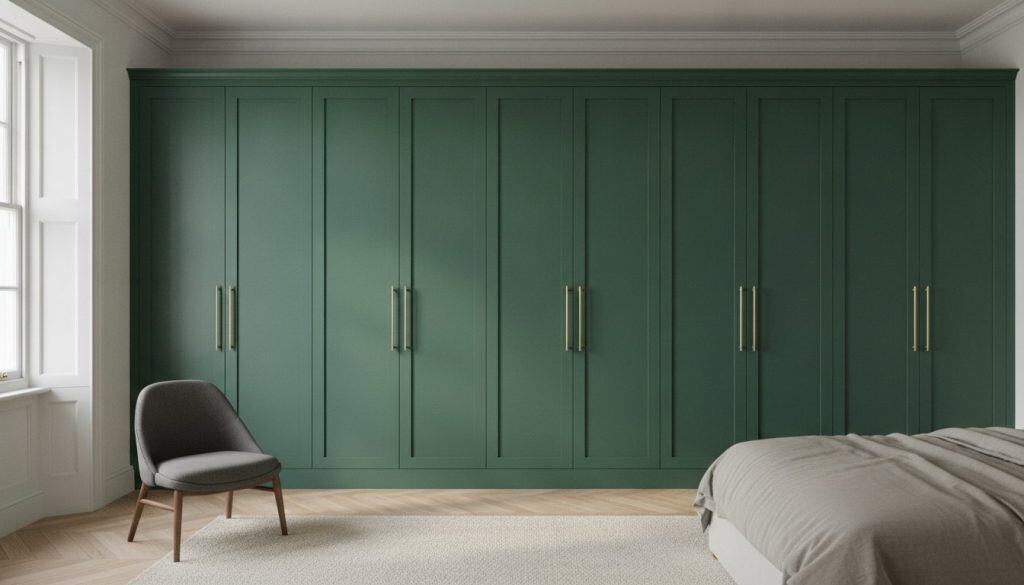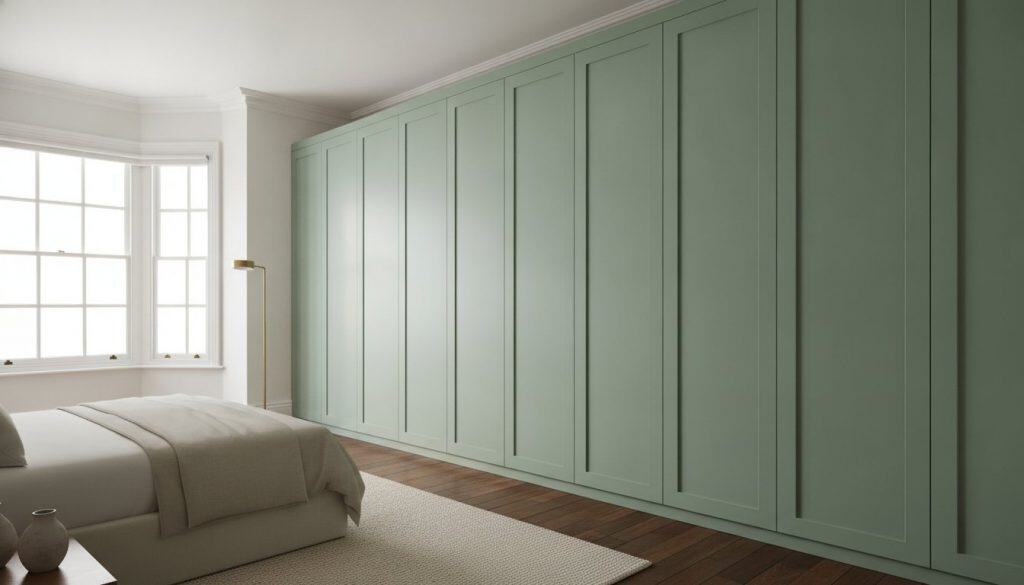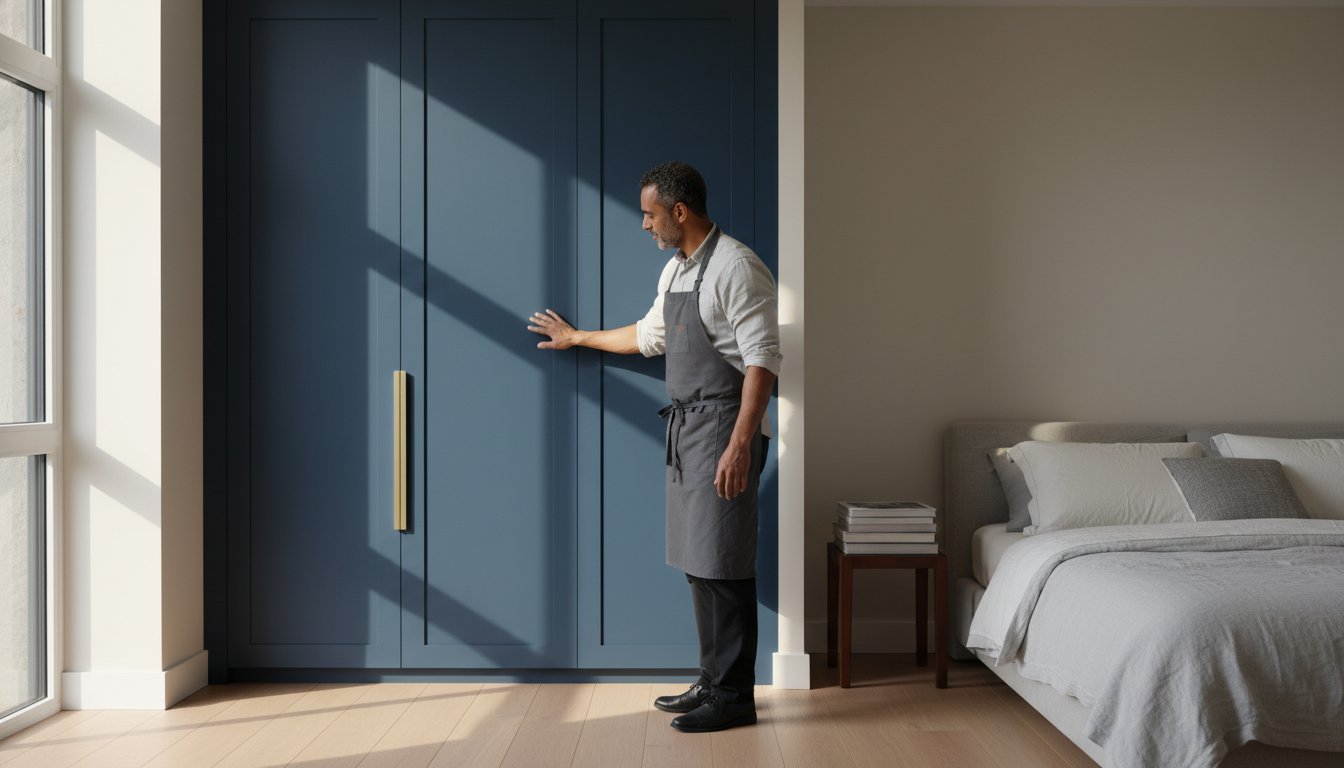
A luxury wardrobe that looks exquisite but feels like textured plastic is not an investment; it is a compromise. You’ve likely spent hours selecting the perfect bespoke fitted wardrobes, only to find the final result marred by visible brush marks or the inevitable peeling of a standard vinyl wrap. It’s a common frustration for those who demand excellence, yet the solution lies in a technique that balances industrial precision with the soul of traditional craftsmanship. Professional hand-sprayed finishing offers a level of refinement that off-the-shelf alternatives simply can’t replicate, providing a smooth-to-the-touch surface that feels as premium as it looks.
We understand that your home is a reflection of your personal taste, and you shouldn’t have to settle for limited colour palettes or finishes that degrade in a busy household. This guide explores why professional hand-sprayed finishing is the definitive choice for achieving a flawless, durable, and bespoke aesthetic for your luxury wardrobes. We’ll preview the latest 2026 trends, from the rise of sophisticated matte textures to the impact of new VOC regulations on luxury coatings. You’ll discover how this meticulous process creates a truly high-end result for your skinny shaker or classic shaker wardrobe doors.
Key Takeaways
- Understand the critical distinction between manual brushing and professional hand-sprayed finishing to ensure a flawless, mark-free surface on your bespoke fitted wardrobes.
- Learn how atomised coatings create a superior film build that resists the peeling and heat sensitivity often found in mass-produced vinyl-wrapped doors.
- Explore the 2026 trend for soft-touch matt and satin sheens to discover how light interaction can elevate the aesthetic of your bedroom design.
- Gain insight into the meticulous multi-stage sanding and priming process used in our workshop to achieve an enduring, professional result for all door styles.
Defining Hand-Sprayed Finishing: The Pinnacle of Bespoke Wardrobe Design
True luxury is found in the details that remain invisible to the untrained eye. For high-end fitted wardrobes, the most critical detail is the surface finish. Hand-sprayed finishing isn’t merely a decorative choice; it’s a rigorous manufacturing process conducted within a controlled workshop environment. Unlike standard retail offerings, this method utilises industrial-grade lacquers and paints to create a surface that is both resilient and visually arresting. It represents the perfect marriage of modern technology and traditional craft, ensuring that every component meets a standard of excellence that mass-produced alternatives cannot reach.
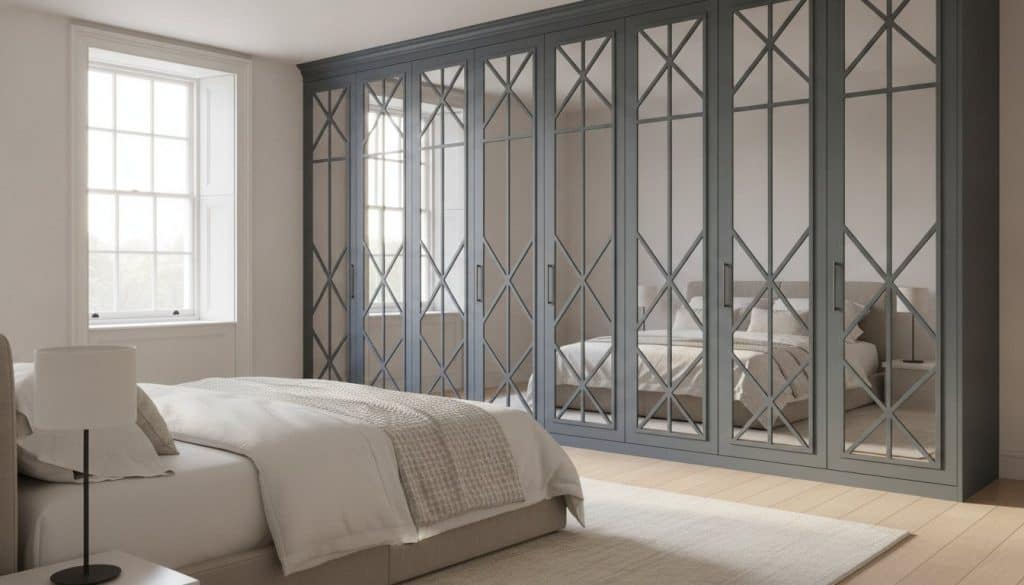
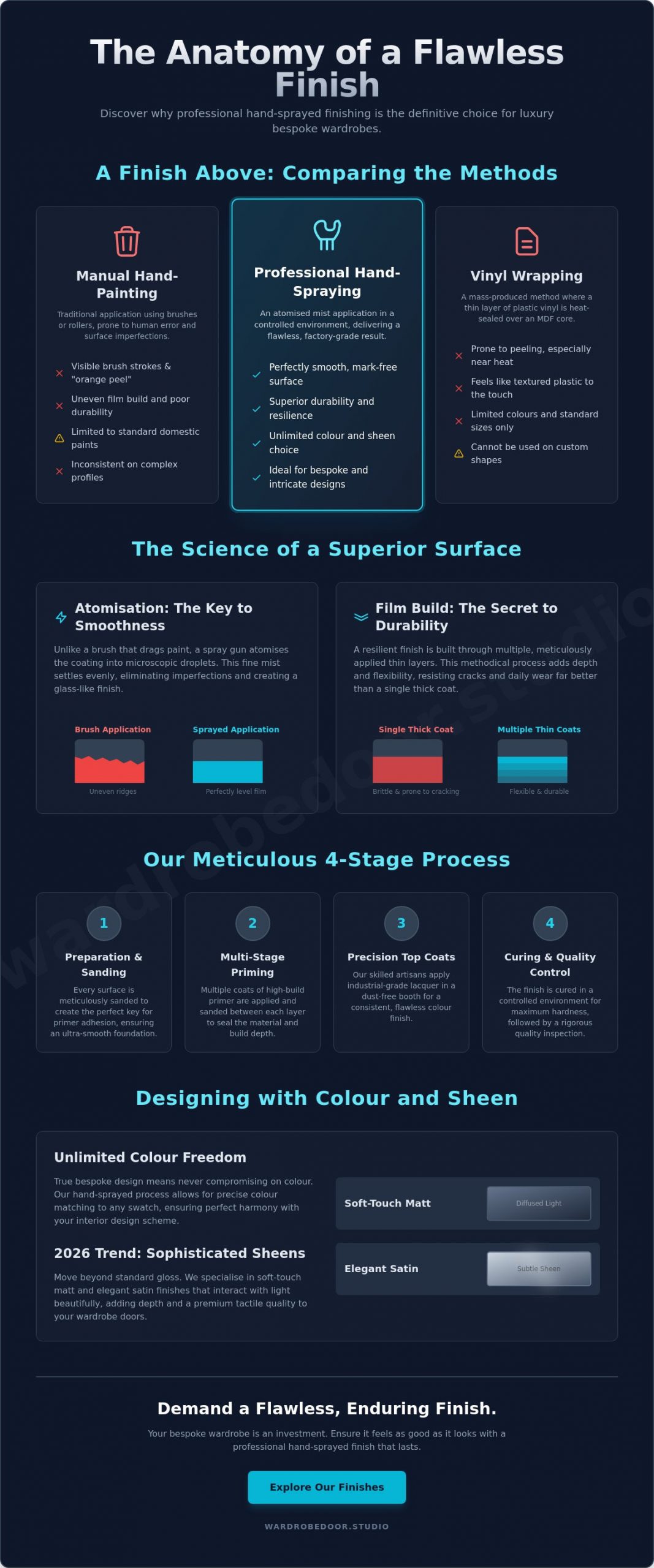
The term is often confused with traditional hand-painting. Whilst hand-painting relies on brushes or rollers to apply pigment, hand-sprayed finishing employs an atomised mist. This technique, a modern evolution of Spray painting, breaks the paint into microscopic droplets. These droplets settle into a perfectly level film, effectively eliminating the ridges and valleys left by bristles. The “hand” element remains vital to this process. A skilled artisan must guide the spray gun with precision to ensure every recess of a Mirror Fret Wardrobe Door receives an even coat. This human touch provides a level of quality control that automated machines often miss, especially when dealing with intricate fretwork or complex door profiles.
The Aesthetic Advantage of a Sprayed Surface
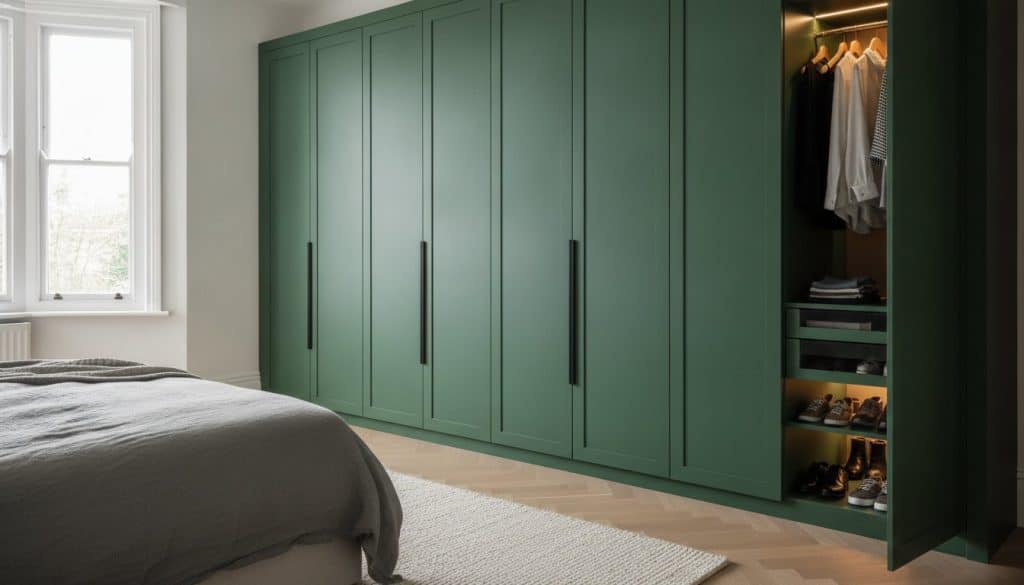
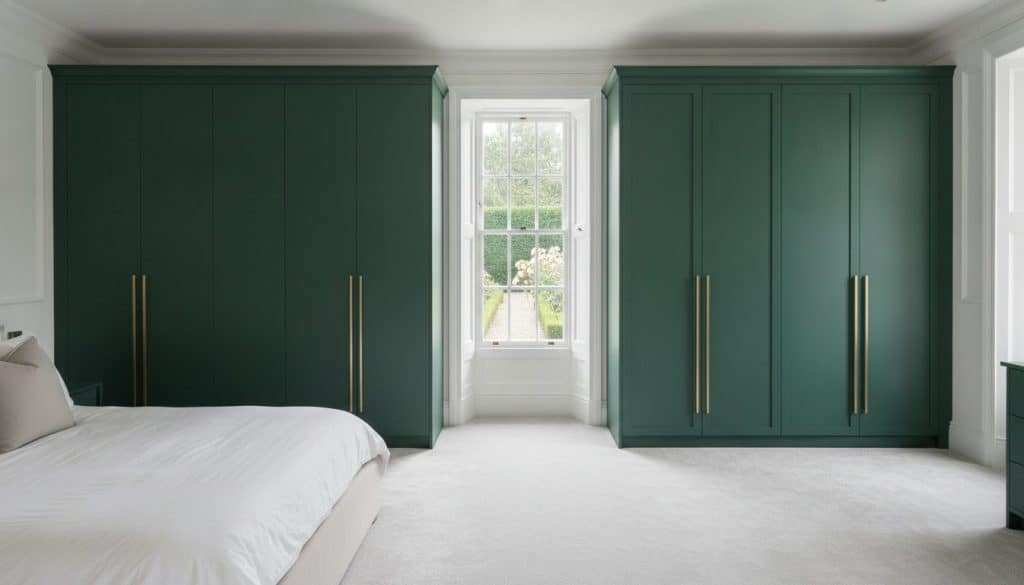
The primary benefit of this approach is the total elimination of unwanted texture. Standard manual application often results in “orange peel” or visible brush strokes that catch the light unevenly. A sprayed surface offers a uniform colour depth that makes the wardrobe appear as though it were carved from a single, solid block of colour. This is particularly striking on Skinny Shaker Wardrobe Doors. The sharp, precise lines of the thin frame are highlighted by the smooth finish, creating a crisp architectural look that defines contemporary luxury. The result is a “liquid” look that feels soft to the touch yet remains incredibly durable.
Why “Bespoke” Demands a Sprayed Finish
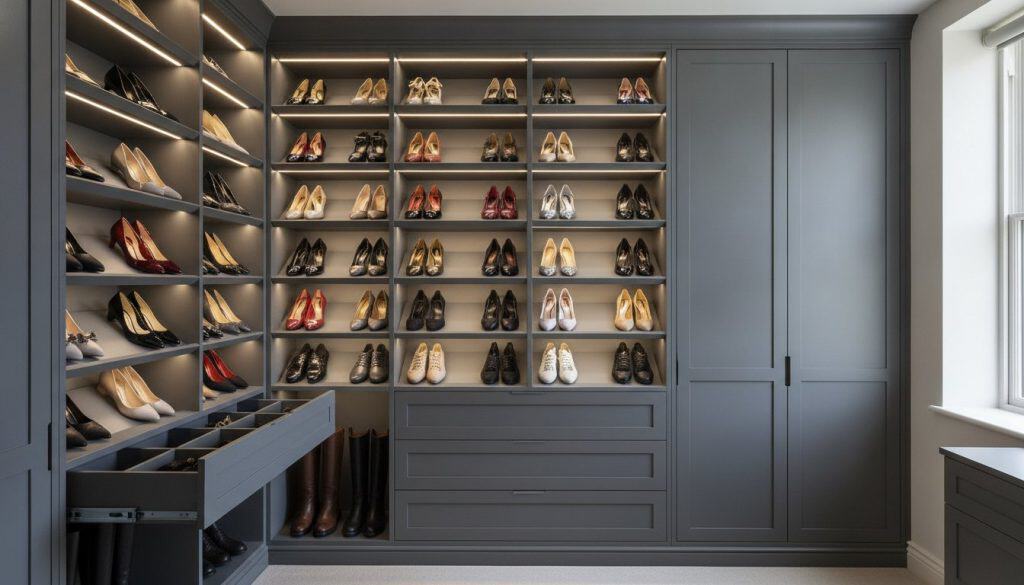
True personalisation requires more than just picking a shade from a brochure. Hand-sprayed finishing allows for total freedom in colour selection, matching your interior palette precisely whilst retaining a factory-grade durability. It’s the only viable solution for bespoke fitted wardrobes that feature custom heights or unique widths. Standard wrapping machines are limited by fixed dimensions and often struggle with deep profiles or non-standard shapes. By finishing everything in-house, we ensure perfect consistency between the wardrobe doors, the internal carcasses, and the decorative plinths, creating a cohesive aesthetic throughout the entire room.
The Technical Superiority of Atomised Coatings over Manual Brushing
Atomisation is the mechanical heart of a high-end finish. Whilst a brush physically drags a viscous liquid across a surface, leaving behind tell-tale marks, a spray gun breaks the coating into microscopic droplets. This fine mist settles onto the wardrobe door in a uniform layer, creating a surface tension that allows the paint to level perfectly before it cures. Professional hand-sprayed finishing relies on this process to achieve a glass-like smoothness that manual application simply cannot replicate. It’s the difference between a surface that looks painted and one that appears fundamentally transformed.
The concept of “film build” is equally vital. Achieving a durable finish isn’t about applying one thick, heavy coat; it’s about the patient accumulation of multiple thin layers. Each layer adds depth and structural integrity to the finish without obscuring the sharp architectural details of the door profile. This methodical approach ensures the coating remains flexible enough to resist cracking whilst being hard enough to withstand the daily rigours of a busy home. For those interested in the foundational principles of these techniques, this guide to Woodworking Finishing 101 provides excellent context on how professional coatings differ from basic stains.
The chemistry of modern lacquers also sets professional results apart from standard retail paints. We utilise industrial-grade polyurethane and acid-catalyst coatings that are specifically engineered for furniture. These aren’t standard emulsions; they’re high-performance materials that offer superior resistance to moisture, oils, and general wear. They cure to a much harder state than air-drying decorative paints, ensuring your investment retains its lustre for years rather than months.
Controlled Environments vs. On-Site Painting
A flawless result is impossible without a controlled environment. Our dedicated spray booths are designed to manage humidity and temperature, two factors that dictate how paint levels and dries. On-site painting is often compromised by airborne dust, pet hair, or fluctuating temperatures, all of which can ruin a wet surface. By finishing doors in a clean-room environment, we extract contaminants before they can settle, resulting in a pristine, resilient surface that feels smooth to the touch. You can explore our range of bespoke fitted wardrobes to see the standard of finish this controlled process produces.
Precision for Intricate Designs
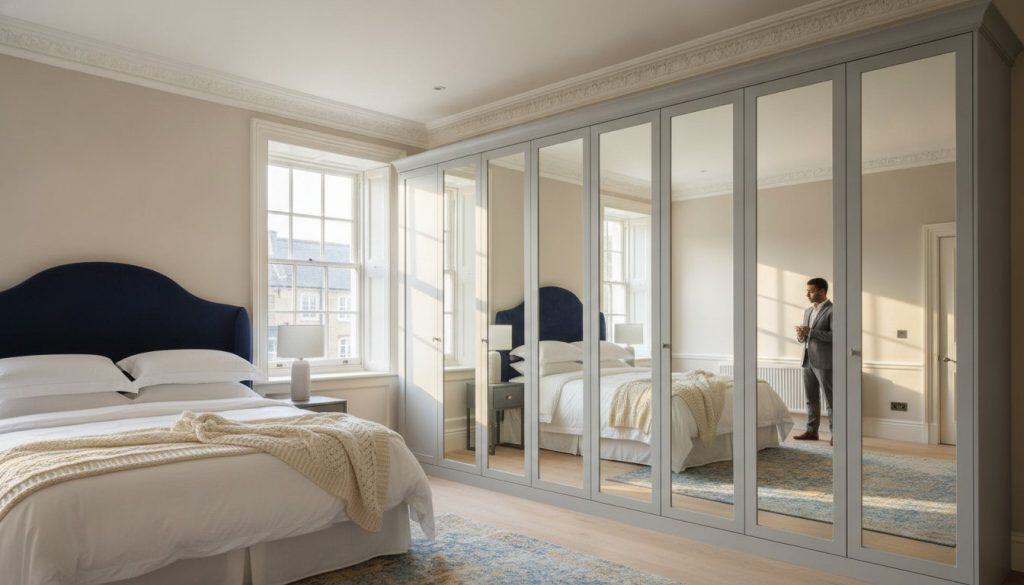
Intricate fretwork and complex profiles present a significant challenge for traditional brushes. Brushes often cause “paint pooling” in tight corners, leading to unsightly drips and a loss of detail. Spraying allows the coating to penetrate the deep recesses of mirror fret wardrobe doors with absolute precision. It ensures even coverage on the “returns”—the small edges and inner lips of the door—where manual painting often leaves gaps or thin spots. This level of detail is essential for maintaining the integrity of the design, ensuring every angle is as perfectly finished as the main face of the panel.
Comparing Finishes: Hand-Sprayed vs. Vinyl Wrapping and Hand-Painting
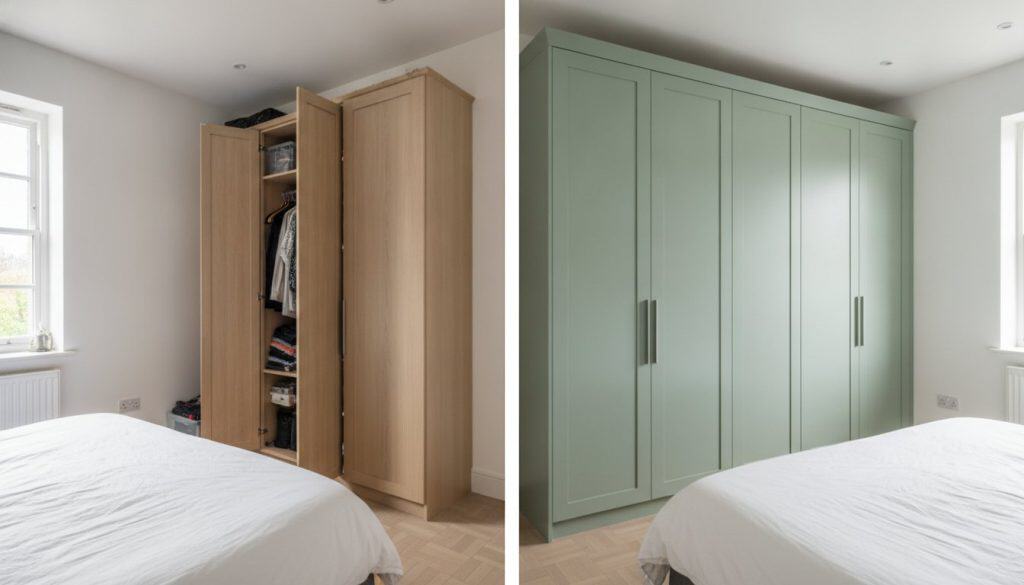
Selecting the final surface for bespoke fitted wardrobes involves a choice between long-term value and immediate convenience. Whilst vinyl wrapping is a common mass-market option, it carries the inherent risk of delamination. This occurs when the adhesive bond between the PVC skin and the core material fails, often triggered by heat or fluctuating bedroom humidity. Unlike the integrated feel of a sprayed lacquer, vinyl wraps often possess a synthetic, “plastic” sheen that lacks visual depth. Hand-sprayed finishing avoids these structural pitfalls by creating a chemical bond with the substrate, ensuring the finish becomes a permanent part of the door rather than a superficial layer.
Traditional hand-painting with a brush is often lauded for its “authentic” period character. However, it lacks the industrial hardness required for modern living. Manual application results in a softer film that is more prone to chipping and staining. Professional hand-sprayed finishing offers a superior balance of aesthetics and resilience. If a sprayed surface is accidentally damaged, it remains repairable; the specific area can be sanded and touched up with precision. A damaged vinyl wrap usually necessitates the replacement of the entire door, making the sprayed approach the more sustainable, “buy once” investment for a luxury home.
The Durability Factor in High-Traffic Bedrooms
High-traffic bedrooms demand surfaces that resist scratching and the chemicals found in everyday household cleaning agents. UV stability is another critical factor. Inferior finishes often yellow when exposed to direct sunlight, a common issue with older white laminates. Modern industrial lacquers are engineered to maintain their colour integrity for decades. The choice of substrate is equally important here, as the finish is only as stable as the material beneath it. Understanding the differences in mdf vs wood wardrobes is essential for ensuring your chosen finish remains flawless over time.
Environmental and Health Considerations
Our commitment to quality extends to the health of your home environment. We prioritise the use of low-VOC (Volatile Organic Compounds) water-based spray lacquers that meet modern environmental standards. By performing the finishing process within a controlled workshop setting, we adhere to rigorous OSHA safety standards for ventilation and extraction. This ensures that any emissions are contained and filtered before the furniture ever enters your residence. This factory-led approach is inherently safer than on-site spraying, where containing overspray and managing air quality is significantly more challenging for the homeowner.
Designing with Colour and Sheen: From Satin Elegance to Modern Matt
Light serves as the final architect of any luxury interior. In the context of hand-sprayed finishing, the way a surface interacts with light determines its perceived depth and character. We don’t merely apply pigment; we manage reflection. High-end bedroom design in 2026 has seen a decisive shift towards “soft-touch” textures that provide a sense of calm and tactile luxury. Whether you’re coordinating with the heritage palettes of Farrow & Ball or seeking a bespoke contemporary shade, the choice of sheen is as critical as the colour itself. The ability to specify a precise percentage of lustre ensures that your wardrobe feels integrated into the room’s atmosphere rather than standing apart from it.
Choosing Your Sheen Level
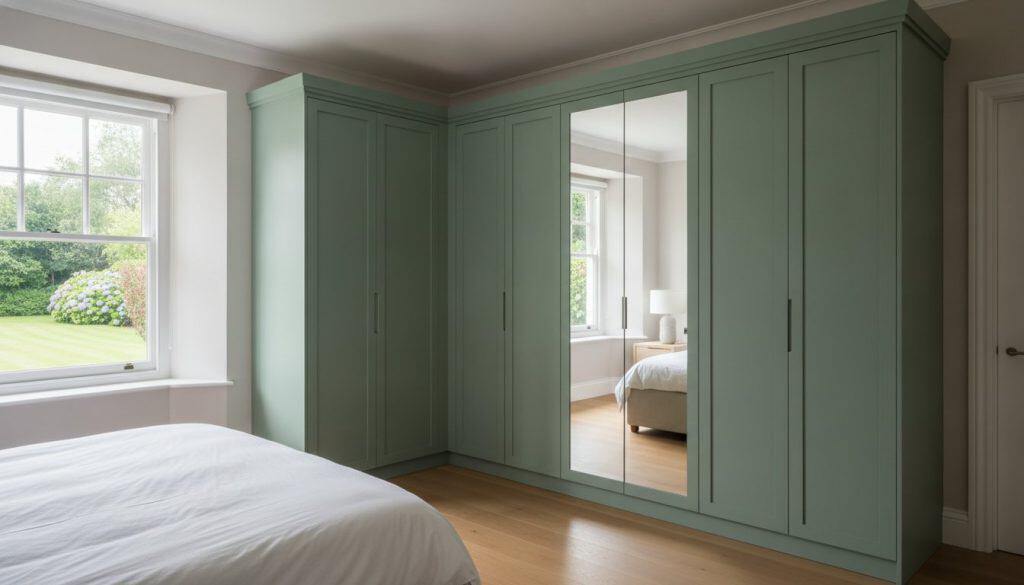
For many homeowners, satin finish wardrobe doors remain the definitive choice for a timeless aesthetic. Satin typically sits at a 20% to 30% sheen level, providing a gentle lustre that reflects light without the harsh glare of high-gloss. It’s the “gold standard” for classic English interiors, offering a sophisticated glow that highlights the craftsmanship of the door profile. Conversely, a 5% dead-matt finish is becoming increasingly popular for modern, minimalist spaces. This level of sheen creates a velvety, non-reflective surface that feels incredibly soft to the touch. You should consider that sheen affects colour perception; a dark charcoal will appear deeper and moodier in a matt finish than it would in a higher sheen.
The Role of High-Density Fibreboard (HDF)
A flawless finish requires a superior canvas. Whilst natural timber is prized for its grain, that very grain can be a hindrance when seeking a mirror-smooth surface. Natural wood is prone to “telegraphing,” where the grain pattern eventually shows through the paint as the wood expands and contracts with the seasons. We utilise High-Density Fibreboard (HDF) for our sprayed components because it provides an exceptionally stable and smooth substrate. This prevents “ghosting” and ensures that the final coat looks like a continuous, liquid film. For flat-panel modern designs, HDF is the only material that allows for the level of precision required in a professional spray studio, ensuring that even the most subtle colours are represented with absolute clarity.
You can explore our full range of door styles and find your perfect colour match at Wardrobe Door Studio.
The Wardrobe Door Studio Process: Precision Finishing in the Heart of England
Our facility represents a convergence of regional manufacturing pride and cutting-edge application technology. Hand-sprayed finishing at Wardrobe Door Studio is a deliberate, multi-stage journey that begins long before the first drop of colour is atomised. Every panel undergoes rigorous preparation to ensure the substrate is perfectly receptive to the lacquer. We sand the surfaces and seal the porous edges of the HDF to ensure total structural stability. Two separate coats of high-build primer follow; we sand between each application to achieve an exceptionally flat, stable foundation. This obsessive attention to the preparation phase is what allows the final topcoat to settle with such remarkable clarity and depth.
Quality control is not an afterthought in our workshop. Every component is moved to a dedicated inspection zone equipped with specialist lighting. This high-intensity illumination reveals even the most minute imperfections that might remain invisible under standard domestic light. We only dispatch doors that meet our exacting standards for colour uniformity and surface smoothness. Once approved, our national delivery network ensures that this studio-finished quality reaches your project. We bring the precision of our regional manufacturing centre to homes across the entire country, ensuring every client receives the same level of excellence.
A Heritage of Quality
There is a distinct advantage to choosing british made wardrobe doors. By supporting local craftsmanship, you gain access to skilled spray technicians who understand the nuances of luxury finishing and the demands of the UK climate. Our manufacturing roots serve as a hallmark of quality that distinguishes our work from mass-produced imports. We also provide a comprehensive supply-only service for trade professionals. This allows developers and interior designers to source factory-finished components for bespoke fitted wardrobes that arrive ready for immediate installation, bypassing the risks of on-site painting.
Final Steps for Your Project
Selecting the right finish requires confidence and tactile experience. We encourage you to request colour samples to observe how our hand-sprayed quality interacts with the specific light in your own home. Our design team is available to consult on which sheen level or door profile best suits your architectural vision, from skinny shaker to mirror fret wardrobe doors with their intricate light-enhancing fretwork designs. If you are ready to elevate your interior with a finish that marries long-term durability with bespoke beauty, you can explore our range of hand-sprayed doors to begin your project transformation.
Elevating Your Interior with Professional Precision
Investing in your home requires a commitment to quality that transcends temporary trends. Choosing professional hand-sprayed finishing ensures that your wardrobes aren’t just functional storage; they’re central architectural features of your bedroom. By prioritising atomised coatings over standard manual methods, you secure a surface that remains resilient against daily use whilst offering a depth of colour that only a workshop-led process can achieve. This meticulous approach guarantees a result that feels as premium as it looks.
Our components are expertly crafted and hand-sprayed in England. We provide bespoke sizing in any colour to meet the exact requirements of your project. Whether you’re a homeowner seeking a personal sanctuary or a trade professional delivering for a client, we supply factory-finished excellence nationwide. Discover our range of luxury hand-sprayed wardrobe doors and take the first step towards a truly bespoke interior. Your vision of a refined, perfectly finished home is well within reach.
Frequently Asked Questions
Is hand-sprayed finishing better than hand-painting with a brush?
Hand-sprayed finishing is superior for those seeking a flawless, factory-grade surface without the visible texture of manual application. Whilst traditional hand-painting leaves behind bristle marks and uneven ridges, the atomisation process creates a perfectly level film. This technique is essential for modern designs like our skinny shaker doors, where architectural precision and a smooth-to-the-touch feel are paramount.
Will a hand-sprayed finish on my wardrobe doors chip easily?
A professional spray finish is highly resilient because it utilizes industrial-grade lacquers that form a chemical bond with the substrate. Unlike standard decorative paints, these coatings cure to a much harder state, providing superior resistance to the daily rigours of a busy home. This process ensures your bespoke fitted wardrobes maintain their pristine appearance without the peeling associated with cheaper vinyl wraps.
Can I choose any colour for my hand-sprayed wardrobe doors?
You have total freedom in colour selection, including precise matching to leading heritage brands such as Farrow & Ball or Little Greene. Because we manage the coating process in a controlled workshop, we can replicate any shade whilst ensuring consistent sheen levels across every component. This bespoke service allows your new wardrobes to integrate seamlessly with your existing interior palette and decor.
What is the difference between a satin and a matt sprayed finish?
The primary difference lies in light reflection and the resulting atmosphere of the room. A satin finish typically offers a 20% to 30% sheen, providing a gentle lustre that highlights the craftsmanship of classic shaker profiles. A matt finish, often specified at a 5% “dead-matt” level, creates a contemporary, velvety surface that absorbs light for a sophisticated, understated look.
How do I clean and maintain a hand-sprayed wardrobe surface?
Cleaning a sprayed surface is straightforward and requires only a soft, slightly damp microfibre cloth for regular dusting. It’s important to avoid abrasive sponges or harsh solvent-based chemicals that could degrade the industrial lacquer over time. For stubborn marks, a mild solution of pH-neutral soap is sufficient to restore the surface without affecting the original sheen or colour depth.
Is hand-spraying environmentally friendly?
Our process prioritises environmental responsibility by utilising modern, low-VOC water-based lacquers that meet 2026 safety standards. By performing the work within a dedicated spray booth, we ensure all airborne particles are captured by advanced extraction systems. This contained approach is significantly more eco-friendly than on-site painting, as it prevents fumes and overspray from entering your home environment.
Can you respray existing wardrobe doors to a professional standard?
We specialise in applying our signature finish to our own bespoke manufactured doors and high-quality replacement panels to ensure a factory-grade result. Whilst some services offer on-site refreshing of old furniture, we achieve our standards within a controlled studio environment. This focus ensures the longevity and precision that luxury projects demand, which is often difficult to guarantee with aged or previously treated substrates.
How long does the hand-spraying process take for a full set of doors?
The multi-stage hand-sprayed finishing process typically requires seven to ten working days within our workshop. This timeframe is necessary to allow for meticulous sanding, priming, and the essential curing time between coats. We prioritise the enduring quality of the finish over speed, ensuring every door is fully hardened and inspected under specialist lighting before it is prepared for national delivery.