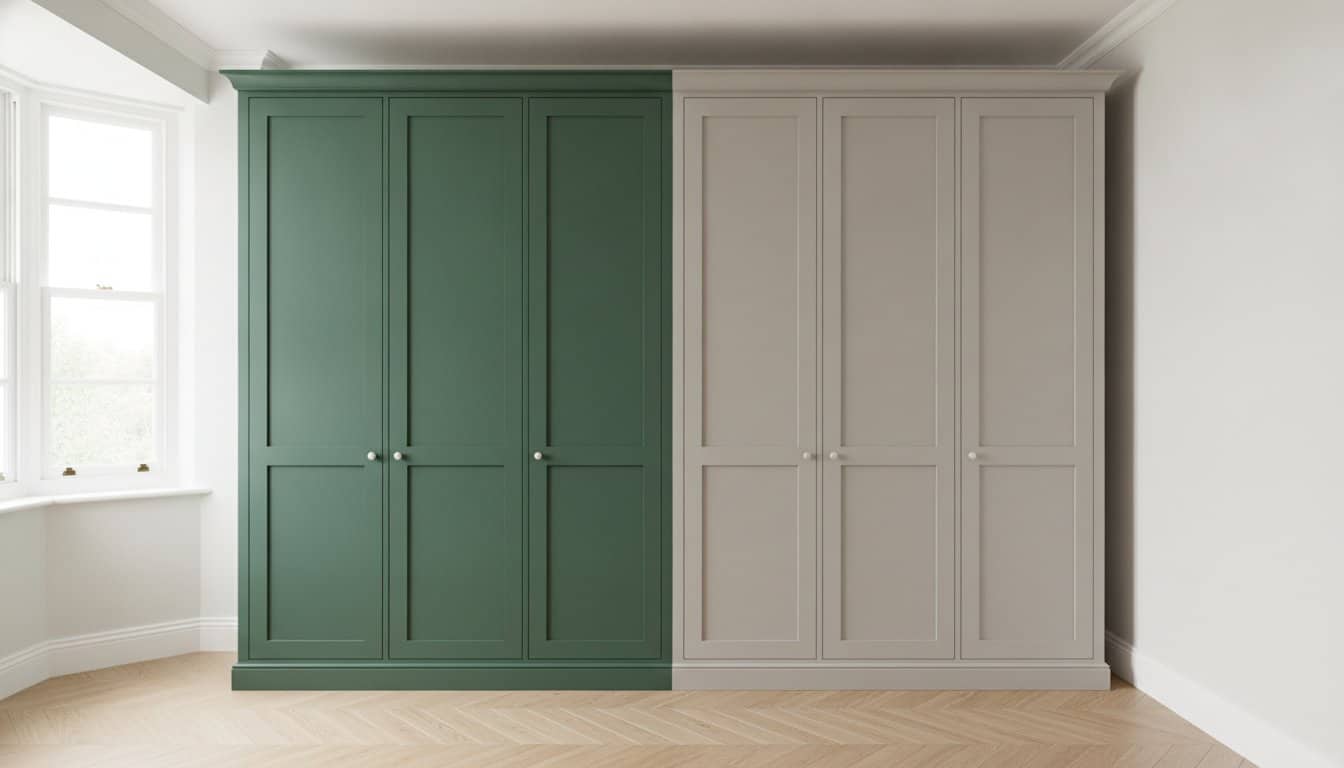
The most transformative element of a bespoke wardrobe isn’t the paint colour you select, but the precise architectural proportion of the door frame itself. Deciding between skinny shaker vs classic shaker doors often feels like a delicate balancing act between heritage charm and contemporary minimalism. It’s natural to feel concerned that a narrower, modern rail might date quickly, or that a traditional wide frame could overwhelm the visual footprint of a smaller room.
We recognise that the subtle difference between a slender 20mm profile and a substantial 90mm stile can completely alter the visual rhythm of your interior. This 2026 design guide promises to demystify these structural nuances, giving you the confidence to choose a style that harmonises with your existing architecture. We will examine the specific design impacts of each door type, the technical benefits of precision-engineered high-density fibreboard, and how our signature hand-sprayed finishing ensures your investment remains a timeless centrepiece of your home.
Key Takeaways
- Identify the fundamental architectural differences between 20mm and 90mm rail widths to determine the ideal visual weight for your space.
- Evaluate skinny shaker vs classic shaker doors based on how their proportions elongate or ground your room’s unique ceiling height.
- Discern why precision-engineered high-density fibreboard and hand-sprayed finishes provide a more durable, luxury result than vinyl-wrapped alternatives.
- Explore the benefits of bespoke customisation to ensure a flawless floor-to-ceiling fit for any existing wardrobe frame.
- Confidently select a finish that harmonises with your interior style, from traditional period features to modern minimalist aesthetics.
Defining the Shaker Aesthetic: Classic vs Skinny Styles
The Shaker aesthetic is defined by a commitment to functional beauty. Originally rooted in 19th-century Shaker furniture principles, the style avoids unnecessary ornamentation in favour of clean lines and honest construction. In 2026, this look has branched into two distinct paths that cater to different architectural sensibilities. Classic Shaker doors utilise substantial stiles and rails, typically measuring between 60mm and 90mm. These wider frames provide a sense of permanence and heritage. Conversely, the Skinny Shaker is a refined evolution. It features slimline rails that often measure as little as 20mm to 30mm. Choosing between skinny shaker vs classic shaker doors isn’t just a technical decision; it sets the tonal foundation for your entire bedroom.
The Anatomy of a Shaker Door
Understanding the construction is vital for appreciating the difference. A Shaker door consists of vertical “stiles” and horizontal “rails” that house a flat, recessed centre panel. The depth of this recess is what creates the characteristic shadow lines that give the door its depth and architectural interest. Whilst traditional doors relied on timber joinery, modern luxury wardrobes often utilise precision-engineered high-density fibreboard (HDF). This material allows for sharper, cleaner edges and a more stable surface for hand-sprayed finishes. This is particularly important when executing the tighter tolerances required for slimline designs, where any imperfection in the join would be immediately visible.
Why 2026 is the Year of the Slimline Look
The rise of the “slim” look is no accident. British interior design is currently dominated by “Quiet Luxury,” a trend that prioritises understated quality over flashy displays. Skinny shaker doors act as the perfect bridge for homeowners who find flat-panel doors too clinical but feel traditional shaker styles are too heavy for modern room sizes. This shift is heavily influenced by contemporary European cabinetry, where the focus has moved towards slender, elongated proportions that create a sense of verticality. By reducing the frame width, you create a look that feels lighter and more agile. It allows the wardrobe to integrate seamlessly into contemporary environments without losing the tactile warmth of a framed door. It’s a sophisticated middle ground that offers the detail of a traditional door with the clean profile of a modern slab.
Visual Proportions and Architectural Impact
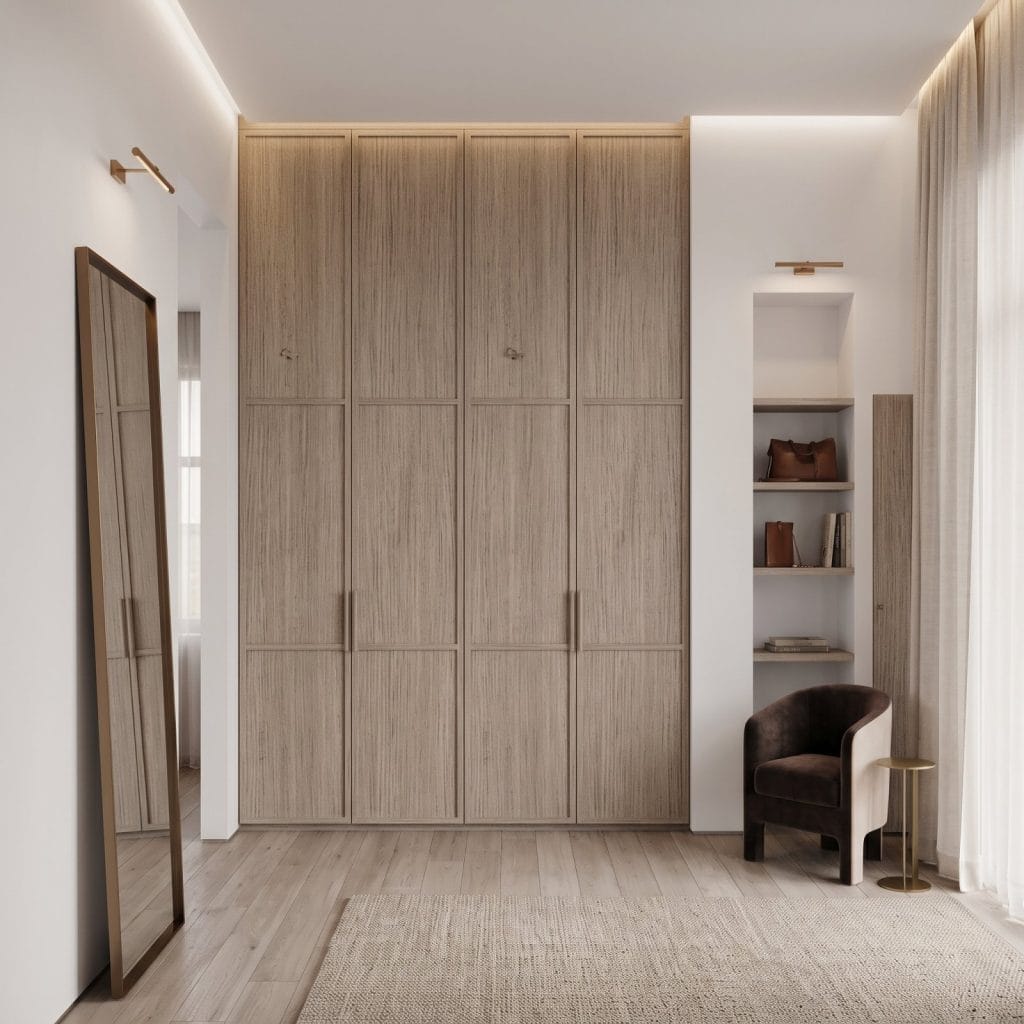
In the context of floor-to-ceiling wardrobes, the choice between skinny shaker vs classic shaker doors dictates the room’s perceived height and volume. Whilst kitchen cabinetry often focuses on horizontal lines, a wardrobe door is a significant vertical expanse. Skinny shaker stiles, often as narrow as 20mm, draw the eye upward. This creates an elongating effect that makes ceilings appear higher and the overall structure feel more agile. The narrower frame also produces sharper, more delicate shadow lines. These “micro-shadows” provide a modern crispness that contrasts with the softer, more substantial shadows found in the classic period in Shaker design.
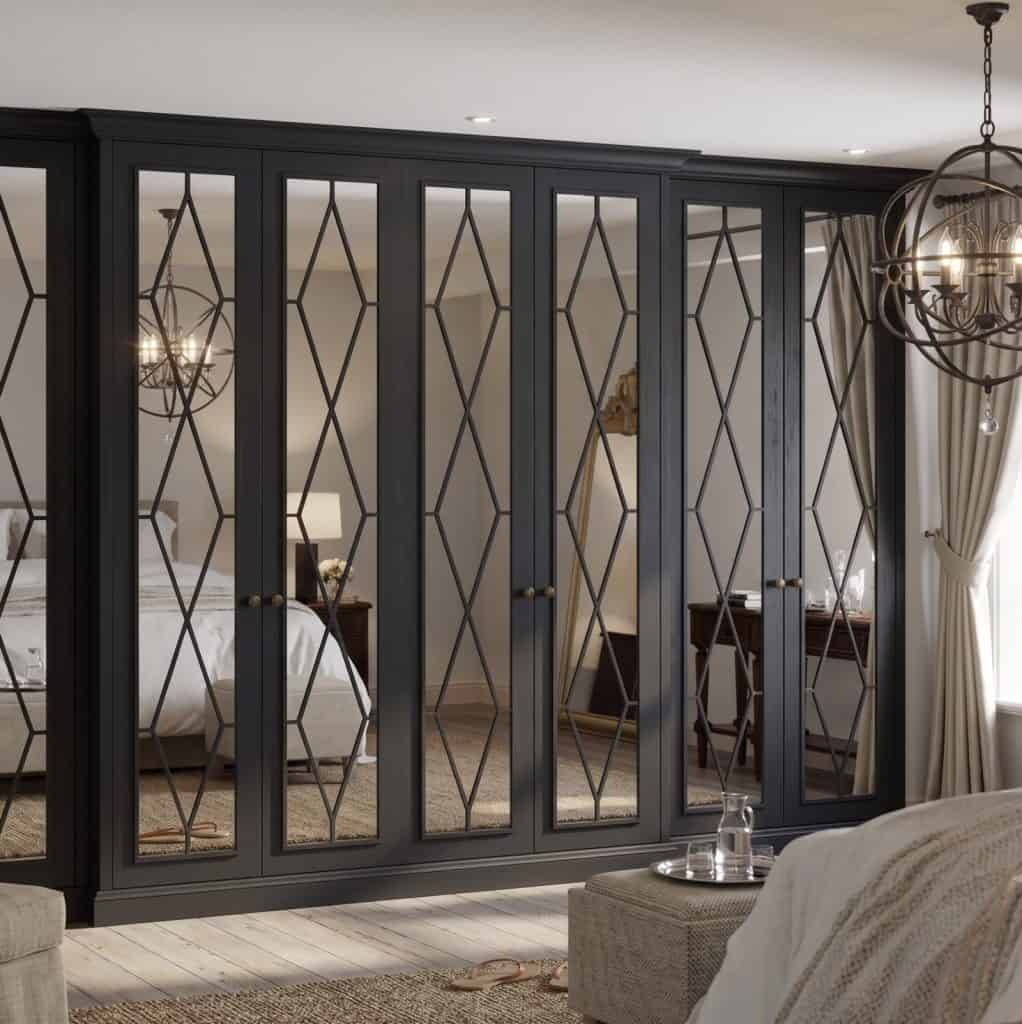
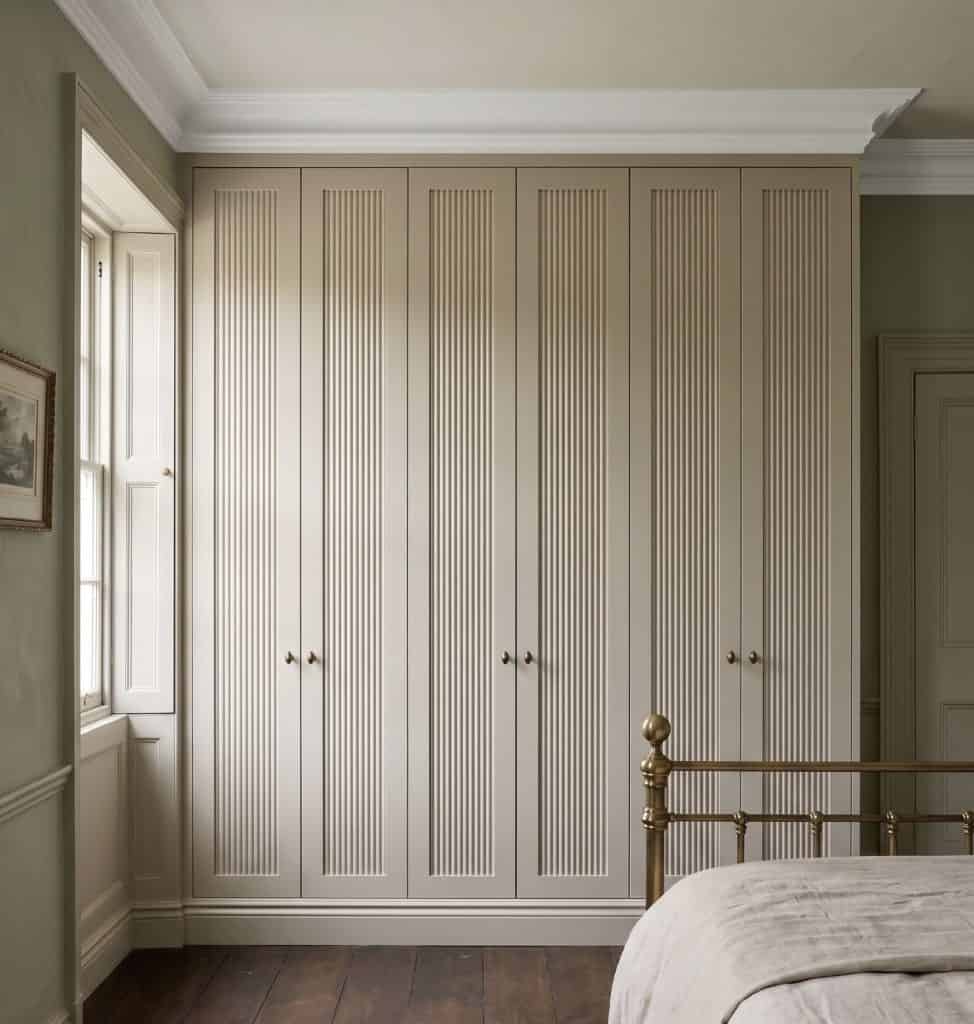
Classic shaker doors, with their 70mm to 90mm rails, offer a grounded and dependable presence. They provide the visual weight necessary to anchor a larger room, preventing the furniture from looking fragile in an expansive master suite. When incorporating mirrors, this choice becomes even more critical. A classic shaker frame creates a bold border that mimics a heavy gallery frame, whilst a skinny shaker offers a contemporary, “infinity” style border. This delicate frame maximises the reflective surface area, which is a highly effective technique for bouncing light around a darker room.
Proportional Comparison: A Technical Breakdown
The architectural impact of these doors is rooted in their specific dimensions. A classic shaker rail typically starts at 70mm, providing ample space for traditional knobs or long bar handles. In contrast, the 20mm to 30mm rails of a skinny shaker require more considered hardware selection. Slimmer frames often pair best with minimalist finger pulls or slender T-bar handles to maintain the streamlined aesthetic. This precision is why many designers opt for skinny shaker profiles when ordering replacement wardrobe doors made to measure. It allows for a modern update to existing frames without the need for a full structural renovation.
Room Size Considerations
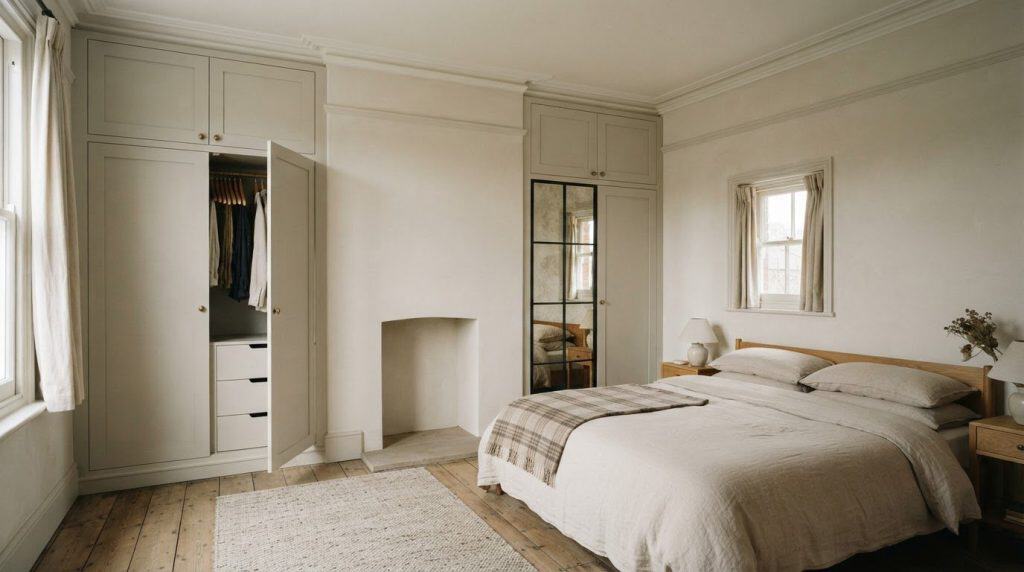
Proportion is the key to a cohesive interior. In smaller guest bedrooms, the broad stiles of a classic shaker can create “visual clutter,” making the space feel unnecessarily busy. Skinny shaker doors alleviate this by reducing the frame’s footprint, allowing the hand-sprayed colour to take centre stage. However, in rooms with high ceilings and ornate cornicing, the classic shaker is often the superior choice. It balances the substantial nature of traditional skirting and coving, ensuring the wardrobe feels like an integrated part of the building’s heritage. If you are uncertain which profile suits your space, you can view our bespoke installations to see these proportions in situ.
Choosing the Right Style for Your Bedroom Interior
Selecting between skinny shaker vs classic shaker doors is a decision that should be dictated by the architectural dialogue of your home. Whilst the classic shaker remains a staple for Victorian and Edwardian restoration projects, the skinny variant has emerged as a frontrunner for contemporary “Scandi” aesthetics. Industry reports on leading cabinet trends highlight that this shift towards micro-shaker profiles reflects a desire for simplicity without the starkness of a completely flat-panel design. It’s about finding a balance that feels intentional rather than accidental.
You don’t necessarily have to commit to a single style for every room in your house. Many sophisticated interior schemes utilise a hybrid approach. This involves installing classic shaker wardrobes in the primary master suite to establish a sense of luxury and heritage, whilst opting for skinny shaker doors in guest bedrooms or home offices. This transition allows you to maintain a cohesive design language across the property whilst adapting the visual weight of the cabinetry to suit the specific dimensions and functions of each individual space.
Matching Style to Property Era
Authenticity is paramount when working within period properties. In a Victorian terrace, the 90mm rails of a classic shaker door align perfectly with the substantial proportions of high skirting boards and ornate plasterwork. Using a skinny profile in such a setting can sometimes feel visually “thin” against robust period details. However, skinny shaker doors are an exceptional tool for updating mid-century homes. The slender silhouette respects the minimalist leanings of the 1950s and 60s whilst providing a bespoke, textured look that flat doors lack. It’s a way to respect architectural heritage without being tethered to the past.
Colour and Light Interaction
The colour you choose will significantly alter how the eye perceives the frame width. Applying dark, saturated shades like forest green or charcoal to skinny stiles creates a striking architectural grid effect. This emphasises the geometry of the wardrobe and makes the furniture feel like a structural element of the room. Conversely, using neutral palettes like stone, clay, or parchment on classic stiles tends to soften the traditional feel, making the wider rails appear less dominant and more integrated into the wall.
Light plays a vital role in how these styles perform. The deeper recess typically found in a classic shaker creates a soft, graduated shadow that adds a sense of warmth and “lived-in” comfort. In contrast, the tighter tolerances of a skinny shaker produce a crisp, high-contrast shadow line. This sharp definition is what gives the slimline look its modern edge, especially when hit by natural light from a window. Our hand-sprayed finish ensures these shadow lines remain clean and precise, regardless of the rail width you choose.

Technical Considerations: Durability and Finish
High-performance furniture relies on the structural integrity of its base material. When evaluating skinny shaker vs classic shaker doors, the technical execution determines whether the aesthetic remains pristine over decades or degrades under the pressures of daily use. Whilst solid timber has a traditional appeal, it is naturally prone to expansion and contraction in response to bedroom humidity. This movement often causes hairline fractures in the paintwork at the joints. To prevent this, we utilise precision-engineered high-density fibreboard (HDF). This material provides an inert, stable core that ensures your rail alignment remains perfect regardless of seasonal temperature shifts.
The method of colour application is equally critical. Unlike the mass-produced, plastic appearance of vinyl wrapping, a hand-sprayed finishing process offers a furniture-grade depth of colour and a seamless edge. Vinyl wraps are notorious for peeling at the corners over time; however, a hand-sprayed surface bonds directly to the HDF. This results in a tactile, luxury finish that is as durable as it is beautiful. Maintenance also varies between the two styles. Classic shaker doors, with their wider recesses, can occasionally collect dust in the deeper corners. Skinny shaker doors, with their tighter profiles and shallower shadow lines, are often swifter to clean with a simple microfibre cloth.
The Superiority of Sprayed HDF
HDF is the gold standard for painted cabinetry because it lacks the grain and knots found in natural wood. This allows for a perfectly smooth surface that is essential for achieving a high-end look. For skinny shaker designs, this material is indispensable. The narrow 20mm joints require immense strength and stability to prevent snapping or shifting. Precision engineering allows these slimline rails to be bonded with absolute accuracy, creating a door that feels solid and substantial to the touch. This stability is what allows the hand-sprayed paint to sit flat, reflecting light evenly across the entire wardrobe frontage.
Long-term Durability
Investing in bespoke fitted wardrobes is a long-term commitment to your home’s value. Classic shaker doors offer excellent impact resistance due to their wider stiles, making them a robust choice for high-traffic family bedrooms. Whilst skinny shaker rails are more delicate in appearance, our HDF construction ensures they are surprisingly resilient. A significant advantage of hand-sprayed surfaces is their repairability. Should a door suffer a knock or scratch over years of use, the surface can be lightly sanded and touched up with matching paint. This is impossible with vinyl-wrapped doors, which usually require complete replacement once damaged. You can explore our hand-sprayed colour palette to find a finish that balances durability with your personal style.
Bespoke Wardrobe Doors: Crafting Your Perfect Shaker Look
The culmination of any luxury interior project lies in the details that off-the-shelf solutions simply cannot provide. When navigating the choice between skinny shaker vs classic shaker doors, the ability to specify custom rail widths ensures your cabinetry is perfectly scaled to your room’s proportions. A standard 70mm rail might appear too heavy in a compact dressing room, whilst a 20mm rail could look lost on an exceptionally tall door. Our bespoke approach removes these compromises, allowing for a tailored aesthetic that respects the unique geometry of your home.
Achieving a flawless floor-to-ceiling alignment requires more than just high-quality materials; it necessitates a meticulous site survey. This process identifies subtle floor variances or wall irregularities that would otherwise disrupt the clean lines of a shaker profile. By integrating skinny shaker wardrobe doors with bespoke internal organisation, you create a storage solution that is as functional as it is visually striking. Every component, from the external stiles to the internal shelving, is designed to work in total architectural harmony.
The Bespoke Advantage
One of the most significant benefits of custom manufacturing is the ability to address awkward spaces. Sloped ceilings in loft conversions or uneven alcoves in period properties often require doors with non-standard angles. Our technical team produces precise drawings for every component, ensuring that even the most complex installations maintain the integrity of the Shaker look. This level of customisation extends to hardware selection. Whilst we don’t supply handles, our team advises on the best placement for your chosen pieces, ensuring that the final result complements the specific rail width and shadow lines of your doors. It’s about creating a finish that feels intentional, not adapted.
Professional Specification
We frequently collaborate with interior designers and trade professionals who require a higher standard of precision than commercial retailers offer. Our manufacturing process is anchored in English heritage, utilising a workspace where traditional craftsmanship meets digital accuracy. Each door undergoes a rigorous hand-sprayed finishing process in our dedicated facility, resulting in a depth of colour that mass-produced alternatives cannot replicate. This commitment to regional manufacturing ensures that every project is delivered with a guarantee of quality and a seamless path from concept to completion. By choosing a partner that manages the entire lifecycle from technical drawing to final spray, you ensure your investment remains a timeless centrepiece of your interior design.
Elevating Your Interior with Bespoke Shaker Artistry
The decision between skinny shaker vs classic shaker doors serves as the definitive architectural choice for your bedroom sanctuary. Whilst the classic profile anchors larger spaces with its heritage-led stiles, the skinny shaker offers a refined verticality that transforms modern interiors. We have established that the longevity of your investment relies on the precision of high-density fibreboard and the depth of a hand-sprayed finish; these elements ensure your cabinetry remains a permanent feature rather than a fleeting trend. Every rail width and shadow line should be an intentional reflection of your home’s unique proportions.
Our English manufacturing facility combines traditional expertise with modern digital accuracy to deliver results that off-the-shelf retailers cannot match. We provide bespoke sizes for a perfect fit alongside nationwide delivery and professional installation to ensure a seamless experience from initial technical drawing to the final spray. You can request a bespoke quote for your shaker wardrobe project today to begin the journey toward an organised, luxury interior. We look forward to helping you realise your vision with precision and pride.
Frequently Asked Questions
What is the main difference between skinny shaker and classic shaker doors?
The primary distinction lies in the width of the stiles and rails that form the door’s frame. Classic shaker doors typically feature wider rails between 60mm and 90mm, providing a substantial, traditional appearance. In contrast, skinny shaker doors utilise a much narrower profile, often between 20mm and 30mm, creating a more contemporary and streamlined silhouette whilst retaining the characteristic recessed centre panel.
Are skinny shaker wardrobe doors a passing trend or a timeless choice?
Whilst they have gained significant popularity recently, skinny shaker doors are considered a modern evolution rather than a fleeting trend. They provide a sophisticated middle ground between the heavy ornamentation of traditional styles and the starkness of flat-panel doors. This versatility ensures they remain a relevant and timeless choice for homeowners seeking a minimalist yet textured aesthetic in 2026 and beyond.
Which shaker style is better for a small bedroom?
Skinny shaker doors are generally the superior choice for smaller bedrooms. Their slender proportions reduce visual weight and prevent the wardrobe from overwhelming the space. The narrow vertical stiles create an elongating effect that makes the room feel taller and more open. When comparing skinny shaker vs classic shaker doors in compact environments, the slimline rail helps maintain a sense of architectural lightness.
Can I replace my existing wardrobe doors with skinny shaker styles?
Yes, you can certainly update your bedroom by replacing existing doors with bespoke skinny shaker options. Because our doors are manufactured to precise measurements in our English facility, they can be tailored to fit any existing wardrobe frame. This is a highly effective way to modernise your storage without the disruption and expense of a complete structural renovation.
What is the best rail width for a modern shaker wardrobe door?
For a truly modern aesthetic, a rail width of 20mm to 30mm is the industry standard for a slimline look. This width is sufficient to create clear, crisp shadow lines without appearing too bulky. If you prefer a more transitional style that bridges the gap between modern and traditional, a medium rail width of approximately 50mm can also be specified through our bespoke service.
Is a hand-sprayed finish better than a vinyl wrap for shaker doors?
A hand-sprayed finish is significantly superior to vinyl wrapping in terms of both aesthetics and longevity. Hand-spraying creates a seamless, furniture-grade surface that bonds directly to the high-density fibreboard, whereas vinyl wraps are prone to peeling and delaminating at the edges over time. Furthermore, a sprayed surface can be easily touched up or repainted if damaged, ensuring your wardrobes remain pristine for decades.
How do I clean the recessed panels on skinny shaker doors?
Cleaning these doors is a straightforward process that requires only a soft, dry microfibre cloth for regular dusting. Because skinny shaker doors typically have shallower recesses than classic styles, they are amongst the easiest to maintain as there are fewer deep corners for dust to accumulate. For more thorough cleaning, a slightly damp cloth with a mild, non-abrasive detergent is sufficient to preserve the hand-sprayed finish.
Are classic shaker doors more expensive than skinny shaker doors?
When selecting skinny shaker vs classic shaker doors from a bespoke manufacturer, there is typically no significant difference in price. The cost is primarily driven by the quality of the base material and the labour-intensive hand-sprayed finishing process rather than the specific width of the rails. Both styles represent a similar investment in luxury craftsmanship and British manufacturing excellence.