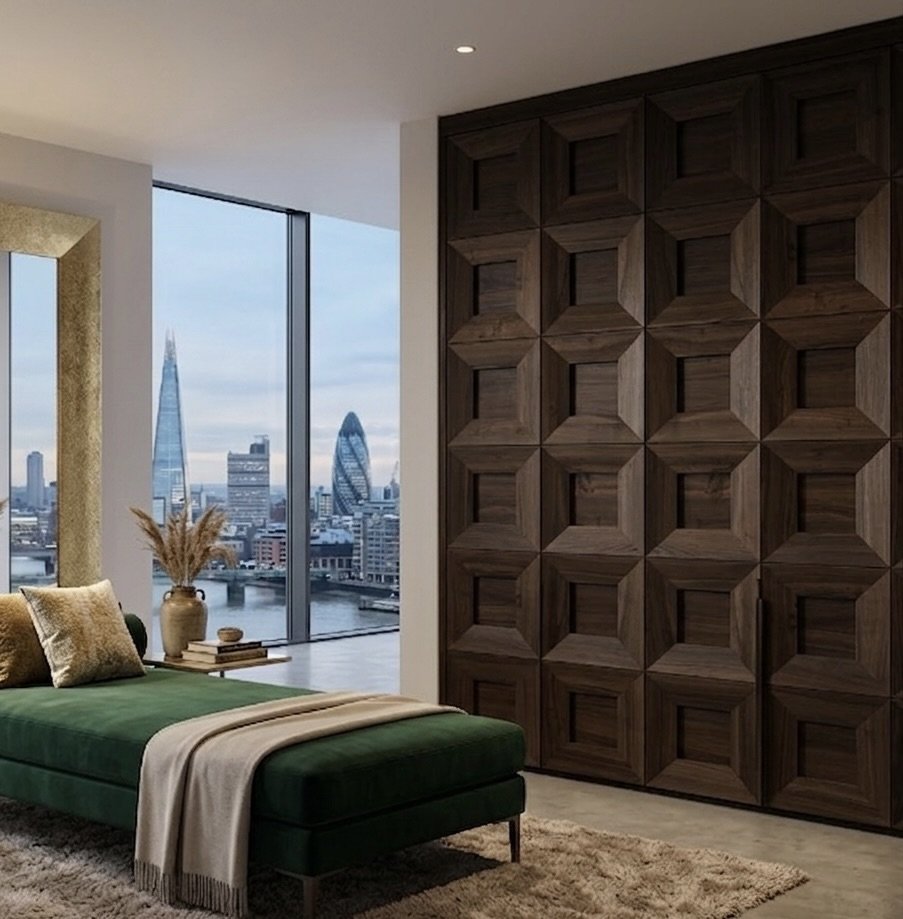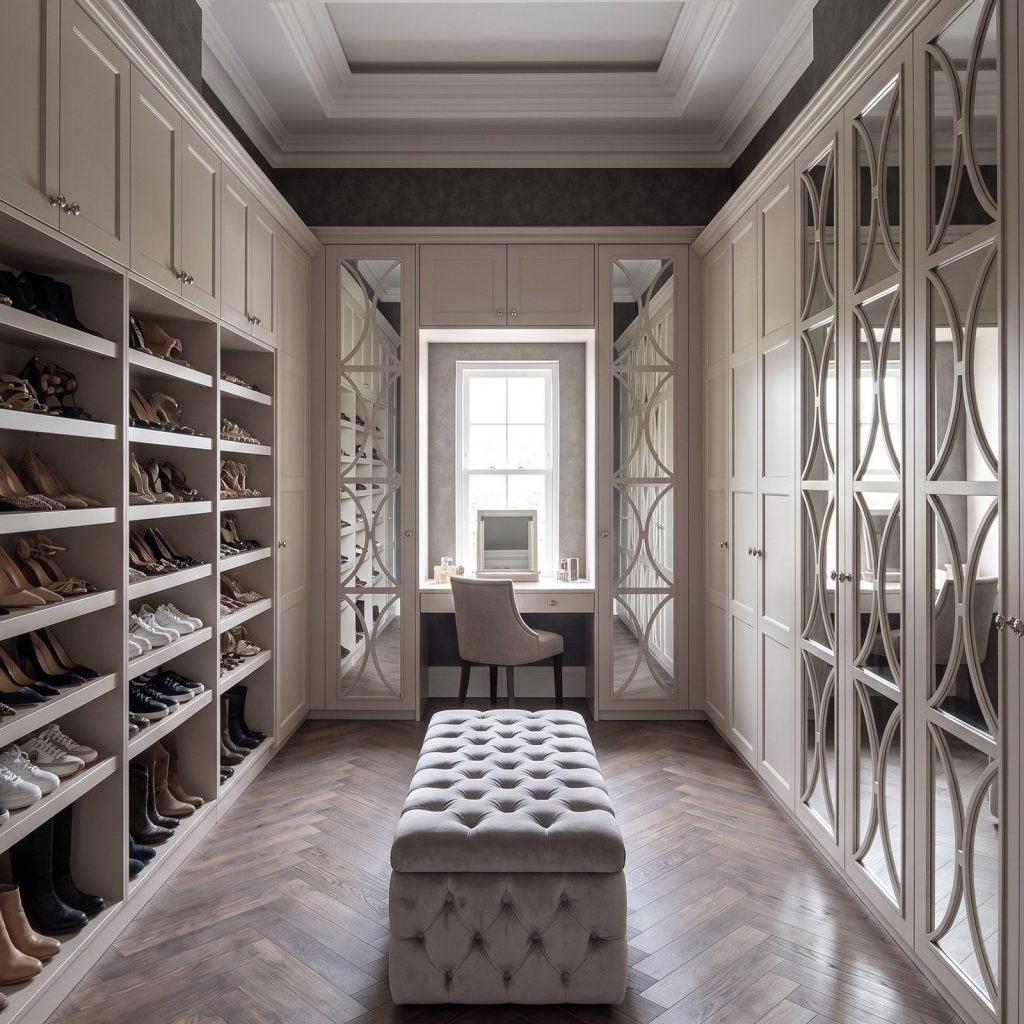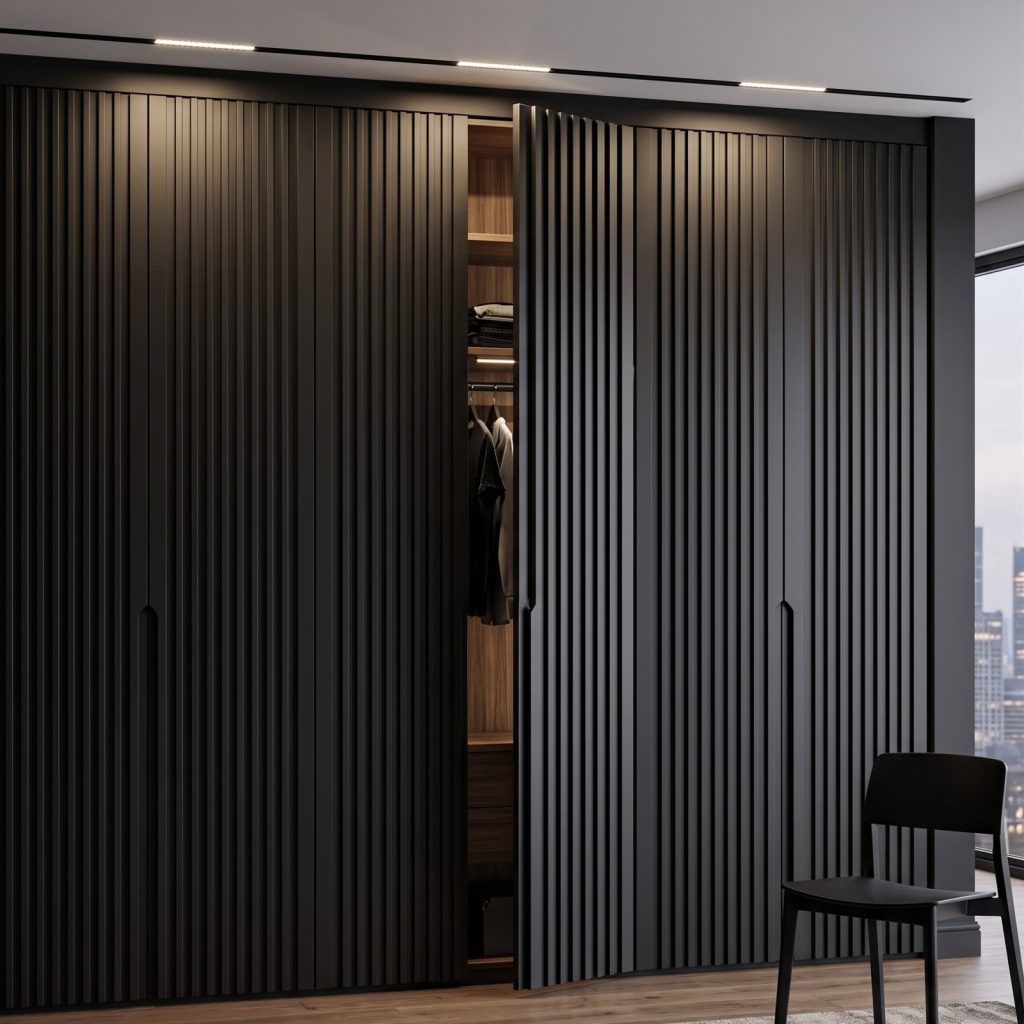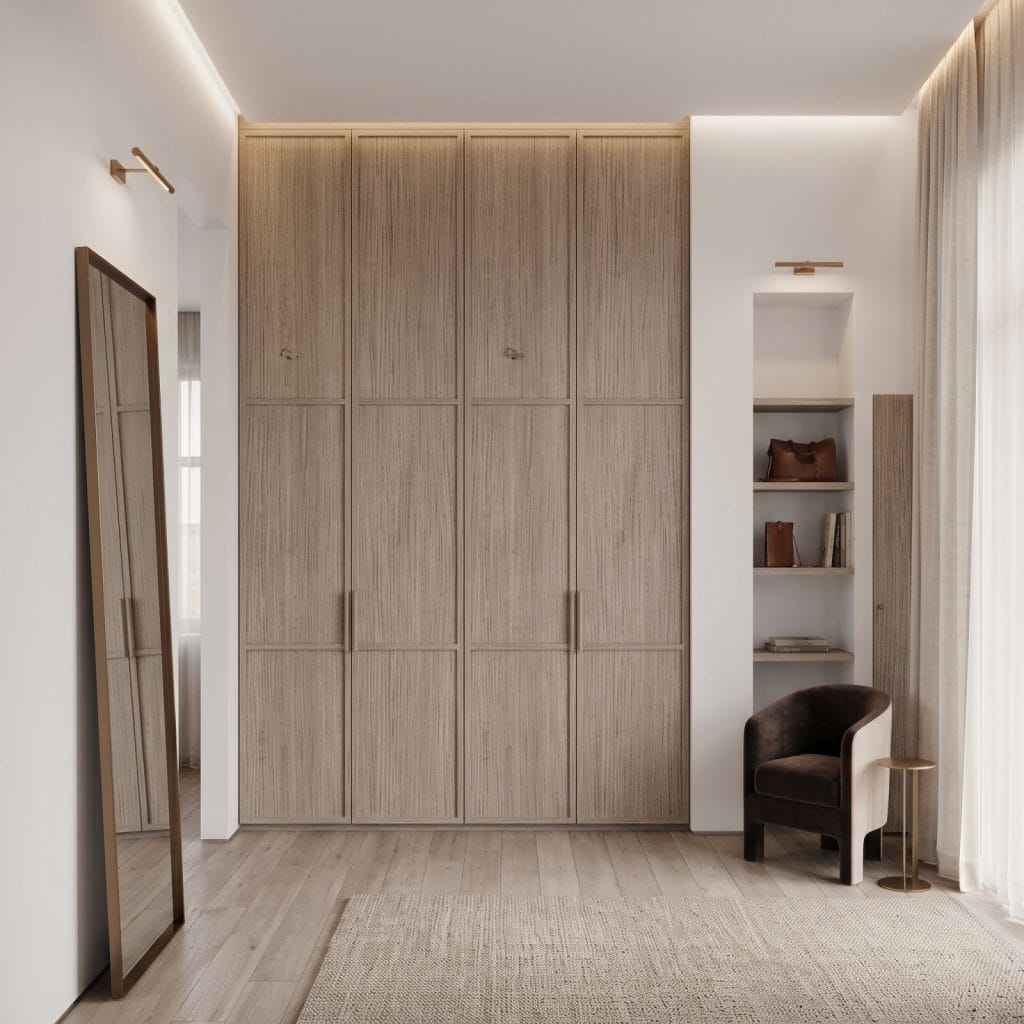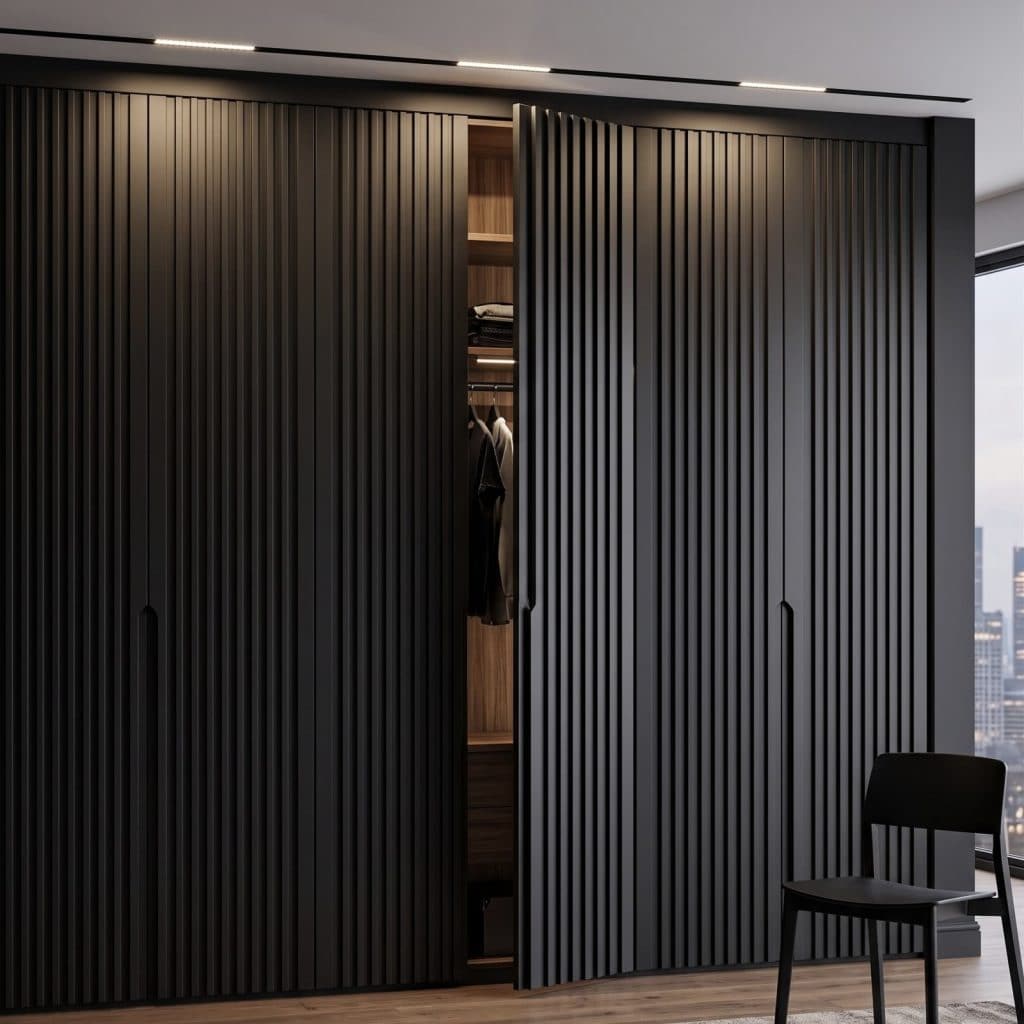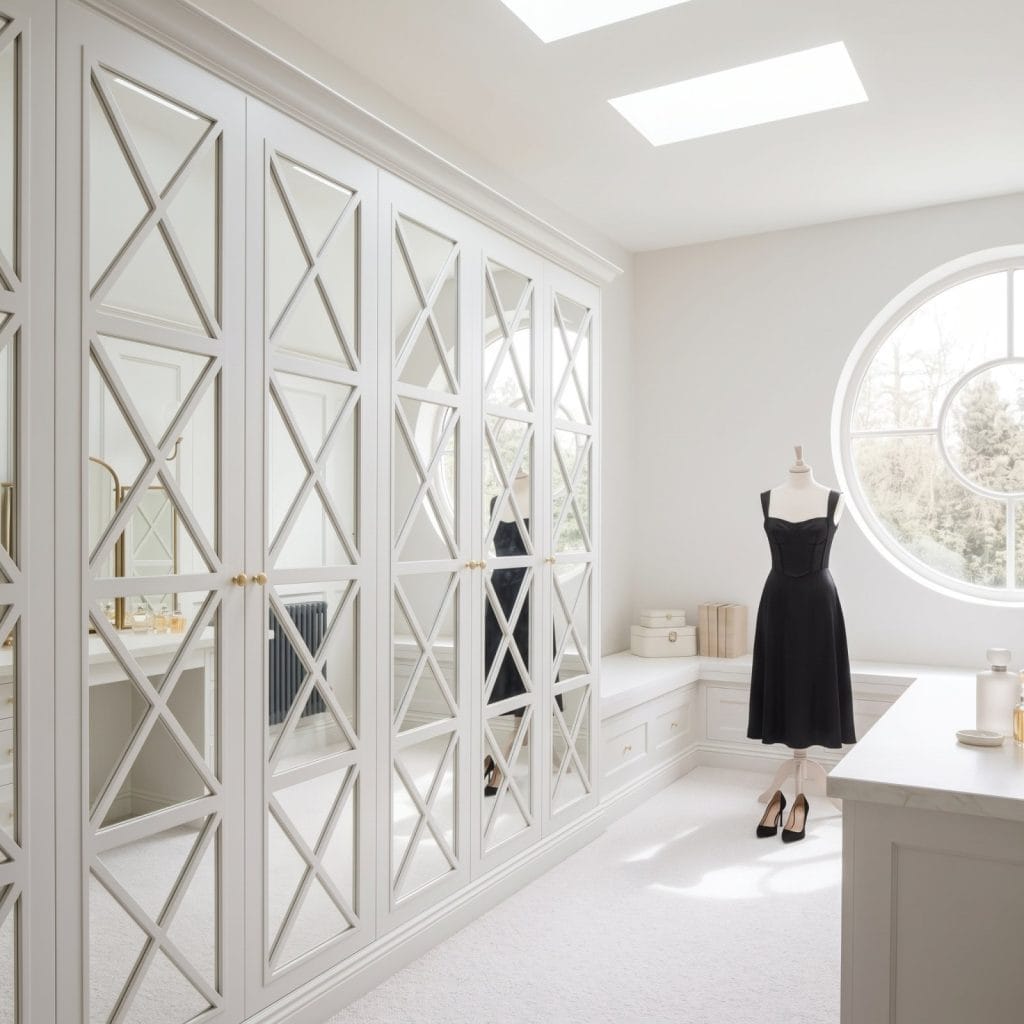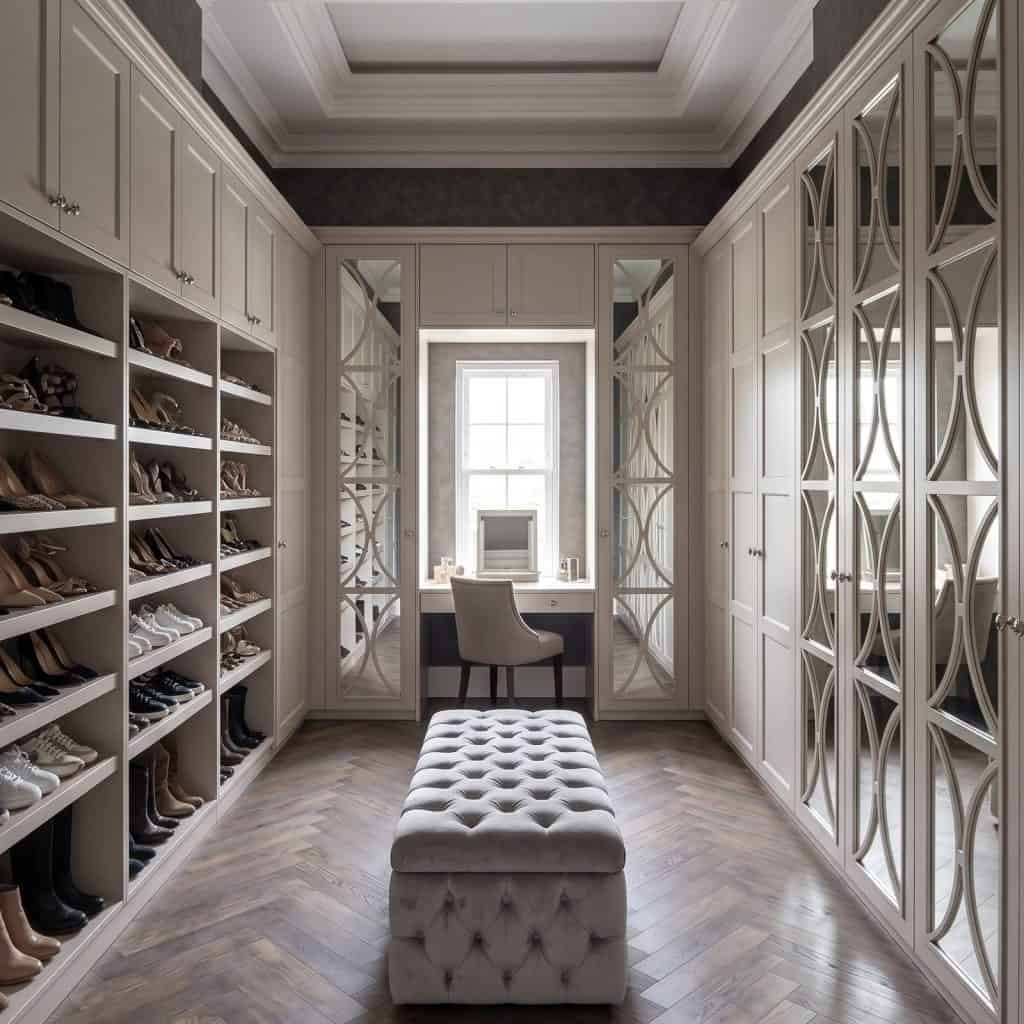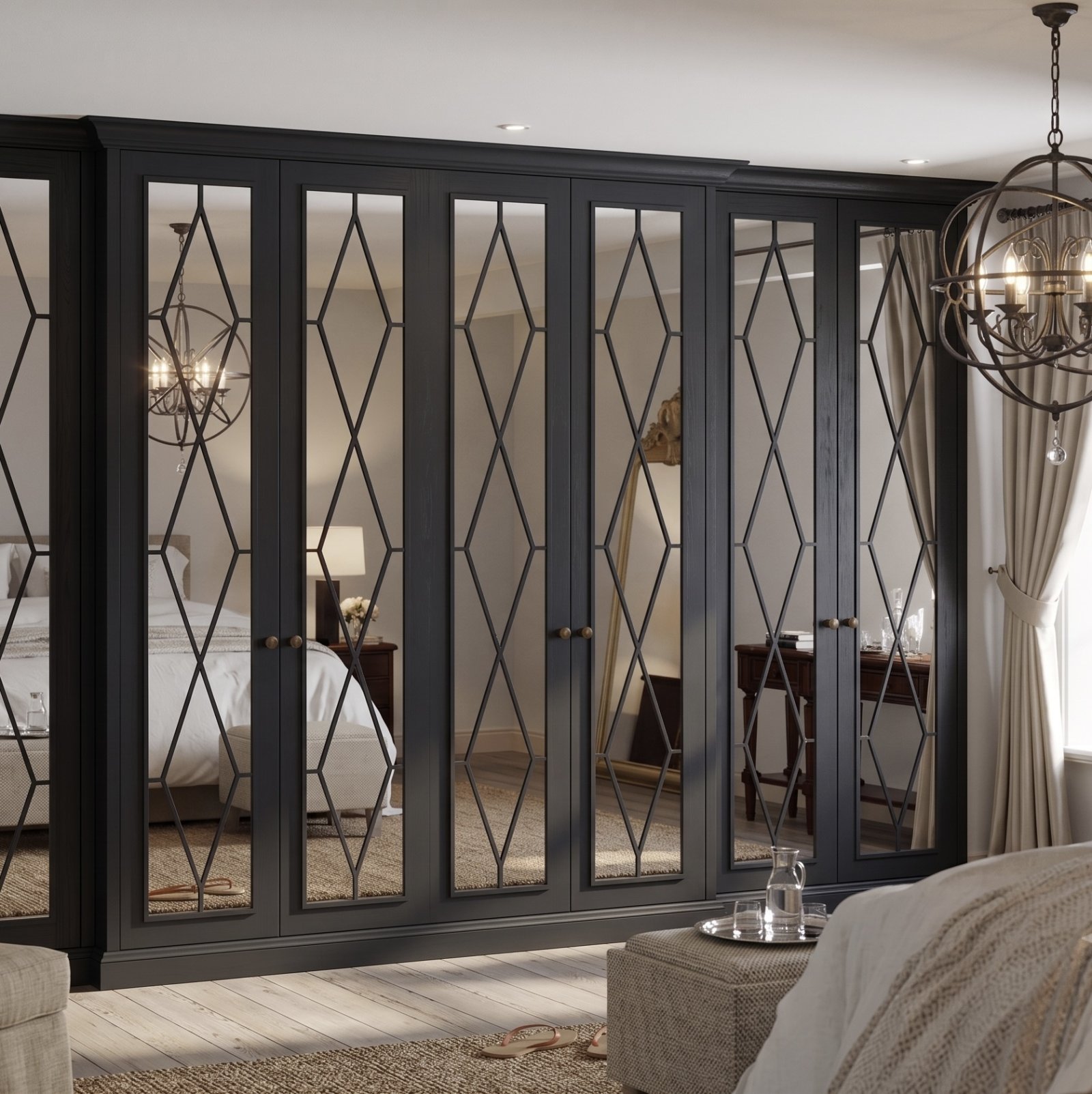
A single ceiling fitting may brighten a dressing room while leaving wardrobe interiors, corners or your reflection unevenly lit. The most useful dressing room lighting ideas start with where you need light, then build a plan around those activities. The aim is to see clearly without making the room feel harsh.
Think about how you use the space: choosing clothes, checking an outfit and moving between storage and a mirror. This guide covers ambient, task and accent lighting, with practical ways to plan fitting positions around mirrors and bespoke storage. Consider these elements together so the room feels cohesive and supports your daily routine.
Key Takeaways
- Balance general illumination, task lighting and visual emphasis when considering dressing room lighting ideas.
- Map dressing activities, mirror positions and storage before deciding where each lighting layer belongs.
- Consider how light reaches a mirror, as its direction can affect shadows and how clearly you see an outfit.
- Coordinate lighting decisions with storage layout, door design and finishes for a cohesive room design.
Dressing room lighting ideas: understand the layers before choosing fittings
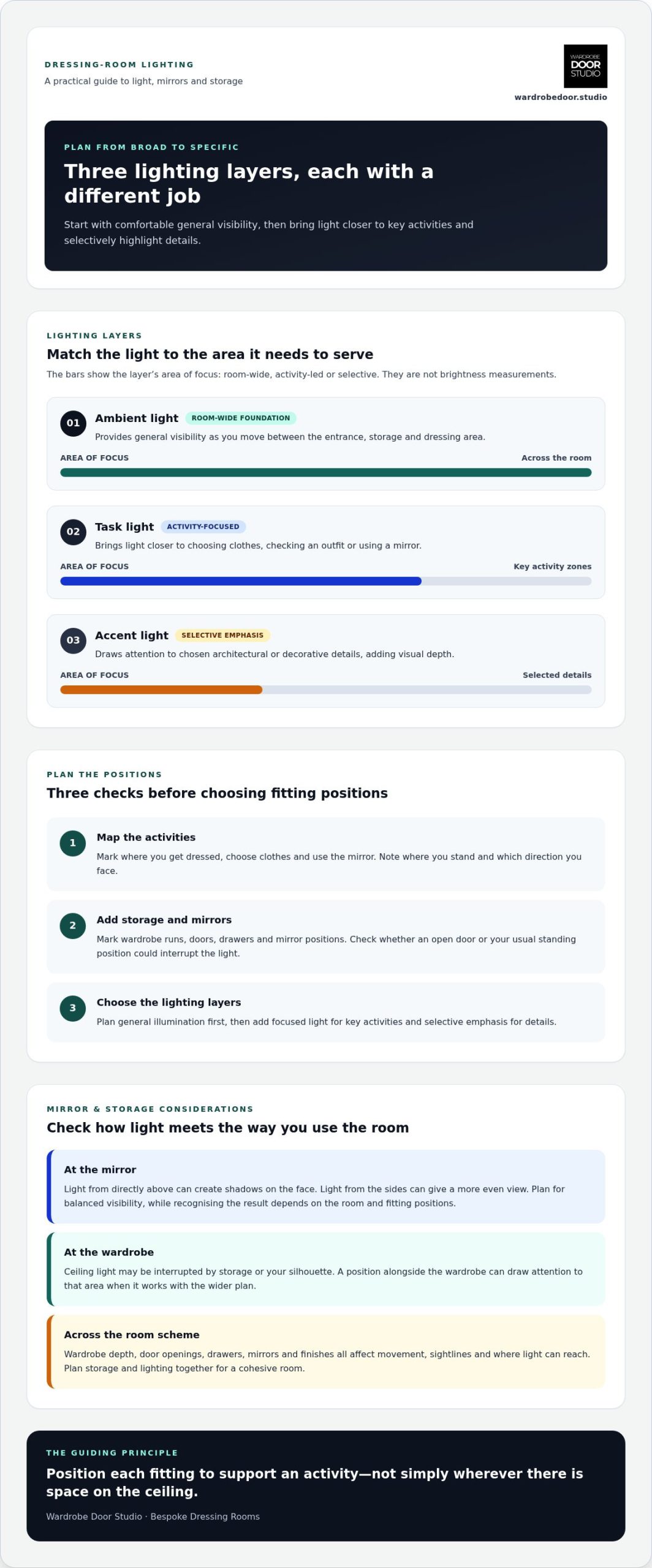
Layered lighting combines ambient light for general visibility, task lighting for specific activities and accent lighting for visual emphasis. Each layer has a distinct role, so you can make the room easier to use without expecting one fitting to do everything. A central ceiling light, for example, may leave wardrobe storage or the mirror less clearly lit, even when the centre of the room feels bright.
Ambient light sets the overall view, task light supports what you’re doing, and accent light gives the room depth and character. Use this framework to assess dressing room lighting ideas before choosing fittings. For a broader overview of how light is used, see the Principles of Lighting.
Which lighting layer supports each dressing-room activity?
Start by listing the activities that happen in each part of the room. Then decide which type of light will support each one. A dressing room may need comfortable general visibility, focused light for close tasks and a softer highlight for selected design details.
- Moving around the room: Ambient lighting provides a general base, helping you see across the space as you move between the entrance, storage and dressing area.
- Using a mirror or choosing clothes: Task lighting brings light closer to the activity. A well-positioned source can make it easier to assess an outfit or distinguish garments without relying only on light from the ceiling.
- Highlighting details: Accent lighting draws attention to architectural features or decorative elements. Use it selectively to add visual depth rather than trying to brighten every surface equally.
Think of the layers as complementary, not competing. Ambient light establishes a comfortable foundation; task and accent lighting then respond to particular activities and focal points. When comparing fittings, identify the job each one needs to do and consider how it will work with the rest of the plan.
How to plan dressing room lighting around mirrors, storage and sightlines
Make a simple plan before settling on fitting positions. Map what you do in the room, then add furniture and the views you need to keep clear. This turns dressing room lighting ideas into choices based on your actual layout rather than a generic arrangement.
- Map activities. Mark where you get dressed, choose clothes and use the mirror. Note where you stand and which direction you face.
- Mark storage and mirrors. Add wardrobe runs, doors, drawers and mirror positions. Check whether an open door or your usual standing position could interrupt light travelling across the room.
- Choose the lighting layers. Plan general illumination first, then add focused light for key activities and selective emphasis for details.
Position each fitting to support an activity, not simply wherever there’s space on the ceiling. Light reaching a mirror from directly above can create shadows on the face, while light from the sides can give a more even view. The result depends on the room and fitting positions, so plan for balanced visibility rather than expecting to eliminate every shadow. The International Association of Lighting Designers offers a wider perspective on lighting design principles.
Where should dressing-room lights go for useful, balanced illumination?
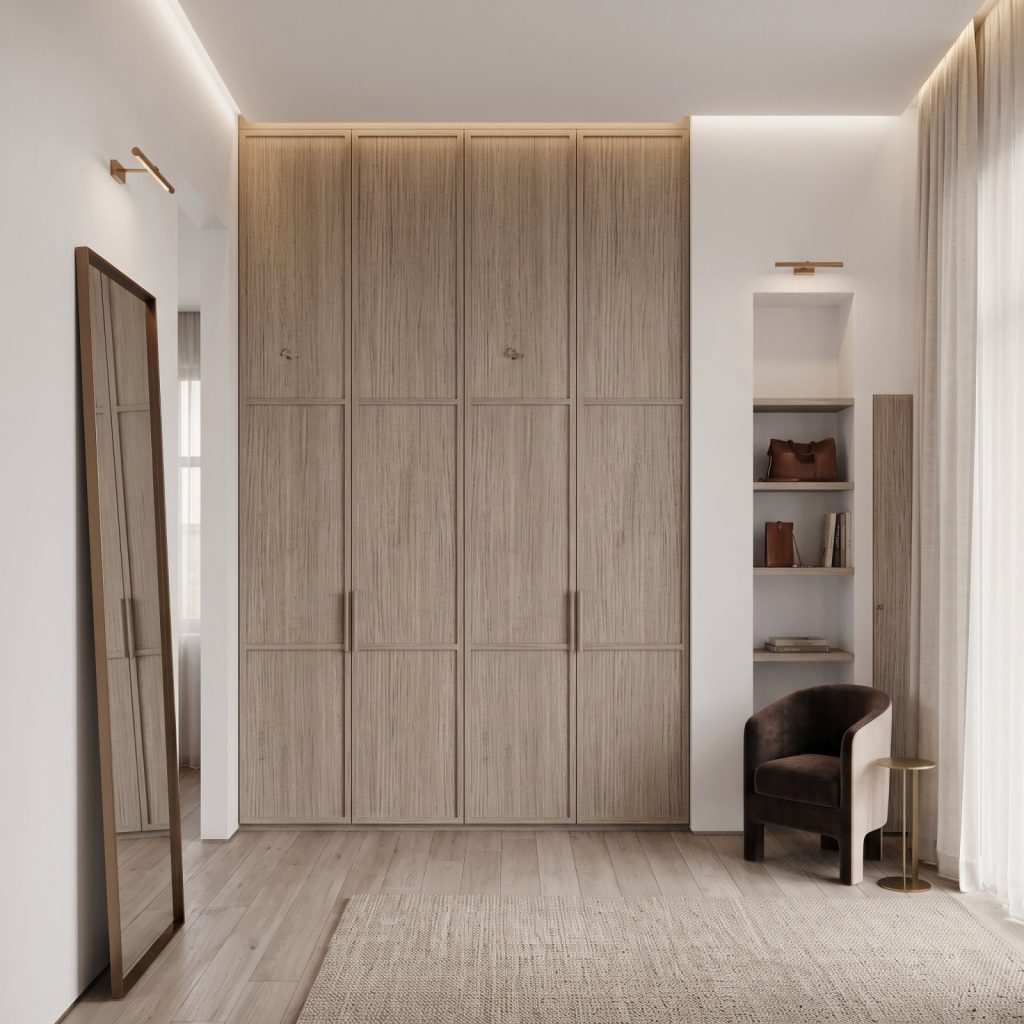
Ceiling fittings can provide general light across the room, but consider what sits below them and whether storage or your own silhouette may interrupt the beam. Vertical fittings beside a mirror bring light closer to face level. Near wardrobes, a position alongside the storage can draw attention to that area, provided it fits into the wider room-lighting plan.
Compare possible positions with the room’s layout and overall aesthetic. When looking at bespoke dressing-room designs, notice how storage, mirrors and sightlines relate to one another. Use those relationships to guide your own plan, rather than choosing fittings in isolation.
Bring dressing room lighting ideas together with bespoke storage
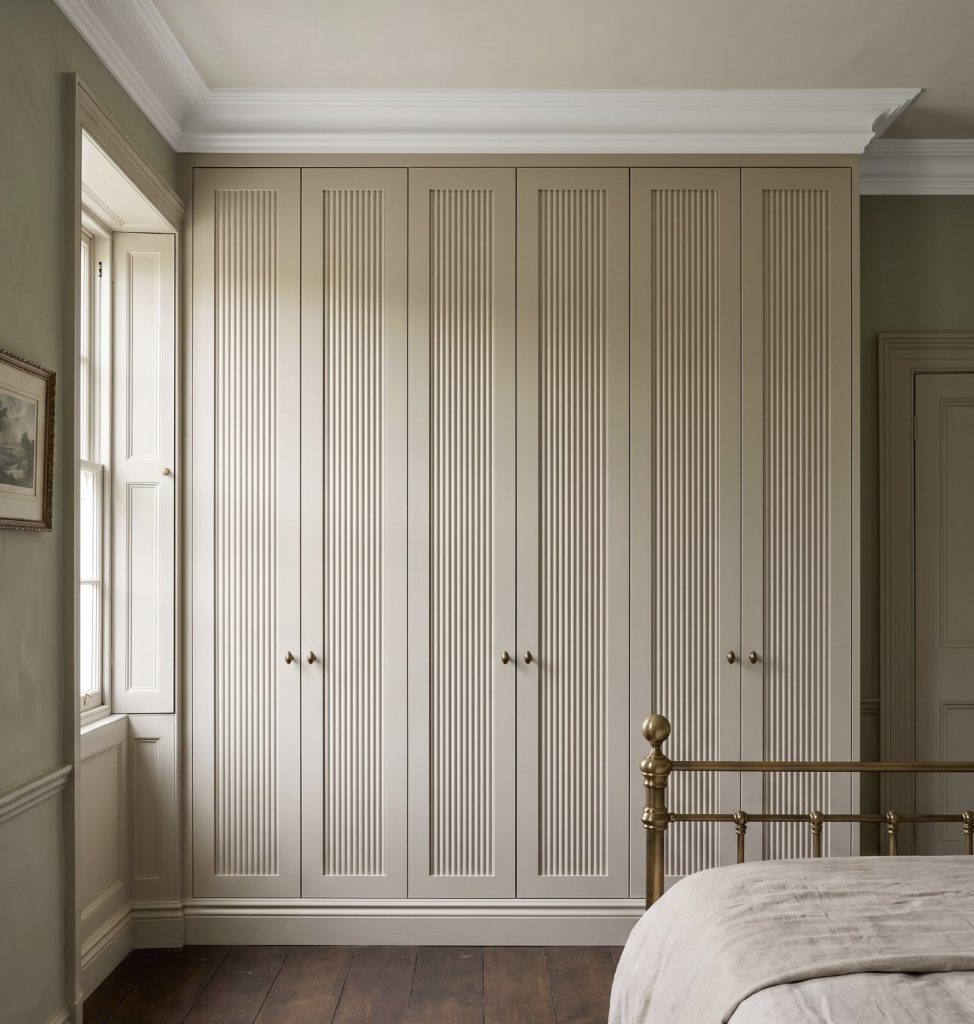
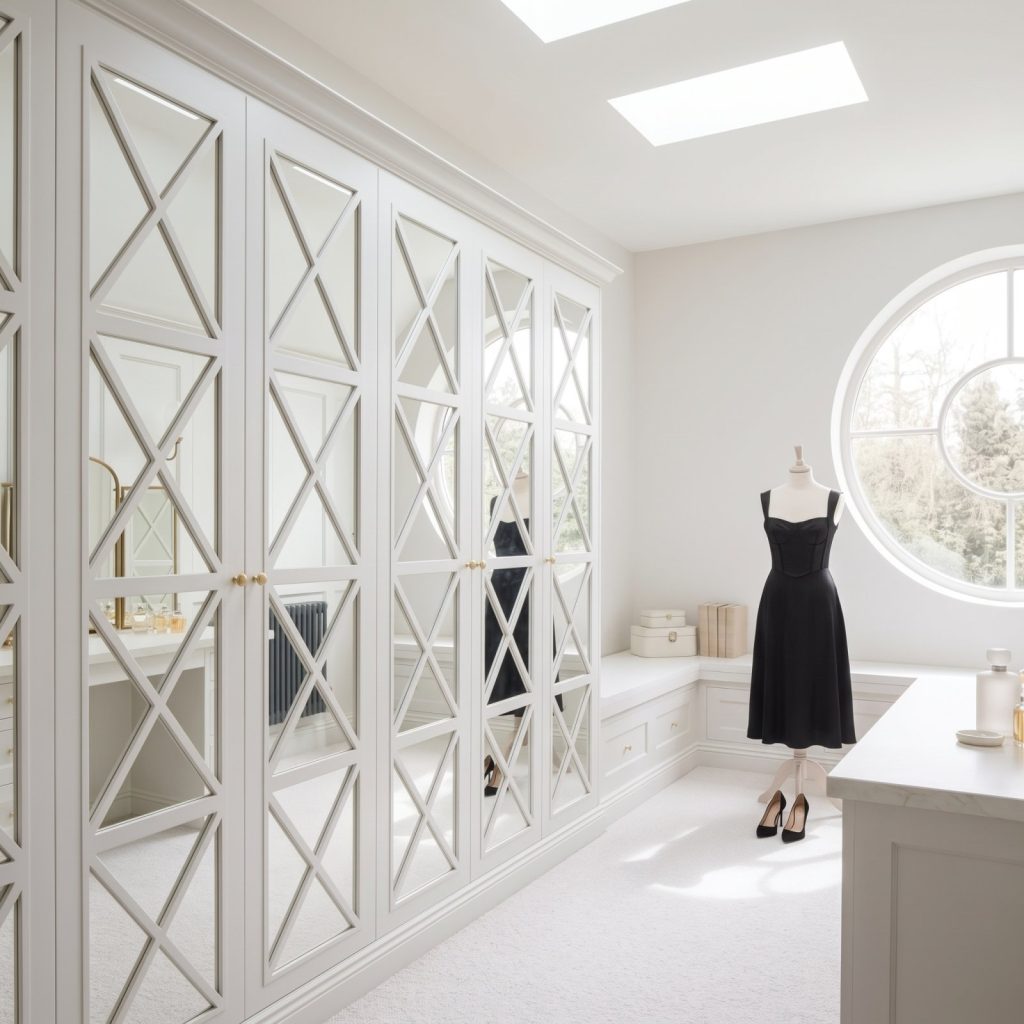
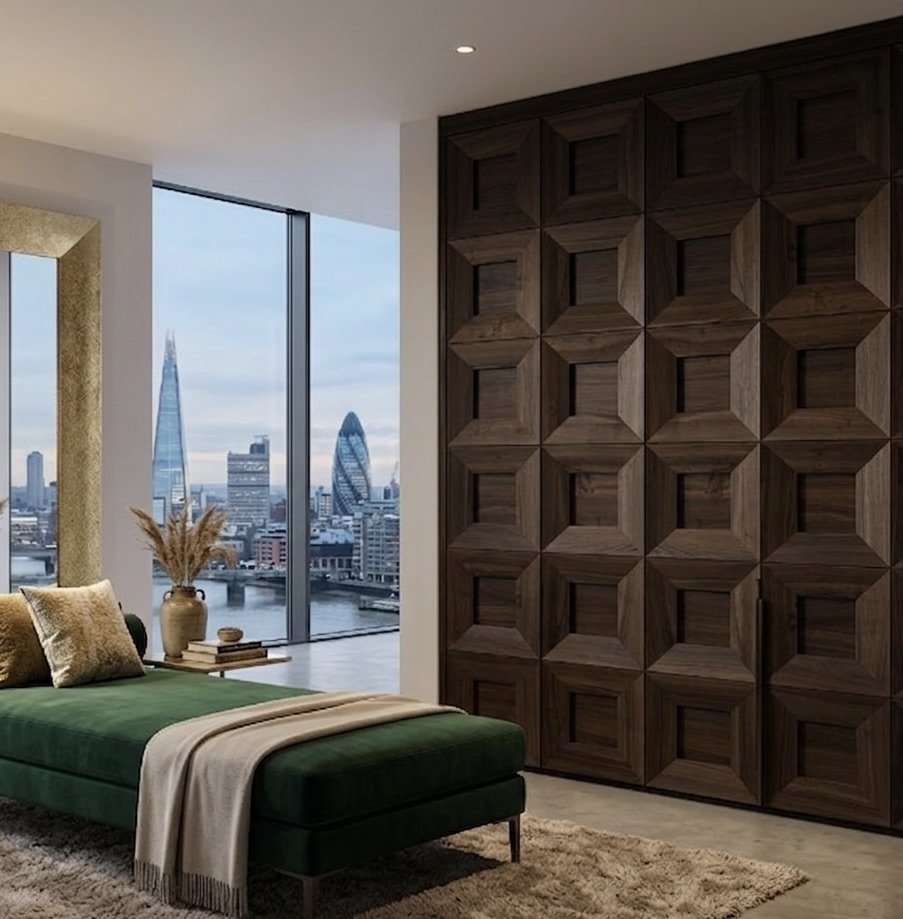
Plan storage and lighting as parts of the same room scheme. The position and depth of wardrobe runs, the way doors open and the location of drawers all affect how you move through the space and where light can reach. Door design and finishes also shape the room’s character: reflective surfaces may carry light across a sightline, while darker or more detailed finishes can create areas of emphasis.
A considered storage layout gives the lighting plan a clear structure and helps the whole dressing room feel cohesive. Sketch the wardrobe, mirror and dressing areas together, then check that fitting positions work with the storage layout and the way you use the room.
When does a bespoke dressing-room design help bring the scheme together?
A bespoke design can help when the room’s proportions, storage requirements and preferred layout need to work together. Planning these elements as a whole establishes where wardrobe doors, drawers and mirrors will sit, giving you a useful reference for coordinating lighting positions and sightlines. It also helps the storage design and chosen finishes contribute to a unified room scheme.
Wardrobe Door Studio offers Bespoke Solutions through two pathways. With Supply & Fit, the process runs from site measurement to final installation; Supply Only provides precision-crafted components for self-installation or use with your own installer.
Wardrobe Door Studio’s bespoke dressing-room solutions are designed around your space and storage needs.
Shape a dressing room around your daily routine
Let your routine guide the final design decisions. Consider what you want to see clearly, where you need room to move and how the storage should sit within the wider interior. Once you have a lighting plan, carry that thinking into the room layout, aligning the atmosphere you want with storage suited to your space.
Wardrobe Door Studio creates bespoke dressing rooms manufactured in England, with Supply & Fit and Supply Only options. The design can be tailored around your space and storage requirements.
Take the next step towards a dressing room designed around your space and preferences. Explore bespoke dressing-room design and begin shaping a scheme that feels considered, practical and distinctly yours.
Frequently Asked Questions
Is LED lighting suitable for a dressing room?
Yes, LED lighting is suitable for a dressing room, where it can provide general or focused illumination. For clearer clothing colours, look for a light source with a Colour Rendering Index (CRI) of 90 or above, as higher colour rendering helps garments and skin tones appear more accurate. Consider how its appearance sits alongside other light sources in the room.
How can I avoid shadows around a dressing-room mirror?
To reduce shadows at a dressing-room mirror, aim for light to reach the face from both sides rather than relying on a single overhead source. Vertical fittings or a backlit vanity mirror can help distribute illumination more evenly. Stand in your usual position and check the view from different angles, since nearby walls or open doors may interrupt the light.
What colour temperature is best for dressing-room lighting?
A warm white range of around 2700K to 3000K is a useful starting point for dressing room lighting ideas, creating a calm atmosphere without making the space feel stark. Before settling on a scheme, compare clothing colours under the chosen lighting and in daylight. This can help you judge how the room’s warmth affects the colours you see.
Can a dressing room have decorative lighting as well as practical lighting?
Yes. Decorative lighting can give the room a focal point, such as a pendant that complements its finishes, while separate fittings provide the visibility needed for everyday tasks. Keep the decorative element in proportion to the room and position it so it doesn’t obstruct movement, storage access or the view in a mirror. This lets style and function work together.