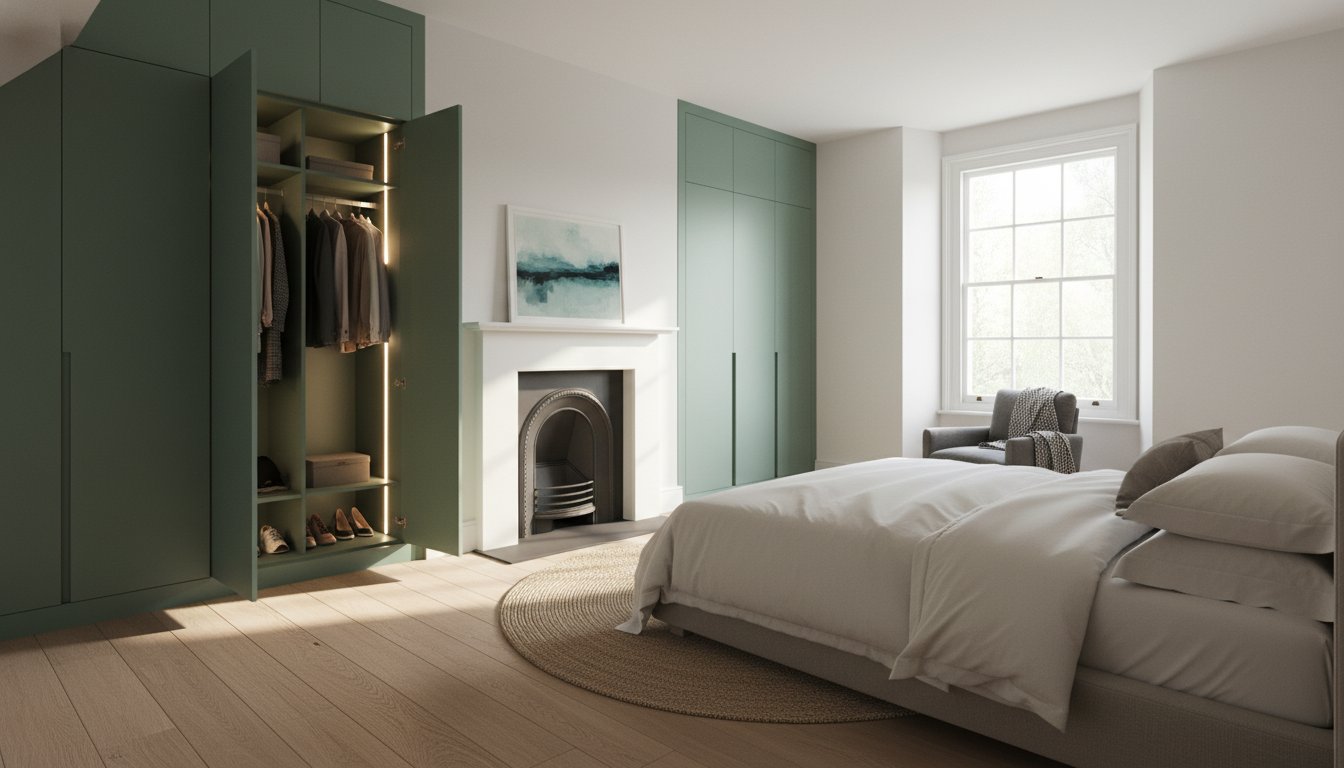
Your bedroom’s architecture should never be forced to accommodate your furniture. Whilst a standard unit might serve a basic function, the inevitable gaps above and beside it often become forgotten zones for dust and wasted potential. If you’ve grown tired of aesthetic fragmentation where your storage feels like an afterthought, exploring high-end alternatives to freestanding wardrobes is the first step towards a more refined interior. With room sizes in UK homes continuing to decline, the need for intelligent, space-saving design has never been more critical for the discerning homeowner.
We understand that you want a home that feels curated rather than cluttered. By moving beyond off-the-shelf constraints, you can achieve a seamless, floor-to-ceiling look that mirrors the precision of professional joinery. This article reveals how bespoke storage solutions can elevate your space through tailored organisation and superior craftsmanship. You’ll discover the most sophisticated trends for 2026, from hand-sprayed finishes to integrated lighting, all designed to maximise your footprint whilst significantly increasing your property’s long-term value. It’s time to replace bulky furniture with an architectural solution that fits your life perfectly.
Key Takeaways
- Identify why off-the-shelf units often fail modern design standards by creating unsightly gaps and disrupting the visual flow of your bedroom.
- Discover how high-end alternatives to freestanding wardrobes provide a seamless architectural fit that conceals structural elements like chimney breasts.
- Learn the benefits of made-to-measure doors as a sustainable method for upgrading standard frames with a premium, bespoke aesthetic.
- Uncover the potential of utilising awkward alcoves and sloped ceilings to turn wasted space into tailored, high-value storage solutions.
- Understand why selecting superior materials and hand-sprayed finishes is vital for ensuring the enduring quality of your custom joinery.
Why Freestanding Wardrobes Fail to Meet Modern Design Standards
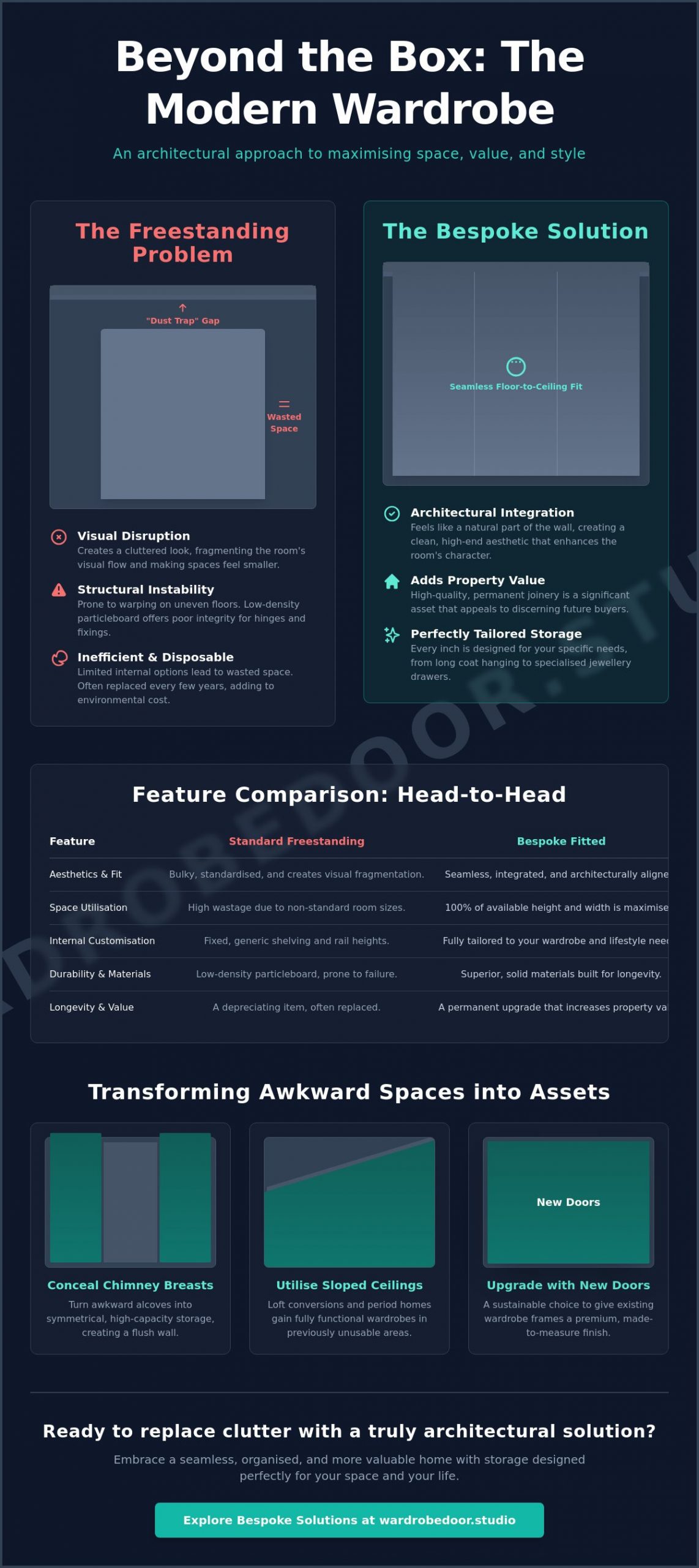
The evolution of the bedroom has rendered the mass-produced, off-the-shelf unit increasingly obsolete. While traditional freestanding wardrobes have served as a staple for decades, they often introduce more problems than they solve in a contemporary luxury interior. One of the most persistent issues is the “dust trap” gap between the unit’s top and the ceiling. This unreachable space serves no functional purpose; instead, it accumulates allergens and creates a visual void that disrupts the room’s height. It’s a design compromise that many homeowners are no longer willing to accept.
Beyond hygiene concerns, these units fragment the visual flow of a space. When a piece of furniture doesn’t align with the room’s architecture, it acts as a bulky obstacle rather than an integrated component. This creates a cluttered atmosphere that makes even generous bedrooms feel cramped and poorly planned. Homeowners seeking sophisticated alternatives to freestanding wardrobes are often driven by the desire for a seamless aesthetic that respects the room’s original character. Standard units also offer limited internal customisation, which leads to the following inefficiencies:
- Inefficient Accessory Storage: Fixed shelving heights rarely accommodate specific items like watch boxes, handbags, or long coats.
- Wasted Depth: Standard units are often either too shallow for bulky items or too deep, causing smaller garments to get lost at the back.
- Lack of Specialised Zones: There’s rarely space for integrated jewellery drawers or pull-out tie racks.
The environmental and financial cost of this “disposable” furniture model is significant. Low-quality, flat-pack items are frequently replaced every few years as they succumb to wear and tear. This cycle of consumption contrasts sharply with the enduring value provided by bespoke joinery.
The Aesthetic Limitation of Standardised Sizes
Standardised furniture is built for an average that rarely exists in reality, especially within the unique proportions of British homes. Off-the-shelf depths and widths frequently leave awkward slithers of dead space that cannot be utilised. This lack of precision often leads to a jarring effect where wood grains and finishes clash amongst other bedroom furniture, undermining the cohesive design language of a luxury suite. A poorly placed unit can also block natural light or cut across ornate Victorian cornicing, compromising the period features that give a property its value.
Structural Instability and Material Fatigue
Period properties often feature uneven flooring that causes tall, freestanding units to lean or warp over time. This instability is exacerbated by the use of thin chipboard backings that offer little structural integrity compared to a solid, bespoke carcass. Hinges often suffer from pulling out of soft particleboard because the material lacks the density required to hold heavy-duty screws securely under the weight of daily use. Investing in alternatives to freestanding wardrobes ensures that your storage remains as stable and functional as the day it was installed.
Bespoke Fitted Wardrobes: The Ultimate Architectural Alternative
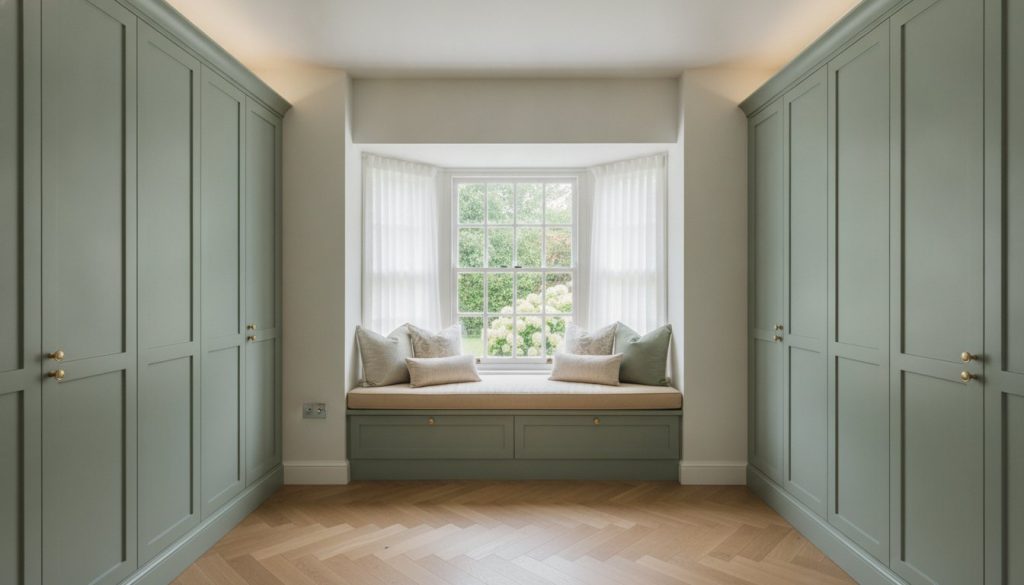
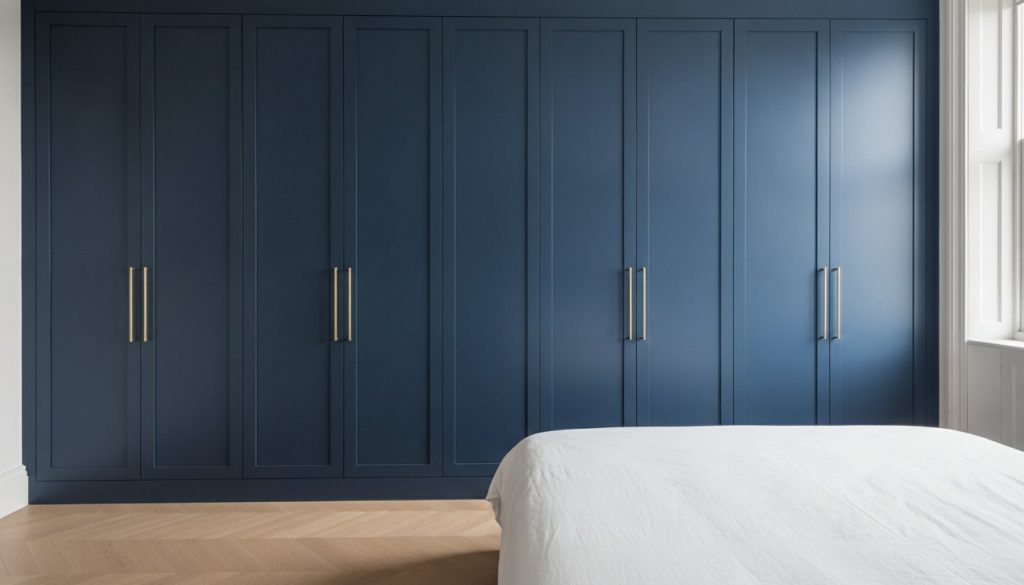
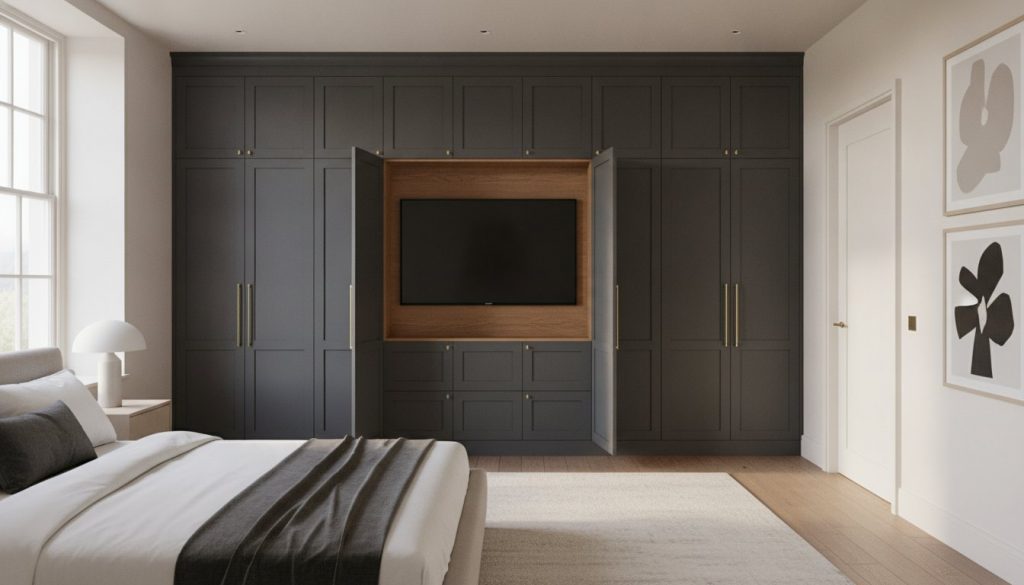
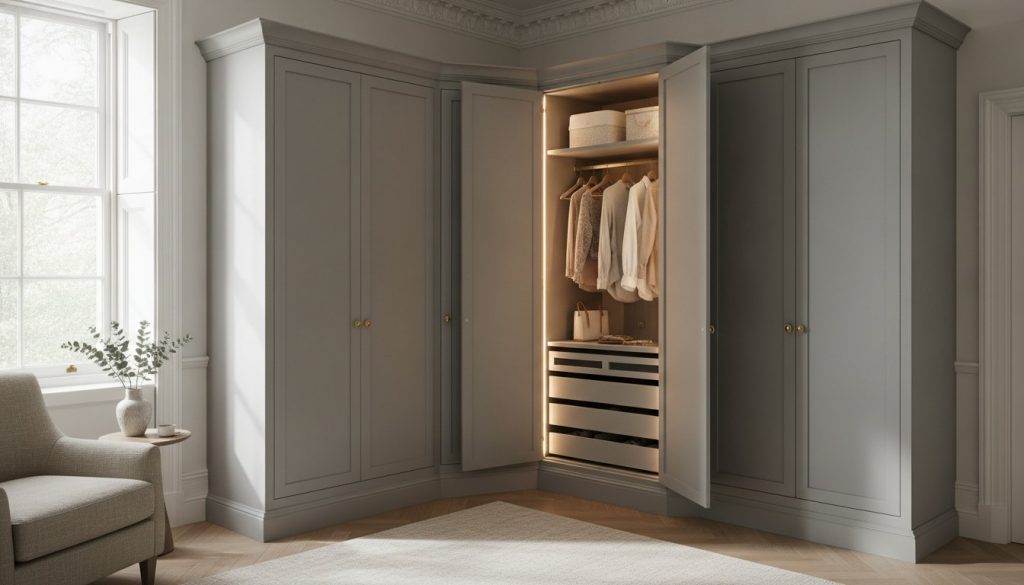
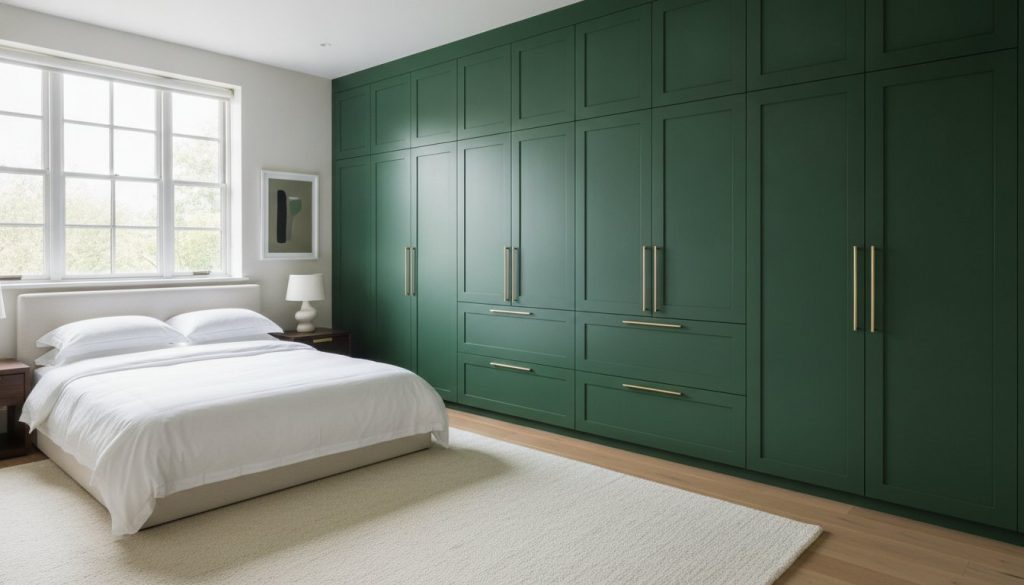
A bespoke fitted wardrobe is far more than a simple storage unit; it’s a precise architectural intervention designed to harmonise with your home’s unique dimensions. Unlike the standardised units discussed previously, these systems are engineered to span from wall-to-wall and floor-to-ceiling. This eliminates the awkward gaps that typically define off-the-shelf furniture. As the premier choice amongst alternatives to freestanding wardrobes, they offer a flush, integrated appearance that makes the cabinetry feel like a natural extension of the wall itself. This seamless look is particularly effective in modern minimalist interiors where visual clutter must be kept to an absolute minimum.
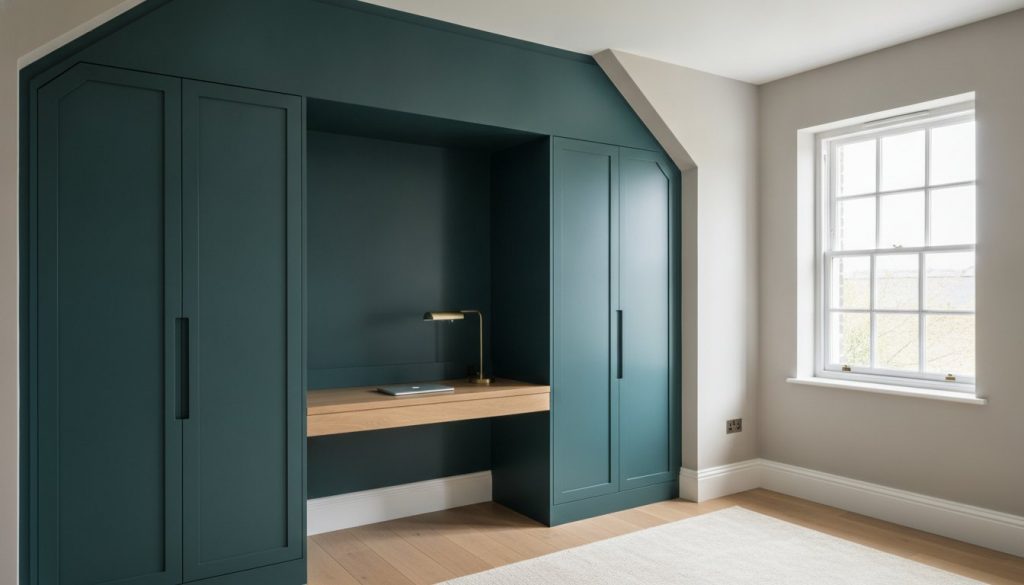
This approach allows you to elegantly conceal unsightly structural elements that often ruin a room’s symmetry. Whether you’re dealing with protruding chimney breasts, irregular alcoves, or exposed pipework, a custom-built solution can be designed to wrap around these features perfectly. By implementing creative storage solutions that respect the original room layout, you turn architectural obstacles into functional assets. Choosing bespoke fitted wardrobes ensures your storage is an enduring asset rather than a temporary fix, significantly increasing the long-term investment value of your property.
Maximising Every Millimetre of Vertical Space
Every centimetre of height in a room represents potential storage. Bespoke designs utilise the full vertical span of your bedroom, providing ample space for seasonal items or infrequently used belongings. This eliminates the need for unsightly storage boxes or suitcases perched precariously on top of cupboards. These floor-to-ceiling structures also serve an aesthetic purpose; they draw the eye upwards, creating a powerful illusion of taller ceilings and a more expansive atmosphere. If you’re ready to move beyond compromise, exploring bespoke storage designs can reveal how architectural integration transforms a master suite.
Tailored Internals for Precision Organisation
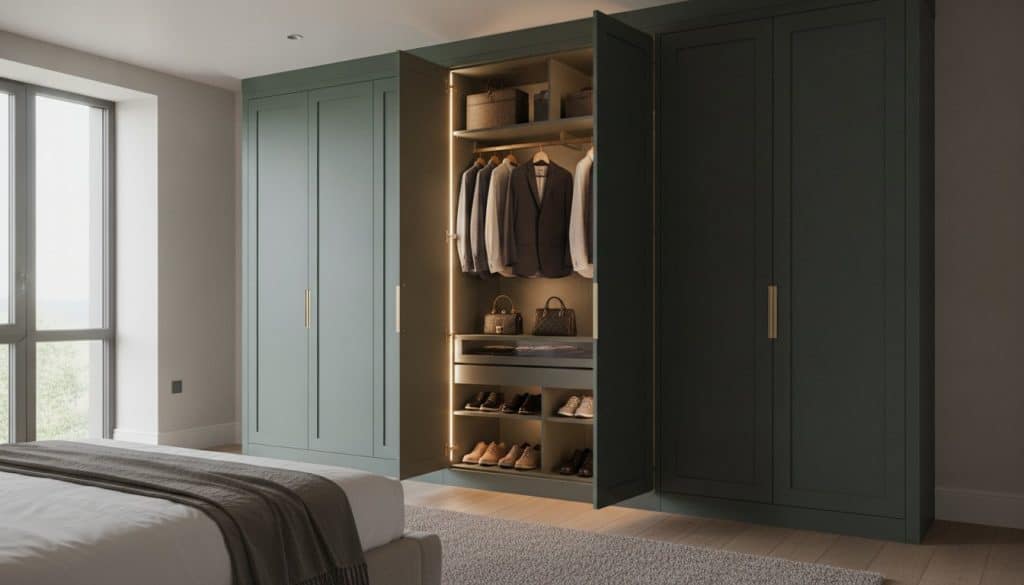
The true luxury of moving away from standard alternatives to freestanding wardrobes lies in the internal configuration. You’re no longer restricted to a rudimentary “rail and shelf” setup. Instead, you can specify an interior layout that reflects your personal wardrobe requirements:
- Specialised Zones: Dedicated heights for long evening dresses, tailored suits, and folded knitwear.
- Sophisticated Accessories: Integrated pull-out shoe racks and velvet-lined jewellery drawers for effortless organisation.
- Atmospheric Lighting: Discreet LED strips that activate upon opening the doors, enhancing both visibility and ambiance.
This level of detail ensures that every item has a dedicated home, reducing the time spent searching for garments and maintaining the pristine condition of your clothing. The result is a highly functional lifestyle hub that balances artistic vision with practical logistics.
Made-to-Measure Replacement Doors: The Smart Alternative
Not every bedroom renovation requires a complete structural overhaul. For many homeowners, the most effective alternatives to freestanding wardrobes involve upgrading the external aesthetic of existing cabinetry. This approach is both sustainable and fiscally responsible; it allows you to retain high-quality internal frames whilst completely transforming the room’s visual identity. By focusing on the facade, you achieve a built-in, high-end look without the significant disruption or waste associated with a full strip-out and disposal of perfectly functional carcasses.
Many modern homes utilise standard IKEA Pax frames because they offer reliable internal organisation. However, their off-the-shelf doors often lack the architectural weight required for a luxury master suite. Professional replacement wardrobe doors made to measure bridge this gap. They provide a precise fit that eliminates the uneven gaps and visible frame edges common in mass-market furniture. This method ensures your cabinetry aligns perfectly with your room’s specific floor-to-ceiling height, creating the illusion of a full-scale bespoke installation at a fraction of the time and cost. It’s a sophisticated way to transition away from alternatives to freestanding wardrobes that feel temporary or ill-fitted.
The Luxury of Hand-Sprayed Finishing
The primary differentiator between a standard update and a luxury renovation lies in the quality of the surface. Unlike the thin vinyl wraps found in high-street showrooms, professional hand-sprayed finishing offers a deep, durable, and flawlessly smooth coating. This technique allows for total creative freedom; you aren’t limited to a pre-set catalogue of shades. You can specify any colour to harmonise with your existing bedroom palette, whether that’s a moody charcoal or a soft, neutral stone. A bespoke satin or matt finish doesn’t just look better; it feels superior to the touch and significantly elevates the perceived value of your interior.
Architectural Styles: Skinny Shaker and Mirror Fret
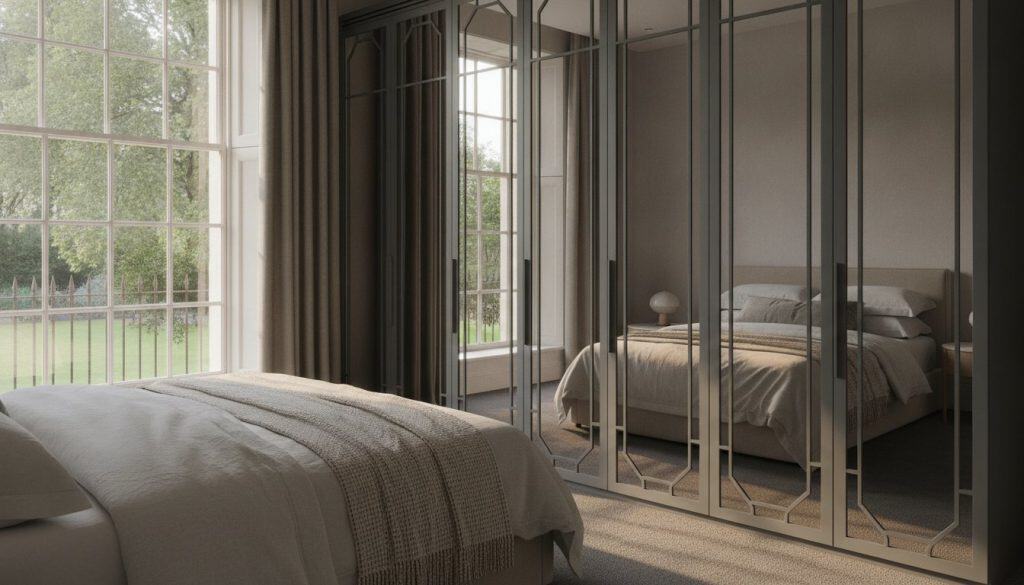
Selection of the right profile is essential for defining the room’s character. Modern minimalist spaces benefit from skinny shaker wardrobe doors, which offer a contemporary take on a traditional design with refined, narrow stiles and rails. This look provides subtle texture without overwhelming the room’s visual flow. For those seeking to inject light and traditional English charm, mirror fret wardrobe doors are an exquisite choice. The intricate fretwork patterns act as a sophisticated focal point, often replacing the need for decorative wall art whilst making smaller rooms feel considerably more spacious through clever reflection.
Utilising Awkward Spaces: Alcoves, Lofts, and Sloped Ceilings
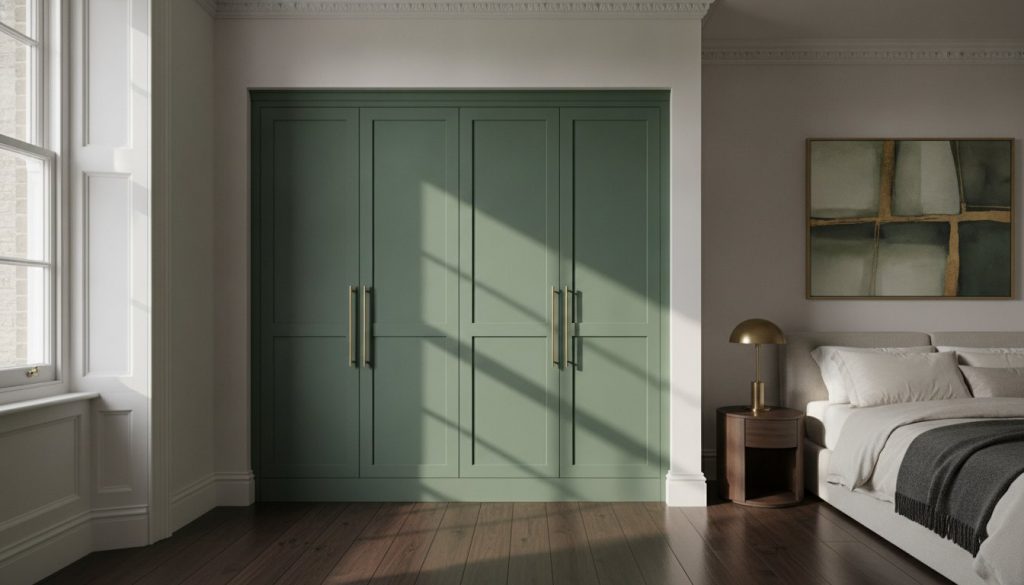
Period properties present a unique set of challenges that standard furniture cannot address. Whilst a rectangular unit might fit into a modern room, it often looks out of place in a Victorian or Edwardian home. The primary reason homeowners seek alternatives to freestanding wardrobes in these settings is the presence of chimney breasts and deep alcoves. A freestanding unit placed in an alcove inevitably leaves gaps at the sides and top, which serve as magnets for dust and represent wasted potential. Bespoke joinery allows you to reclaim this “dead space”, turning it into a high-capacity storage zone that follows the room’s contours exactly.
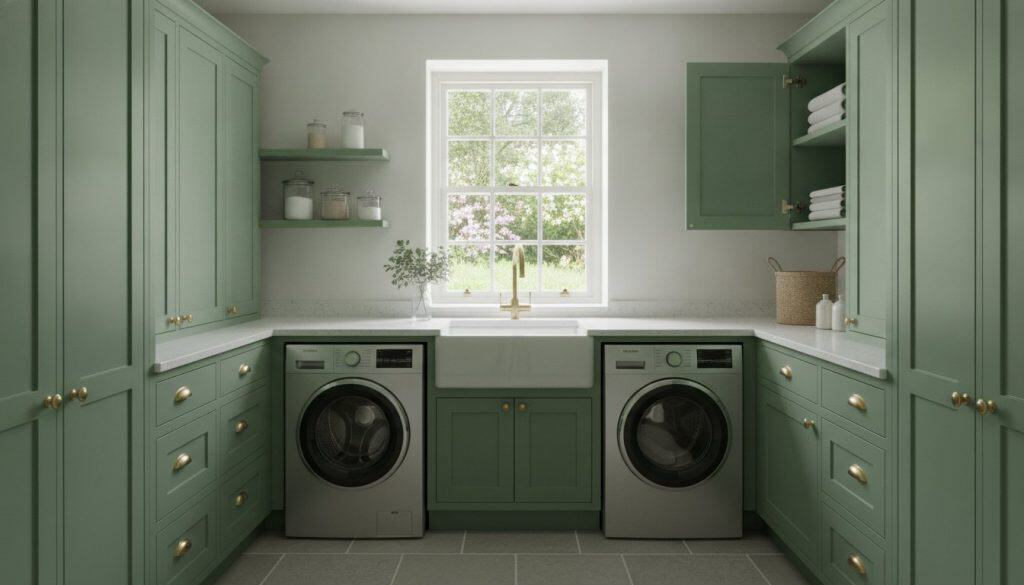
Beyond the master suite, custom solutions can wrap around corners or integrate into awkward under-stairs niches. These areas are often neglected because they require complex, non-linear construction that mass-market providers don’t offer. By using precision-engineered carcasses, you can transform a difficult hallway or a cramped corner into a functional wardrobe or storage hub. This level of architectural integration ensures that your home’s character is enhanced rather than hidden by bulky, intrusive furniture. It’s about working with the building, not against it.
Chimney Breast Alcove Solutions
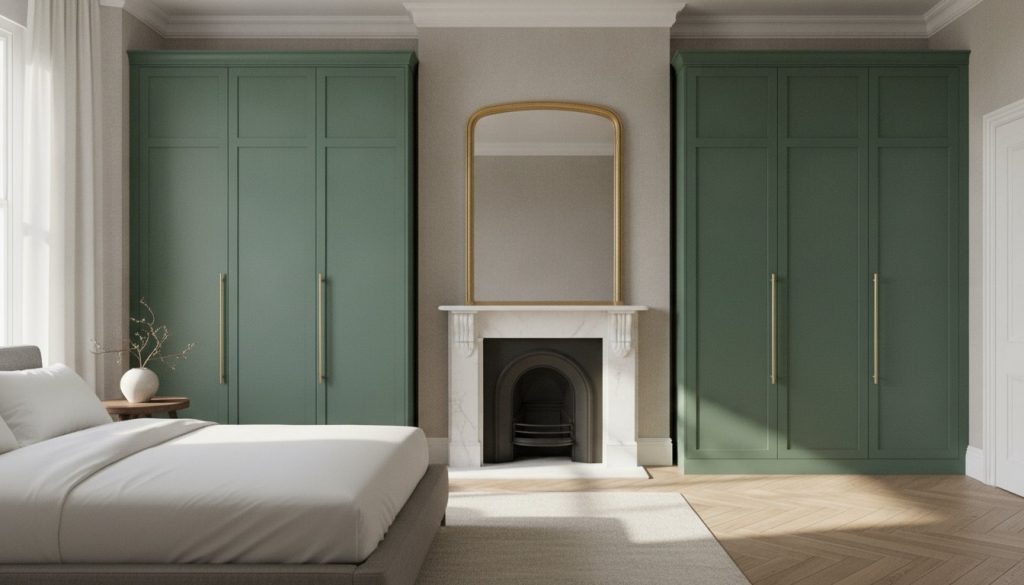
Achieving symmetry is vital for balancing a room’s proportions, especially in traditional English architecture. When building into alcoves, a professional designer must handle varying depths and irregular masonry to ensure the frontal appearance remains perfectly flush. You can also integrate bespoke dressing tables, vanity units, or desks between the wardrobe sections. This creates a multifunctional wall that feels deliberate and cohesive, rather than a collection of mismatched pieces. This approach doesn’t just add storage; it organises the entire room’s layout into a single, elegant vision.
Navigating Sloped Ceilings and Loft Eaves
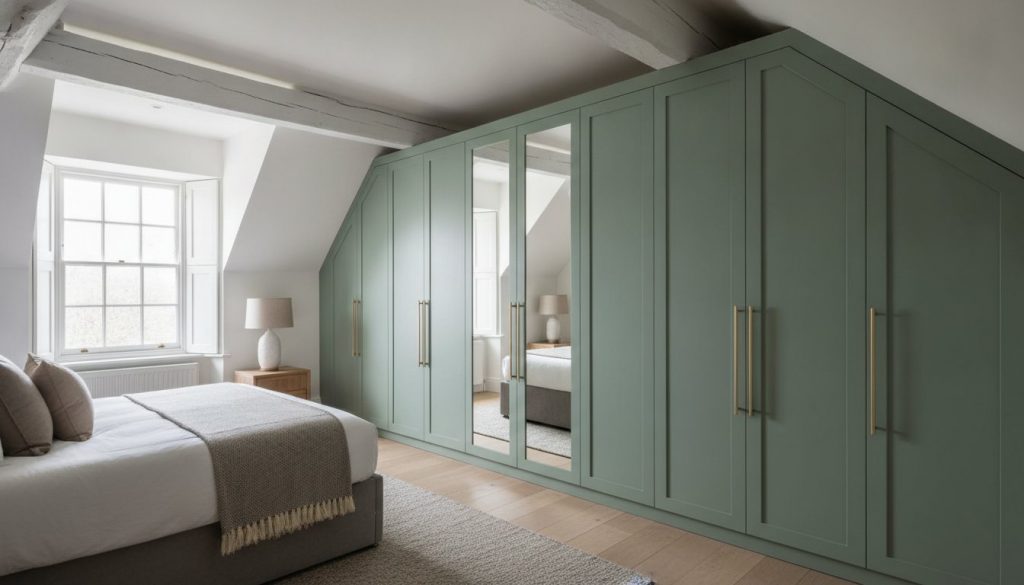
Loft conversions and attic rooms are perhaps the most demanding environments for storage. Angled cuts and low eaves mean that freestanding furniture simply cannot accommodate the roofline without leaving vast amounts of unusable space. Made-to-measure doors can be manufactured to follow the exact pitch of the ceiling, providing a clean, integrated finish that maximises every available inch of the eaves. Bespoke carcasses are scribed directly to the wall to eliminate gaps in loft spaces, ensuring a rock-solid fit that standard units can’t replicate. If you’re struggling with a challenging layout, start your custom storage project today to see how we can help.
Choosing Your Solution: Materials and Specification
Selecting the right materials is the most critical decision in the transition from temporary furniture to permanent joinery. Mass-market units often rely on low-density chipboard that lacks the structural integrity for large-scale applications. In contrast, luxury alternatives to freestanding wardrobes utilise High-Density Fibreboard (HDF) to ensure a perfectly smooth, paintable surface that remains stable over time. This choice of substrate determines whether your cabinetry will still look pristine a decade from now or succumb to the sagging and material fatigue common in budget alternatives. It’s the professional’s choice for a reason.
The design consultation serves as the bridge between your artistic vision and practical logistics. It’s during this phase that we identify the optimal configuration for your clothing collection and lifestyle habits. A well-designed interior should be as functional as it is beautiful, balancing hanging space with specialised storage for accessories. This meticulous approach ensures that your final installation isn’t just a piece of furniture; it’s a tailored organisational system that respects the room’s architecture whilst enhancing your daily routine.
HDF vs Solid Wood: The Professional Choice
Whilst solid wood is often associated with traditional quality, it’s rarely the best choice for large wardrobe doors. Natural timber is prone to movement, warping, and cracking when exposed to the fluctuating temperatures of a domestic bedroom. HDF provides superior stability, resisting these environmental changes whilst offering a much denser surface for finishing. A hand-sprayed coating on HDF achieves a level of uniformity that is impossible on grain-heavy woods. This durability is essential for high-traffic environments where doors are opened multiple times a day. When specifying your project, consider these technical advantages:
- Surface Precision: HDF allows for a flawless, mirror-smooth finish without visible wood grain.
- Structural Integrity: The material’s density ensures hinges remain secure and doors stay perfectly aligned.
- Versatile Design: It’s the ideal medium for complex profiles like skinny shaker or intricate mirror fretwork.
From Concept to Completion
A successful project begins with a comprehensive site survey and the creation of detailed technical drawings. This phase allows you to visualise the final layout and ensure every internal component matches your specific requirements. We cater to both trade professionals seeking supply-only components and homeowners who require a full-service experience. You can choose professional installation to guarantee a perfect fit or opt for a supply-only route if you have a trusted local joiner. Enquire about our bespoke design service today to begin your journey towards a more organised and beautiful home.
Transform Your Space with Bespoke Excellence
Transitioning from standardised furniture to architectural joinery is a definitive step towards a more refined home. By choosing sophisticated alternatives to freestanding wardrobes, and perhaps complementing them with stylish pieces from Living Chic, you eliminate the visual clutter of awkward gaps and reclaim every millimetre of your room’s footprint. Whether you opt for a full-scale bespoke installation or upgrade your current frames with made-to-measure replacement doors, the result is a seamless, high-end finish that prioritises both form and function.
Our meticulous process ensures your storage is hand-sprayed in England and tailored to your specific lifestyle requirements. We provide expert design and professional installation across London and the Home Counties, guiding you from the initial concept to a flawless completion. It’s time to invest in a storage solution that respects your home’s unique character whilst significantly enhancing its long-term value. Explore our range of bespoke wardrobe doors and fitted solutions and discover the enduring quality of true craftsmanship. Your ideal interior is within reach.
Frequently Asked Questions
What are the best alternatives to freestanding wardrobes for small bedrooms?
Bespoke fitted wardrobes are the most effective alternatives to freestanding wardrobes in compact spaces because they utilise the full vertical span of the room. By extending cabinetry from floor to ceiling, you maximise storage volume without increasing the furniture’s footprint. Incorporating mirrored doors or light-reflecting finishes further enhances the sense of space, making a small bedroom feel considerably more open and organised than it would with bulky, standardised units.
Is it cheaper to buy a freestanding wardrobe or have one fitted?
Whilst freestanding units often have a lower initial price point, bespoke fitted solutions provide superior long-term value. Off-the-shelf furniture is frequently prone to material fatigue and may require replacement every few years. In contrast, high-quality fitted cabinetry is a permanent architectural improvement. It’s designed to endure decades of use, eventually proving more cost-effective when considering the lifespan of the materials and the increased efficiency of the storage.
Can I put bespoke doors on my existing IKEA Pax wardrobe frames?
Upgrading existing IKEA Pax frames with luxury bespoke doors is a common and highly effective design strategy. This approach allows you to retain functional internal carcasses whilst achieving a high-end, built-in aesthetic. By selecting made-to-measure doors with a professional hand-sprayed finish, you can completely transform the appearance of mass-market frames. This method provides a sophisticated look that mirrors a full bespoke installation at a fraction of the disruption.
How do I maximise storage in a room with sloped ceilings?
Maximising storage in rooms with sloped ceilings requires cabinetry that is precisely engineered to follow the roofline. Bespoke carcasses are scribed directly to the angled walls and eaves, turning previously unusable voids into high-capacity storage zones. Standardised furniture cannot accommodate these unique pitches, often leaving large areas of dead space. Custom joinery ensures every available centimetre is utilised for hanging rails, shelving, or specialised accessory drawers.
What is the best material for custom wardrobe doors?
High-Density Fibreboard (HDF) is the preferred material for high-end wardrobe doors due to its exceptional stability and smooth surface. Unlike solid wood, HDF does not warp or crack when exposed to the temperature fluctuations common in domestic bedrooms. It provides a flawlessly uniform substrate for hand-sprayed finishes, ensuring a mirror-smooth coating that maintains its integrity over time. This makes it the professional choice for durable, luxury cabinetry.
How long does it take to install bespoke fitted wardrobes?
The installation of a bespoke wardrobe system generally requires between one and three days on-site, depending on the project’s scale. This timeframe includes the precise fitting of internal carcasses and the careful alignment of the doors to ensure a flush, architectural finish. Because the components are manufactured and finished in a controlled workspace beforehand, the on-site phase is efficient and causes minimal disruption to your daily routine.
Can I choose any colour for my hand-sprayed wardrobe doors?
A hand-sprayed finish offers the unique advantage of unlimited colour customisation for your bedroom interior. You aren’t restricted to a limited palette; instead, you can specify any shade to match your existing decor or create a bold new focal point. This professional finishing technique ensures a deep, durable coating that far exceeds the quality of standard vinyl wraps or hand-painted surfaces, providing a sophisticated and personalised aesthetic.
Do fitted wardrobes add value to my home?
High-quality fitted wardrobes are considered a permanent architectural asset that can increase a property’s resale value. Prospective buyers often prioritise integrated storage solutions that maximise room dimensions and eliminate the need for additional furniture. In the UK market, bespoke joinery signals a well-maintained home with premium specifications. This makes it a sound investment that enhances both the immediate functionality of your space and its long-term market appeal.