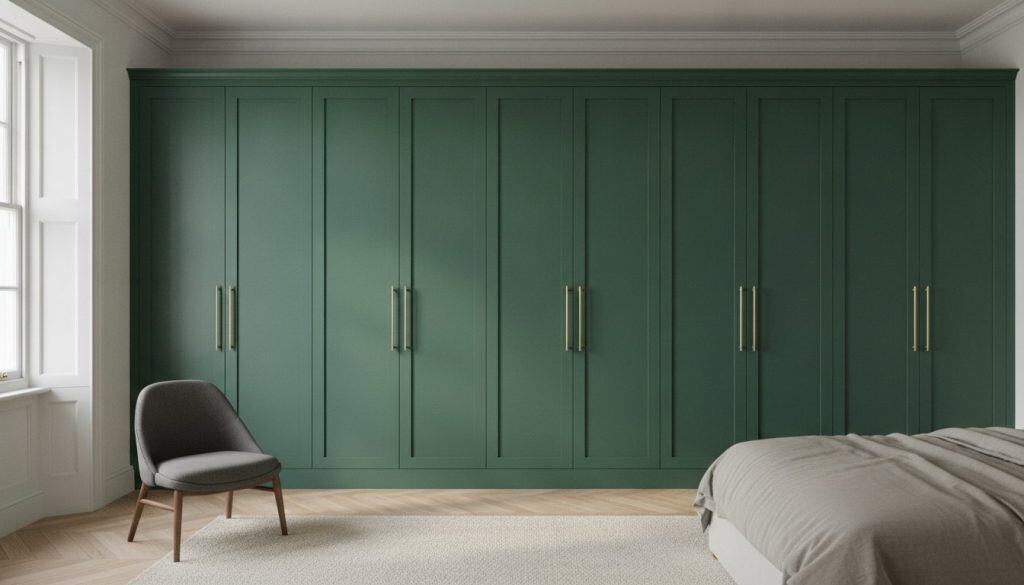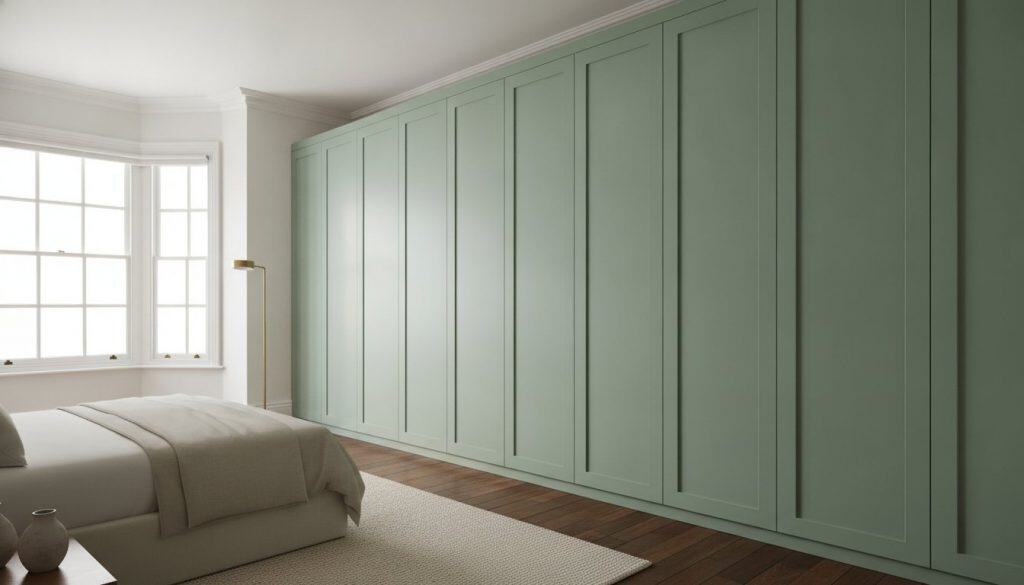
A mirror should do more than simply reflect a space; it should define its architectural character. Many homeowners find that standard mirrored surfaces can feel cold or utilitarian, especially when attempting to resolve the challenges of a dark or awkwardly shaped room. You might worry that adding intricate detailing will result in flimsy, plastic overlays that detract from your home’s heritage. It’s a common frustration to seek the light-enhancing benefits of glass whilst fearing the lack of durability in complex designs.
This guide explores how mirror fret wardrobe doors transform the bedroom into a sophisticated focal point by blending traditional British craftsmanship with modern, light-enhancing technology. You’ll discover how hand-finished fretwork provides a structural elegance that mass-produced alternatives cannot match. We will examine the leading design trends for 2026, including how to select patterns that complement your interior history and ensure your bespoke installation remains a lasting investment in quality.
Key Takeaways
- Understand how mirror fret wardrobe doors utilise ornamental lattice overlays to multiply natural light and expand the perceived square footage of smaller or darker rooms.
- Learn the essential principles of architectural scale to ensure your chosen fretwork pattern harmonises with the existing proportions and heritage of your interior design.
- Discover why moisture-resistant, high-density MDF is the industry standard for intricate fretwork, offering superior stability and resistance to warping compared to traditional solid wood.
- Identify the most efficient route for your project, whether you require a professional supply-only service for trade installation or a comprehensive, hand-sprayed bespoke wardrobe design.
Defining Mirror Fret Wardrobe Doors: A Blend of Heritage and Modernity
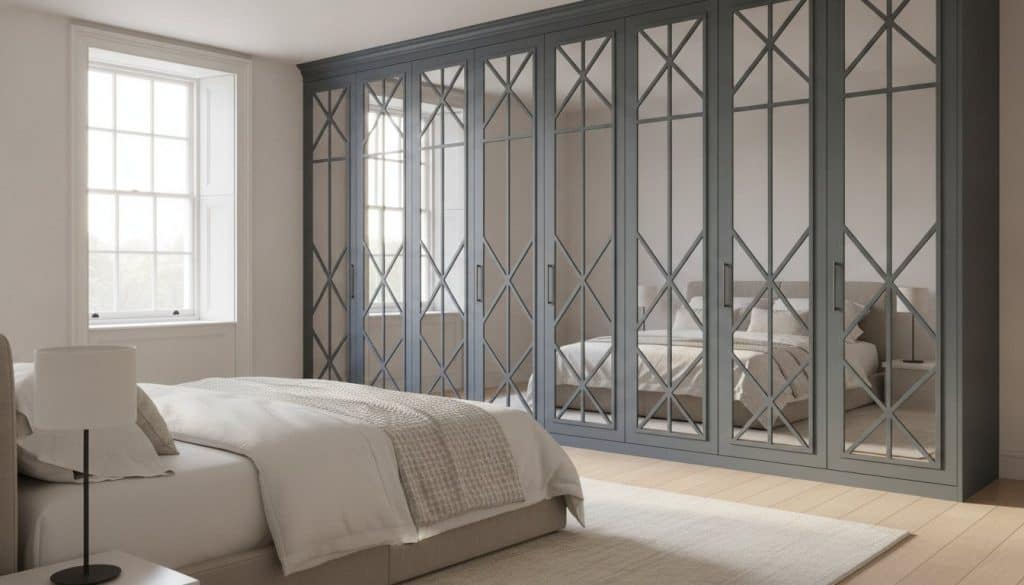
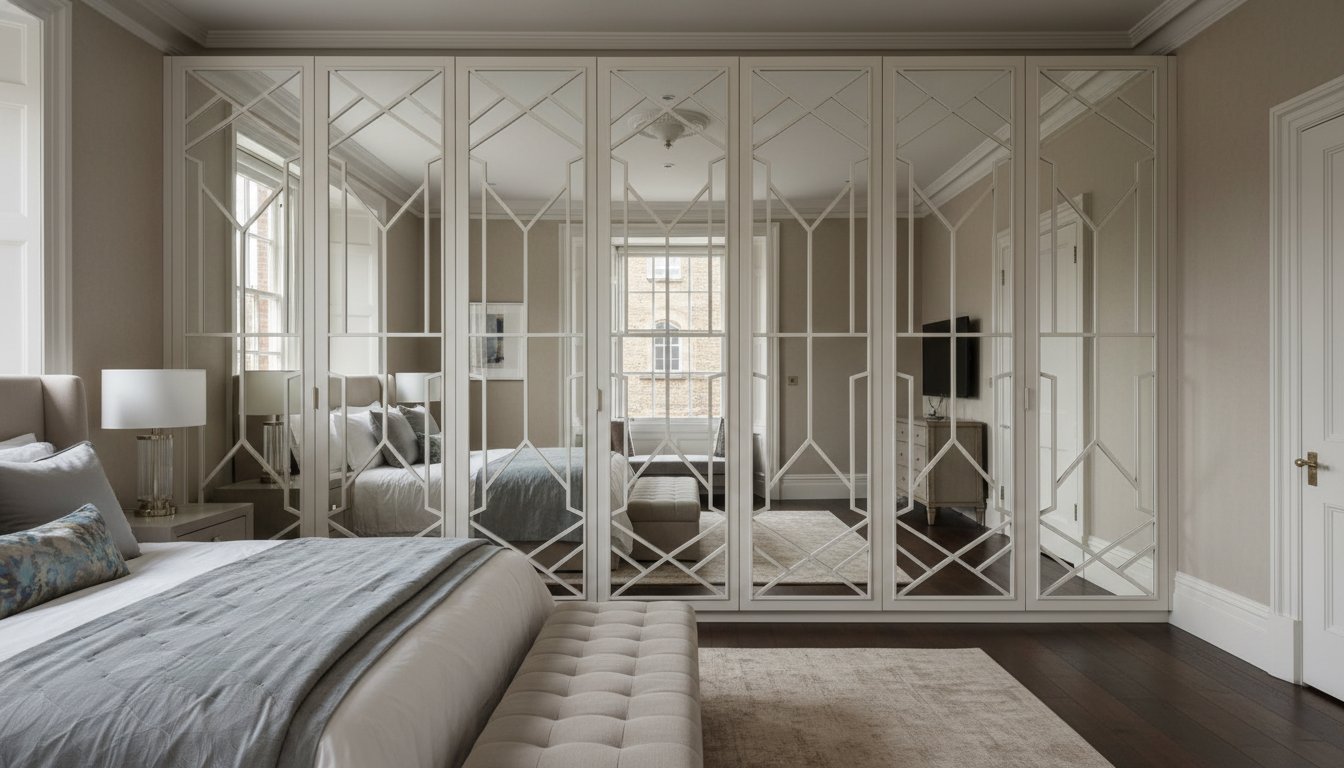
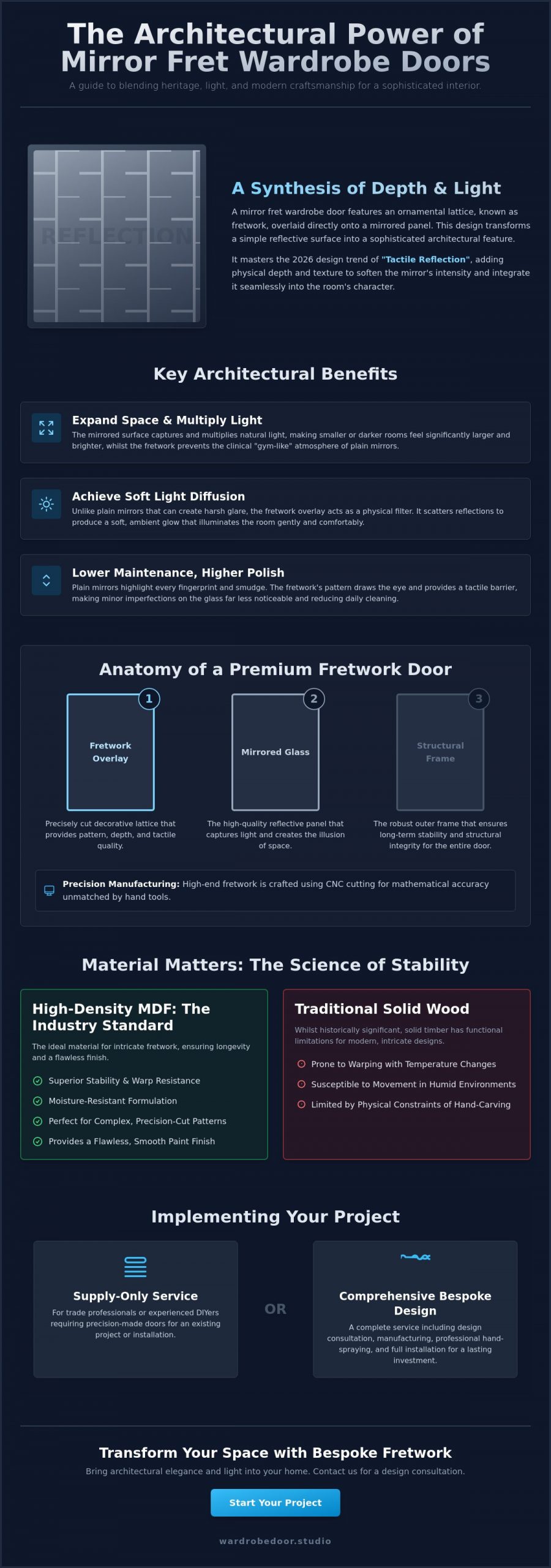
A mirror fret wardrobe door is more than a simple furniture component; it’s a structural synthesis of depth and light. At its core, this design features an ornamental lattice overlaid directly onto a mirrored panel, creating a sophisticated interplay of reflection and shadow. For those exploring the technical roots of this style, understanding What is Fretwork? reveals a long history of geometric precision used to soften harsh surfaces and add architectural interest to functional items.
In 2026, interior design trends have moved decisively toward “tactile reflection.” Whilst plain glass surfaces can often feel cold or utilitarian, mirror fretwork introduces a physical layer that grounds the reflection. This approach tames the mirror’s intensity, making it feel like an integrated part of the room’s architecture rather than a mere void. The distinction between bespoke manufactured doors and mass-produced alternatives is vital here. High-end fretwork is characterised by crisp, clean lines and a seamless finish, avoiding the flimsy, “stuck-on” appearance common in budget, off-the-shelf options.
The Anatomy of a Fretwork Door
Quality mirror fret wardrobe doors are engineered using a meticulous three-layer system. First, a robust outer frame provides the necessary structural integrity. Behind this sits the mirrored glass, which is then crowned by the decorative fretwork overlay. This layering is essential for creating a premium look; the physical thickness of the fretwork generates subtle shadow lines against the mirror, providing a sense of three-dimensional luxury. To achieve this, we utilise precision CNC cutting. This technology ensures that even the most intricate geometric patterns are rendered with absolute mathematical accuracy, a feat that traditional hand-tools simply cannot replicate with such consistency.
The Evolution of Fretwork in British Interiors
The use of fretwork has deep roots in the British design tradition, once gracing the grand libraries and dressing rooms of classic English manors. Historically, these patterns were limited by the physical constraints of hand-carving in solid timber. Today, modern manufacturing allows us to bring this heritage into contemporary townhouses with far greater complexity. You can explore how these styles have transitioned through the centuries in our definitive guide to classic english wardrobe design. By combining these time-honoured patterns with modern light-enhancing mirrors, we create a product that respects the past whilst serving the needs of a modern, space-conscious home. It’s a perfect marriage of artisanal history and 21st-century precision.
The Architectural Benefits of Mirrored Fretwork in Bedroom Design
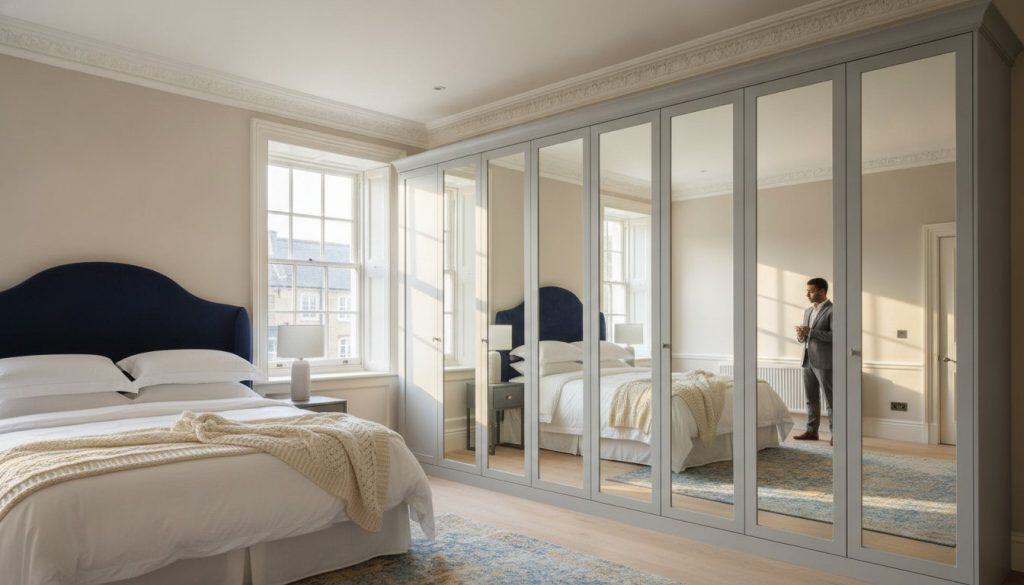
Architectural design is often a game of illusion and correction. Large, uninterrupted mirrored panels often create an unintended “gym-like” atmosphere, stripping a bedroom of its sanctuary-like warmth and making the space feel clinical. Incorporating mirror fret wardrobe doors resolves this by introducing an ornamental rhythm that breaks up the reflection whilst retaining its expansive benefits. This “Space-Multiplier” effect is particularly valuable in 2026, as urban apartments and townhouses increasingly require clever design solutions to feel larger and more open without sacrificing character.
Beyond the aesthetic appeal, there is a distinct practical advantage to these decorative overlays. Plain mirrored surfaces are notorious for highlighting every fingerprint and smudge, requiring constant maintenance to look pristine. The physical structure of the fretwork provides a natural tactile barrier. It draws the eye toward the pattern rather than the minor imperfections on the glass behind it, ensuring your bedroom remains a polished environment with less daily upkeep. For those seeking a completely tailored solution, our bespoke fitted wardrobes offer the precision required to align these patterns with your existing ceiling heights and room proportions.
Maximising Natural Light and Diffusion
The primary reason for choosing mirrored surfaces is to enhance brightness. However, direct reflection can sometimes lead to uncomfortable glare, especially during the early morning hours. Whilst the glass captures every available lumen, the fretwork acts as a physical filter that diffuses the light. By scattering the reflection, you achieve a soft, ambient glow that fills the room without the harshness of a direct mirror. To get the most out of this effect, consider the orientation of your room; you can find more strategies for positioning in our guide to fitted wardrobes with mirrored doors. Strategically placing your wardrobe opposite a window allows the fretwork to catch and distribute natural light into the darkest corners of the space.
Correcting Room Geometry with Decorative Overlays
Fretwork acts as a visual tool to correct awkward room dimensions. In rooms with low ceilings, vertical fretwork patterns act as architectural “pinstripes,” drawing the eye upwards and creating the illusion of height. Conversely, the sharp, often claustrophobic angles of loft conversions can be softened through the use of circular or interlocking curved designs. This creates a fluid transition between the walls and the sloping ceiling. Instead of relying on heavy wallpaper or paint to create interest, these doors function as a “feature wall” that provides both storage and a sophisticated design statement. The result is a room that feels balanced, intentional, and architecturally sound.
Selecting the Perfect Fretwork Pattern for Your Interior Style
Choosing the ideal design for your mirror fret wardrobe doors requires a deep understanding of your room’s existing architectural narrative. A pattern shouldn’t simply sit on the surface; it must converse with the height of your ceilings, the profile of your skirting boards, and the overall volume of the space. Scale is the most critical factor in this process. In smaller bedrooms, a dense, intricate lattice can feel overwhelming, whilst a larger, more open geometric pattern might lose its impact in a grand, high-ceilinged suite. The goal is to find a balance where the fretwork feels like a natural extension of the room’s skeleton.
Symmetry remains the cornerstone of luxury bedroom design, offering a sense of order and tranquillity. Most mirror fret designs lean into this classical balance, providing a rhythmic focal point that anchors the room. However, the mood you wish to cultivate will ultimately dictate the complexity of the design. A simple, repetitive lattice promotes a sense of calm, whereas a bold sunburst or interlocking circular pattern acts as a definitive statement piece. By customising these patterns to align with existing details, such as the curves of your coving or the linear precision of your architraves, you create a cohesive aesthetic that feels entirely intentional.
Geometric and Art Deco Influences
Art Deco-inspired fretwork is defined by bold, unapologetic lines and stepped shapes that evoke the glamour of the 1920s. These designs are particularly effective in modern, minimalist apartments where they provide a structured contrast to clean surfaces. To enhance this architectural drama, many designers pair geometric fretwork with dark, hand-sprayed finishes like charcoal or deep navy. This creates a striking silhouette against the mirror, turning the wardrobe into a piece of functional art that thrives on high-contrast lighting.
Classic Regency and Victorian Inspirations
For those residing in period properties, traditional lattice and circular fretwork designs offer a way to maintain historical integrity whilst introducing modern light-enhancing features. These styles echo the refined elegance of Regency and Victorian drawing rooms, where delicate woodwork was a hallmark of status. Muted, neutral finishes like off-white or soft stone work best here, allowing the intricate shadows of the fretwork to speak for themselves. You can explore more about these high-end finishes in our guide to designer wardrobe doors uk, which provides further insight into the luxury materials and hand-sprayed techniques that define 2026 interior trends. This approach ensures your new installation feels like it has always belonged amongst the heritage of your home.
Quality and Craftsmanship: The Science of Stability and Finish
Precision is the silent hallmark of luxury. When manufacturing mirror fret wardrobe doors, the choice of substrate is not merely a matter of cost, but of engineering necessity. Whilst many homeowners assume solid timber represents the pinnacle of quality, the technical reality of intricate joinery suggests otherwise. Solid wood is a “living” material that expands and contracts with changes in bedroom temperature and humidity. In the context of thin, delicate fretwork lines, this movement inevitably leads to warping, bowing, or snapping at the weakest joints. To ensure a product remains stable for decades, we rely on advanced material science and precision engineering.
Every door we produce is made-to-measure to the exact millimetre. This level of accuracy is essential for ensuring that the fretwork pattern aligns perfectly across multiple doors, creating a seamless visual flow. Unlike mass-produced alternatives that rely on standard sizing, our bespoke approach accounts for the unique nuances of your space, such as uneven floors or historic walls. By combining high-tech CNC machining with traditional hand-sprayed finishing, we deliver a product that possesses the soul of a handcrafted piece with the reliability of modern manufacturing.
Material Selection for Intricate Fretwork
The density of premium, moisture-resistant (MR) MDF makes it the ideal canvas for CNC precision. Because it is grain-free, the cutting tools can achieve incredibly sharp, clean edges that would splinter or fray in natural wood. This material is specifically engineered to withstand the varying temperatures of a modern home, ensuring the intricate lattice remains perfectly flat against the mirror. Premium moisture-resistant MDF is the definitive professional choice for painted fretwork in 2026 because it provides the dimensional stability required to prevent snapping or bowing in intricate geometric designs.
The Superiority of a Hand-Sprayed Finish
A luxury finish should be felt as much as seen. Many budget providers use factory-wrapped vinyl, which often peels at the edges or displays an artificial, “orange-peel” texture under close inspection. In contrast, our multi-coat hand-sprayed process involves several layers of primer and topcoat, resulting in a deep, saturated colour that feels exceptionally smooth to the touch. Whether you prefer a contemporary matt or a soft satin glow, this method ensures every crevice of the fretwork is perfectly coated. We offer comprehensive custom colour matching, allowing you to synchronise your wardrobes with iconic palettes from RAL, Farrow & Ball, or Little Greene. If you are ready to elevate your bedroom with this level of precision, you can order your bespoke mirror fret wardrobe doors to begin your design journey.
Implementing Mirror Fret Doors: From Replacement to Bespoke Projects
Integrating mirror fret wardrobe doors into a property requires a flexible approach that respects both the project’s budget and its architectural ambition. We provide a comprehensive “Supply-Only” service designed for trade professionals and confident DIYers who possess the necessary tools for precision fitting. This route allows for the seamless acquisition of high-end components whilst maintaining control over the installation timeline. To support this, nationwide delivery ensures that these intricate, hand-finished components arrive safely at any UK destination, utilising specialist transport to protect the mirrored glass and delicate fretwork from transit damage.
For those seeking a complete transformation, our full design and installation service represents the pinnacle of luxury end-to-end project management. We also maintain robust trade partnerships, acting as a reliable manufacturing partner for interior designers and contractors who require bespoke solutions for their clients. Whether you are refurbishing a single room or managing a large-scale development, our manufacturing heritage provides the traditional reliability needed for modern, high-specification interiors.
Upgrading Existing Frames with Replacement Doors
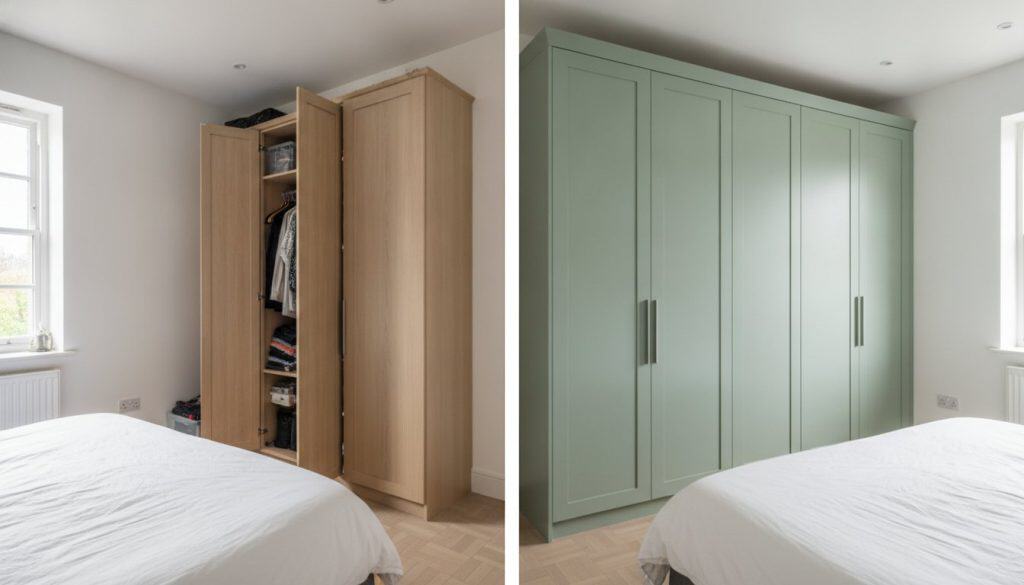
One of the most efficient ways to modernise a bedroom is by utilising replacement wardrobe doors made to measure. This method allows you to achieve a high-end look without the disruption of “ripping out” existing carcasses. It is a sustainable and cost-effective strategy that focuses the investment on the visible, tactile elements of the room. Our doors are fully compatible with standard UK wardrobe sizes and can be precision-engineered to fit IKEA Pax systems, allowing you to upgrade mass-market furniture with bespoke, hand-sprayed fretwork. Accurate measurement is the foundation of this process, ensuring that each new panel aligns perfectly with the existing frame for a seamless finish.
The Bespoke Design Consultation Process
The journey toward a fully custom installation begins with a detailed technical consultation. This stage moves from initial conceptual drawings to a rigorous site survey, where every millimetre of the space is accounted for. Working closely with designers or homeowners, we help select the specific fretwork pattern that best complements the room’s heritage and light profile. Once the design is finalised, the manufacturing process begins in our regional workspace, where the doors are hand-sprayed to your chosen colour specification. The final phase involves professional installation by our skilled fitters, who ensure that the doors operate with the smooth, silent momentum expected of a luxury product. This structured progression guarantees that the final result is as functional as it is visually striking.
Transforming Your Bedroom with Timeless Fretwork
Choosing mirror fret wardrobe doors is a definitive step toward creating a bedroom that feels both architecturally sound and visually expansive. By prioritising the stability of moisture-resistant materials and the precision of CNC technology, you avoid the pitfalls of warping whilst gaining a sophisticated, light-diffusing focal point. These doors do more than store belongings; they correct room proportions and introduce a layer of British craftsmanship that standard mirrored surfaces simply cannot provide.
Every component we produce is hand-sprayed and manufactured in England, ensuring a level of finish that meets the highest professional standards. We offer nationwide UK delivery and provide bespoke designs for retail and trade clients, ensuring your project receives the meticulous attention it deserves. Whether you’re upgrading existing frames or embarking on a complete room redesign, our team is ready to assist in bringing your vision to life.
Explore our bespoke Mirror Fret Wardrobe Doors and request a consultation today. Your journey toward a more elegant, light-filled sanctuary begins with a single, well-considered design choice.
Frequently Asked Questions
Can mirror fret wardrobe doors be made to any size?
Yes, every door is bespoke and manufactured to your specific millimetre requirements. This allows for a perfect fit in any space, including rooms with sloping ceilings or non-standard floor-to-ceiling heights. Unlike mass-produced alternatives, our custom approach ensures the fretwork pattern remains perfectly proportioned regardless of the door’s dimensions.
What is the best material for fretwork wardrobe doors?
High-density, moisture-resistant (MR) MDF is the professional standard for intricate fretwork designs. This material provides the dimensional stability required to prevent warping or snapping in delicate patterns. Its grain-free surface allows for precision CNC cutting, ensuring the edges remain crisp and smooth after the hand-sprayed finishing process.
How do I clean the mirror behind the fretwork overlay?
You can maintain the clarity of the mirror by using a slim microfibre cloth and a non-abrasive glass cleaner. Simply mist the cloth rather than the door to prevent liquid from pooling behind the fretwork. The lattice design actually helps to hide minor smudges, meaning the glass requires less frequent deep cleaning than a standard plain mirror.
Are mirror fret doors suitable for IKEA Pax wardrobes?
Yes, mirror fret wardrobe doors can be precision-engineered to fit IKEA Pax carcasses perfectly. This is a popular way to elevate standard storage units into bespoke furniture pieces. We manufacture the doors with the necessary hinge hole boring to match the existing IKEA framework, allowing for a straightforward installation process.
What colours are available for the fretwork frames?
We offer a comprehensive range of hand-sprayed finishes, including full custom colour matching to RAL, Farrow & Ball, and Little Greene palettes. This ensures your wardrobe doors harmonise with your existing interior decor. The multi-coat spraying process provides a durable, smooth finish that is available in various sheen levels, from deep matt to a soft satin.
Can I order mirror fret doors as “supply only” for my own builder to fit?
Yes, we offer a supply-only service for trade professionals and confident DIY enthusiasts who wish to manage their own installation. Each bespoke order is delivered nationwide across the UK with the necessary technical specifications. This allows your own builder or carpenter to fit the doors whilst you benefit from our specialist manufacturing expertise.
Do mirror fret doors make a small bedroom look bigger?
Yes, these doors are exceptionally effective at making smaller bedrooms feel more expansive and airy. The mirrored surface reflects light to multiply the perceived square footage, whilst the fretwork overlay prevents the room from feeling clinical. This combination adds depth and character without the visual weight of solid, dark wardrobe panels.
How long is the lead time for bespoke fretwork doors in the UK?
Lead times for bespoke mirror fret wardrobe doors in the UK typically range from four to six weeks, depending on the complexity of the pattern and the chosen finish. This period allows for the meticulous precision required during the CNC cutting and hand-sprayed stages. You will receive a more accurate timeline during your initial design consultation once the project scope is defined.