A truly classic English wardrobe design is far more than a place to organise your attire; it’s an architectural exercise in proportion and symmetry that defines the very soul of a room. You likely appreciate the understated elegance of heritage cabinetry, yet you might worry that a traditional aesthetic won’t accommodate your contemporary lifestyle or could look dated before the decade is out. It’s a common dilemma to feel torn between the allure of solid timber and the practical stability required for a flawless, hand-sprayed finish.
We understand that a bespoke commission is a significant investment in your home’s enduring value. This guide promises to demystify the hallmarks of English craftsmanship, helping you integrate timeless aesthetics into your modern space without sacrificing storage capacity. We’ll explore material integrity, the structural standards of BS 6222-2, and how to choose between Shaker or Mirror Fret details to ensure your project is a masterpiece of both form and function.
Key Takeaways
- Master the architectural principles of symmetry and proportion that define an authentic classic english wardrobe design.
- Discover why high-quality fibreboard is the professional choice for achieving a durable, hand-sprayed finish that resists natural timber movement.
- Learn how to use panelling, cornicing, and fretwork to enhance the character of your space whilst maximising storage capacity.
- Bridge the gap between heritage and modern living by exploring the ‘Skinny Shaker’ aesthetic and contemporary internal configurations.
- Gain the confidence to manage your bespoke commission through a clear understanding of site surveys and professional installation requirements.
Defining the Aesthetic of Classic English Wardrobe Design
A classic english wardrobe design is far more than a storage solution; it’s an architectural commitment. It transforms a functional necessity into a permanent feature of the home’s structure. This philosophy prioritises longevity over fleeting trends, ensuring that the cabinetry feels as though it was conceived alongside the original floor plans of the property. By viewing the wardrobe as a built-in element rather than a piece of freestanding furniture, we achieve a level of integration that respects the room’s existing proportions and history. It’s about creating a sense of permanence that anchors the space.
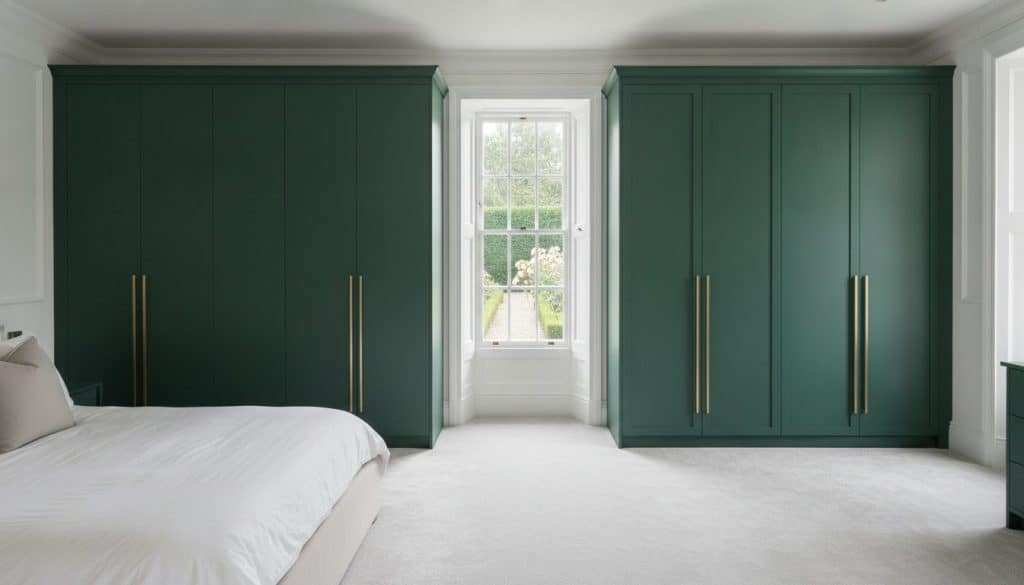
British joinery has always been defined by its relationship with the building it occupies. Whether you’re working within the generous alcoves of a Victorian terrace or the expansive walls of a manor house, the goal is to balance functional storage with visual weight. Modern interpretations of classic english wardrobe design often favour hand-sprayed finishes in muted tones, which allow the intricate details of the doors to catch the light without overwhelming the room’s decor. This approach ensures the installation remains relevant as interior styles evolve over the decades.
The Influence of Georgian and Victorian Architecture
The grand proportions of Georgian manors and the verticality of Victorian townhouses continue to shape our approach to modern cabinetry. Georgian design famously emphasised airy, light-filled spaces, which led to a gradual departure from the heavy, dark oaks of earlier centuries in favour of refined, painted finishes. When we design for these spaces, we look closely at the room’s volume. Ceiling heights dictate the scale of the doors, whilst original skirting boards and picture rails provide the blueprint for our custom mouldings. This ensures the installation doesn’t just sit in the room; it belongs to it. By mirroring these period features, we create a seamless transition between the old and the new, an architectural balance also championed by Windows in the Dales through their focus on maximising natural light within heritage properties.
Symmetry: The Secret to a Timeless Bedroom
Symmetry serves as the foundation for a truly balanced bedroom environment. Paired doors and mirrored layouts are not just aesthetic choices; they create a psychological sense of order and calm. Achieving this requires meticulous planning, often centring the wardrobe within the room’s architectural layout or aligning it with the chimney breast. Using floor-to-ceiling designs maintains clean, uninterrupted lines that lengthen the appearance of the walls. This approach eliminates the cluttered look of standard, off-the-shelf units, replacing it with a bespoke facade that enhances the room’s inherent character. When every line aligns with the room’s geometry, the result is an atmosphere of quiet, understated luxury.
The Essential Elements: Panelling, Cornicing, and Fretwork
The anatomy of a classic english wardrobe design relies on three structural pillars: the plinth, the panel, and the cornice. These elements work in concert to provide a grounded, permanent appearance that distinguishes bespoke cabinetry from temporary storage. Whilst a flat-panel door might offer a minimalist aesthetic, traditional British joinery utilises depth and shadow to create visual interest. This interplay of light is particularly important in the UK, where natural light levels vary significantly throughout the seasons.
Quality markers are found in the precision of the mitre joints and the substantial feel of the doors. We treat hardware and ironmongery as the ‘jewellery’ of the wardrobe. Choosing hand-finished brass or polished nickel handles can elevate the entire facade, providing a tactile point of contact that reinforces the luxury of the build. It’s these final touches that transform a storage unit into a heritage feature.
Shaker Style and Raised Panels
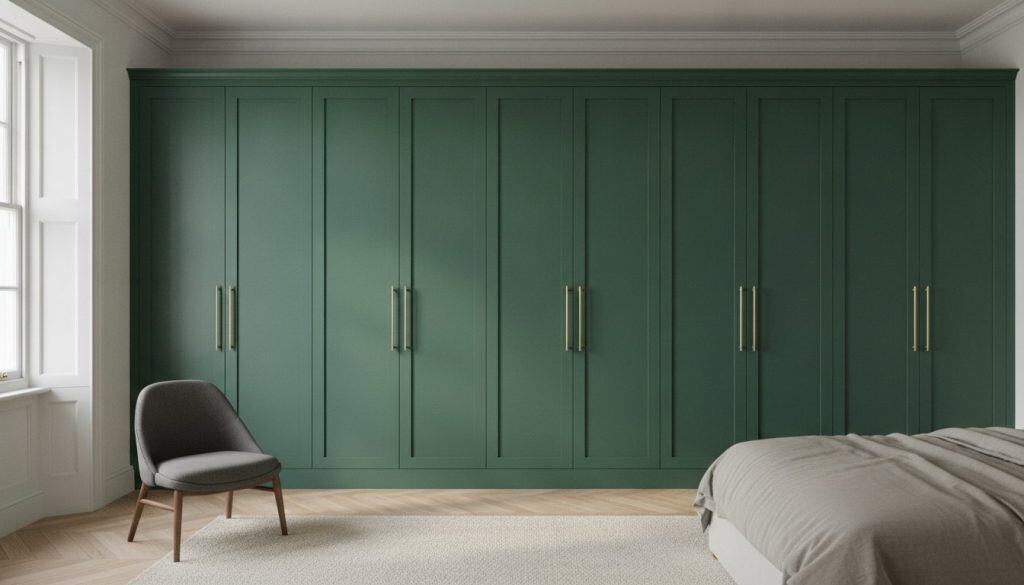
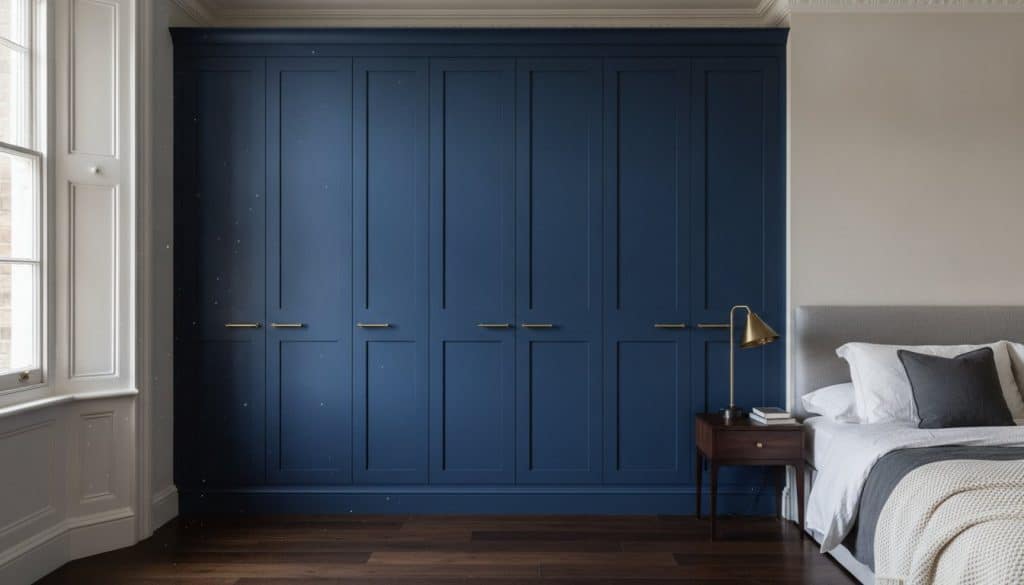
The Shaker door is the bedrock of classic english wardrobe design, valued for its honest craftsmanship and versatile utility. Its recessed centre panel provides a clean, geometric look that suits both period and modern homes. For those seeking a more ornate, traditional feel, raised and fielded panels offer a sophisticated alternative. These panels feature a bevelled edge that sits proud of the frame, adding a layer of formal elegance. Selecting the correct rail width is vital; narrower rails often suit smaller rooms, whilst wider rails provide the necessary scale for high-ceilinged Victorian bedrooms.
Mirror Fretwork: The Ultimate English Luxury
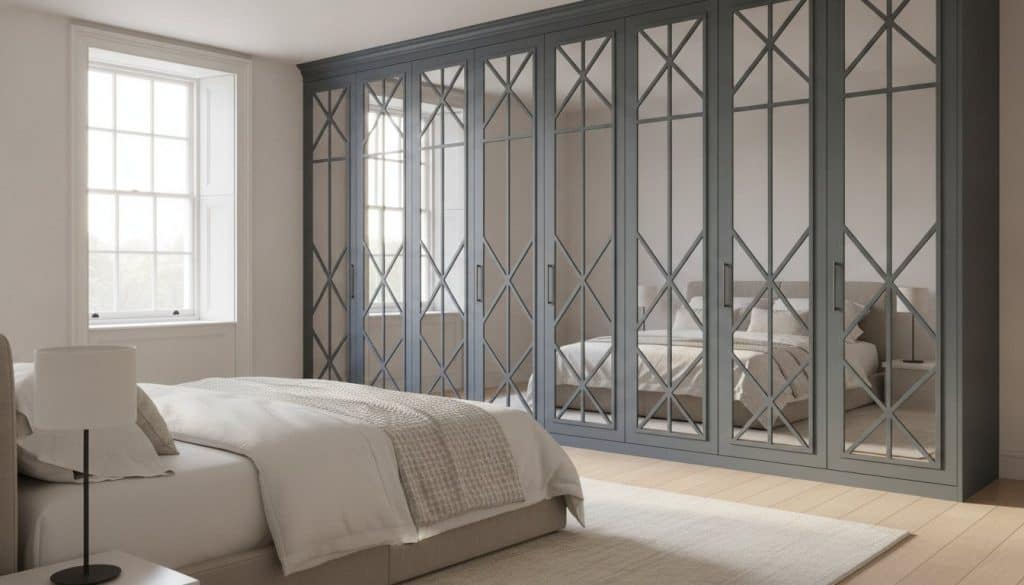
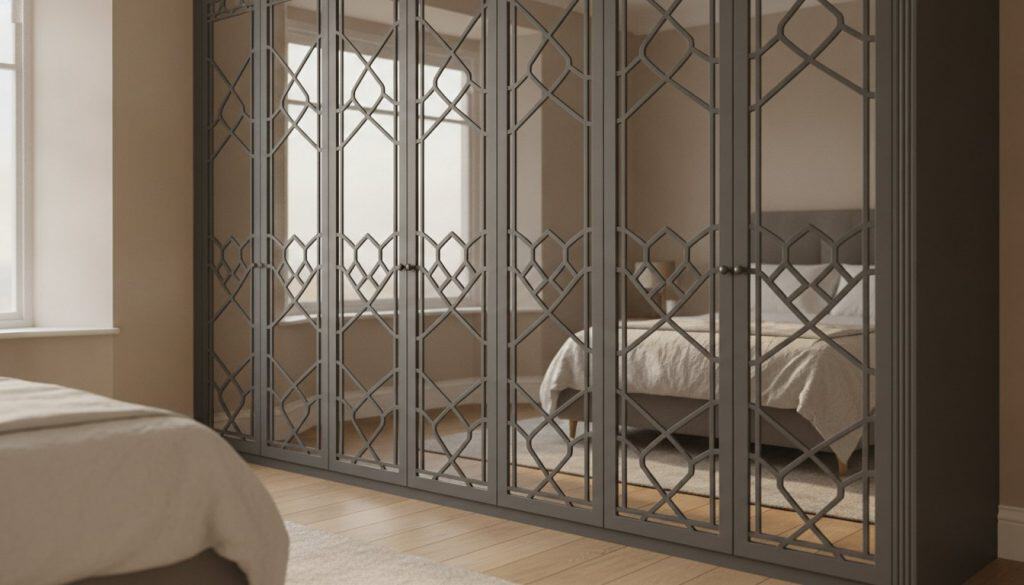
Mirror fretwork represents the pinnacle of high-end English design. By overlaying a geometric wooden lattice onto a mirrored surface, you introduce texture and depth to the room. This element is particularly effective in smaller British bedrooms, as the mirrors reflect light and create an immediate illusion of space. The fretwork itself can range from simple quatrefoils to complex interlacing patterns, allowing for a high degree of personalisation. If you’re looking to balance heritage charm with a sense of openness, exploring our Mirror Fret wardrobe doors offers an ideal starting point for your design journey. For a deeper understanding of how mirrored surfaces can be used as a structural design tool, our guide to fitted wardrobes with mirrored doors explores how expert craftsmanship can use light to transform even the most compact bedroom.
Architectural Cornices and Plinths
A wardrobe’s silhouette is defined by its top and bottom. The cornice provides the crowning detail, and you should choose a profile that complements your room’s existing coving. Whether you opt for a simple, stepped design or a more elaborate dental moulding, this feature bridges the gap between the cabinetry and the ceiling. At the base, the plinth provides a solid, grounded appearance. By matching the height and profile of the wardrobe’s plinth to your existing skirting boards, we ensure the installation feels like an original part of the building’s fabric.

Material Integrity: Why Modern Craftsmanship Favours Fibreboard
A common misconception in luxury cabinetry is that ‘solid wood’ is the only marker of quality. Whilst timber has its place in rustic furniture, it’s often the enemy of a flawless, hand-sprayed finish. For an authentic classic english wardrobe design, the priority is a smooth, architectural surface that remains stable over decades. Achieving this level of precision requires an understanding of how materials react to the modern home environment, where central heating and seasonal humidity create constant stress on organic fibres.
This sensitivity to the home environment is a shared challenge for all high-end joinery; for those concerned about moisture levels affecting their property, Grabex Windows Ltd provides specialist insights into managing issues like condensation in double glazing.
Professional craftsmanship has evolved to combine traditional joinery aesthetics with advanced, engineered materials. High-Density Fibreboard (HDF) has become the industry standard for premium painted wardrobes. It provides a dense, uniform surface that doesn’t suffer from the grain telegraphing or sap seepage often seen in softwoods. By using HDF for the door panels and frames, we ensure that the intricate mouldings and sharp lines of your cabinetry remain as crisp as the day they were installed.
The Problem with Solid Wood in Modern Homes
Natural timber is hygroscopic, meaning it constantly absorbs and releases moisture. In a typical British home, the transition from a damp autumn to a centrally heated winter causes solid wood to warp, shrink, and expand. This movement is particularly destructive to painted finishes. As the wood shifts, the paint at the joinery seams inevitably cracks, revealing the raw material beneath. This is why stability is the most vital factor for replacement wardrobe doors made to measure. Without a stable substrate, even the most expensive paint will eventually fail.
The Benefits of Hand-Sprayed HDF
Choosing HDF allows for a level of finishing that solid wood simply cannot match. Its consistent density enables us to achieve a perfectly smooth, mirror-like surface through our hand-spraying process. This material is incredibly resilient against the daily wear and tear of a busy household, resisting the dents and scratches that often plague softer timbers. Furthermore, the structural integrity of HDF allows for much more precise fretwork and intricate detailing. When you commission a classic english wardrobe design featuring complex geometric patterns, HDF ensures those details remain sharp and structurally sound without the risk of snapping along a natural grain line.
By marrying these modern material benefits with traditional design markers like cornices and plinths, we create furniture that looks heritage but performs with contemporary reliability. It’s a pragmatic approach to luxury that values the long-term aesthetic of your interior over outdated material myths.
Integrating Classic Design into Contemporary British Homes
Adapting a classic english wardrobe design for a 2026 interior requires a delicate balance between heritage markers and modern lifestyle needs. Whilst the architectural foundations remain rooted in Georgian and Victorian proportions, the way we live today demands greater versatility and a lighter visual touch. Contemporary British homes often feature a mix of period features and clean, minimalist decor. To bridge this gap, designers are moving away from heavy, imposing structures in favour of refined profiles that respect the room’s history without dominating it.
One effective strategy involves mixing mirrored fretwork panels with solid doors. This combination allows you to maintain the traditional aesthetic discussed in previous sections whilst significantly increasing the natural light within the room. In smaller urban apartments or north-facing bedrooms, the reflective surfaces prevent the cabinetry from feeling restrictive. It’s a pragmatic evolution of the classic look that serves the functional requirements of modern living. By alternating textures, you create a rhythmic facade that adds depth to the bedroom without the visual clutter of freestanding units. Homeowners seeking to maximise the spatial benefits of reflective surfaces will find our comprehensive resource on fitted wardrobes with mirrored doors an invaluable guide to using light as an architectural material.
The Skinny Shaker: A Modern Classic
The rise of skinny shaker wardrobe doors represents a significant shift in bespoke cabinetry for 2026. This style retains the honest construction of the traditional Shaker but utilises a much slimmer rail, typically around 20mm to 25mm. This subtle adjustment creates a more sophisticated, linear appearance that feels at home in both a 19th-century terrace and a contemporary new build. It offers a bridge between the past and the present, providing the texture of panelling with the sleekness of modern design. This slim profile is particularly effective when applied to floor-to-ceiling installations, as it draws the eye upward and emphasises ceiling height.
Heritage Colours and Finishes
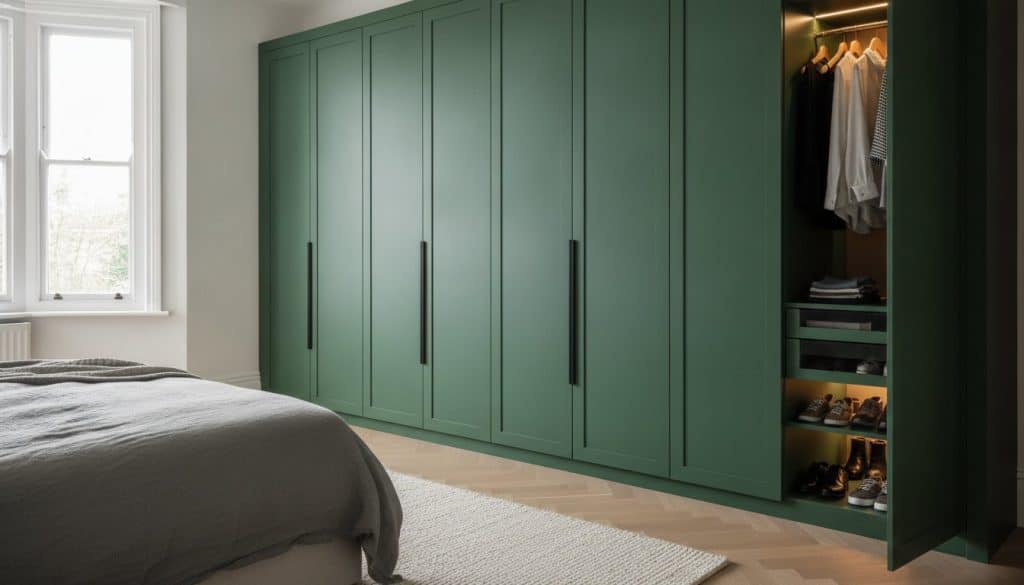
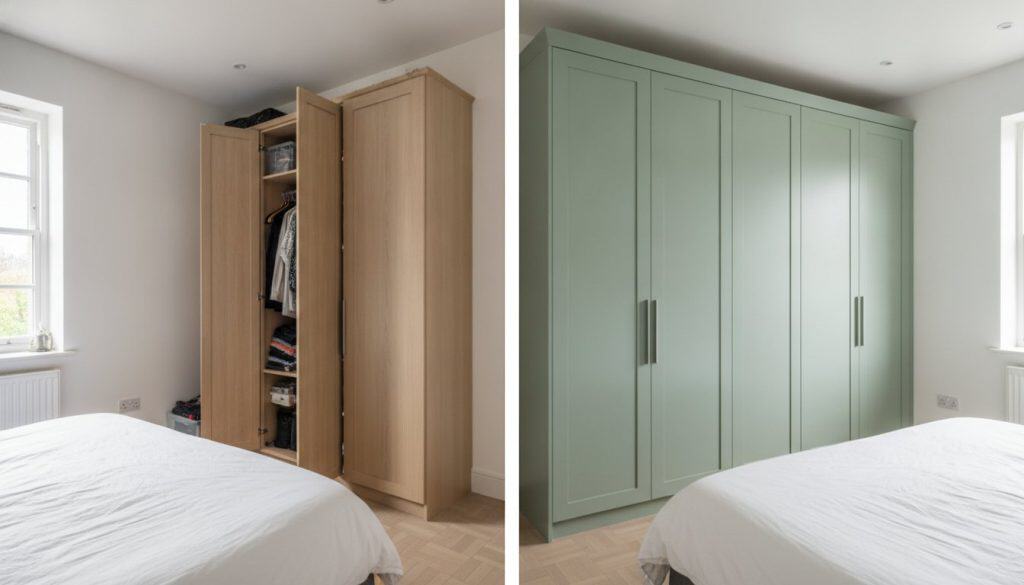
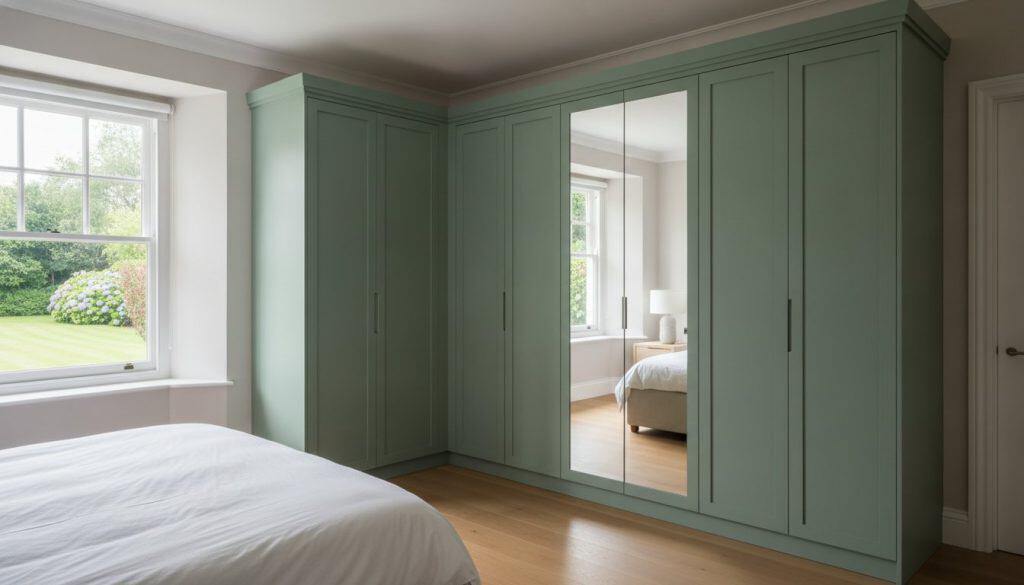
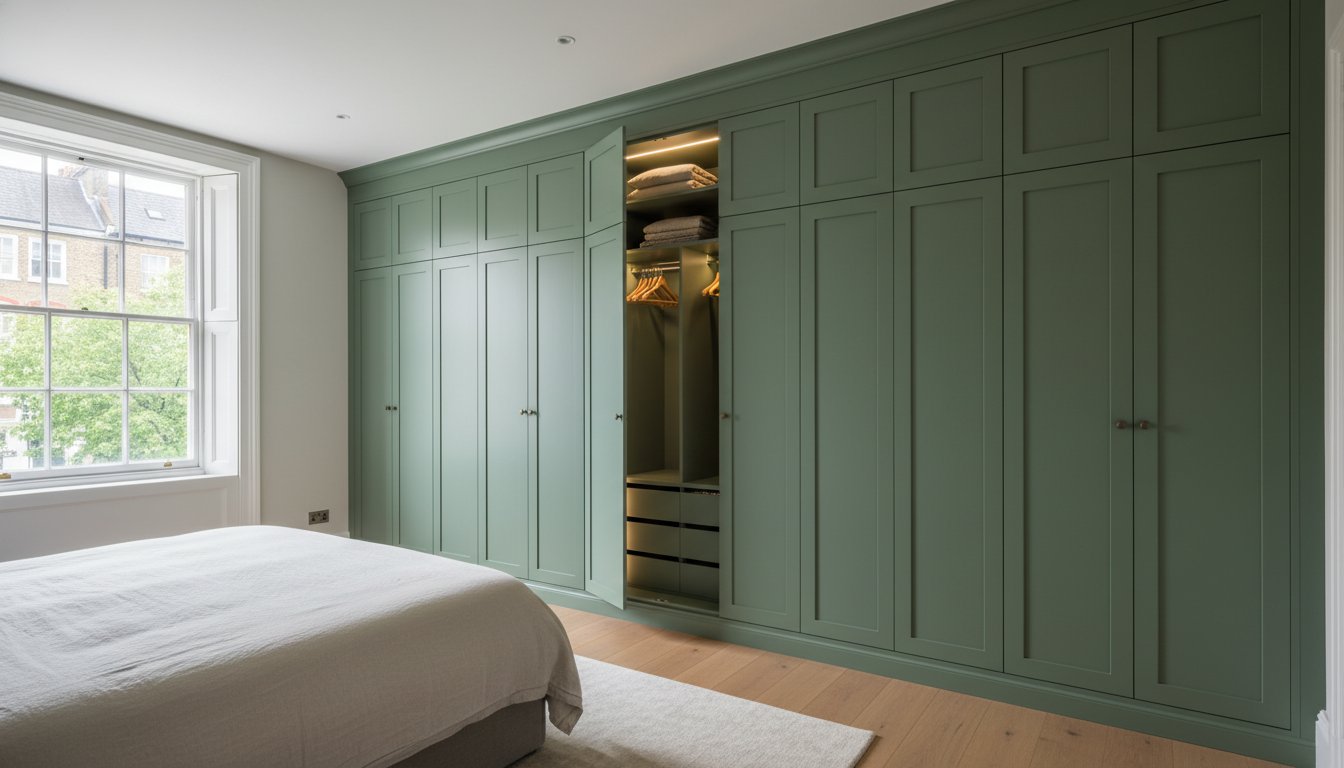
Your choice of palette is vital for ensuring your cabinetry feels fresh rather than dated. Current trends for 2026 show a decisive move away from high-gloss whites towards softer, more organic tones. Cashmere, misty blue, and sage green have become the preferred choices for homeowners seeking a calming, sophisticated atmosphere. These muted shades highlight the craftsmanship of the fretwork and cornicing without the harshness of high-contrast colours. They provide a neutral backdrop that complements both antique furniture and modern textiles.
A professional, hand-sprayed finish is essential to achieve the desired luxury effect. We recommend selecting a satin or matt finish with a low sheen level, typically between 10% and 20%. This choice minimises glare from bedside lighting and provides a velvety texture that is soft to the touch. If you’re ready to define the palette for your next project, you can explore our full range of designer wardrobe doors UK styles and finishes to find the perfect match for your interior.
Commissioning Your Bespoke English Wardrobe
Commissioning a custom project is the final step in translating heritage inspiration into a tangible, high-end reality. Whilst the design principles we’ve discussed provide the aesthetic framework, the success of a classic english wardrobe design relies on a transition from conceptual vision to technical precision. This process is a partnership between your personal style and professional expertise, ensuring that every millimetre of the installation serves both a functional and architectural purpose.
Finalising your design involves more than just selecting a door style; it’s about curating a complete storage ecosystem. From the internal configuration of hanging rails and pull-out trays to the specific weight of the hinges, every detail contributes to the sense of luxury. By moving beyond off-the-shelf limitations, you gain the freedom to create a piece that feels deeply personal and structurally permanent.
The Design Consultation and Survey
The journey begins with a professional site survey, a non-negotiable step for any bespoke fitted project. British housing stock, particularly period properties, rarely features perfectly straight walls or level floors. A meticulous survey identifies the challenges of awkward alcoves, chimney breasts, or sloped ceilings that standard units cannot accommodate. This data is then translated into technical drawings that define the exact scale of your classic english wardrobe design. During this stage, we align the internal layout with your specific lifestyle, ensuring that the organisation of the interior is as considered as the beauty of the facade.
The Installation and Finishing Touch
Professional installation is what separates a high-quality commission from a standard furniture purchase. Our installers ensure that the plinths, cornices, and side fillers are scribed perfectly to your room’s unique contours, creating the seamless ‘built-in’ look that defines the English aesthetic. This precision prevents unsightly gaps and ensures the structural integrity of the cabinetry for decades to come.
The final character of the piece is often found in the ironmongery. Selecting handles and knobs is a vital decision that reinforces the heritage feel of the wardrobe. Whether you choose aged brass beehive knobs for a Victorian touch or sleek, hand-finished T-bars for a modern Shaker look, these tactile elements provide the finishing point of contact. Combined with a professional hand-sprayed finish applied in a controlled environment, these final touches guarantee a mirror-smooth result that is impossible to achieve with on-site painting. The result is a meticulous installation that stands as a testament to British manufacturing excellence.
Transforming Your Space with Timeless Craftsmanship
Investing in a classic english wardrobe design is a commitment to the architectural integrity of your home. We’ve explored how traditional proportions and meticulous material selection, specifically the use of high-density fibreboard, ensure a finish that remains flawless against the stresses of modern living. By prioritising symmetry and professional site surveys, you can transform a standard bedroom into a space of refined, understated luxury. Every detail, from the cornice profile to the weight of the hardware, contributes to a sense of permanence that freestanding furniture simply lacks.
Our bespoke designs are tailored to any room size, ensuring that even the most awkward alcoves become functional heritage features. Every component is expertly hand-sprayed in England to achieve a level of precision that off-the-shelf solutions cannot replicate. We provide nationwide delivery and professional installation to guarantee your vision is realised with absolute accuracy. It’s time to move beyond temporary storage and embrace cabinetry that’s built to last a lifetime.
Design your classic English wardrobe with Wardrobe Door Studio and experience the enduring value of precision craftsmanship. We look forward to helping you create a home that reflects your appreciation for quality and heritage.
Frequently Asked Questions
What is the difference between classic English and modern wardrobe design?
Classic English design prioritises architectural permanence through the use of cornices, plinths, and symmetrical panelling. It’s intended to look like an original part of the room’s structure. In contrast, modern design often focuses on minimalist, handle-less facades and modular flexibility that doesn’t necessarily interact with the building’s original period features.
Can I install classic English wardrobes in a modern house?
You can certainly integrate these designs into contemporary properties to introduce character and a sense of history. A classic english wardrobe design works particularly well in new builds by providing a focal point that breaks up flat, featureless walls. Choosing a “Skinny Shaker” profile often helps bridge the gap between traditional joinery and modern minimalism.
Why is mirror fretwork so popular in traditional British bedrooms?
Mirror fretwork is a quintessential luxury feature because it introduces intricate texture whilst reflecting natural light. This is particularly valuable in UK homes where bedroom sizes can be modest. The geometric lattice prevents a large bank of wardrobes from appearing too heavy or imposing, creating a more open and airy atmosphere.
Is MDF better than solid wood for bespoke wardrobe doors?
High-Density Fibreboard (HDF) is the superior choice for any wardrobe intended for a hand-sprayed finish. Unlike solid wood, it doesn’t warp or shrink in response to central heating; this prevents the paint from cracking at the joints. It provides a stable, perfectly smooth substrate that maintains its crisp lines for decades.
What are the best colours for a classic English wardrobe in 2026?
The trend for 2026 moves away from stark whites and cool greys towards warmer, nature-inspired tones. Sage green, muted olive, and misty blues are increasingly popular for their calming effect. Cashmere and warm stone neutrals also provide a sophisticated alternative that complements heritage architectural details without feeling dated. For a comprehensive overview of the latest luxury styles and palettes, our guide to designer wardrobe doors UK trends for 2026 covers the full spectrum of available finishes.
How do I choose between a traditional Shaker and a Skinny Shaker door?
Your choice should depend on the room’s proportions and the desired level of traditionalism. A traditional Shaker, with rails typically between 75mm and 100mm, suits high-ceilinged period properties. The Skinny Shaker, featuring 20mm rails, offers a more delicate, contemporary aesthetic that still respects the principles of classic english wardrobe design.
What is the typical depth of a classic fitted wardrobe?
A standard depth for a fitted wardrobe is 600mm, which provides ample space for coats and suits on hangers. Whilst we can manufacture bespoke depths as shallow as 450mm for folded items or specific alcoves, maintaining a 600mm depth ensures maximum versatility for all types of attire and prevents sleeves from being crushed.
Do I need to match my wardrobe cornices to my room’s coving?
You don’t need an exact match, but the profiles should complement one another to ensure visual harmony. If your room has ornate Victorian coving, a simple, stepped cornice on the wardrobe might look underscaled. Selecting a wardrobe cornice that mirrors the weight and style of the room’s existing mouldings helps the cabinetry feel like a permanent architectural feature.