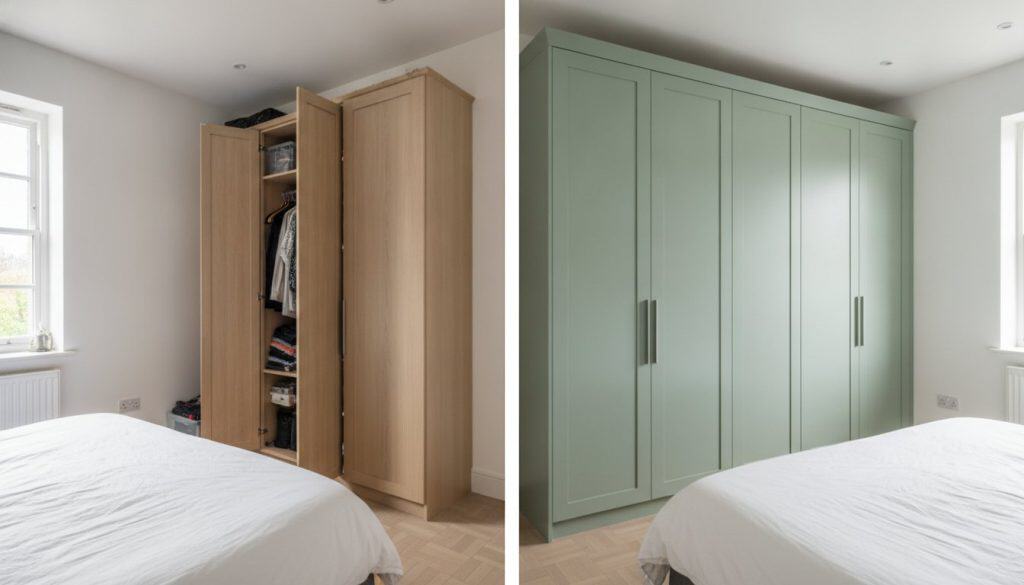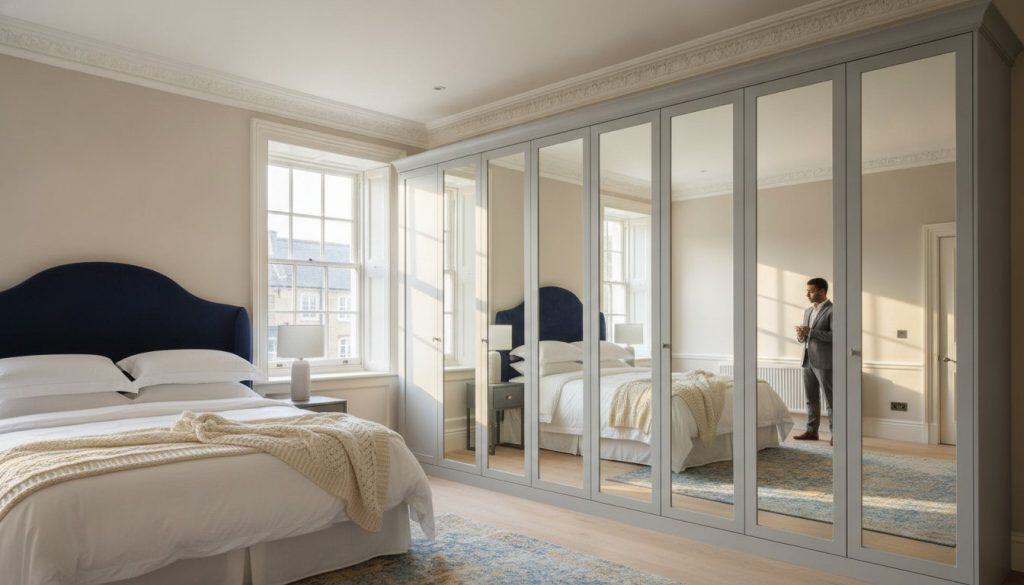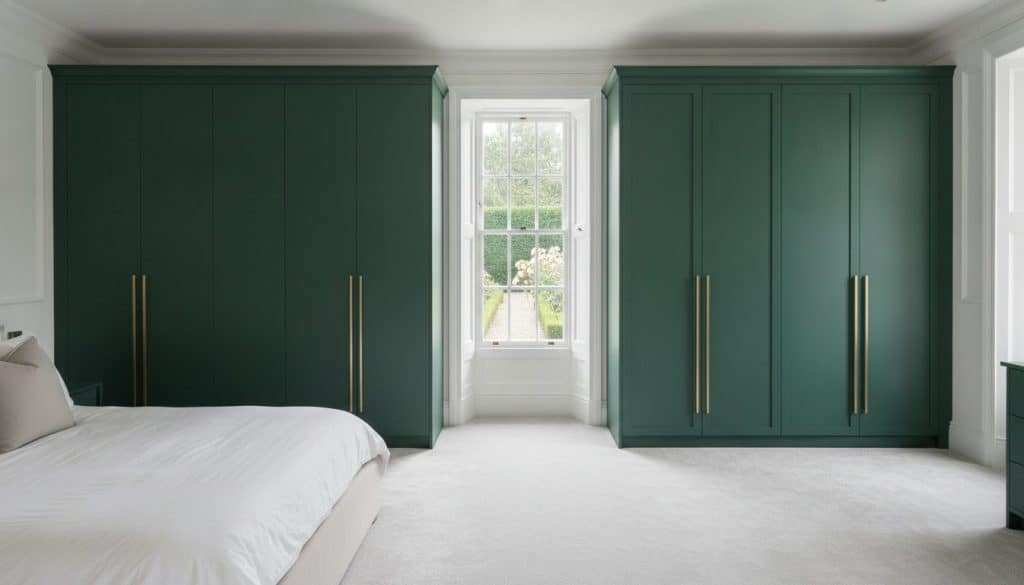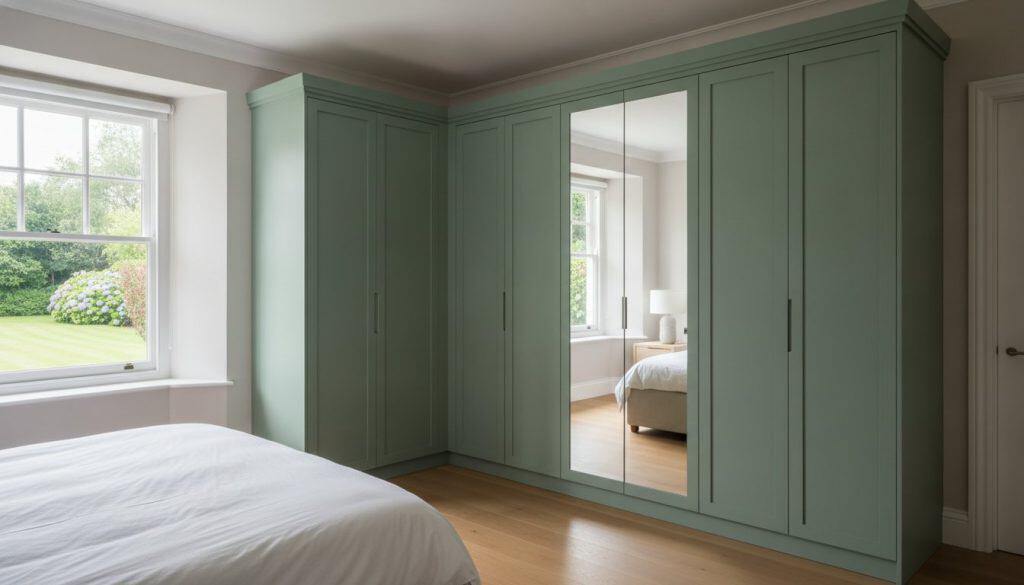
Why settle for the harsh glare of high gloss or the sometimes lifeless texture of a standard matt when the perfect equilibrium exists? Choosing satin finish wardrobe doors is no longer just a design preference; it’s a strategic decision for homeowners seeking a bespoke, high-end aesthetic that avoids the common pitfalls of mass-produced materials. You’ve likely felt the frustration of seeing fingerprints mar a dark surface or worried that a specific finish might look more like plastic than premium joinery. It’s a valid concern when investing in the long-term value of your home.
In this 2026 guide, you’ll discover why the satin finish has become the definitive choice for sophisticated British interiors. We’ll clarify the confusing distinction between satin and silk finishes, whilst providing practical maintenance advice to keep your investment looking pristine. We also examine how the upcoming changes to the UK Furniture and Furnishings (Fire) (Safety) Regulations 2026 are influencing luxury manufacturing and material choices. From achieving a hand-sprayed look to understanding the durability of different textures, this overview ensures your next bedroom project achieves a level of refined elegance that endures.
Key Takeaways
- Learn why the subtle, silk-like glow of a satin finish provides a more refined aesthetic than the sharp reflections of traditional gloss.
- Compare satin finish wardrobe doors against matt and gloss alternatives using Light Reflectance Value (LRV) to ensure your cabinetry interacts perfectly with natural light.
- Understand the technical superiority of hand-sprayed finishes over vinyl-wrapped alternatives for a seamless, bespoke appearance that avoids a plastic-like look.
- Master the art of colour selection by coordinating your wardrobe finish with your bedroom’s specific orientation and existing wall textures.
- Discover how made-to-measure precision and professional installation transform standard storage into a tailored architectural feature.
Defining the Satin Aesthetic: Why It Is the Premier Choice for 2026
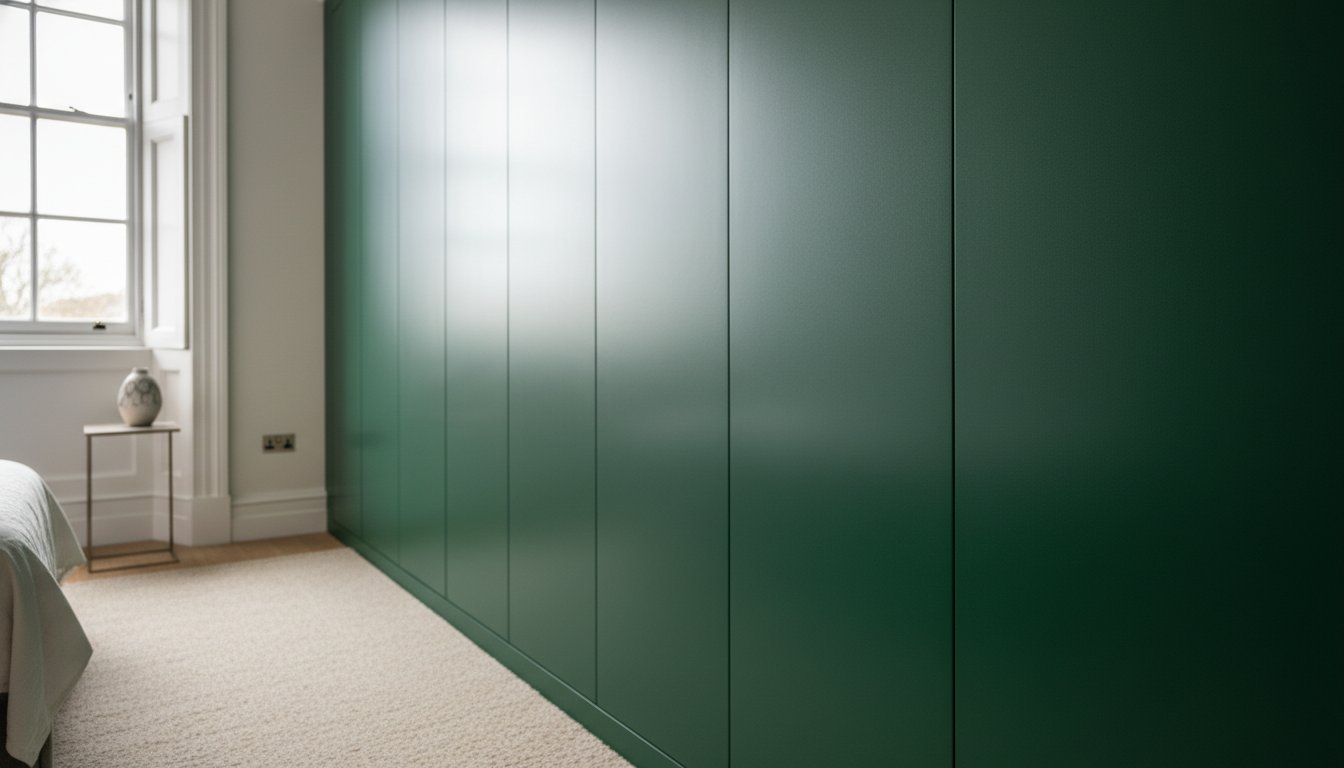
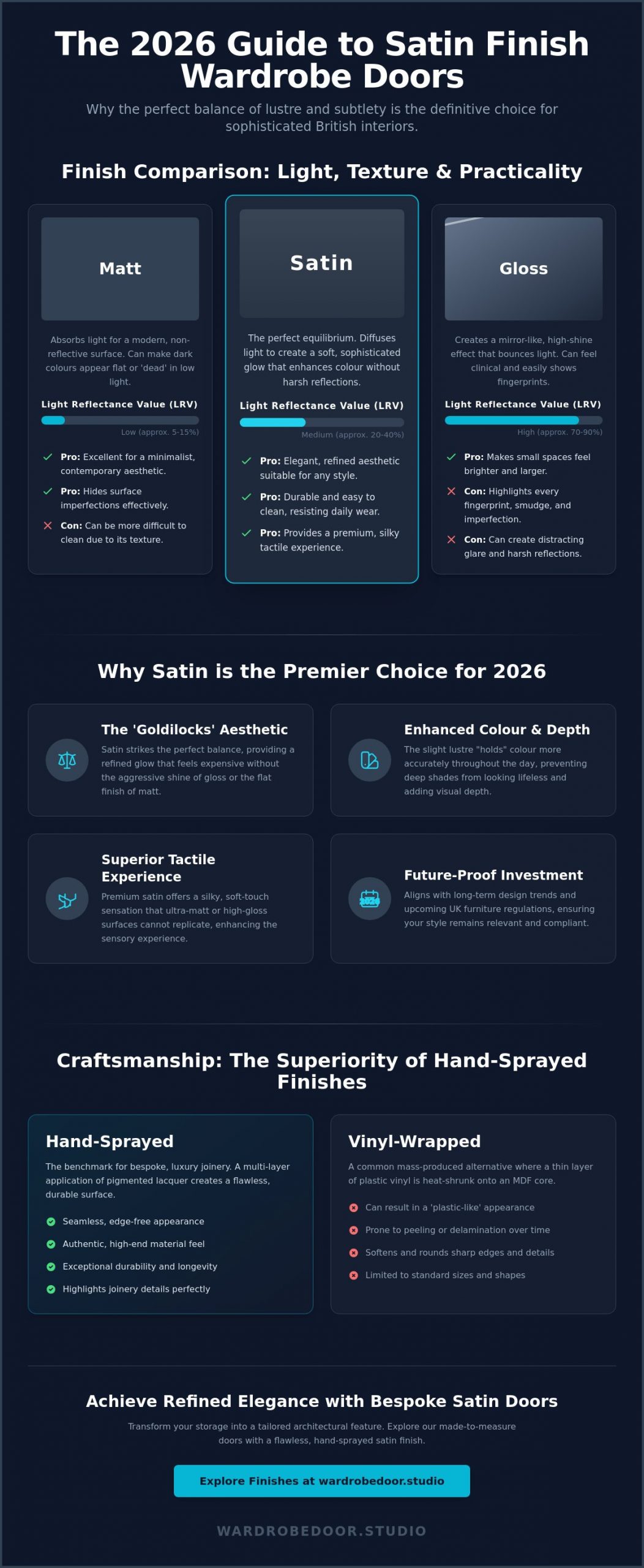
The appeal of a satin finish lies in its ability to diffuse light rather than reflect it. Whilst high-gloss surfaces create a mirror-like effect that can feel clinical, and ultra-matt options sometimes absorb too much light, satin finish wardrobe doors strike a precise balance. This finish sits comfortably in the middle of the spectrum of paint sheen levels, offering a luminosity that feels both organic and intentional. It’s the “Goldilocks” of cabinetry; it provides enough glow to feel expensive without the aggressive shine of a showroom floor.
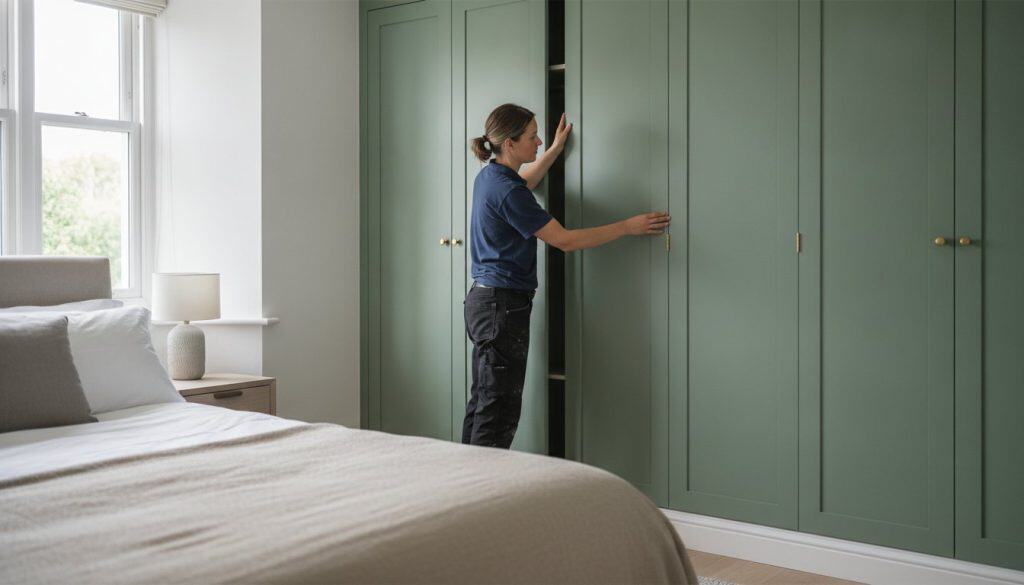
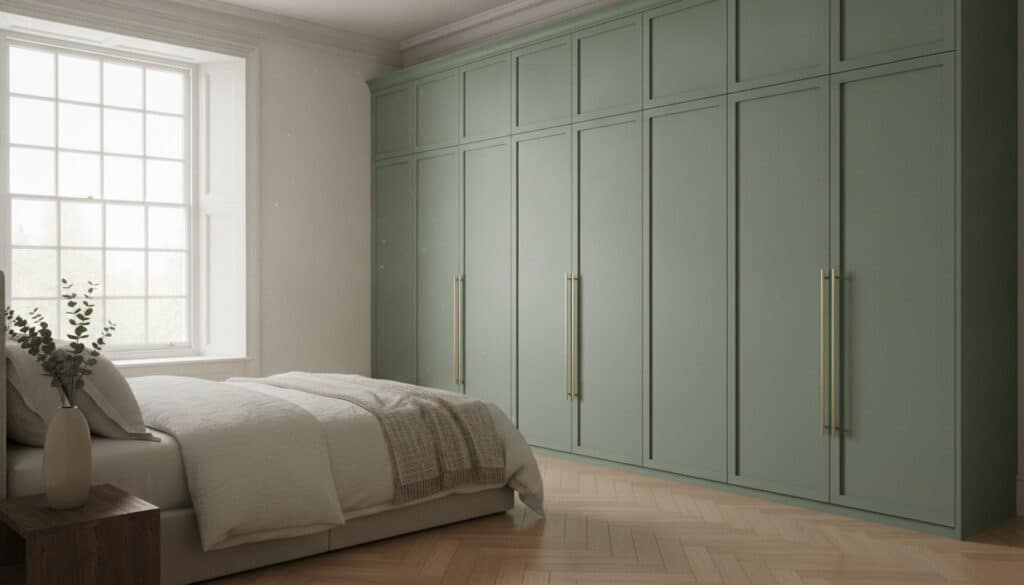
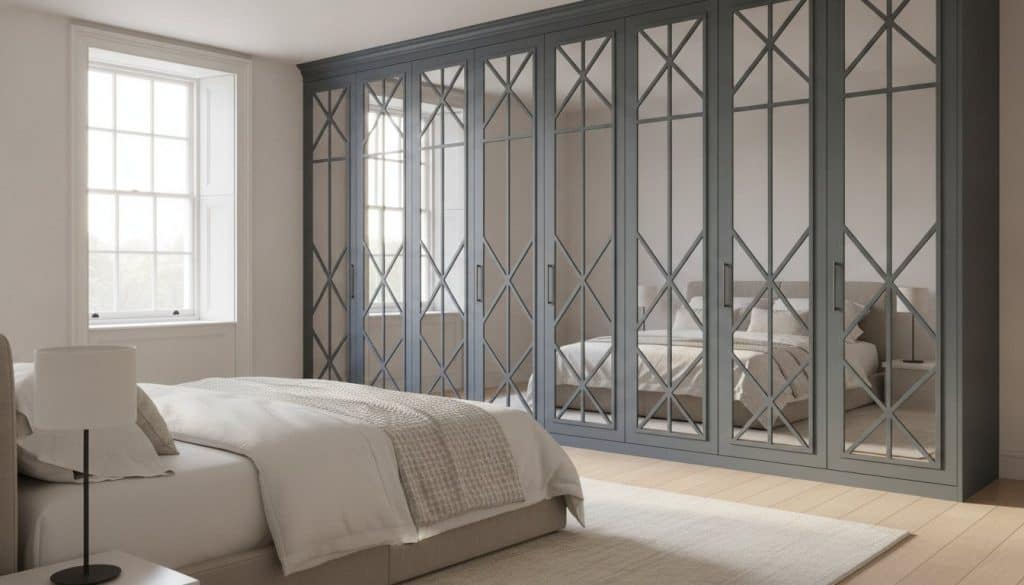
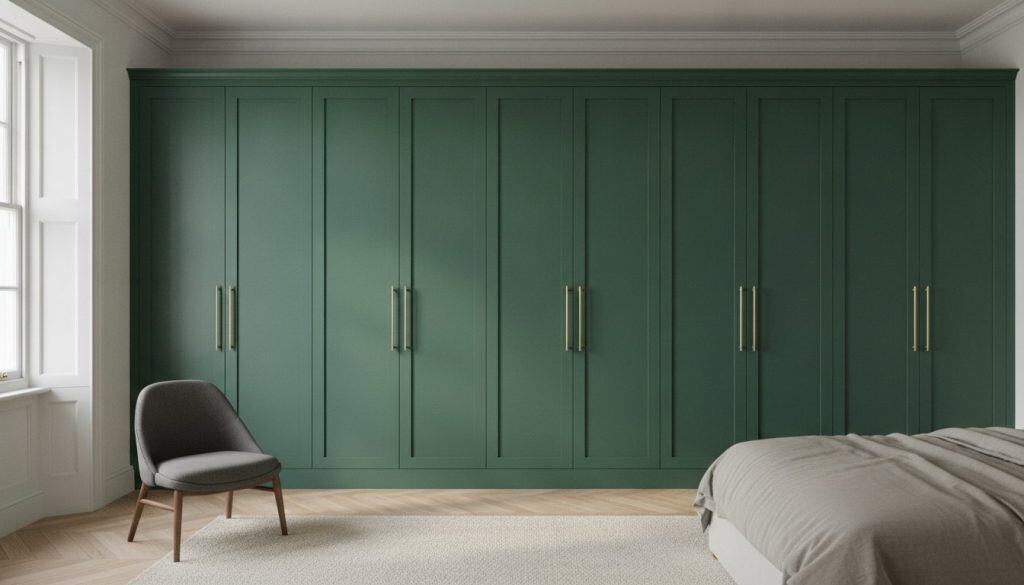
Specific architectural details benefit immensely from this soft-touch approach. Whether applied to our Skinny Shaker Wardrobe Doors or a contemporary Flat Panel design, the aesthetic remains consistent. It provides a soft glow that accentuates the clean lines of the joinery. On a Classic Shaker door, the satin finish highlights the recessed panels without the distracting glare that often plagues polished surfaces. It’s a choice that respects the craftsmanship of the build.
The Aesthetic Appeal of a Soft Sheen
Sophistication arises from subtlety. Satin finishes add a layer of visual depth that ultra-matt surfaces often lack. Because they possess a slight lustre, they “hold” colour more accurately across different times of the day. A deep navy or a soft pebble grey won’t look “dead” in the corner of a dimly lit room; instead, the surface catches stray light to maintain its vibrancy. This creates an understated elegance that fits perfectly within both traditional Victorian renovations and modern sophisticated homes.
Why Satin is Dominating 2026 Interior Trends
Current design movements prioritise sensory experiences. One leading supplier noted that 67% of their customers in 2024 opted for matte or textured finishes over traditional high-gloss. This preference has evolved into the 2026 dominance of satin. It offers the tactile softness people crave without the maintenance burden of ultra-matt surfaces. It’s durable and looks bespoke.
The industry is also preparing for the conclusion of the UK government’s furniture fire safety consultation in June 2026. This regulatory shift is encouraging a move toward higher-quality, hand-sprayed finishes that align with modern safety and sustainability expectations. Choosing a classic satin finish ensures your bedroom design remains relevant long after fleeting trends have faded. It’s a long-term investment in style. Pairing these doors with materials like natural oak or satin brass hardware creates a layered, multi-textured environment that defines the current luxury standard.
Satin vs Matt vs Gloss: Comparing Light, Texture, and Practicality
Selecting the right finish involves more than just a visual preference. It’s a technical choice that dictates how a room behaves under different lighting conditions. Understanding Light Reflectance Value (LRV) is essential here. Gloss finishes possess a high LRV, bouncing light directly back into the room. This can make a space feel brighter but often results in distracting glares and harsh reflections. Matt finishes sit at the opposite end, absorbing light and providing a flat, modern appearance. However, satin finish wardrobe doors offer a refined middle ground. They diffuse light softly, creating a sense of depth that makes large, floor-to-ceiling wardrobes feel less imposing and more integrated into the room’s architecture.
Light Reflectance and Visual Depth
Satin’s ability to diffuse light prevents the “flat” look common in dark matt colours. In a north-facing bedroom where natural light is limited, a matt black or deep navy wardrobe can feel like a visual void. A satin finish in the same shade catches the subtle shifts of daylight, revealing the elegant contours of your cabinetry. This diffusion also assists in the perception of room size. While gloss can make a room feel larger through reflection, it often feels cluttered with the reflected images of every object in the room. Satin provides a clean, expansive feel without the visual noise, softening the presence of large furniture pieces.
Durability and Maintenance Comparison
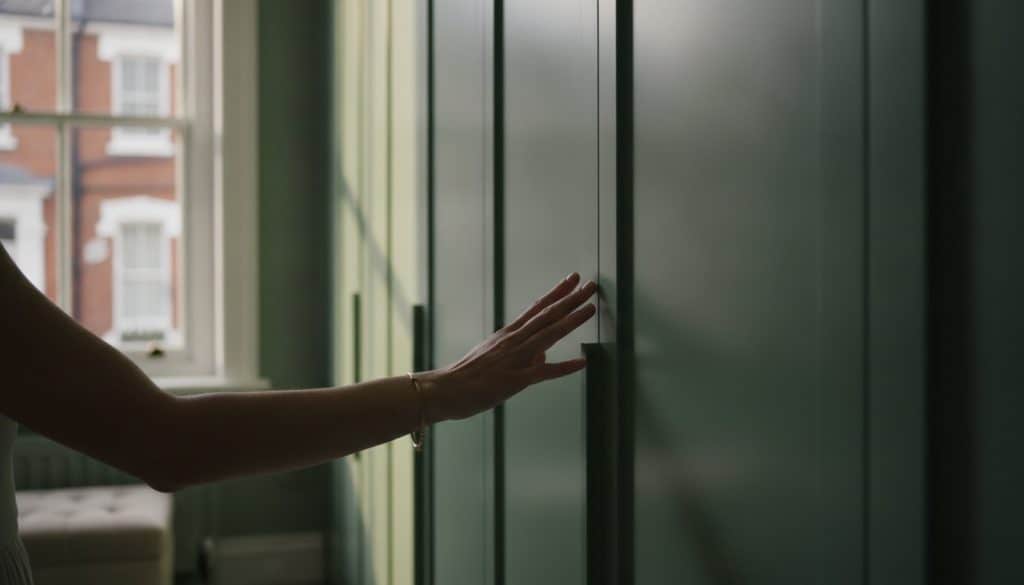
Texture and “hand-feel” are often overlooked until the installation is complete. A premium satin finish provides a silky, tactile experience that feels substantial and high-end. This is particularly noticeable on our Classic Shaker Wardrobe Doors, where the transition between the stile and the panel remains smooth and consistent. The technical nature of wood finishing processes used in our professional workshop ensures a surface that is both resilient and satisfyingly tactile. It avoids the “plastic” sensation associated with cheaper vinyl wraps, offering instead the refined touch of true craftsmanship.
Practicality is where the satin finish truly excels in high-traffic dressing rooms. Fingerprints are the primary enemy of both high-gloss and “super-matt” surfaces. Gloss shows every oily smudge, whilst super-matt can suffer from “burnishing,” a phenomenon where repeated touching creates permanent shiny patches on the surface. Satin is remarkably forgiving. Its surface structure hides minor imperfections and resists the oils from frequent contact, making it a superior choice for wardrobes used daily in busy households.
Maintenance requirements are minimal. A soft, damp microfibre cloth is usually sufficient to maintain the original lustre without the need for harsh chemical cleaners. Unlike textured laminates that can trap dust in their grain, a hand-sprayed satin finish is exceptionally smooth. This makes it an ideal choice for those who value both durability and elegance. If you are planning a complete bedroom overhaul, exploring our range of bespoke fitted wardrobes can help you visualise how these high-performance finishes interact with your specific floorplan.
The Superiority of Hand-Sprayed Finishes over Mass-Produced Alternatives
The process of creating satin finish wardrobe doors begins long before the first coat of pigment is applied. In our specialised workshop, we utilise a controlled environment to ensure every surface remains free from the microscopic dust particles that plague standard factory production. Hand-sprayed finishing is a meticulous discipline. It involves applying multiple layers of professional-grade paint in a sequence that allows each coat to bond chemically with the substrate. This creates a finish that isn’t merely a layer on top of the door but an integral part of the furniture itself. This method is the only way to achieve the consistent, soft-touch glow that defines a luxury interior.
A flawless satin sheen relies heavily on the quality of the foundation. We use high-build primers that are sanded back by hand to create a perfectly level surface. This eliminates the “orange peel” texture often seen on mass-produced items. By controlling the viscosity of the paint and the pressure of the spray, our craftsmen ensure that the colour remains deep and saturated. This level of precision allows for total customisation. You can select any shade from leading colour houses, and we will maintain a perfectly uniform satin lustre across every panel of your bespoke installation.
Why Hand-Sprayed Finishes Surpass Vinyl Wrapping
Vinyl wrapping involves heat-shrinking a plastic film over a door. Whilst this is a common budget solution, it carries a significant risk of de-lamination. Over time, the heat and moisture in a bedroom can cause the edges to peel away, a failure that is impossible to repair. Hand-spraying removes this risk entirely. It also allows us to achieve crisp, sharp details on skinny shaker wardrobe doors. A vinyl wrap often rounds off these delicate edges, muddying the architectural lines that make the design so appealing. A sprayed finish preserves every detail, ensuring your cabinetry looks as sharp a decade from now as it does on the day of installation.
Material Foundations: Why High-Density MDF Excels with Satin Paint
Choosing the right core material is essential for a high-end result. When considering the mdf vs wood wardrobes debate, high-density fibreboard (HDF) is the superior choice for a painted finish. Unlike solid timber, which expands and contracts with changes in humidity, engineered HDF is remarkably stable. This stability prevents the paint from cracking at the joints, a common issue in solid wood doors. Because HDF has no grain or knots, it provides the smooth, non-porous substrate required for satin finish wardrobe doors. It allows the paint to sit perfectly flat, which is the only way to achieve that signature silk-like reflection without any visual distortion.
Design Guidance: Integrating Satin Finishes into Your Interior Scheme
Successful interior design relies on the deliberate interplay between light, colour, and texture. When you introduce satin finish wardrobe doors into a bedroom, you aren’t just adding storage; you’re installing a large-scale architectural element that dictates the room’s atmosphere. Unlike high-gloss surfaces that can feel detached from their surroundings, a satin finish acts as a bridge. It possesses enough lustre to feel premium whilst maintaining a soft, diffused quality that allows it to harmonise with various wall treatments and floor coverings. Achieving this balance requires a technical understanding of how your specific space interacts with natural and artificial light.
Selecting the Perfect Colour Palette
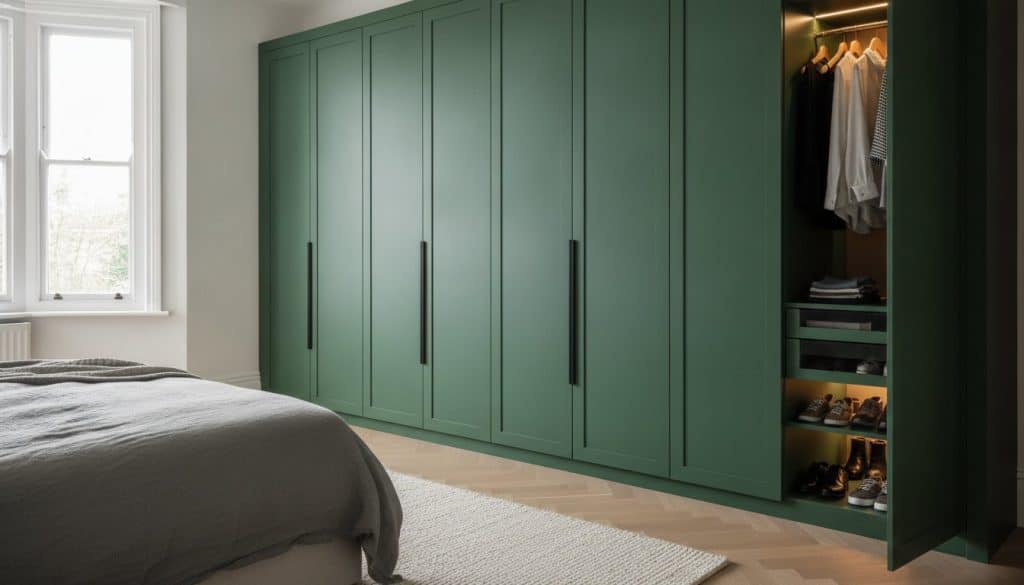
The orientation of your bedroom should be your primary guide when choosing a colour for your wardrobe. In north-facing rooms, where the light is naturally cooler and more bluish, neutral tones like “mussel” or “cashmere” excel. These shades possess enough warmth to prevent the space from feeling cold, whilst the satin sheen ensures the surface doesn’t appear flat or muddy in lower light. Conversely, south-facing rooms can handle the dramatic depth of dark navy or forest green. In these bright spaces, a soft satin sheen prevents dark pigments from becoming overwhelming, as the surface gently scatters the abundant sunlight rather than creating harsh, high-contrast reflections.
Before committing to a final shade, always test sample swatches within the room itself. Observe how the finish shifts from the crisp clarity of morning light to the warmer, elongated shadows of the late afternoon. This exercise is particularly important for satin finish wardrobe doors, as their appearance is more dynamic than a standard matt. You’ll notice that the subtle glow changes throughout the day, providing a sense of movement and life to your cabinetry that mass-produced, flat-packed alternatives simply cannot replicate.
Coordinating Hardware and Room Lighting
The beauty of a hand-sprayed satin finish is significantly enhanced by thoughtful lighting and hardware choices. Warm LED lighting, particularly when integrated into ceiling coffers or used as bedside task lighting, interacts beautifully with the diffused reflection of the doors. This creates a soft, ambient glow that makes the bedroom feel more like a luxury suite. To maintain this sophisticated aesthetic, hardware selection is critical. Satin brass has become a firm favourite amongst designers for its ability to complement the silk-like texture of the paint without the “bling” of polished gold.
Creating visual contrast is another effective strategy for a bespoke look. If your wardrobe doors have a satin finish, consider pairing them with matt-finish walls. This subtle textural shift creates a layered, professional appearance that feels curated rather than accidental. For those seeking a more contemporary edge, matt black handles provide a sharp, graphic contrast against lighter satin panels. If you are ready to elevate your space with precision-engineered cabinetry, you can explore our bespoke fitted wardrobes to find the perfect combination for your home.
Bespoke Luxury: The Wardrobe Door Studio Approach to Satin Finishing
At Wardrobe Door Studio, we believe that the true value of luxury cabinetry lies in the details that often go unseen. Whilst many providers rely on automated mass production, our approach is defined by a commitment to individualised precision. Every set of satin finish wardrobe doors that leaves our workshop is the result of a deliberate manufacturing process that balances traditional joinery techniques with modern finishing technology. This ensures that your furniture isn’t just a functional storage solution, but a bespoke architectural feature designed to last a lifetime. Our pride in our manufacturing heritage adds a layer of reliability to our modern aesthetic, offering a refined invitation to discover quality.
The Excellence of British Manufacturing
Quality control is the primary differentiator of our production model. By maintaining our manufacturing operations within our English workshop, we oversee every stage of the process, from the initial cutting of high-density substrates to the final hand-sprayed coat. This level of oversight is why british made wardrobe doors continue to lead the market in durability and aesthetic refinement. Local production also allows us to significantly reduce our environmental impact. We prioritse sustainable materials and minimise transport emissions, ensuring that your pursuit of elegance does not come at the expense of ecological responsibility.
A Seamless Process from Concept to Installation
Our service is designed to remove the complexity often associated with custom joinery. We act as a collaborative partner for both homeowners and trade professionals, providing a structured journey from the initial design consultation to the final handover. This process begins with detailed site surveys and technical drawings. These documents ensure that every made-to-measure door fits perfectly, regardless of the unique architectural quirks of your property. Our professional installation team then takes over, ensuring that the alignment and operation of your satin finish wardrobe doors are as flawless as the finish itself.
Choosing our hand-sprayed satin finish is an investment in enduring quality. It represents the hallmark of our luxury collection, offering a level of sophistication that mass-produced alternatives cannot match. By combining meticulous British craftsmanship with a service guarantee that covers the entire project lifecycle, we provide the confidence that your vision for a refined, bespoke interior will be realised with absolute precision. Our unhurried yet purposeful flow ensures that quality always takes precedence over speed, resulting in a finished product that stands as a testament to mastery of craft.
Elevating Your Interior with Enduring Craftsmanship
Choosing the right surface for your bedroom is a decision that balances aesthetic vision with daily practicality. The subtle luminosity of satin finish wardrobe doors provides a sophisticated alternative to the harshness of gloss or the sometimes lifeless quality of matt. By opting for a professional hand-sprayed finishing technique rather than a mass-produced wrap, you ensure your cabinetry maintains its silk-like texture and deep colour saturation for years to come. This choice reflects a commitment to quality that transcends fleeting interior trends.
Our English workshop remains dedicated to the heritage of British manufacturing. Every component is precision made-to-measure to suit your specific architectural requirements, ensuring a flawless fit even in challenging spaces. This meticulous approach, combined with our expert design consultation, ensures that your storage solutions are as functional as they are beautiful. Whether you’re a homeowner seeking a refined sanctuary or a trade professional delivering a high-end project, the right finish is the final, essential layer of a successful design.
Explore our collection of bespoke satin finish wardrobe doors and begin the journey toward a perfectly tailored bedroom. We look forward to helping you transform your space with precision and elegance.
Frequently Asked Questions
What is the difference between satin and matt wardrobe doors?
The primary difference lies in the Light Reflectance Value (LRV), where satin offers a subtle, silk-like sheen whilst matt remains entirely flat. A satin surface diffuses light to create a soft glow that adds visual depth to the cabinetry. In contrast, matt finishes absorb light, providing a contemporary, non-reflective appearance. This makes satin a more versatile choice for those who want their wardrobes to feel luminous without the intense glare of high-gloss.
Are satin finish wardrobe doors easy to keep clean?
Yes, satin finish wardrobe doors are exceptionally easy to maintain due to their smooth, non-porous surface. Unlike textured or ultra-matt finishes that can trap dust and oils, a hand-sprayed satin surface can be wiped clean with a soft microfibre cloth and a gentle, non-abrasive cleaner. This resilience makes them a practical choice for high-traffic bedrooms where maintaining a pristine, bespoke look is a priority for the long term.
Do satin finish doors show more fingerprints than matt doors?
Satin finishes are generally more forgiving than both high-gloss and “super-matt” surfaces when it comes to visible fingerprints. The subtle sheen helps to mask oily smudges that would be immediately apparent on a reflective gloss door. Additionally, high-quality hand-sprayed paint is less prone to “burnishing,” which is the permanent shiny marks that often affect flat matt surfaces after repeated contact in the same area.
Can I have satin finish doors made to measure for my existing wardrobes?
We provide a precision made-to-measure service that allows new satin finish wardrobe doors to be engineered for your existing wardrobe carcasses. Our technical team conducts detailed site surveys to ensure every panel is tailored to your specific dimensions, regardless of the original manufacturer. This bespoke approach allows you to upgrade your bedroom’s aesthetic to a luxury standard without the disruption of a complete structural overhaul.
How does a satin finish react to natural vs artificial bedroom lighting?
A satin finish reacts dynamically by diffusing light rather than bouncing it back harshly into the room. Under natural daylight, the surface reveals the subtle contours and architectural depth of the door design. When you switch to artificial evening light, particularly warm LEDs, the finish takes on a soft, silk-like glow. This avoids the clinical reflections and glares often produced by gloss doors under bright ceiling lights or bedside lamps.
Is a hand-sprayed satin finish more durable than a vinyl-wrapped one?
A hand-sprayed finish is significantly more durable than vinyl wrapping because it creates a permanent chemical bond with the high-density substrate. Vinyl wraps are prone to de-lamination and peeling at the edges, especially in environments with fluctuating temperatures. Our professional spray process involves multiple layers of premium paint and high-build primers, resulting in a resilient surface that won’t shrink, crack, or lift over time.