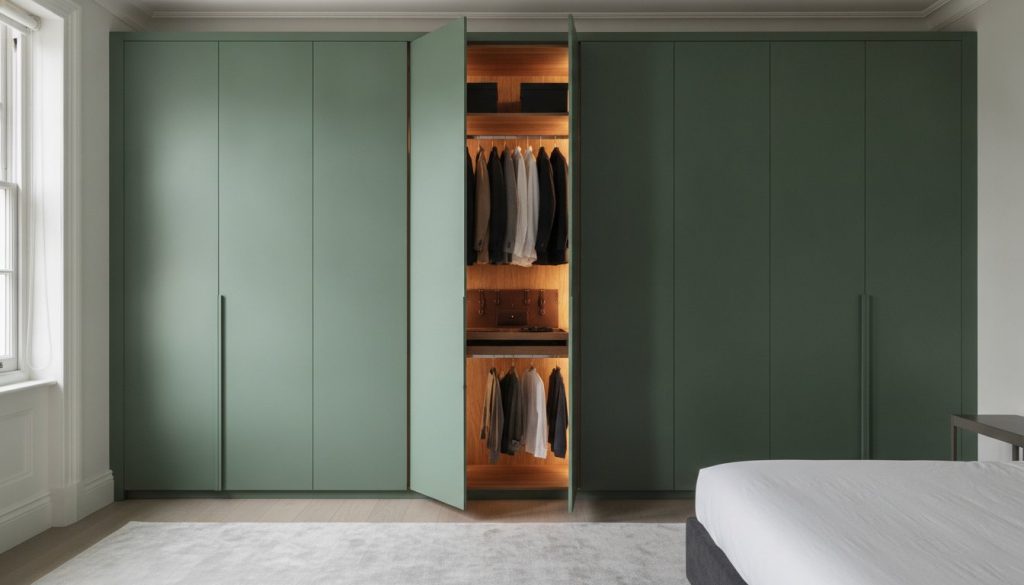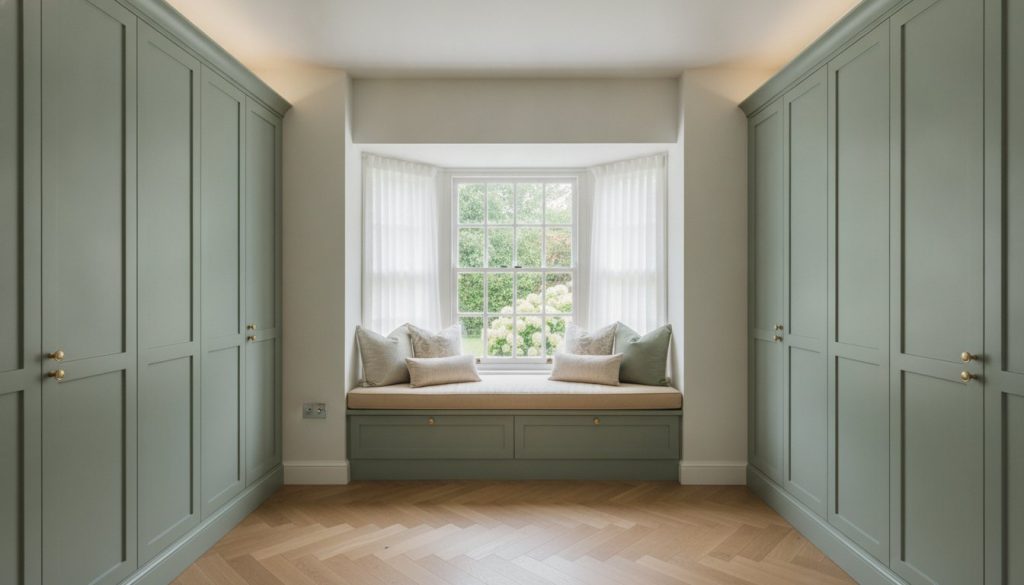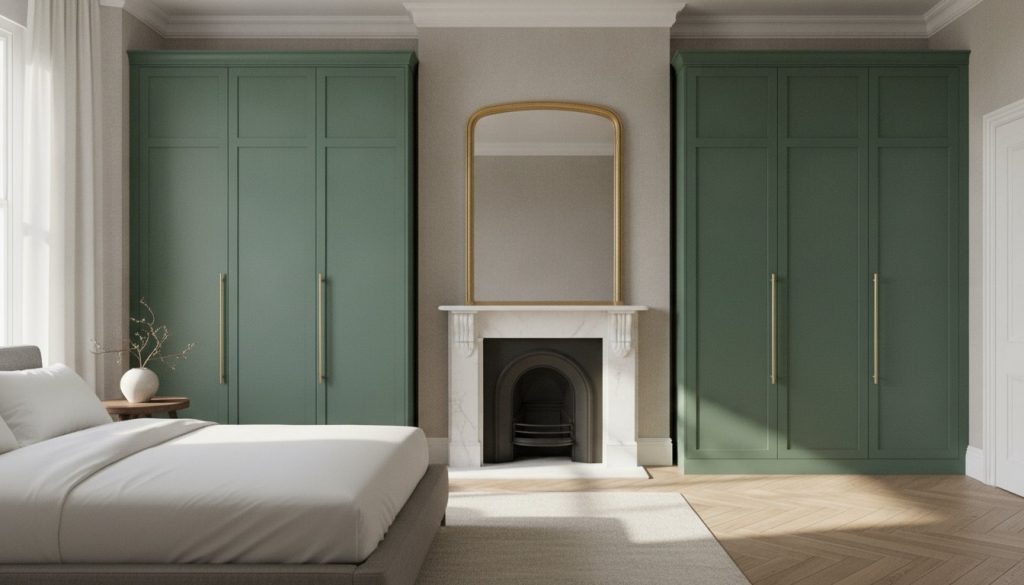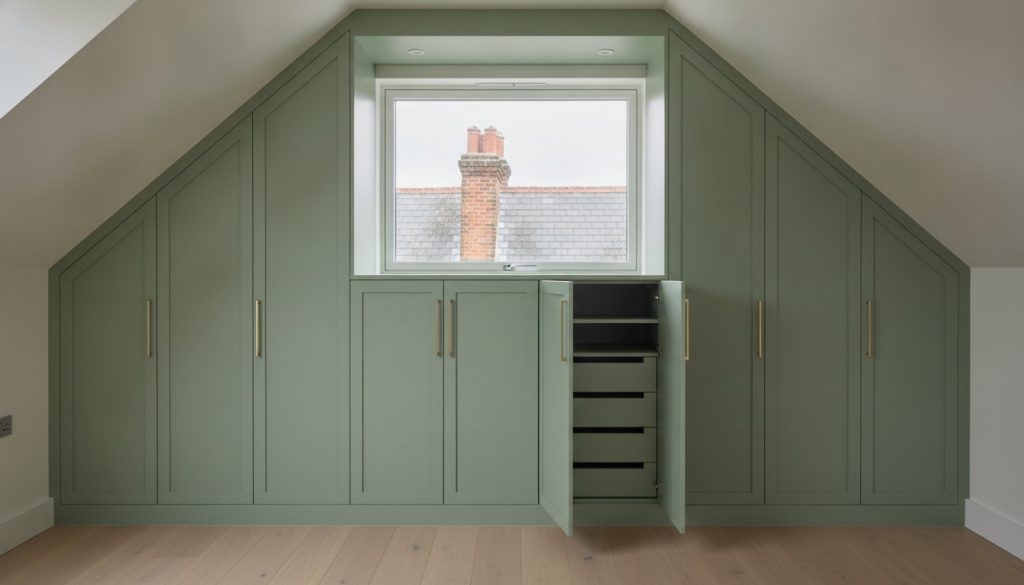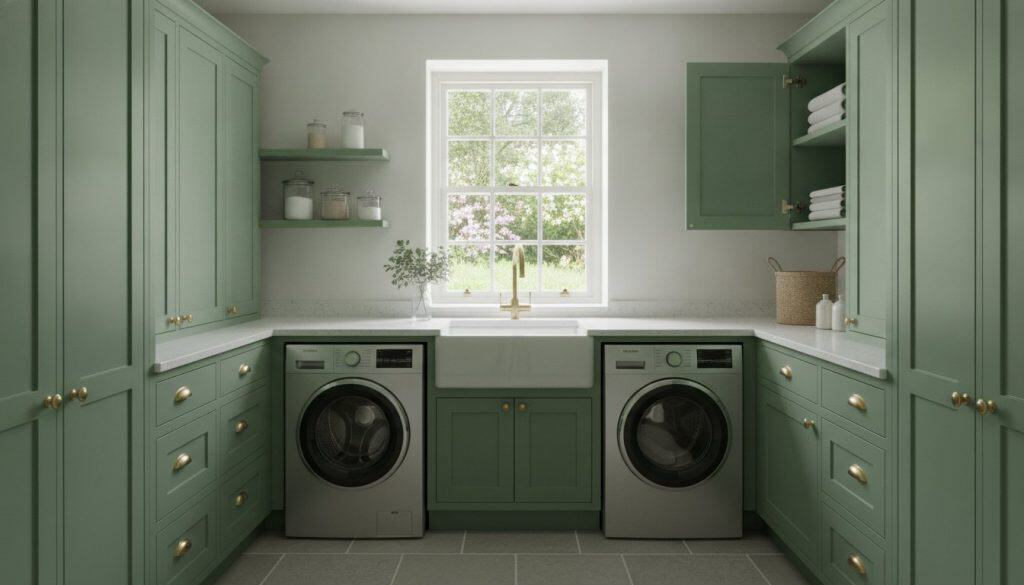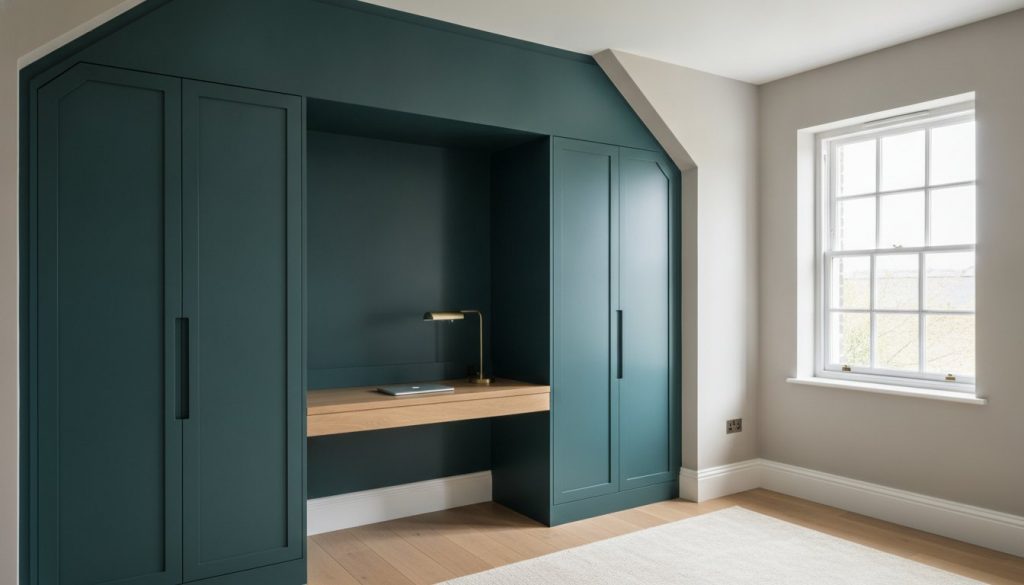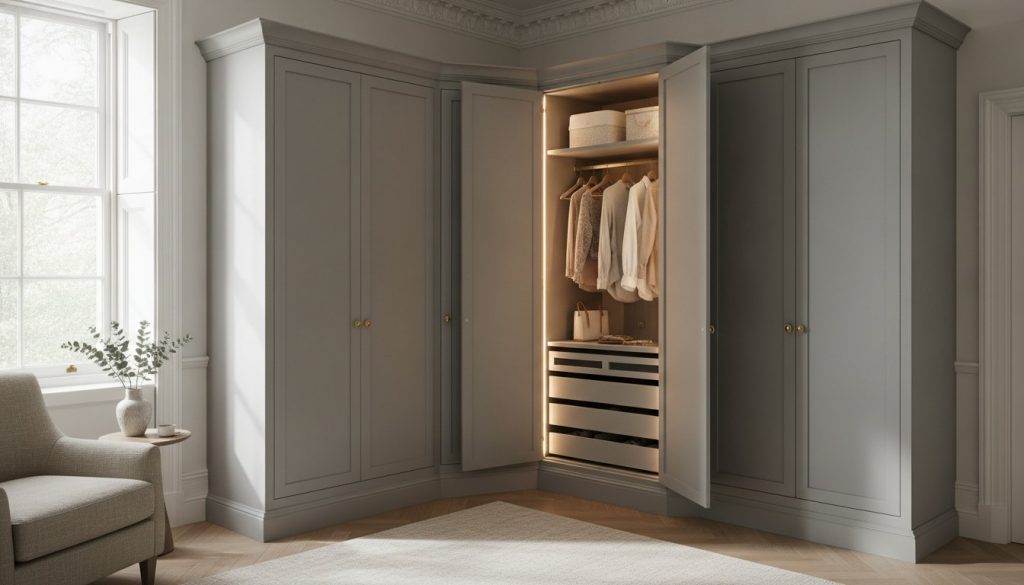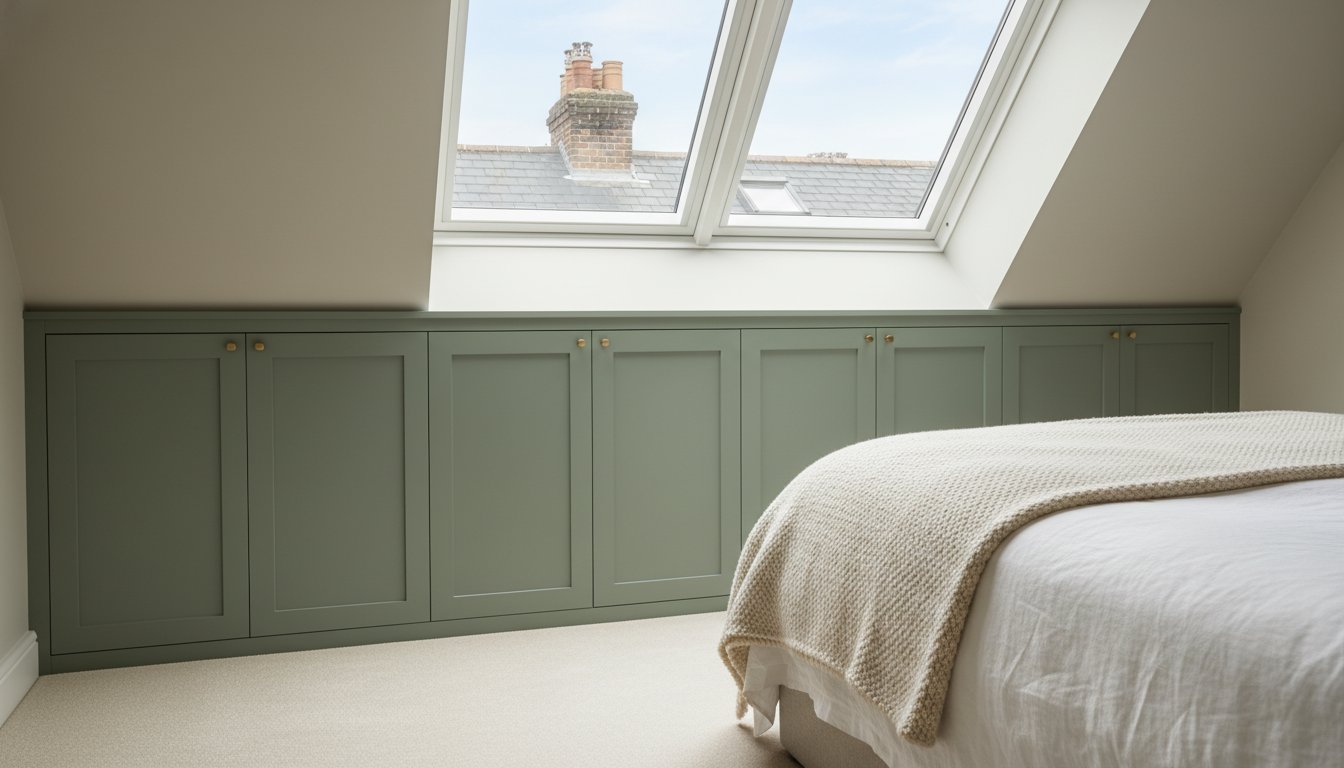
With search interest for floor-to-ceiling storage rising by 24% year-on-year, it’s clear that UK homeowners are no longer willing to settle for the wasted space and unsightly gaps left by modular furniture. When dealing with the unique architecture of a loft conversion, off-the-shelf units often result in a clumsy, “stepped” appearance that detracts from the room’s design. Achieving a truly refined finish requires fitted wardrobes for sloped ceilings that are precision-engineered to follow every angle of your eaves with millimetre accuracy.
You likely feel that your loft’s awkward proportions should be a sophisticated design feature rather than a storage hurdle. We’ll show you how to transform these challenging spaces into seamless storage solutions using bespoke craftsmanship and high-end manufacturing. This guide explores how hand-sprayed finishes and skinny shaker styles can maximise your floor plan whilst delivering the “quiet luxury” aesthetic that defines modern British interiors.
Key Takeaways
- Understand why standard modular units fail in eaves and how bespoke engineering eliminates the inefficient “stepped” look and wasted “dead space”.
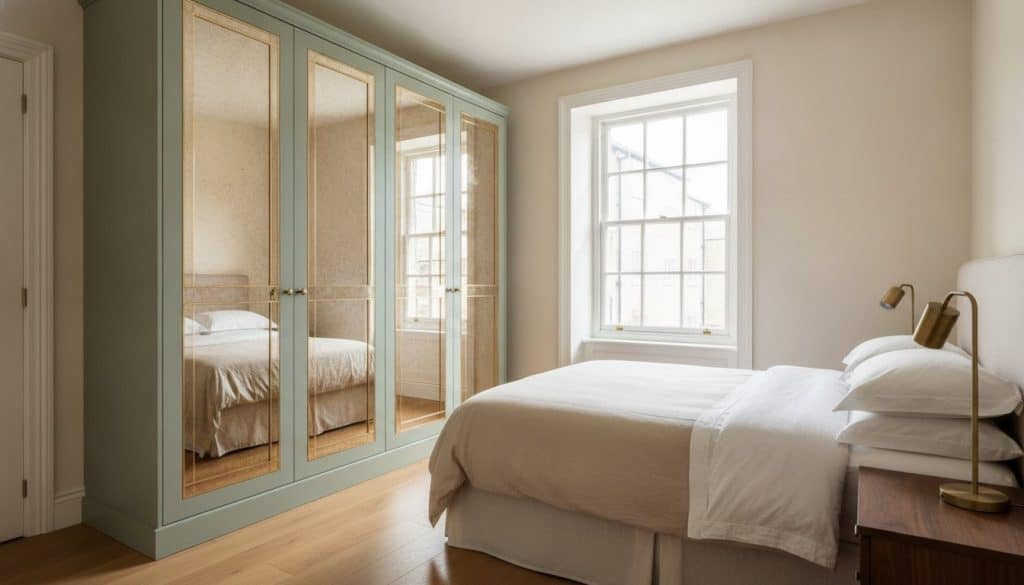
- Discover how contemporary skinny shaker doors and mirror fretwork can brighten and modernise the unique angles of a loft conversion.
- Learn the precise measurement steps required for fitted wardrobes for sloped ceilings to ensure a flawless, floor-to-ceiling architectural fit.
- Evaluate the superior durability and finish of hand-sprayed, British-manufactured carcasses compared to mass-produced flat-pack alternatives.
- Master the planning process to transform challenging loft footprints into high-capacity, luxury storage that adds genuine value to your home.
The Challenge of Sloped Ceilings: Why Standard Wardrobes Fail
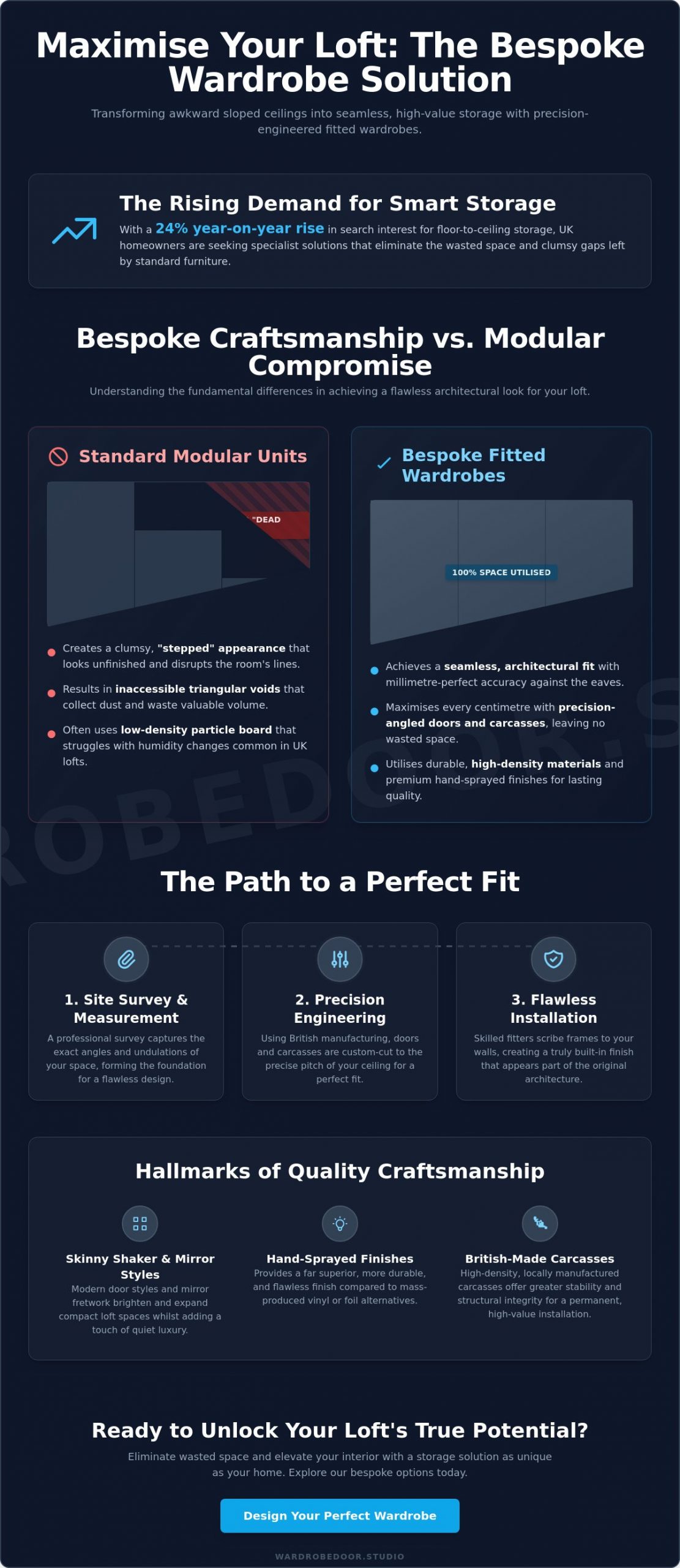
UK loft conversions present a unique architectural paradox. Whilst they offer a significant 24% increase in property value according to 2026 market data, their unconventional proportions often make traditional furnishing impossible. Standard off-the-shelf wardrobes are designed for perfectly vertical walls and 90-degree corners, making them fundamentally incompatible with the pitched roofs and eaves characteristic of British attic spaces. When a rectangular unit is placed against a sloped ceiling, it creates a “stepped” silhouette that leaves large, inaccessible gaps. These triangular voids quickly become dust traps and wasted “dead space” that serve no functional purpose for the homeowner.
The visual impact of these gaps is equally detrimental to the room’s aesthetic. In a well-designed interior, the eye should travel smoothly along the room’s architectural lines without interruption. Modular units break this flow, creating a cluttered and unfinished appearance that makes the ceiling feel lower and the footprint smaller. Achieving a truly seamless architectural fit requires a sophisticated approach to Cabinetry, where the furniture is treated as a permanent extension of the home’s structure rather than an afterthought. By mirroring the pitch of the roof, bespoke storage eliminates visual noise and restores a sense of deliberate design to the space.
Defining the Bespoke Sloped Wardrobe
A bespoke sloped wardrobe is a custom-engineered storage solution where the doors and internal carcasses are precision-cut at the exact angle of the ceiling’s pitch. Unlike modular units that leave a clumsy “stepped” gap, a bespoke fit is entirely flush. Every millimetre of available space is utilised through scribing, a meticulous technique where the frame is hand-shaped to mirror the subtle undulations of the ceiling line for a professional finish.
Why Loft Conversions Require Specialist Solutions
UK loft architecture is notoriously varied, with Victorian gables and complex Mansard roofs presenting unique angles that mass-produced furniture cannot match. Investing in fitted wardrobes for sloped ceilings ensures storage is as unique as the architecture, supporting the 24% value increase associated with high-quality loft renovations. These floor to ceiling wardrobes draw the eye upward, making compact attic spaces feel airy, spacious, and expertly curated.
Bespoke vs. Modular: Achieving a Seamless Architectural Look
Choosing between modular units and bespoke craftsmanship is the most critical decision in any loft renovation. Modular furniture relies on standard rectangular boxes that are mass-produced for flat walls. In the context of a loft, these boxes create a “stepped” effect where the furniture abruptly stops, leaving a jagged gap against the pitch of the roof. High-end interior design, as frequently showcased by Wardrobe Door Studio, prioritises built-in solutions that respect the building’s skeleton rather than fighting against it. For fitted wardrobes for sloped ceilings, this means the doors and carcasses are cut at the exact angle of the roof, creating a single, unbroken line that looks like part of the original architecture.
The difference isn’t merely aesthetic; it’s a matter of structural integrity. Flat-pack alternatives often use low-density particle board that can struggle with the fluctuating temperatures and humidity levels common in UK attic spaces. Custom-built wardrobes utilise high-density materials that offer far greater stability. When these materials are paired with a premium hand-sprayed finishing, the result is a piece of furniture that feels substantial and permanent. Unlike modular units that can feel flimsy or temporary, bespoke cabinetry provides the durability required for a high-traffic master bedroom.
The Stepped Problem in Modular Furniture
Modular units are essentially approximations of a fit. To hide the inevitable gaps between a square wardrobe and an angled ceiling, installers often use large, unsightly filler panels. This doesn’t just look clumsy; it results in a significant loss of storage volume. A custom-angled door follows the ceiling line perfectly, reclaiming every cubic centimetre for your belongings. This precision allows for the inclusion of full-height hanging space even in the tightest corners, a feat that modular “blocks” simply cannot achieve.
Precision Engineering and Site Surveys
A professional site survey is the foundation of a successful installation. Unlike off-the-shelf solutions, bespoke designs involve detailed technical drawings that account for every quirk of the masonry and the exact pitch of the eaves. Skilled fitters then ensure the final piece is perfectly level and scribed to the wall, eliminating the need for bulky cover-ups. If you’re looking to elevate your space, exploring bespoke fitted wardrobes can provide the clarity needed to transform an awkward corner into a sophisticated focal point. This collaborative process ensures that the internal configuration-from pull-out shoe racks to integrated LED lighting-is tailored precisely to your lifestyle needs.
Choosing Your Style: Skinny Shaker and Mirror Fretwork
Selecting the correct door profile is as vital as the structural engineering behind the carcass. Whilst the previous sections addressed the technical necessity of precision-angled cuts, the visual success of fitted wardrobes for sloped ceilings depends on the door style and finish you choose. A high-quality hand-sprayed finishing is essential here. Unlike standard vinyl wraps that can peel at the edges over time, a hand-sprayed finish provides a durable, deep-pigmented surface that handles the unique design considerations for attic conversions. For rooms with low or sloping ceilings, lighter tones such as cashmere or soft beige are recommended to maintain an airy, open atmosphere.
The choice of door style should reflect the architectural era of your home whilst meeting modern functional needs. Whether you’re aiming for a minimalist aesthetic or a more traditional feel, the door acts as the primary interface between your storage and the rest of the room. By carefully matching the door’s vertical lines or reflective properties to the room’s pitch, you can turn a challenging attic corner into a sophisticated focal point that feels entirely intentional. Working through a structured wardrobe design service checklist before committing to a style ensures your door choice aligns with both your aesthetic vision and the practical demands of your loft’s architecture.
Skinny Shaker: Modern Elegance for Angled Walls
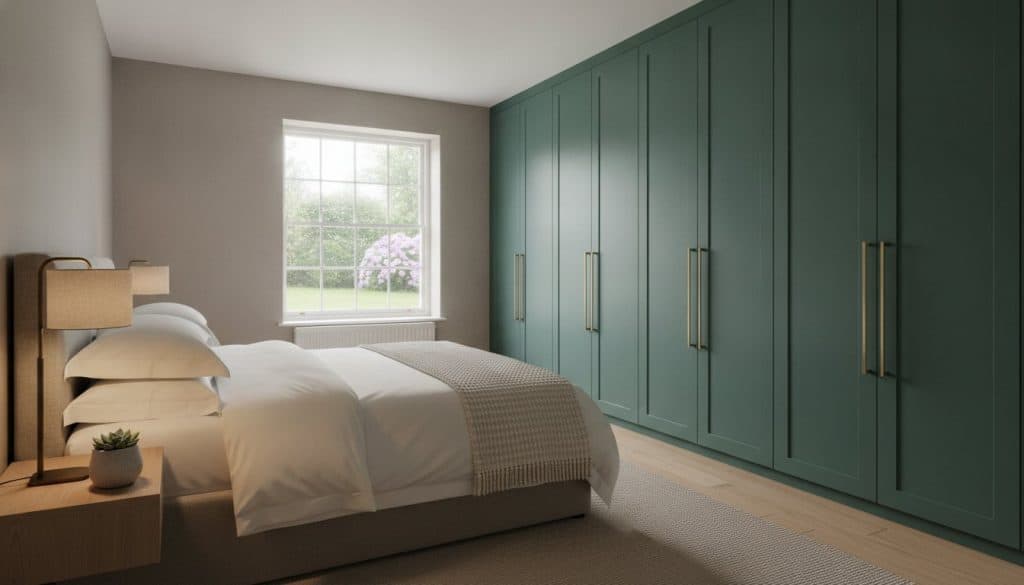
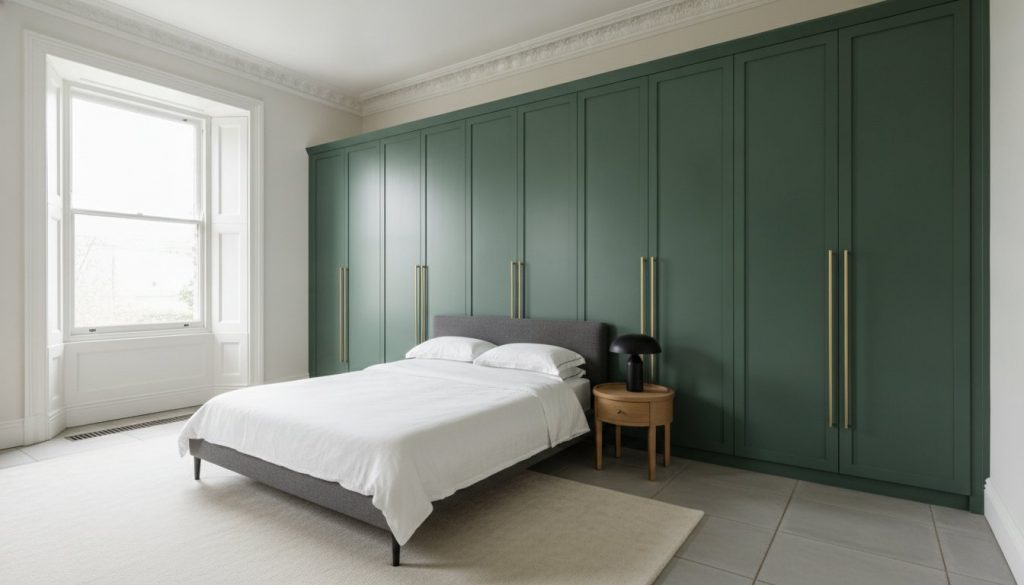
Skinny shaker wardrobe doors are increasingly popular for loft spaces due to their refined, slim-line profile. The 20mm frame offers a contemporary update to the classic shaker design, providing clean lines that contrast beautifully with the dramatic angles of a ceiling slope. For 2026, earthy neutrals like taupe and stone are the dominant colour trends. These shades work harmoniously with the skinny shaker’s minimalist silhouette to create a “quiet luxury” look that doesn’t overwhelm the room’s unique geometry.
Mirror Fretwork: Creating the Illusion of Space
Mirror fretwork doors are a strategic choice for darker eaves where natural light may be limited. By integrating mirrored panels, you reflect light back into the room, making a compact loft feel significantly larger and brighter. The addition of bespoke fretwork introduces a “Classic English” aesthetic, offering a level of luxury that plain mirrored glass cannot achieve. This style is particularly effective in master suites, where the intricate patterns of the fretwork add texture and depth to the room’s perimeter without sacrificing the sleek, floor-to-ceiling finish.
Planning and Measuring for Sloped Wardrobe Doors
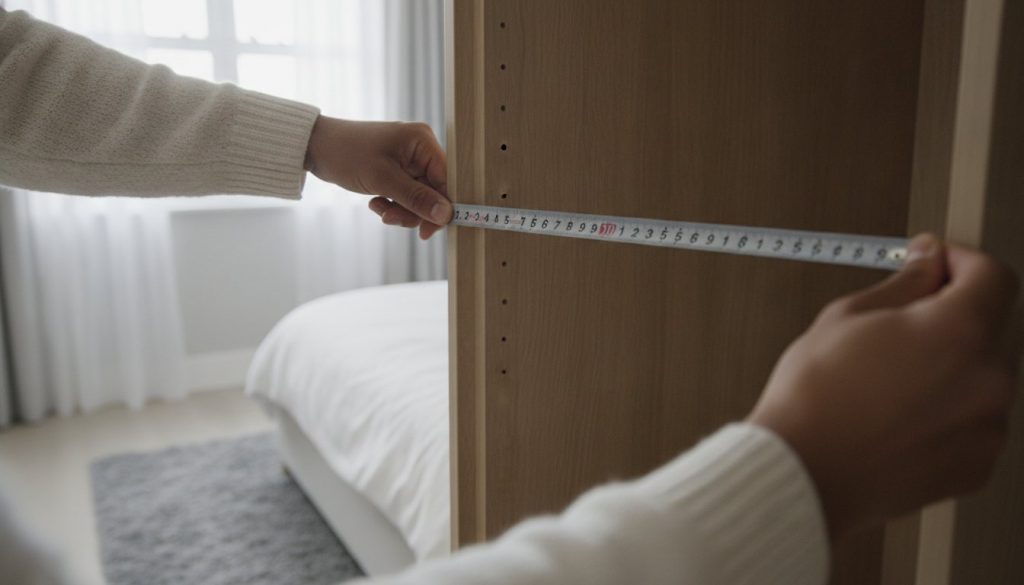
Achieving a flawless architectural fit requires more than a simple tape measure. Precision is the defining characteristic of luxury fitted wardrobes for sloped ceilings, and the process begins with identifying the exact pitch of your eaves. You must measure the vertical height at both the highest point (the apex) and the lowest point where the wardrobe will sit. These two figures, combined with the horizontal width, allow for the calculation of the ceiling’s angle. In older UK properties, it’s essential to check if the floor is level. Even a slight deviation can cause door misalignment, which is why professional-grade installers prioritise structural assessments before manufacturing begins.
Wonky walls are a common reality in British homes. To counter this, we utilise “scribe” margins. This involves providing extra material on the side and top panels, which is then hand-shaped on-site to follow the exact contours of your masonry. This meticulous approach ensures there are no unsightly gaps or thick filler strips, resulting in the seamless, floor-to-ceiling finish discussed in earlier sections. If you’re ready to begin your storage transformation, you can book a professional technical survey to ensure every millimetre is accounted for.
The Three-Point Measurement Rule
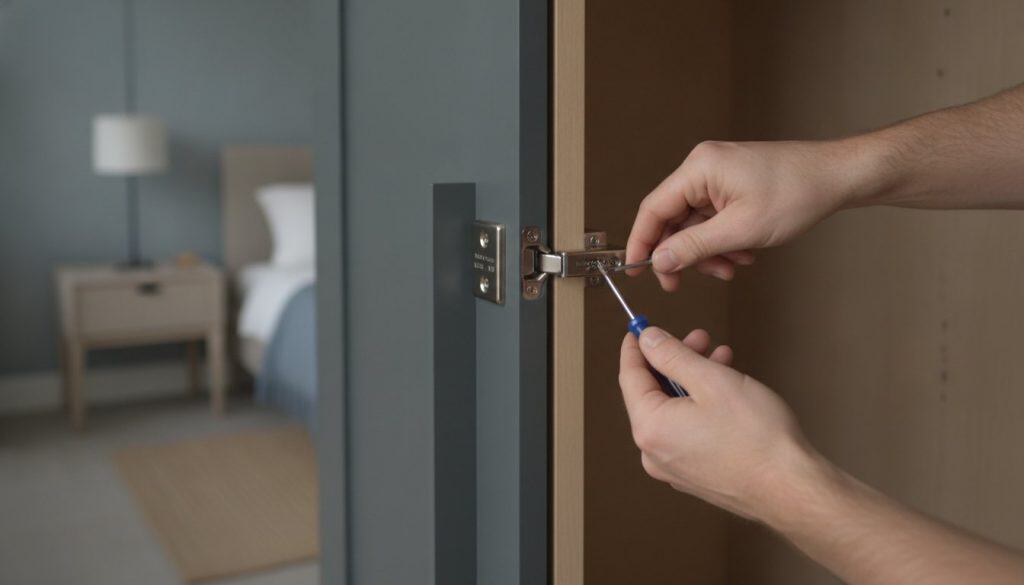
Depth is often overlooked in loft storage planning. You must measure the depth at the back, middle, and front of the proposed unit to identify any tapering in the walls. Using an angle finder or a physical template is the only way to guarantee the door will swing freely without catching the sloped ceiling. You also need to account for hinge clearances; the pivot point of the door must sit far enough away from the slope to allow a full opening. Without this foresight, you risk a wardrobe that looks beautiful but fails to function effectively.
Internal Layout Considerations
The internal architecture should mirror the external slope. We recommend placing full-height hanging rails in the tallest section of the wardrobe to accommodate coats and long dresses. The lower “short-wall” sections are better suited for integrated drawers, pull-out shoe racks, or adjustable shelving. This configuration ensures that every inch of the eaves is utilised. For those with existing carcasses that simply need a visual upgrade, replacement wardrobe doors made to measure can provide a sophisticated refresh whilst maintaining your current internal layout.
The Wardrobe Door Studio Difference: British Craftsmanship
The successful integration of fitted wardrobes for sloped ceilings into a luxury interior depends entirely on the quality of the manufacturing. Our family-run studio brings over 20 years of experience to every project. We maintain a deep pride in our British manufacturing heritage, ensuring that every component is engineered and finished right here in England. By controlling the entire production process, we provide a level of traditional reliability that mass-produced alternatives cannot match. This heritage of excellence ensures that your bespoke storage is not just a functional addition, but a lasting investment in your home’s architecture.
Our commitment to quality begins with the selection of high-density materials. Standard retail units often use low-grade chipboard that can warp or degrade in the fluctuating humidity of a loft conversion. We utilise superior high-density fibreboard, which provides a perfectly stable substrate for our signature hand-sprayed finishing. This material choice is critical for achieving the sharp, clean lines required for angled eaves and ensures that the paint finish remains flawless for years to come. Whether you require a full design and installation or a supply-only service for your own fitters, our approach remains rooted in the principles of understated elegance and technical precision.
A unique advantage of our bespoke service is the ability to refresh existing storage. If your loft already has carcasses in place but the aesthetic feels dated, we can manufacture replacement doors specifically cut to your existing ceiling pitch. This allows you to upgrade to modern styles like our Mirror Fret or Skinny Shaker ranges without the upheaval of a full strip-out. It’s a sophisticated way to modernise your space whilst retaining the structural elements that already work. Before commissioning new doors, consulting a comprehensive bespoke wardrobe design service checklist can help you confirm that your chosen finishes, materials, and configurations meet the highest standards of luxury craftsmanship.
Luxury Hand-Sprayed Finishes
There is a profound difference between a factory-bonded vinyl wrap and a genuine hand-sprayed finish. Our process involves multiple layers of premium pigment, resulting in a depth of colour and a smooth, tactile surface that feels superior to the touch. This method offers exceptional durability in high-use bedroom environments, resisting the peeling and fading common with standard finishes. We also offer the flexibility to colour-match your wardrobes to popular designer palettes, allowing your storage to blend seamlessly with your chosen wall colours or stand out as a bold statement piece.
From Concept to Completion
We operate as a meticulous partner for both individual homeowners and trade professionals, including developers and interior designers. Our collaborative process is designed to be steady and informative, moving from your initial artistic vision through to the practical logistics of nationwide delivery or professional installation. We invite you to experience the quality of our work first-hand by ordering material samples or booking a design consultation. By choosing a specialist who understands the nuances of British loft architecture, you ensure a final result that is both high-end and highly functional.
Elevate Your Loft with Precision-Engineered Storage
Transforming a loft conversion into a functional, luxury space requires moving beyond the limitations of modular furniture. By prioritising a precise architectural fit, you eliminate wasted eaves space and replace unsightly gaps with a seamless, floor-to-ceiling aesthetic. The integration of hand-sprayed finishes and bespoke internal layouts ensures that your storage is as durable as it is beautiful, respecting the unique geometry of your home. Whether you opt for the minimalist lines of a skinny shaker or the light-reflecting elegance of mirror fretwork, the result is a room that feels intentionally designed and professionally curated.
Investing in fitted wardrobes for sloped ceilings ensures that every millimetre of your attic’s footprint is utilised to its full potential. Our solutions are hand-sprayed in England and precision-engineered to match any angle, providing a level of quality that off-the-shelf units cannot replicate. With nationwide delivery available, achieving a sophisticated and organised interior is a straightforward process rooted in expert craftsmanship.
Ready to finalise your vision? Explore Our Range of Bespoke Fitted Wardrobes and discover how our British manufacturing can redefine your space. Your journey toward a more elegant and efficient home starts with a single, well-measured step.
Frequently Asked Questions
Can I have sliding doors on a sloped ceiling wardrobe?
Hinged doors are the most effective solution for sloped ceilings because they allow the door to be precision-cut to the exact angle of the pitch. Sliding doors require a continuous, level top track, which is impossible on an angled ceiling without creating a large, unsightly triangular filler panel. By using hinged wardrobes, you maintain a seamless, floor-to-ceiling finish that follows the architecture of your loft perfectly.
How much does a bespoke fitted wardrobe for a sloped ceiling cost in 2026?
The cost of bespoke storage in 2026 varies based on the complexity of the angles, the choice of materials, and the number of internal compartments. Whilst industry data suggests that high-end fitted wardrobes for sloped ceilings represent a significant investment in property value, you should seek a tailored quote that accounts for your specific dimensions. For a comprehensive breakdown of what drives pricing in the custom joinery market, our guide to the cost of bespoke wardrobes UK provides a definitive framework for evaluating quotes with confidence. Factors such as hand-sprayed finishes and intricate fretwork will influence the final project value more than standard designs.
Is it possible to replace doors on an existing sloped wardrobe frame?
It’s entirely possible to manufacture replacement doors for an existing sloped wardrobe frame, provided the carcass is structurally sound. This is a sophisticated way to update the aesthetic of your bedroom without the disruption of a full strip-out. We can precision-cut new doors in styles like Skinny Shaker or Mirror Fret to match your current ceiling pitch, ensuring the new installation integrates perfectly with your existing architecture.
What is the best material for sloped wardrobe doors?
High-density moisture-resistant MDF is widely considered the superior material for sloped wardrobe doors, particularly in loft environments where temperature fluctuations occur. This material provides a stable, smooth substrate that is essential for achieving a premium hand-sprayed finish. Unlike natural timber, it won’t warp or expand, ensuring that the precision-angled cuts remain flush against your ceiling line for the lifetime of the furniture.
How do I measure the angle of my sloped ceiling for a wardrobe?
To determine the pitch of your ceiling, you must measure the vertical height at the highest and lowest points of the wardrobe’s footprint. Using a digital angle finder placed against the slope provides the most accurate reading for manufacturing. It’s also vital to check the horizontal width between these two points to verify the diagonal length, ensuring the doors are engineered with millimetre precision to avoid catching the ceiling.
Can I fit a sloped wardrobe myself or do I need a professional?
Whilst some homeowners attempt a DIY installation, professional fitting is highly recommended for sloped ceilings due to the complexity of scribing to uneven walls. A professional installer ensures that the wardrobe is perfectly level, even if your loft floor is slightly pitched. Given that structural safety and fire regulations are critical in loft conversions, an expert installation of fitted wardrobes for sloped ceilings provides the peace of mind that your cabinetry adheres to British standards.
Will a mirrored wardrobe door work on an angled cut?
Mirrored doors work exceptionally well on angled cuts and are a strategic choice for brightening darker eaves. The mirror is precision-cut to the same pitch as the door frame, maintaining the architectural flow of the room whilst reflecting natural light. This creates a sense of depth and volume in compact attic spaces, turning what could be a dark corner into a sophisticated and airy focal point.
How long does it take to manufacture bespoke sloped doors?
The manufacture of bespoke sloped doors typically takes between four and eight weeks, depending on the complexity of the design and the chosen finish. Hand-sprayed options require a meticulous curing process to ensure a durable and high-quality surface, which takes longer than standard factory finishes. This unhurried approach ensures that every component meets our rigorous standards of luxury craftsmanship before it arrives at your property for installation.