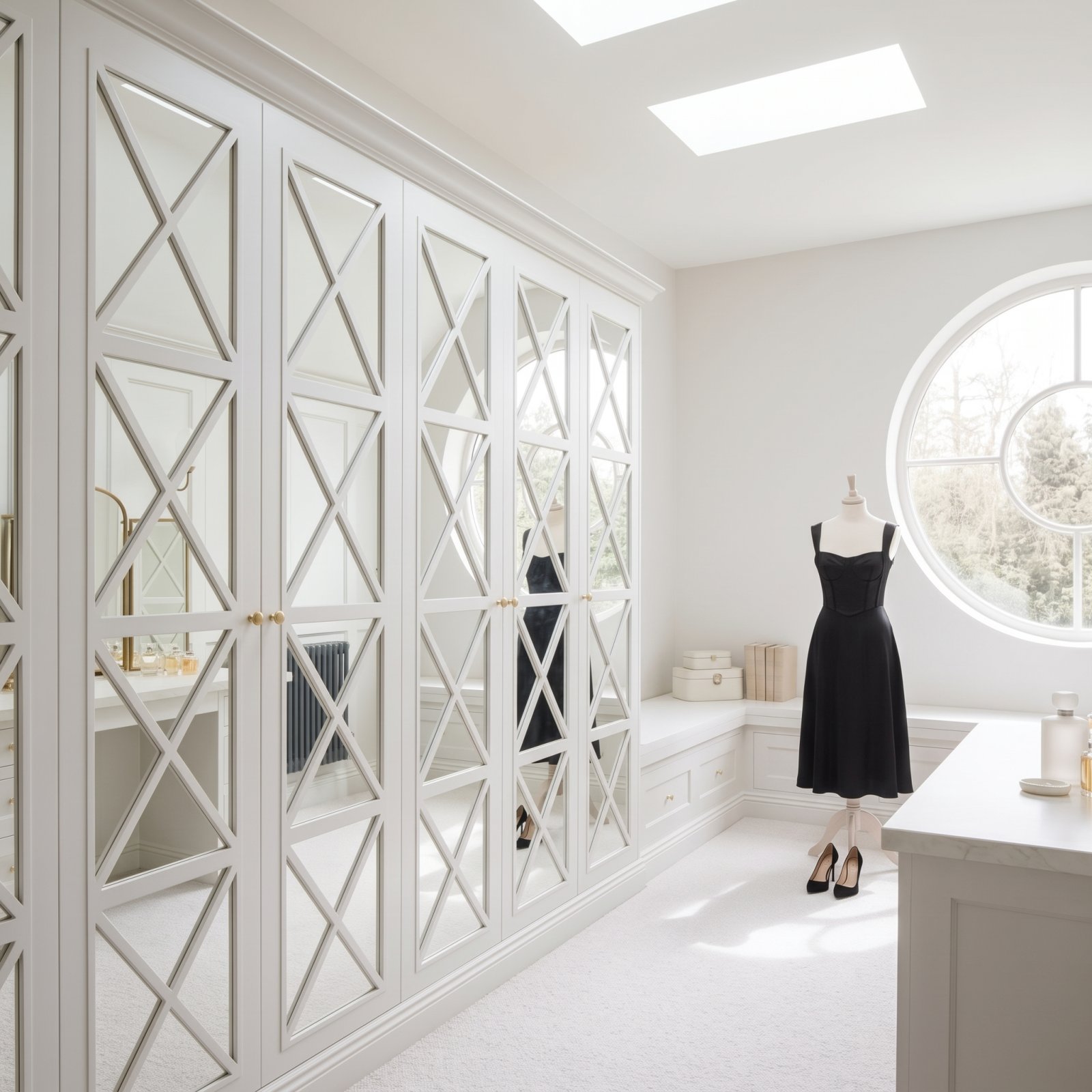
A bespoke wardrobe isn’t automatically more functional than a standard one. The right layout is shaped around the clothes you wear and reach for most. To design a functional wardrobe, sort garments into hanging and folded categories, then allocate space for each alongside drawers, shelves and accessories. Keep frequently used items easy to reach.
It’s easy to focus on appearance and overlook the everyday details that make a wardrobe work well. Start with your actual clothing and routines, rather than a fixed arrangement that leaves some sections crowded and others underused.
This guide explains how to estimate the hanging space you need, choose practical rail heights and plan drawer dimensions around what you store. You’ll also learn how to arrange wardrobe zones to make getting dressed and putting clothes away more straightforward.
Key Takeaways
- Use a clothing inventory to identify which garments need hanging space, folded storage or dedicated accessory sections.
- Estimate hanging capacity by grouping garments by length, then consider whether shorter items can share space across stacked rails.
- Place everyday essentials between waist and eye level, and tailor drawers and shelves to the items they will hold.
- Explore wardrobe door styles from Wardrobe Door Studio when you’re ready to bring a considered interior plan together with a cohesive finish.
1. Building a wardrobe around clothes you actually wear
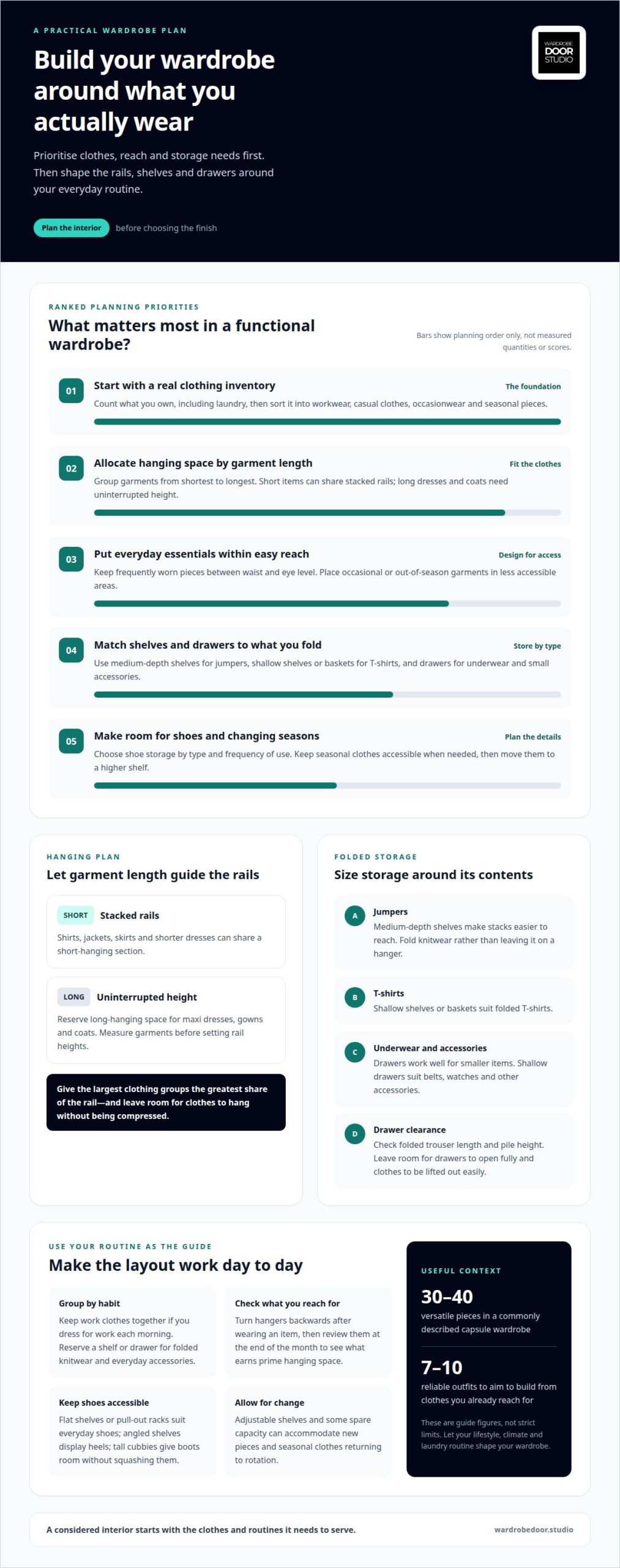
The first step in learning how to design a functional wardrobe is to make an honest inventory. Do laundry first, or include clothes waiting to be washed, so the count reflects what you own. Then sort garments into workwear, casual clothes, occasionwear and seasonal pieces. A capsule wardrobe commonly contains around 30–40 versatile pieces, but your lifestyle, climate and laundry routine should shape the selection, not a strict limit.
To organise a wardrobe for easy access, place everyday clothes where they’re easiest to reach, with occasional and out-of-season garments in less accessible areas. Turn each hanger backwards after wearing an item, then review the wardrobe heroes at the end of the month. Use that evidence to decide what deserves prime hanging space and what contributes to clutter. Build combinations from the clothes you already reach for, aiming for 7–10 reliable outfits.
Plan storage around your daily habits as well as garment type. Keep work clothes together if you dress for work each morning, and reserve a shelf or drawer for folded knitwear and everyday accessories. Hang trousers, suits, dresses and coats; store jumpers and underwear in drawers. To help clothes last, store them clean and dry, avoid crushing delicate or structured garments, and fold knitwear rather than leaving it on a hanger.
Make room for winter layers and coats alongside lighter everyday clothes. Keep seasonal pieces accessible when you need them, then move them to a higher shelf as the weather changes. A tailored layout should reflect what you wear throughout the year, not an idealised wardrobe that doesn’t suit your routine.
2. How much hanging space do I need in a wardrobe?
Estimate hanging space from your clothes, not the wardrobe’s overall width. Group shirts, jackets, skirts and dresses, then arrange each group from shortest to longest. This reveals which garments can share a short-hanging section and which need uninterrupted height. Allow space for clothes to hang without being compressed, and give the largest clothing groups the greatest share of the rail.
Short garments can go on two stacked rails, increasing hanging capacity within the same section. Use a single medium-height rail for jackets, skirts and shorter dresses; reserve long-hanging space for maxi dresses, gowns and coats. In a small bedroom, this layout can reduce the need for extra storage furniture while keeping each group of clothes visible and accessible.
Balance rails with drawers and shelves according to what you fold. Keep jumpers on medium-depth shelves, where stacks are easier to reach, and use shallow shelves or baskets for T-shirts. Drawers work well for underwear and small accessories. Adjustable shelves and some spare capacity make it easier to accommodate new pieces or changing needs, such as seasonal clothes coming back into rotation.
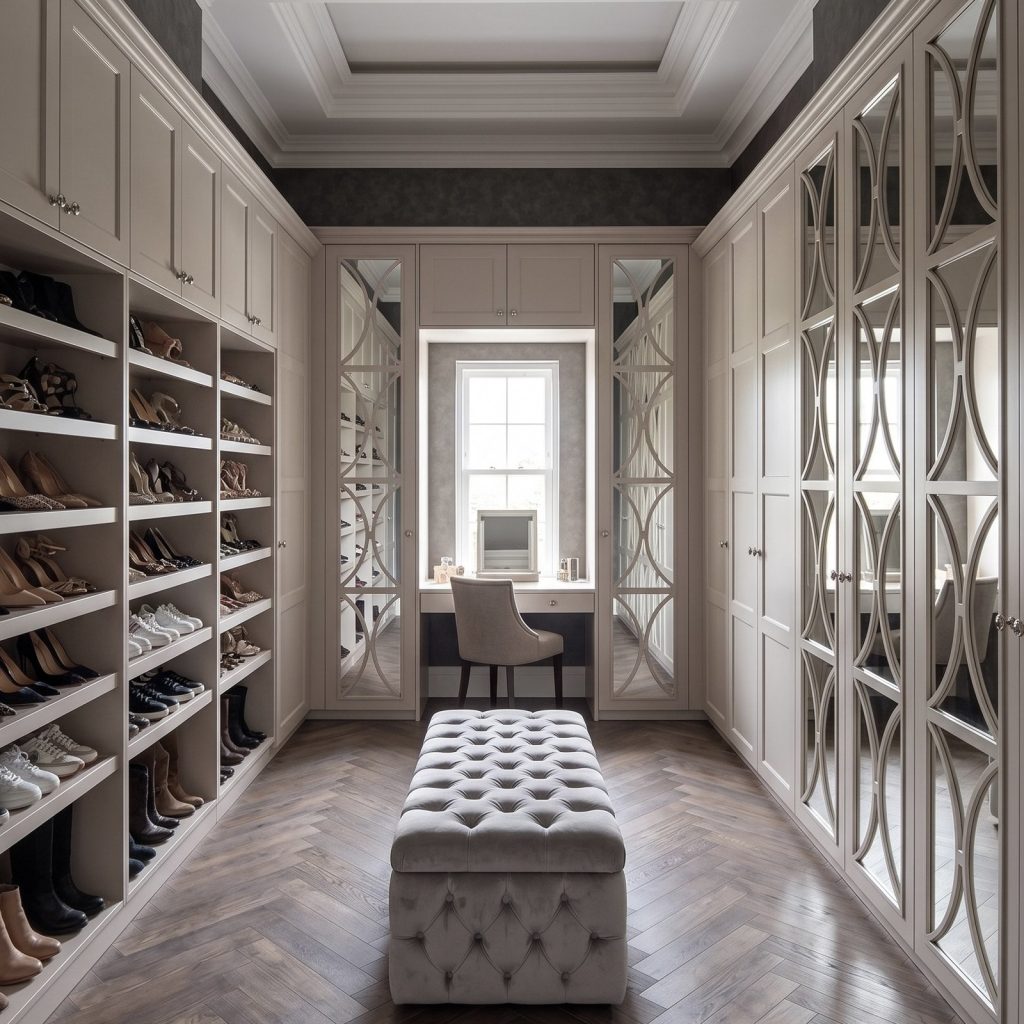
Plan shoe storage by type and frequency of use. Flat shelves or pull-out racks suit everyday shoes; angled shelves display heels, while tall cubbies give boots room without squashing them. Pull-out shoe racks also allow airflow around footwear. A considered interior can bring these elements together with a refined finish; explore bespoke fitted wardrobe designs for ideas that suit your available space.
3. Choosing rail heights and drawer dimensions
Set rail heights by measuring the garments they’ll hold. Long coats and dresses need clear vertical space, while shirts and trousers may fit beneath a second rail. Position everyday items between waist and eye level so frequently worn pieces are easy to reach. Keep seasonal garments higher or lower, depending on how often you need them.
Size drawers around their contents rather than a fixed layout. A shallow drawer suits belts, watches and other accessories; folded knitwear needs more depth to avoid compressed stacks. Check the length of folded trousers and the height of your preferred piles before deciding on drawer proportions. Leave enough clearance for drawers to open fully and clothes to be lifted out easily.
For versatile outfits, choose colours that coordinate with clothes you already wear, such as neutral trousers with shirts in complementary shades. Choose adaptable everyday styles, then add seasonal colours or distinctive accessories for variety. Wardrobe staples should suit your routine: a workwear collection may need more shirts, while a casual wardrobe could prioritise comfortable layers.
Choose footwear for the occasions and walking your routine involves. Everyday shoes should feel comfortable for regular wear; dress shoes can be stored separately from casual pairs to make outfit planning simpler. Decide which garments and footwear need the most convenient positions, then tailor rails, shelves and drawers around those priorities. Explore tailored wardrobe design options to bring your storage plan together.
Wardrobe Door Studio
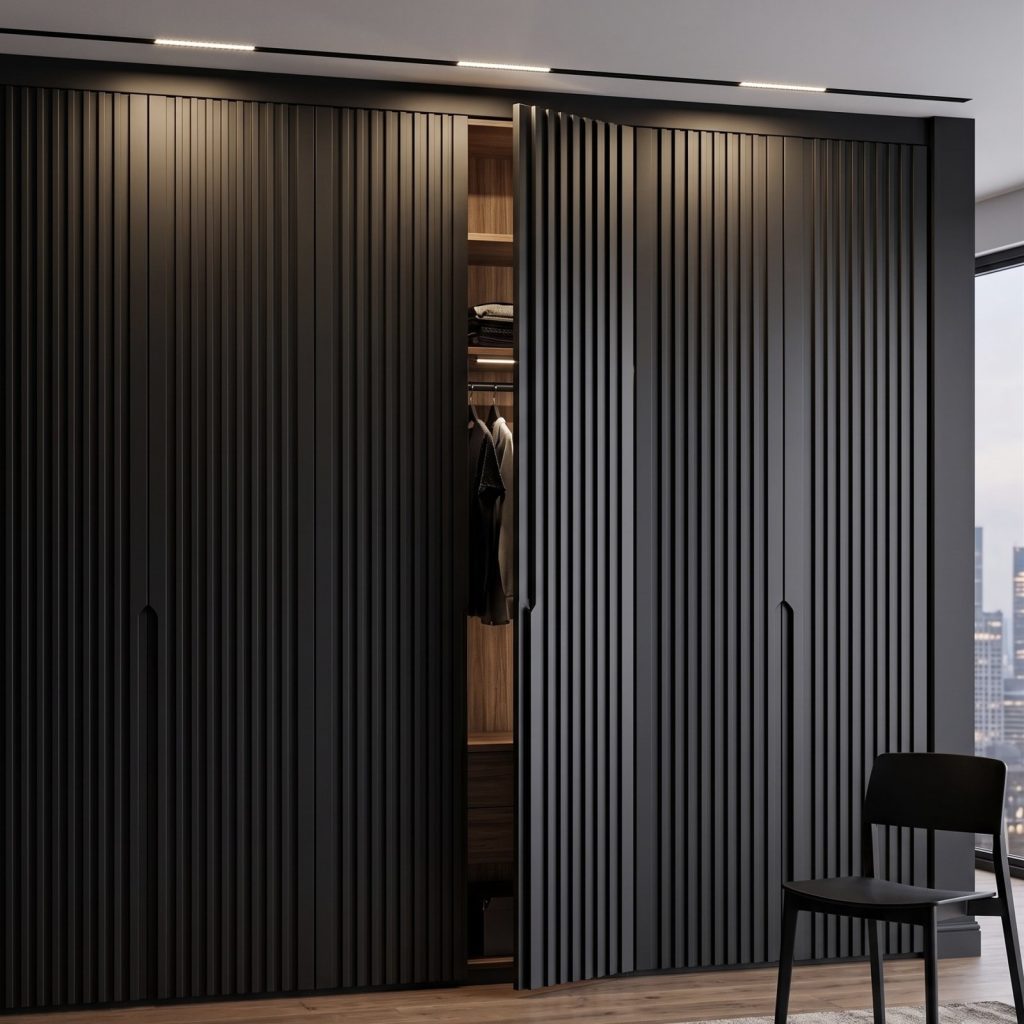
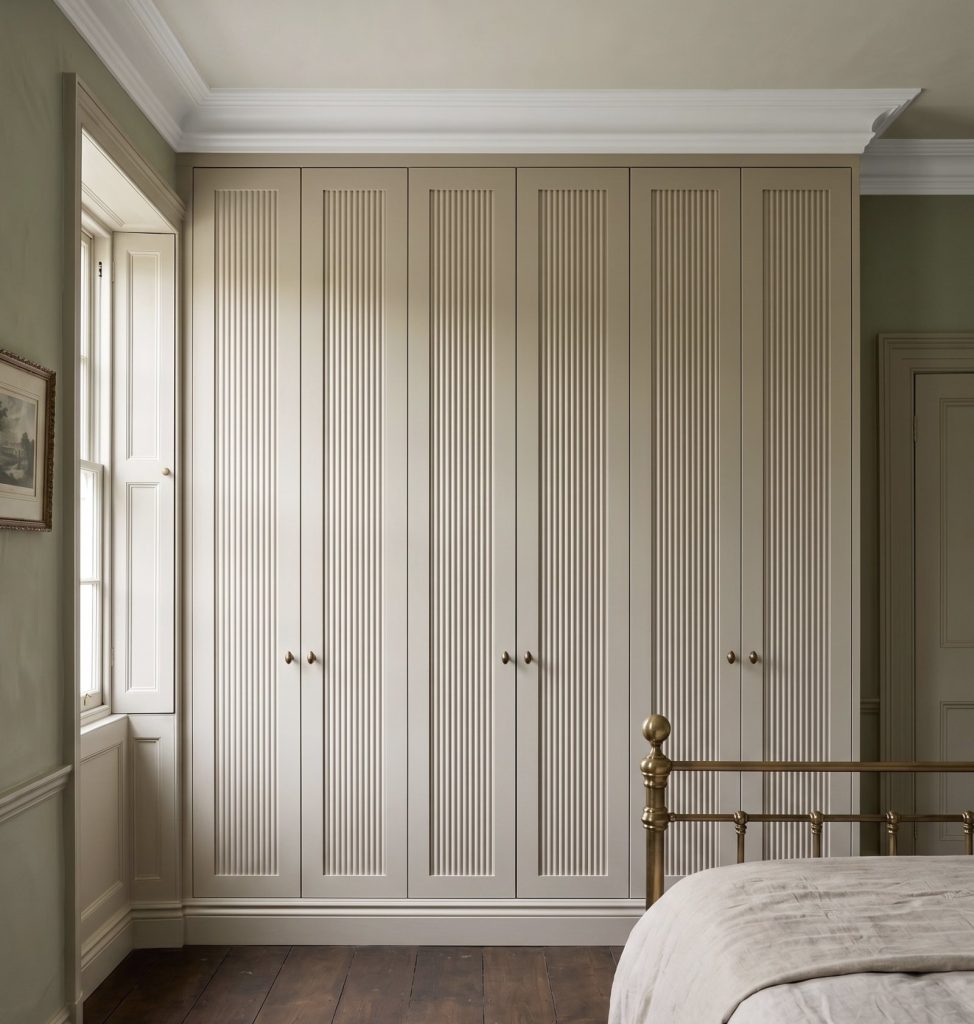
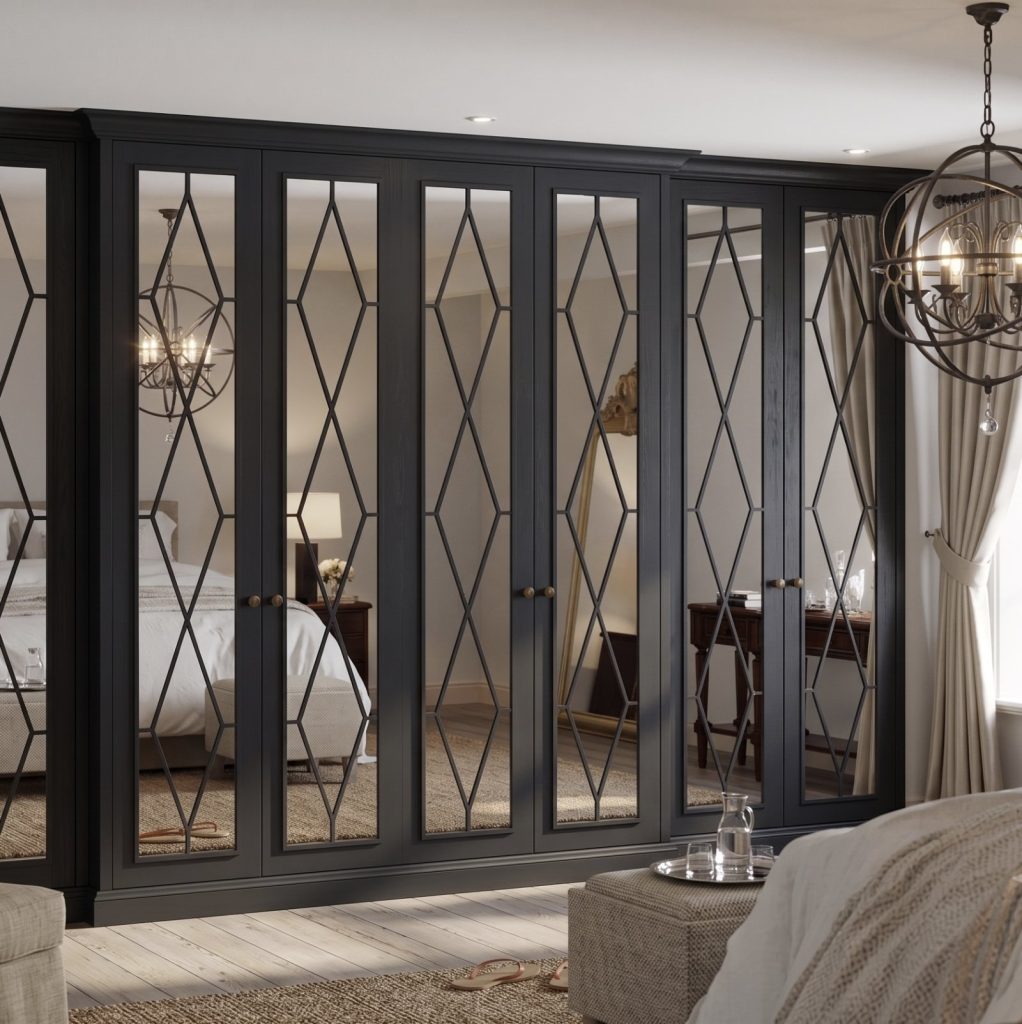
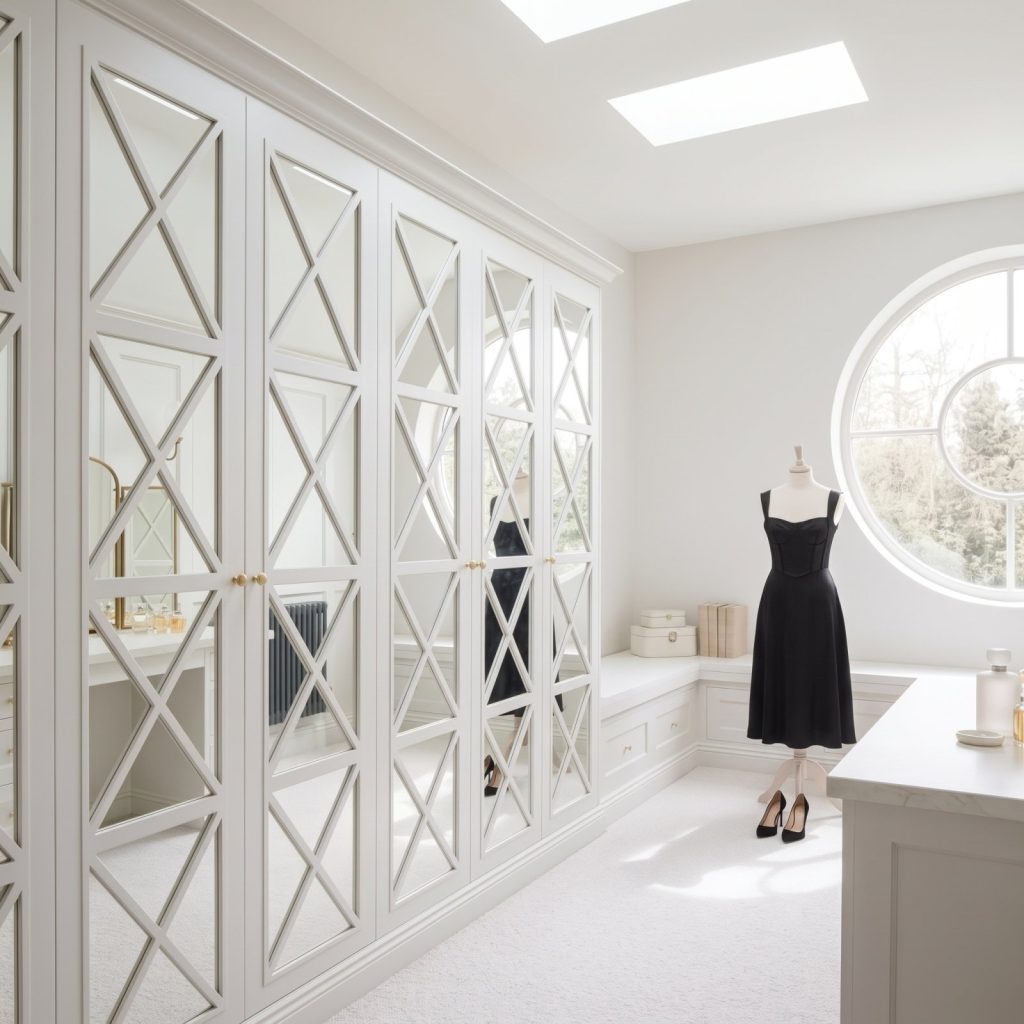
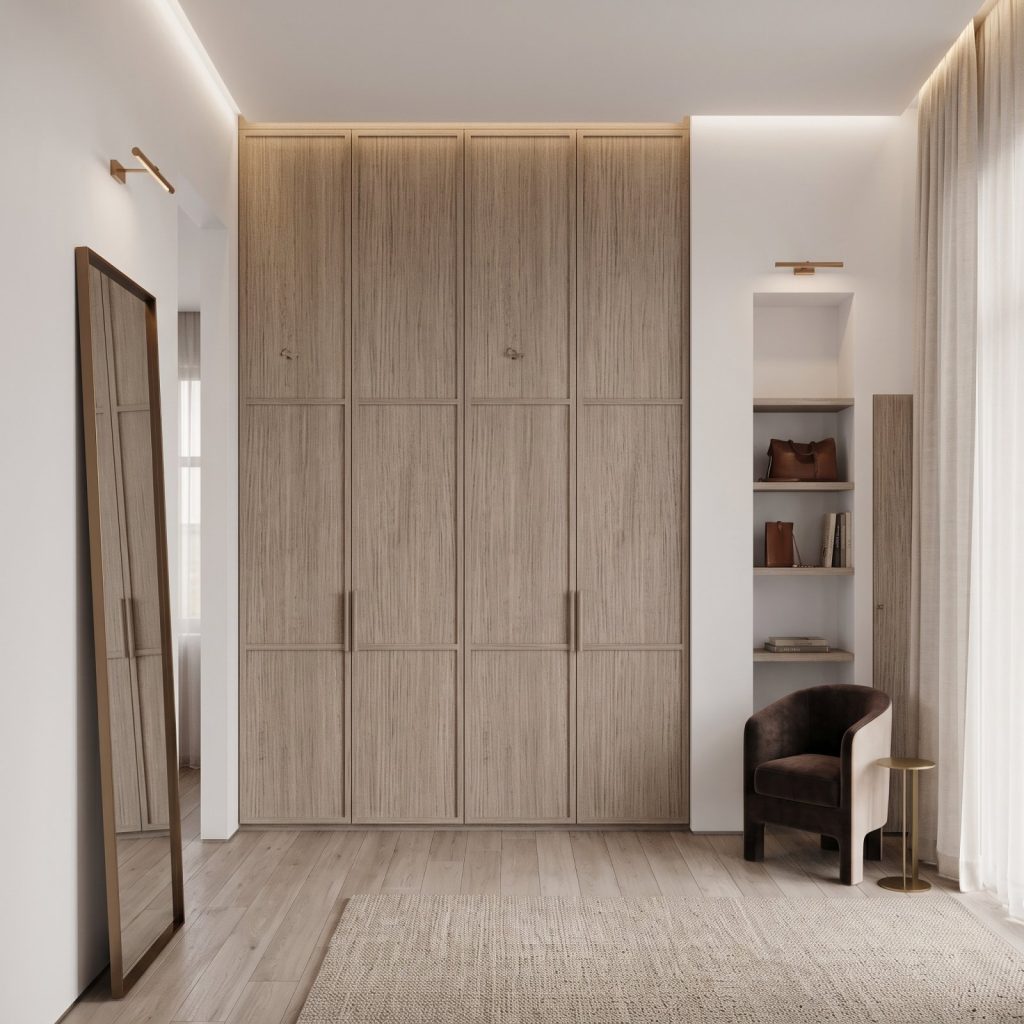
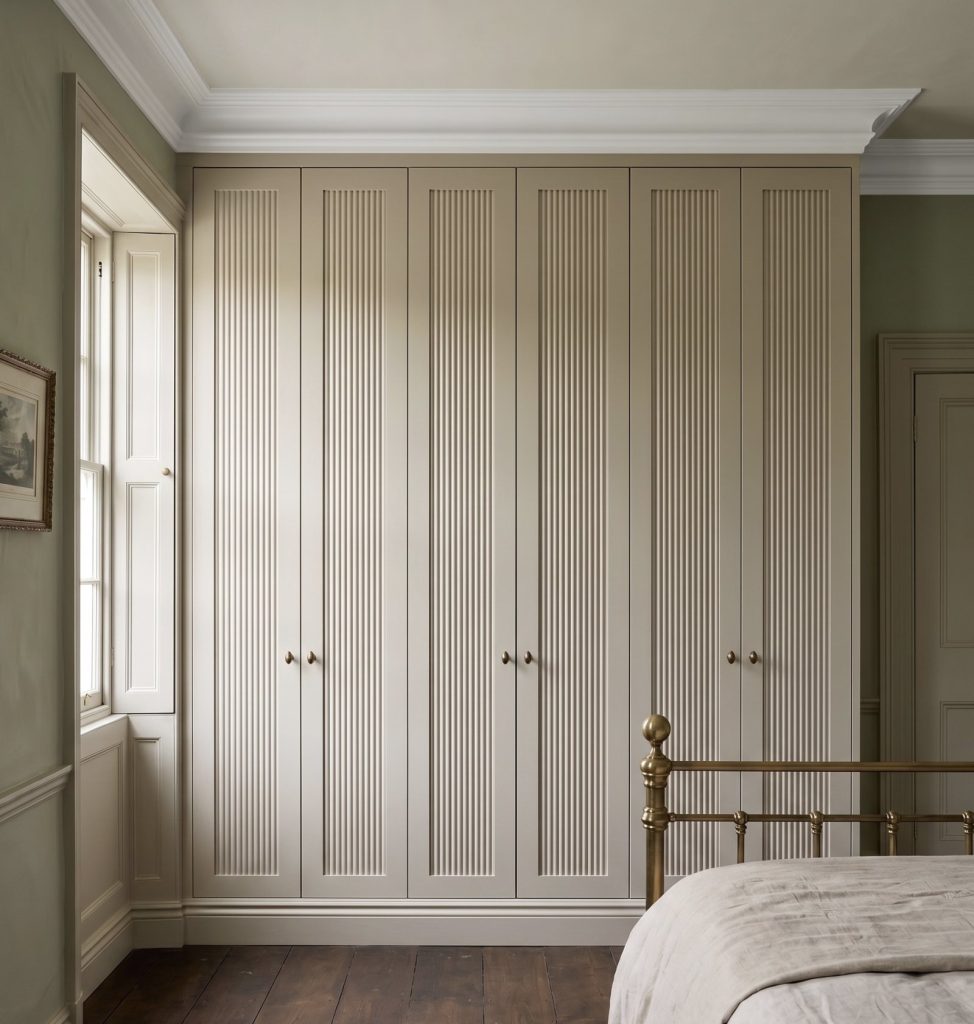
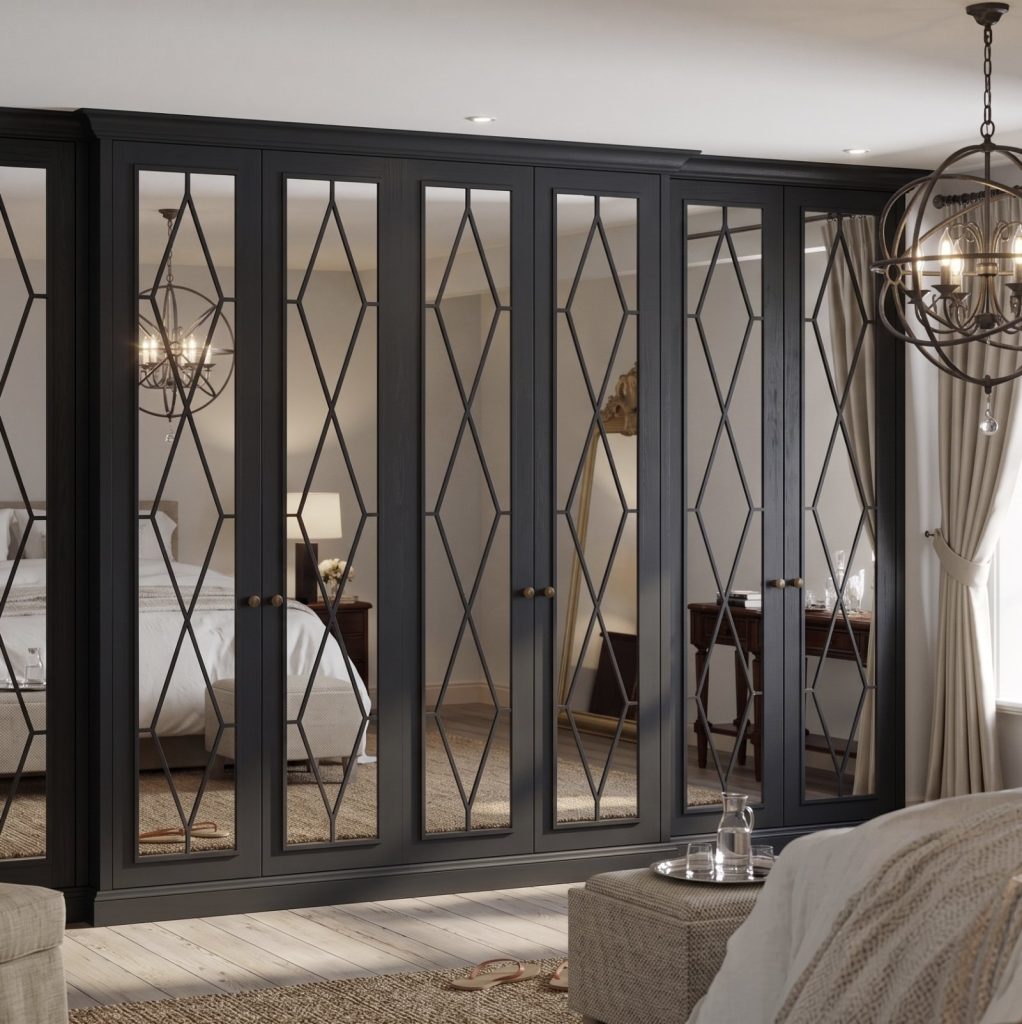
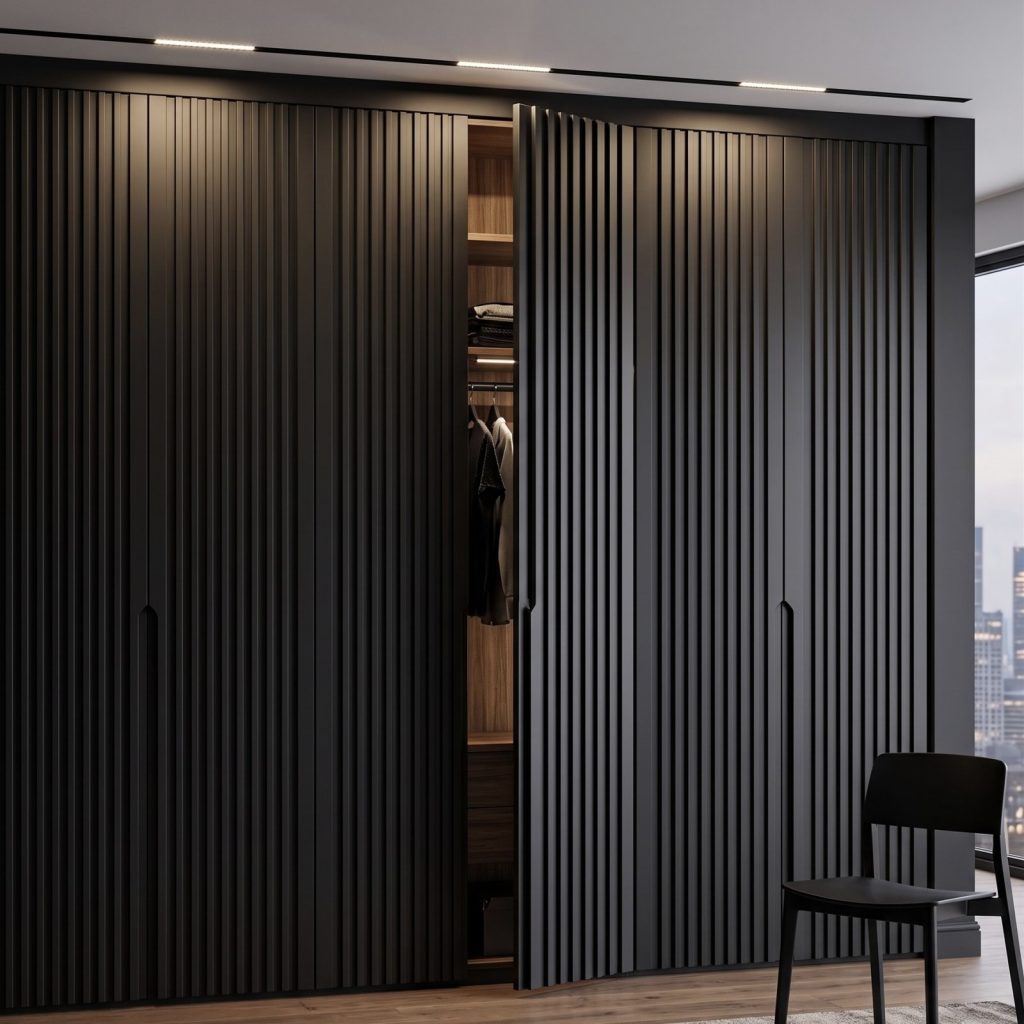
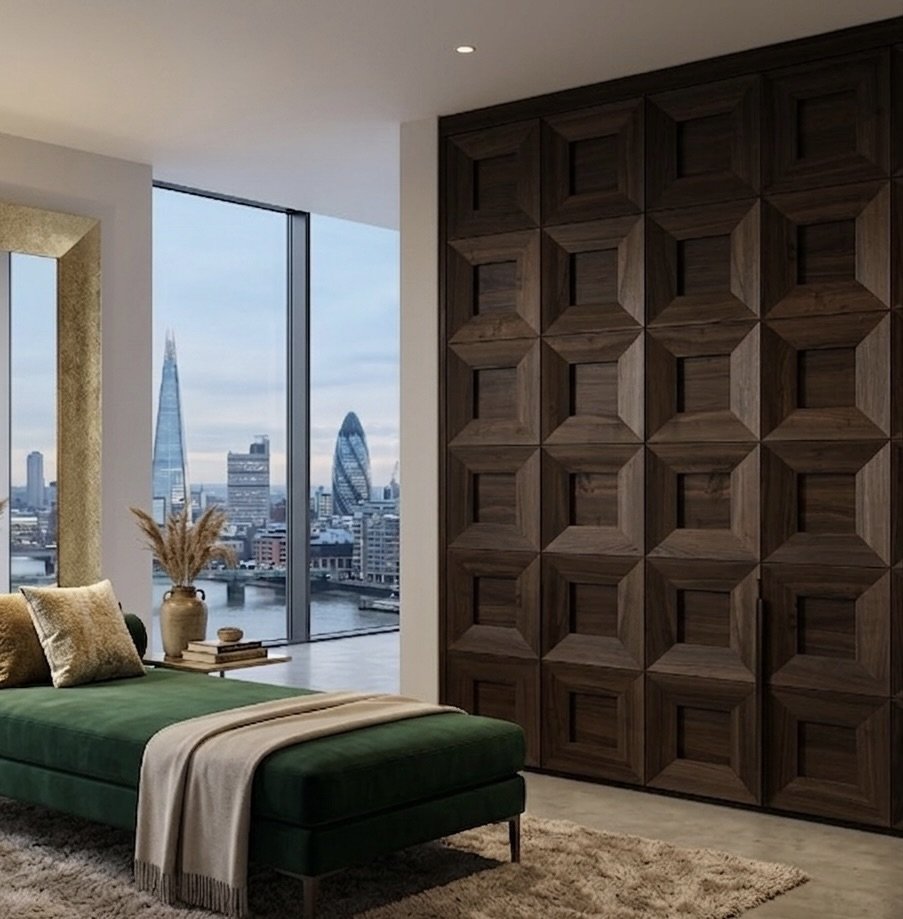
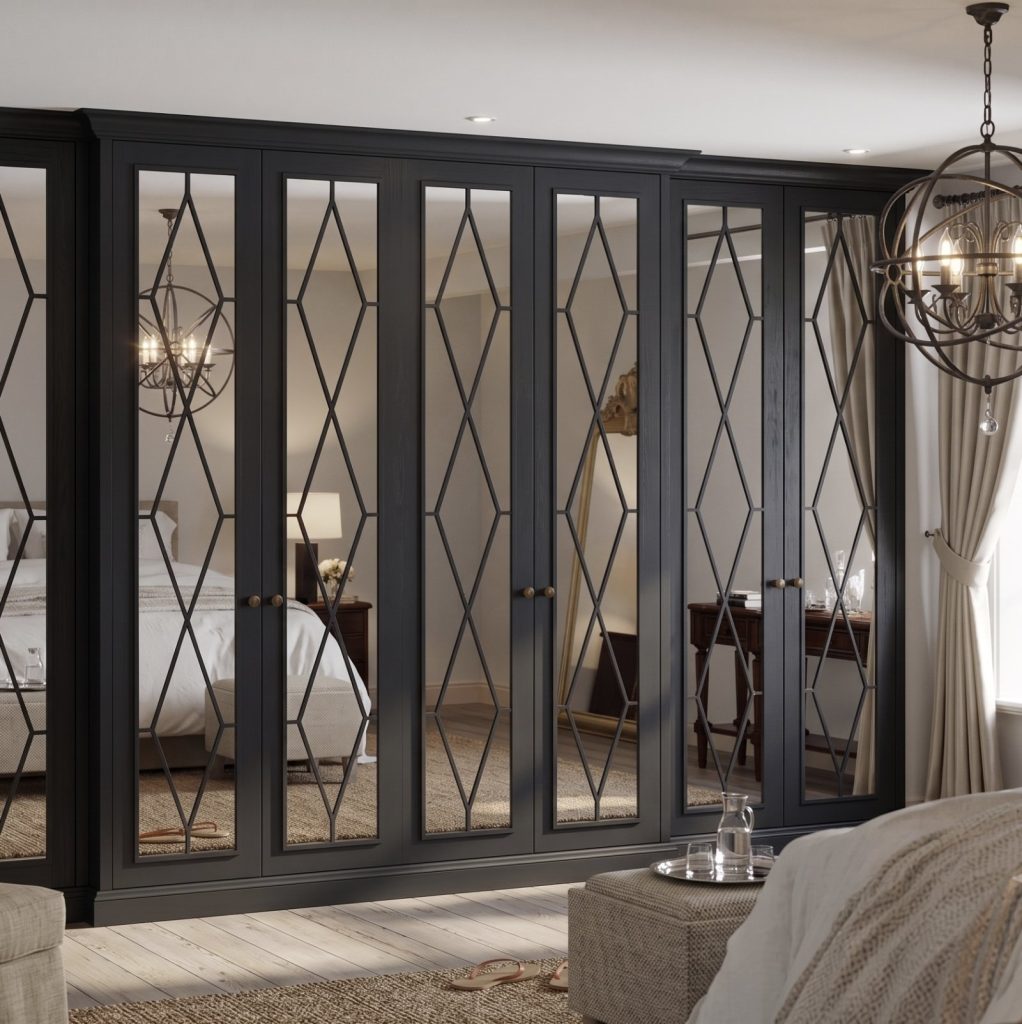
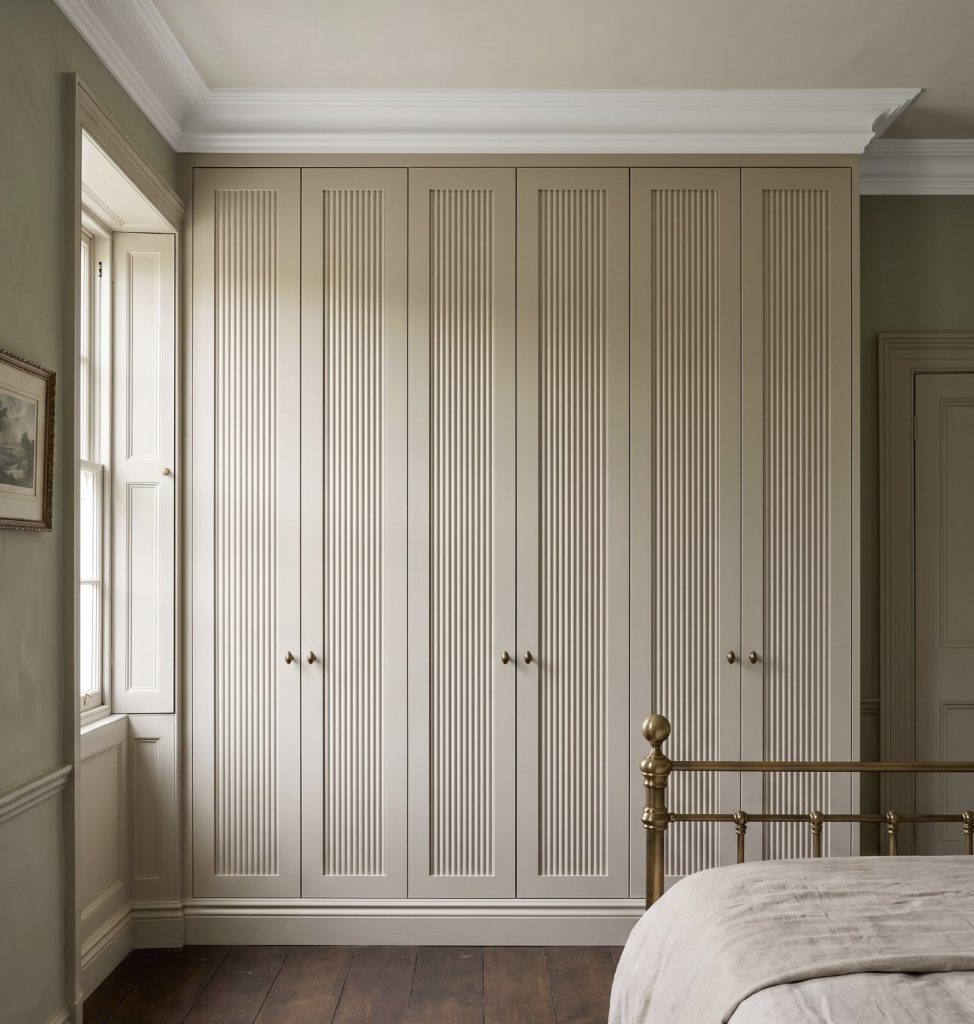
Once your storage plan is clear, Wardrobe Door Studio can help you choose a finish to suit it. Its bespoke wardrobe doors include Skinny Shaker, Mirror Fret, Classic Shaker and Flat Panel styles, offering distinct ways to bring the wardrobe’s exterior into harmony with your room.
Choose a style that suits the interior you’re creating: clean lines can complement a simple scheme, while a more detailed door can add definition. The doors complete the visual plan, while the practical layout remains centred on your clothes, rails, drawers and shelves.
Ready to discuss bespoke wardrobe doors for your project? Contact Wardrobe Door Studio.
Give your wardrobe plan a considered finish
A well-planned interior can do more than provide storage; it can make getting dressed feel calmer and more deliberate. As you move from layout to appearance, consider how the doors will sit within the room’s character. Skinny Shaker, Mirror Fret and Classic Shaker wardrobe doors offer distinct design directions, each bringing its own visual detail to the finished space.
Knowing how to design a functional wardrobe gives you a practical foundation for making those choices with purpose. The next step is to bring your preferred look and storage priorities together in a design that feels suited to your home. Contact Wardrobe Door Studio to discuss your wardrobe project, and take the next step towards a space that works beautifully for you.
Frequently Asked Questions
Are bespoke wardrobe interiors better than standard ones?
Bespoke interiors suit rooms with awkward alcoves, sloping ceilings or storage needs that don’t fit a uniform layout. They allow the design to respond to the room and your belongings. A standard arrangement may work well in a straightforward space with typical storage needs. Consider bespoke fitted wardrobes when you want the design tailored to the room.
How do I plan a wardrobe interior properly?
Start with the room’s usable space, including doors, windows and any features that could obstruct access. Then assign each section a purpose, such as hanging formalwear, storing folded knitwear or keeping accessories together. Sketching these zones can reveal whether drawers will block access or shelves are too high. Designing a functional wardrobe means resolving these practical details before settling on the final arrangement.
How much hanging space do I need in a wardrobe?
There’s no single amount of hanging space that suits every wardrobe; base the rail allocation on the clothes you intend to hang. Consider garment lengths, how much room each group needs to stay accessible, and whether items are worn together. For example, a household with several long coats needs a different rail arrangement from one with mostly shirts and jackets.
What should I include inside a fitted bedroom wardrobe?
Include storage that matches your belongings: rails for garments that crease, shelves for folded pieces and drawers for smaller items. A full-length mirror can be useful if you dress in the bedroom, while a dedicated section can keep bags or accessories together. Keep bulky items from obstructing frequently used storage so the interior stays practical in daily use.