Does a self-applied finish on a bespoke wardrobe inevitably lead to visible brush marks and unsightly cracking at the timber joints? Many homeowners ask can you paint shaker doors at home whilst achieving that elusive, factory-sprayed aesthetic. You likely recognise that the timeless Shaker design relies on crisp lines and a perfectly smooth surface. However, the constant worry of paint peeling or the wood shifting over time often stalls even the most inspired interior projects.
We promise to demystify the professional process, showing you how to achieve a flawless, manufactured-grade result that stands up to the rigours of daily use. This guide details the exact materials and specialist techniques required to prevent joint movement and ensure long-term durability. We will examine why the choice of substrate is as vital as the paint itself; providing you with a clear, logical path to a sophisticated finish that reflects the enduring value of true luxury craftsmanship.
Key Takeaways
- Identify your specific door material to determine the most effective preparation and painting methodology for a lasting finish.
- Learn why high-density MDF is the superior choice when asking can you paint shaker doors, as it provides a stable surface that resists joint cracking.
- Master the professional preparation techniques, such as “keying” the substrate, to ensure a flawless and durable bond between the primer and the door.
- Understand the distinct advantages of professional hand-sprayed finishing compared to traditional brushing for achieving a factory-smooth, orange-peel-free aesthetic.
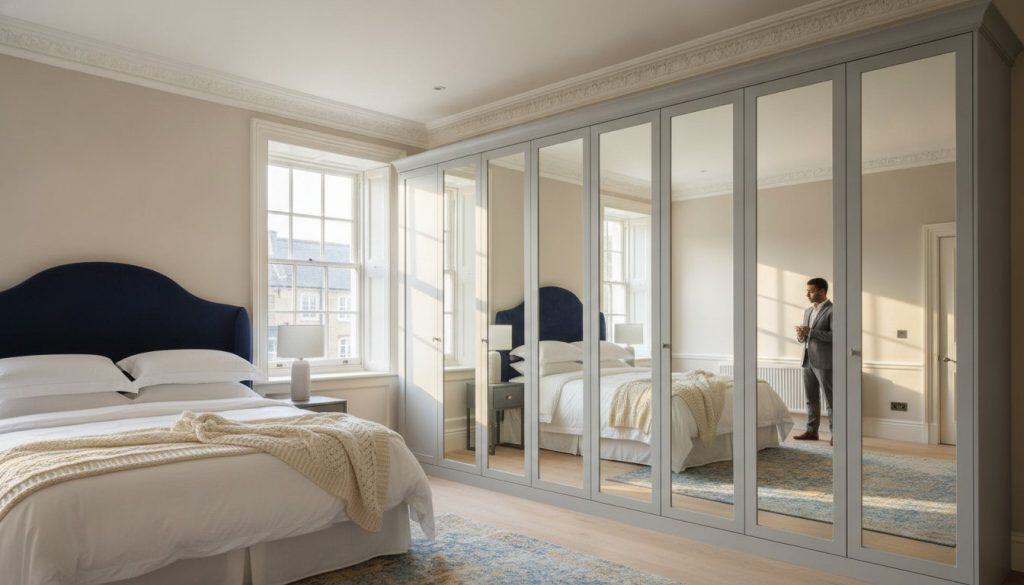
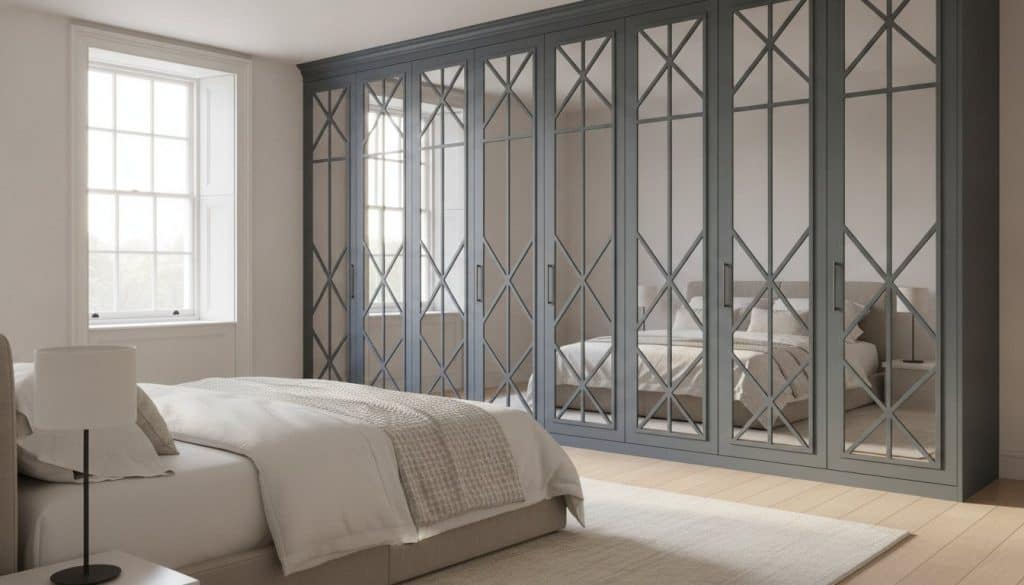
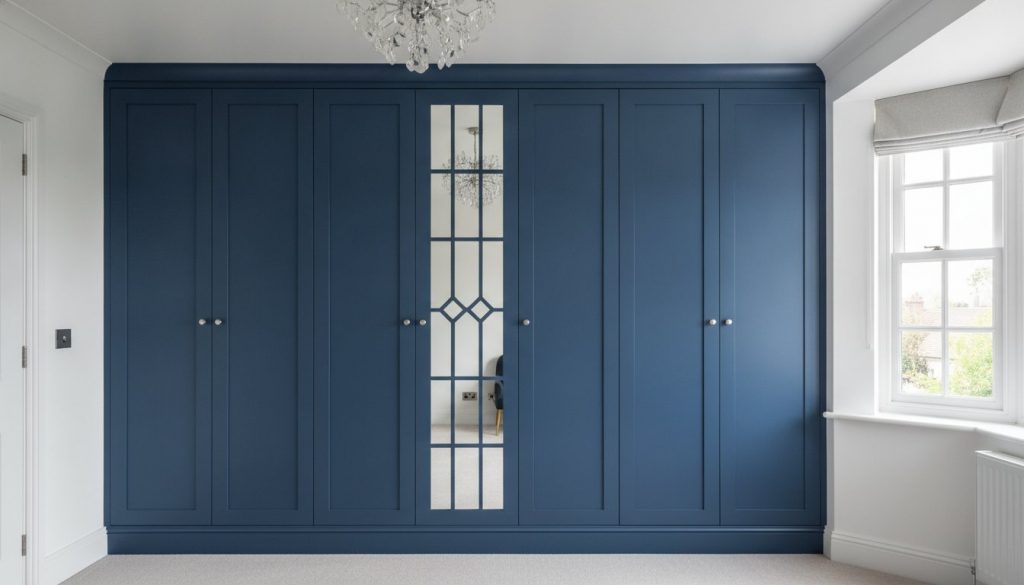
- Explore how to elevate your bespoke wardrobe project by combining custom colours with sophisticated design elements like mirror fretwork.
Can You Paint Shaker Doors? Understanding the Possibilities
It’s a common query for those looking to refresh their interiors: can you paint shaker doors to achieve a high-end look? The answer is a resounding yes, though the path to a luxury finish depends entirely on the door’s construction. Whether you’re working with solid timber, veneer, or high-density MDF, each substrate requires a specific approach to ensure the paint adheres correctly and remains durable. Identifying your material is the first step in avoiding a finish that looks amateur or fails prematurely.
Traditional joinery, whilst beautiful, presents unique challenges for painted finishes. Many homeowners discover that paint often cracks along the seams of mortise and tenon joints over time. This occurs because natural timber is an organic material that expands and contracts with changes in humidity. These Shaker design principles were originally intended for unpainted or stained wood where such movement was less visible. In 2026, the design preference has shifted decisively towards bespoke painted finishes that offer a more uniform, architectural aesthetic, often favouring stable materials that prevent this unsightly cracking.
The Aesthetic Appeal of Painted Shaker Styles
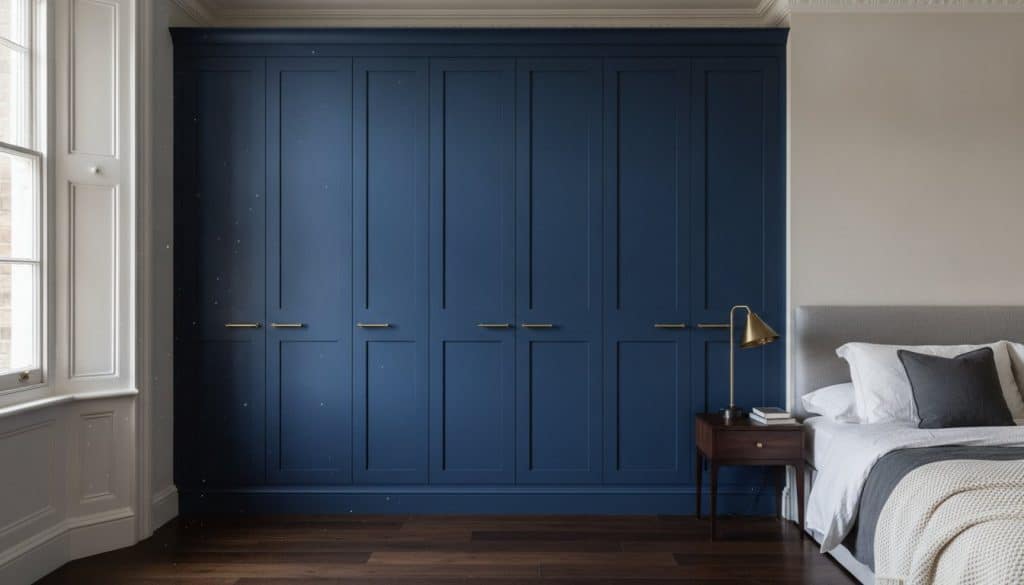
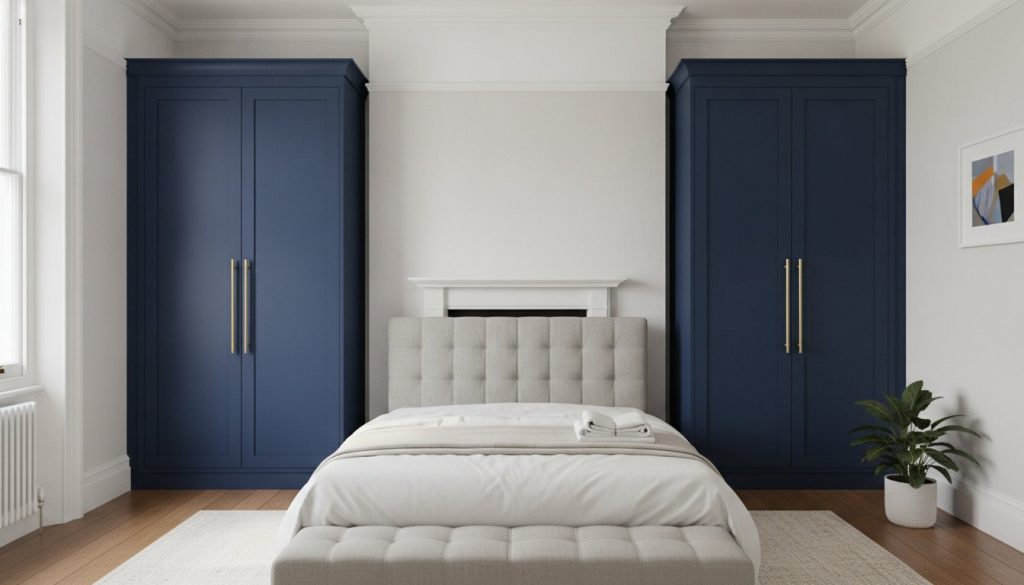
Paint has the unique ability to accentuate the geometric precision and clean lines of a Shaker profile. By removing the distraction of varying wood grains, a painted finish allows the shadow lines of the recessed panel to become the focal point. This versatility is unmatched; you can choose everything from deep, dramatic navys to soft, modern neutral greys. This approach ensures a cohesive look across a full bank of fitted wardrobes, making the cabinetry feel like an integral part of the room’s architecture rather than a collection of separate units.
Common Challenges When Painting at Home
Achieving a professional result at home requires overcoming several technical hurdles. The recessed panel of a Shaker door is a notorious trap for excess paint; if you aren’t meticulous, paint pools in the corners and softens the sharp edges that define the style. Natural woods also contain tannins that can bleed through light-coloured paints, causing yellowing or staining if the surface isn’t sealed correctly. Finally, maintaining a dust-free environment is essential. Even the smallest airborne particles can ruin a smooth surface, highlighting the difference between a DIY attempt and a professional, hand-sprayed finish.
Choosing the Best Material: Why MDF Often Beats Solid Wood for Painting
Whilst the question of can you paint shaker doors is often answered with a simple affirmative, the professional reality is far more nuanced. The longevity of your luxury finish is dictated primarily by the substrate beneath the pigment. In the world of high-end cabinetry, the debate between solid timber and Medium-Density Fiberboard (MDF) is settled not by cost, but by the science of material stability. For a finish that remains pristine for decades, the choice of material is the most critical decision you will make.
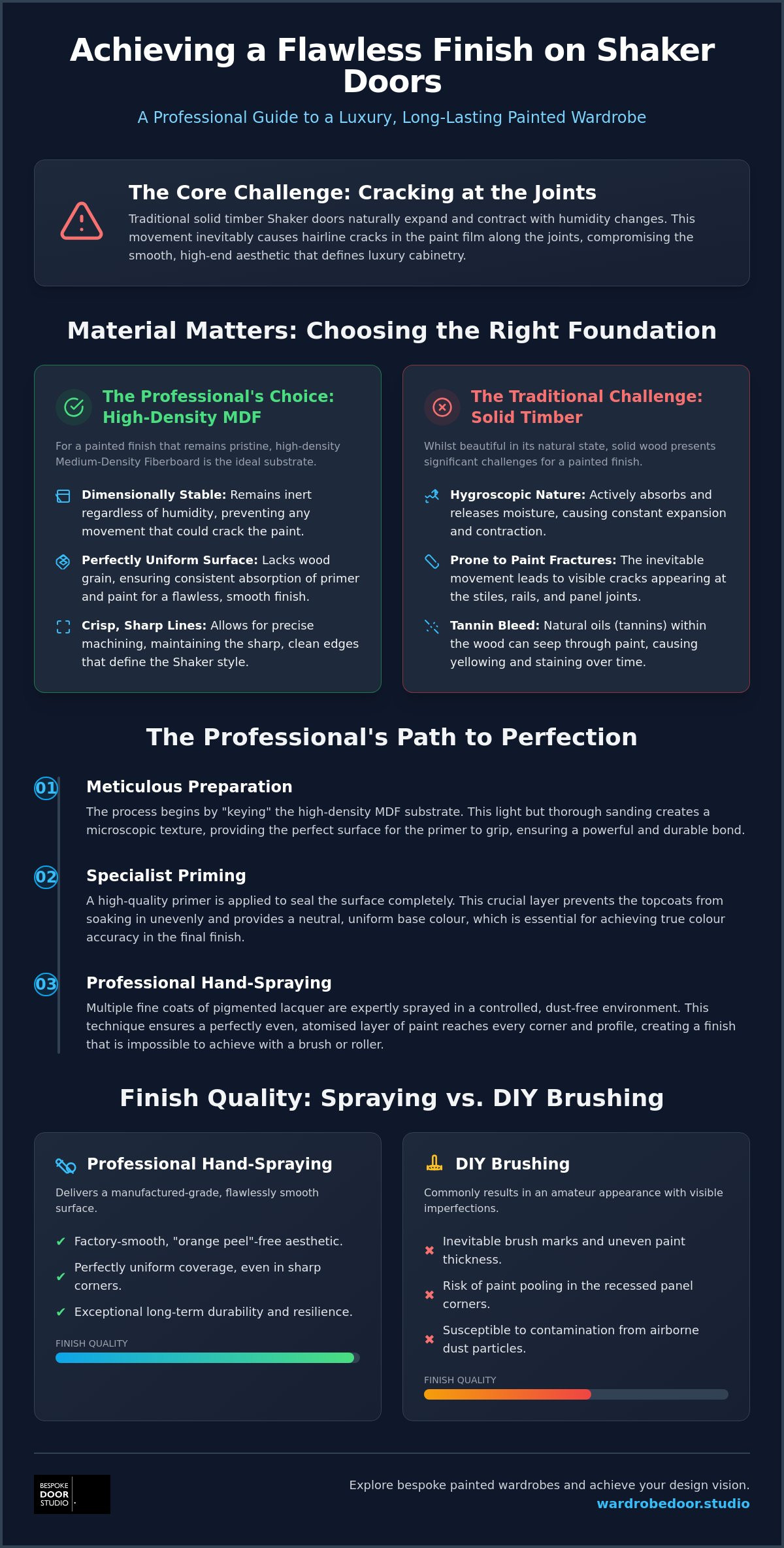
Solid timber is a hygroscopic material; it naturally absorbs and releases moisture from the air. This causes the wood to expand and contract, a process known as “movement.” In a Shaker door, where the central panel meets the stiles and rails, this movement inevitably leads to hairline fractures in the paint film at the joints. High-density MDF, however, is an isotropic material. It remains remarkably stable regardless of environmental changes. This stability ensures that the paint bond remains unbroken, providing a durable surface that looks as though it were professionally manufactured rather than merely coated.
The Benefits of High-Density Fiberboard (MDF)
MDF offers a level of uniformity that natural wood cannot match. Because it lacks a directional grain, it absorbs primers and topcoats consistently across the entire surface. This is particularly vital in centrally heated British homes, where dry air in winter can cause natural timber doors to warp or shrink. High-density fiberboard provides the perfectly inert, non-porous foundation necessary for an exquisite hand-sprayed finishing that resists the micro-movements typically found in timber. If you are planning a refined interior project, exploring our range of bespoke fitted wardrobes can help you decide which material aligns best with your long-term design vision.
When to Choose Solid Wood Instead
There are specific instances where solid wood remains the appropriate choice. For heritage renovations or period properties where historical accuracy is paramount, the natural “character” of painted timber is often preferred. In these cases, a subtle wood grain visible beneath the paint adds a layer of traditional authenticity. However, homeowners must accept higher maintenance requirements. Painted timber doors often require periodic touch-ups at the joints to manage the effects of natural expansion. It is a choice between the living texture of wood and the mirror-smooth, maintenance-free perfection of high-grade MDF.
How to Paint Shaker Doors: The Professional Step-by-Step Process
Many homeowners ask can you paint shaker doors with the expectation of a quick weekend project, but the transition from a raw substrate to a luxury finish requires a disciplined sequence of preparation and application. Achieving a factory-smooth surface is not a matter of luck; it is the result of meticulous attention to detail. This professional methodology ensures that your wardrobes don’t just look refreshed, but appear as though they were manufactured with their new bespoke colour from the very beginning.
Success depends on the physical bond between the paint and the door. Without proper “keying” and priming, even the most expensive designer paints will eventually flake or chip, particularly around the high-traffic areas of the handles and edges. By following a structured, multi-stage process, you can eliminate the common pitfalls of DIY painting and secure a finish that matches the enduring quality of the cabinetry itself.
Step 1: Meticulous Surface Preparation
Preparation is the most critical phase of the entire project. You must begin by degreasing the doors thoroughly to remove any oils, waxes, or household dust that could compromise adhesion. Once clean, the surface requires sanding to create a “key.” We recommend starting with a 120-grit sandpaper for the initial smoothing, followed by a 240-grit for a refined, professional touch. It is essential to pay particular attention to the internal corners of the Shaker recess. These areas often trap dust, which must be vacuumed out completely to prevent a gritty texture in your final finish.
Step 2: Priming and Undercoating
The choice of primer is non-negotiable for a luxury result. High-quality shellac-based primers are excellent for blocking tannins in wood, whilst modern water-based alternatives offer exceptional stability for MDF. Apply thin, even layers rather than a single thick coat to avoid drips. A vital signature of professional work is “de-nibbing” between every single coat. This involve a very light sand with a fine-grade pad once the primer is dry, removing any micro-textures or raised fibres. Always allow for full drying times in a temperature-controlled room to ensure the chemical bond is secure.
Step 3: The Final Top Coat
Whilst the question of can you paint shaker doors often centres on the colour, the application technique is what defines the aesthetic. For wardrobes, a satin or eggshell finish is generally preferred over high gloss in 2026 designs. Use a high-quality synthetic brush for the recesses and a short-pile microfibre roller for the flat stiles. To minimise visible brush marks, employ the “lay off” technique: run a nearly dry brush very lightly over the wet-rolled surface in long, continuous strokes. Finally, respect the curing time. Paint may feel dry to the touch within hours, but it remains soft for several days. Do not rush to re-attach handles to your replacement wardrobe doors made to measure until the lacquer has fully hardened and reached its maximum durability.
Professional Hand-Spraying vs. DIY Brushing: The Luxury Difference
When considering can you paint shaker doors to a standard that matches high-end showroom displays, the comparison between traditional brushing and professional hand-spraying is stark. Whilst DIY methods can yield respectable results, they often fall short of the precision required for a truly luxury interior. The technical difference lies in the application technology and the chemical composition of the coatings used. A hand-sprayed finish provides a level of manufactured perfection that manual application simply cannot replicate.
Industrial-grade lacquers outperform standard retail paints in every measurable category. These coatings are designed for durability and resistance to the oils found on human skin, which often degrade domestic paints over time. Professional finishing also eliminates the “orange peel” texture common with rollers and the visible ridges left by brushes. The result is a surface that feels as smooth as it looks, providing the enduring value that defines bespoke cabinetry. For those seeking a flawless transition, our professional installation and finishing services ensure your project benefits from these industrial standards.
The Science of Hand-Sprayed Finishing
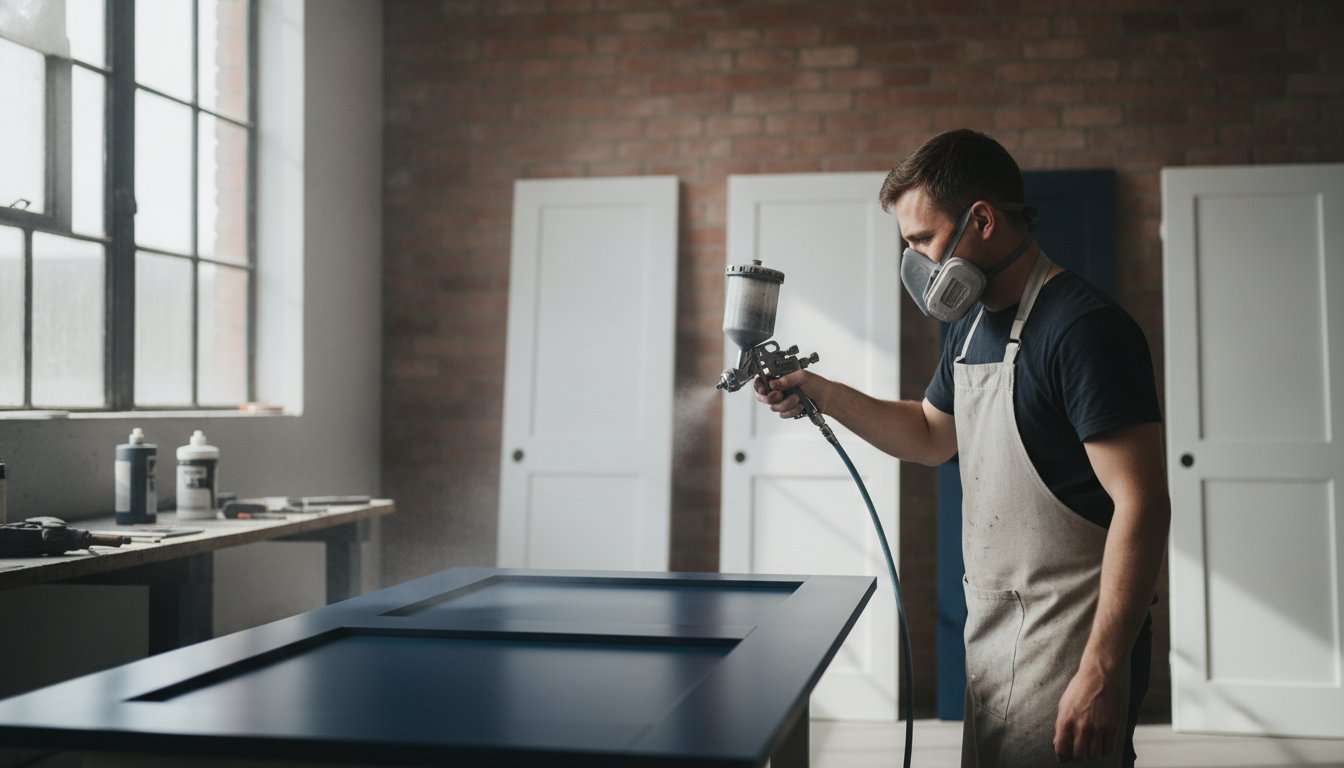
Professional finishing utilises specialised equipment to atomise paint into microscopic particles. This creates a seamless, uniform layer that settles perfectly into every corner of the profile without pooling. Unlike retail paints, industrial lacquers are often multi-component systems that chemically cure to an extreme hardness. This process ensures consistent colour depth across even the most complex designs, such as skinny shaker wardrobe doors, where narrow frames make manual brushing particularly difficult. The uniformity achieved through spraying creates a sophisticated, architectural look that elevates the entire room.
Why DIY Painting Often Falls Short
Manual application inevitably leaves subtle brush marks or a slight texture, regardless of the “self-levelling” claims on the tin. A common technical failure in DIY projects is “bridging” within the Shaker grooves. This occurs when paint accumulates too thickly in the recessed joints, creating a bridge of pigment that eventually cracks and peels as the door is used. Residential environments also lack the sterile conditions of a dedicated spray booth. Airborne dust and lint are the enemies of a smooth surface; professional facilities use advanced filtration to ensure a pristine finish that is impossible to achieve in a standard bedroom or garage setting.
Transforming Your Space with Bespoke Painted Wardrobes
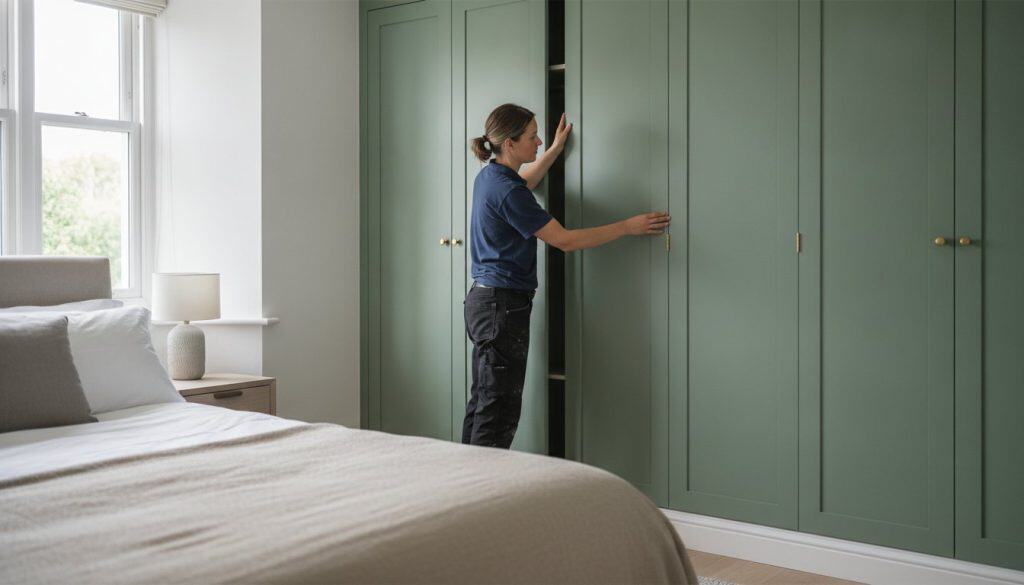
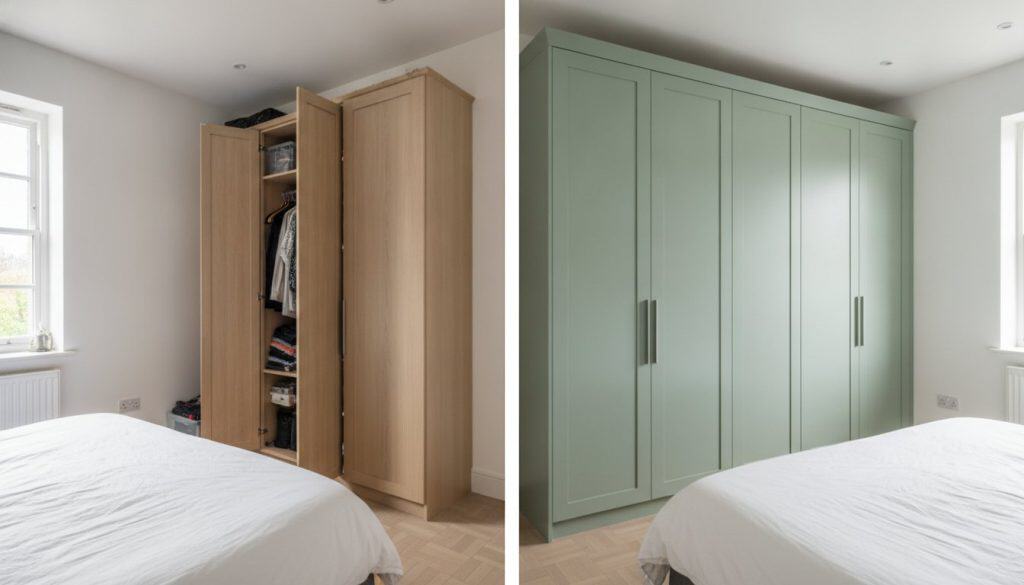
The decision to refresh your interior often begins with a fundamental question: can you paint shaker doors to achieve a result that feels like a deliberate design choice rather than a temporary fix? When executed with professional precision, a painted finish does more than change a colour; it alters the architectural weight of a room. A high-quality, hand-sprayed surface increases the longevity of your cabinetry and adds measurable value to your property by providing a bespoke aesthetic that retail alternatives cannot replicate. This transformation is most effective when the wardrobe is treated as a permanent element of the room’s structural palette.
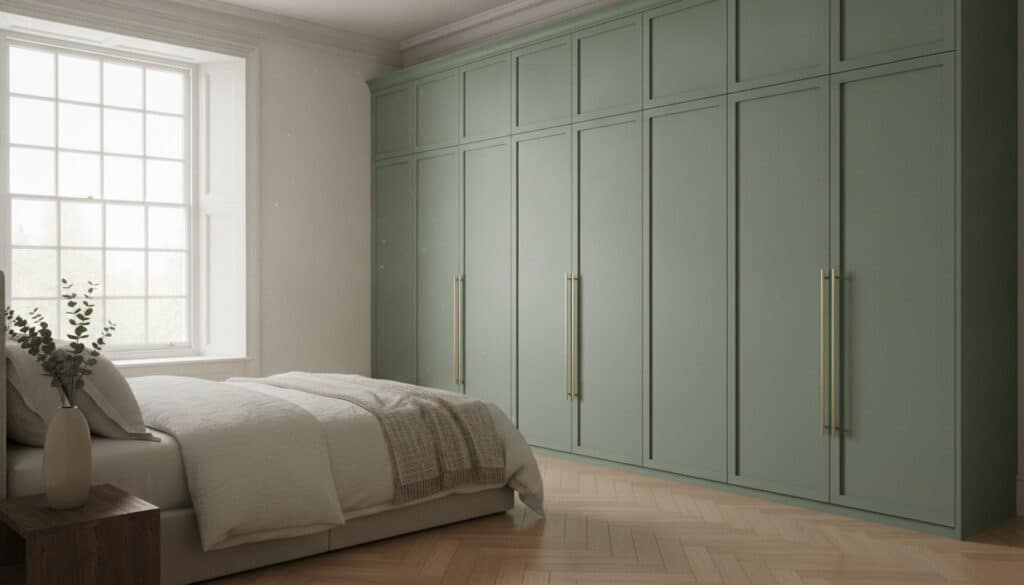
In 2026, the trend for luxury storage has moved towards integrated design, where wardrobes are colour-matched to skirting boards or wall treatments to create a seamless, built-in appearance. This level of customisation allows you to move beyond standard off-the-shelf options, opting instead for a palette that reflects your personal style. Whether you are aiming for a minimalist sanctuary or a bold statement, the final finish serves as the bridge between functional furniture and high-end interior design.
Selecting Your Signature Colour
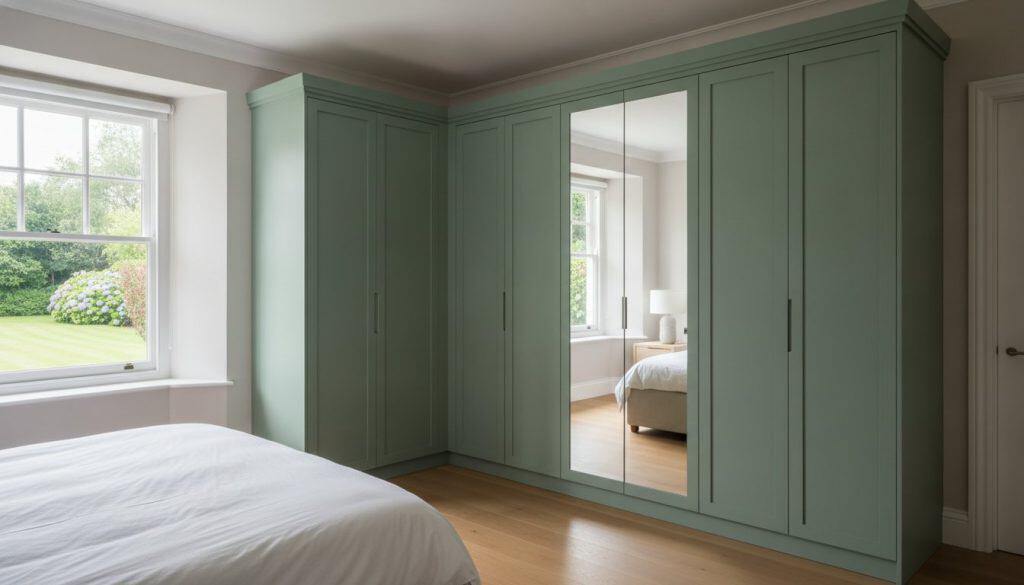
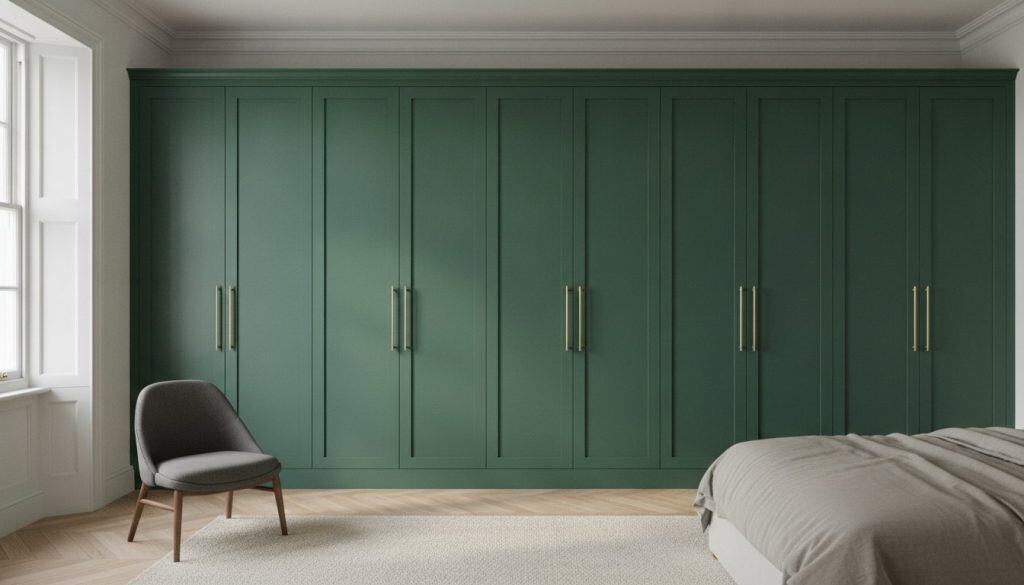
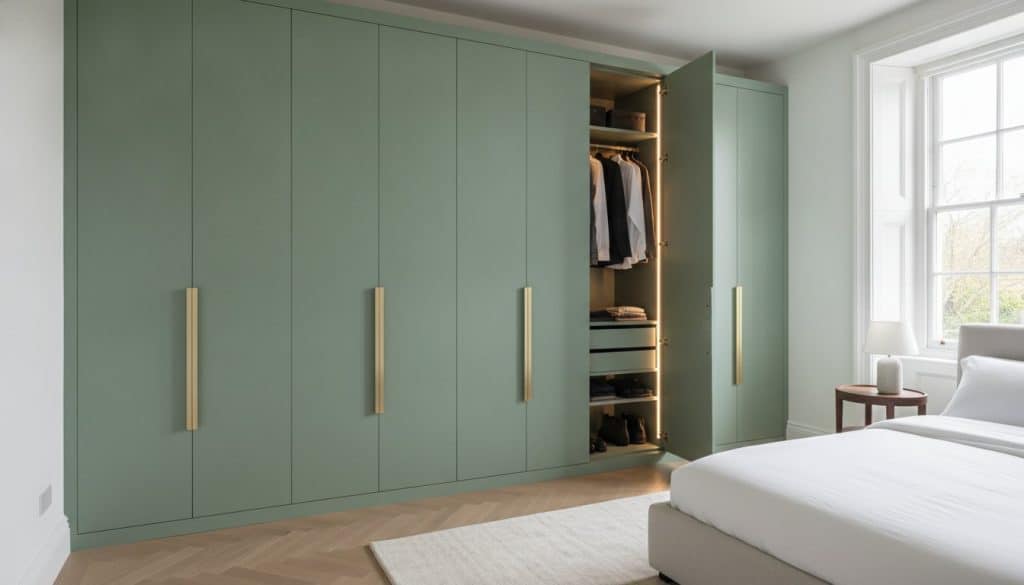
Choosing the perfect hue requires an understanding of how light interacts with different textures. For 2026, we see a significant rise in “moody” palettes, with dark forest greens, pewter greens, and deep charcoals becoming the preferred choice for sophisticated bedrooms. These grounded tones provide a sense of permanence and calm. It is also vital to consider the sheen level. A matt sprayed finish offers a contemporary, chalky depth that absorbs light, whilst a satin finish provides a subtle glow that highlights the crisp edges of the Shaker profile. A professional design consultation can be invaluable here, ensuring your chosen palette remains timeless amongst shifting trends.
The Wardrobe Door Studio Approach
Our commitment to excellence is rooted in a tradition of British manufacturing. We believe that a luxury finish starts in the workshop, not on the building site. By choosing our bespoke fitted wardrobes, you ensure that every component is meticulously prepared and finished in a controlled environment. This approach allows for the seamless integration of complex elements, such as mirror fret wardrobe doors, which require a level of finishing detail that is impossible to achieve with a brush. Every door arrives ready for installation, boasting a factory-smooth surface that is durable enough for daily use. We invite you to request a sample to feel the physical difference of a professional spray-finished door, allowing you to experience the quality of our craftsmanship firsthand before your project begins.
Achieving a Timeless Finish for Your Interior
We’ve explored the technical nuances of substrate stability and the meticulous preparation required for a factory-smooth result. Selecting high-density MDF ensures your cabinetry remains immune to the joint cracking common in natural timber. Whilst manual application is possible, the industrial durability of a hand-sprayed finish provides an architectural elegance that is designed to endure. This professional methodology elevates the Shaker profile, allowing its clean lines to define the room without the distraction of brush marks or uneven textures.
When asking can you paint shaker doors, it’s clear that the application method defines the final outcome. A professional approach secures a uniform colour depth and a chemically cured surface that resists the rigours of daily use. We take pride in our heritage of British manufacturing, delivering precision-engineered solutions that transform standard storage into a central design feature. Every project is an opportunity to combine traditional craftsmanship with modern durability.
Explore our range of bespoke hand-sprayed Shaker doors. Our components are expertly hand-sprayed in England and custom-sized to your exact specifications. It is this attention to detail that makes us a trusted choice for trade professionals and luxury homeowners alike. Your journey towards a refined, beautifully organised home begins with a commitment to quality and precision.
Frequently Asked Questions
Can you paint over vinyl-wrapped Shaker doors?
Yes, it’s entirely possible to paint over vinyl-wrapped doors provided the vinyl is securely bonded to the substrate. You must first clean the surface with a degreaser and apply a specialist high-adhesion primer designed for non-porous surfaces. If the vinyl is peeling or bubbling, it’s better to remove it entirely before painting the underlying MDF. This ensures the longevity of your bespoke finish and prevents future delamination.
What is the best type of paint for Shaker wardrobe doors?
Industrial-grade acid-catalyst lacquers or water-borne acrylic paints are the preferred choice for a professional, durable finish. These coatings provide a hard-wearing surface that resists skin oils and daily wear better than standard retail emulsions. For those asking can you paint shaker doors at home, a high-quality water-based eggshell or satinwood offers a sophisticated, low-sheen aesthetic that complements the clean, geometric lines of the Shaker profile whilst remaining easy to maintain.
Do I need to sand Shaker doors before painting?
Sanding is an essential step to create a mechanical “key” for the primer to bond with. You don’t need to remove the existing finish entirely; a light sand with 120-grit to 240-grit sandpaper is sufficient to dull the surface. This process is particularly vital in the recessed corners of the door where paint is prone to peeling. Always ensure you remove all residual dust with a vacuum and tack cloth before applying any coatings.
How do I prevent paint from cracking in the Shaker door joints?
Preventing cracks at the joints requires using a stable substrate like high-density MDF, which doesn’t expand and contract like solid timber. If you’re painting existing solid wood doors, apply thin, even layers of paint and avoid “bridging” the joints with thick coats. Ensuring the wardrobe is in a temperature-controlled environment helps minimise the organic movement of the wood, which is the primary cause of hairline fractures in the paint film over time.
Is it better to spray or brush-paint Shaker doors?
Professional hand-spraying is the superior method for achieving a flawless, factory-grade finish without visible brush marks or roller texture. Spraying atomises the paint into fine particles, allowing it to settle evenly across the complex profiles when you ask can you paint shaker doors. Whilst brushing is a traditional technique, it often leads to paint build-up in the recessed corners. Spraying ensures a uniform colour depth and a smoother surface that reflects the quality of luxury craftsmanship.
Can I paint Shaker doors without removing them from the hinges?
Removing the doors from their hinges is strongly recommended to achieve a professional result. Painting doors whilst they are hanging often leads to paint runs and pooling in the horizontal recesses of the Shaker design. It is also difficult to paint the edges and around the hinge plates cleanly without getting paint on the hardware. Laying the doors flat allows for better control over the paint flow and ensures a more consistent, even application across the entire surface.
How many coats of paint do Shaker doors typically need?
A luxury finish typically requires one to two coats of high-quality primer followed by two top coats of your chosen colour. If you’re making a dramatic colour change, such as moving from a dark wood to a light neutral, a third top coat may be necessary to ensure perfect opacity. De-nibbing between every single coat with a fine-grade abrasive pad is essential to remove any raised fibres or dust particles, ensuring the final surface remains mirror-smooth.
How long does it take for painted wardrobe doors to fully cure?
Whilst most modern paints are touch-dry within two to four hours, a full chemical cure typically takes between seven and fourteen days. During this period, the paint film is still soft and susceptible to marking or chipping. We advise waiting at least 48 hours before re-attaching handles or hardware. Avoid cleaning the surface with any chemical detergents for the first month to allow the finish to reach its maximum industrial hardness and long-term durability.