By 2026, the standard wardrobe is no longer just a place to hide clothes; it has evolved into a curated architectural statement that defines the entire home’s aesthetic. You likely feel that a dressing room should be a sanctuary, yet many spaces end up feeling cramped, dark, or frustratingly utilitarian. It’s a common challenge to balance the essential functionality of full-length mirrors with a design that feels intentional rather than merely practical.
We’ve curated these 10 inspiring mirror fret dressing room ideas to help you transform your storage into a sophisticated showroom. You’ll discover how bespoke fretwork, when paired with expert hand-sprayed finishes and precision lighting, can turn a simple wardrobe into the focal point of a luxury upgrade. We’ll explore everything from geometric patterns that add depth to small rooms to integrated LED systems that create a high-end, dramatic glow. By focusing on the intersection of traditional craftsmanship and modern technology, you can create a bright, airy environment that reflects your personal style whilst providing the meticulous organisation your collection deserves.
Key Takeaways
- Understand how mirror fretwork adds architectural depth and softens the reflection of large wardrobe panels for a more sophisticated, balanced aesthetic.
- Discover how to select the ideal fretwork pattern to establish a specific mood, whether you prefer classic English elegance or modern geometric chic.
- Learn how to implement layered lighting with your mirror fret dressing room ideas to enhance the intricate details whilst avoiding unwanted glare.
- Find out how bespoke, made-to-measure replacement doors can transform a small or dark dressing room into a bright, luxury sanctuary without structural changes.
- Recognise the value of hand-sprayed finishes, which offer a flawless and durable quality that far exceeds standard hand-painted or off-the-shelf methods.
The Architectural Appeal of Mirror Fretwork in Dressing Rooms
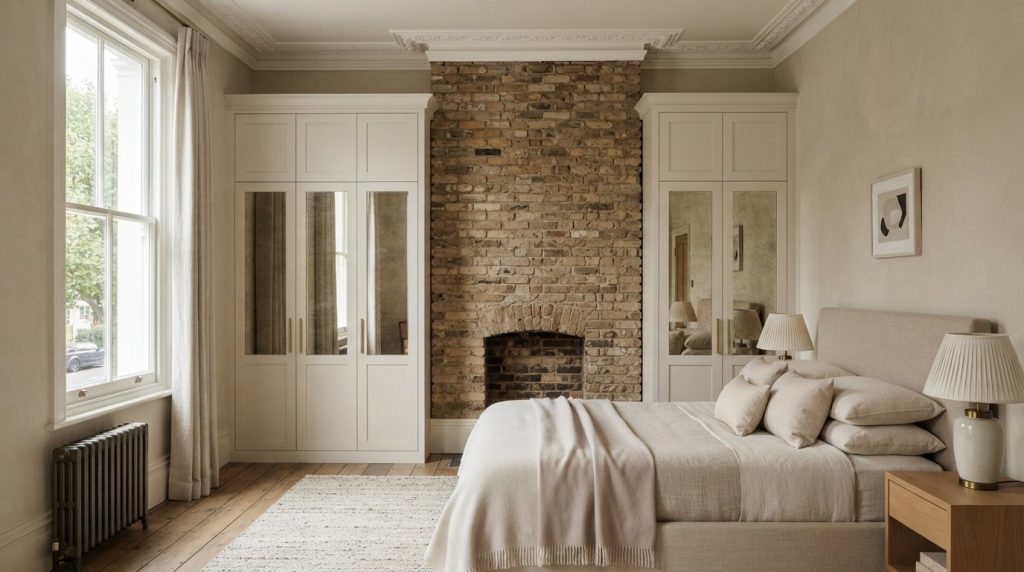
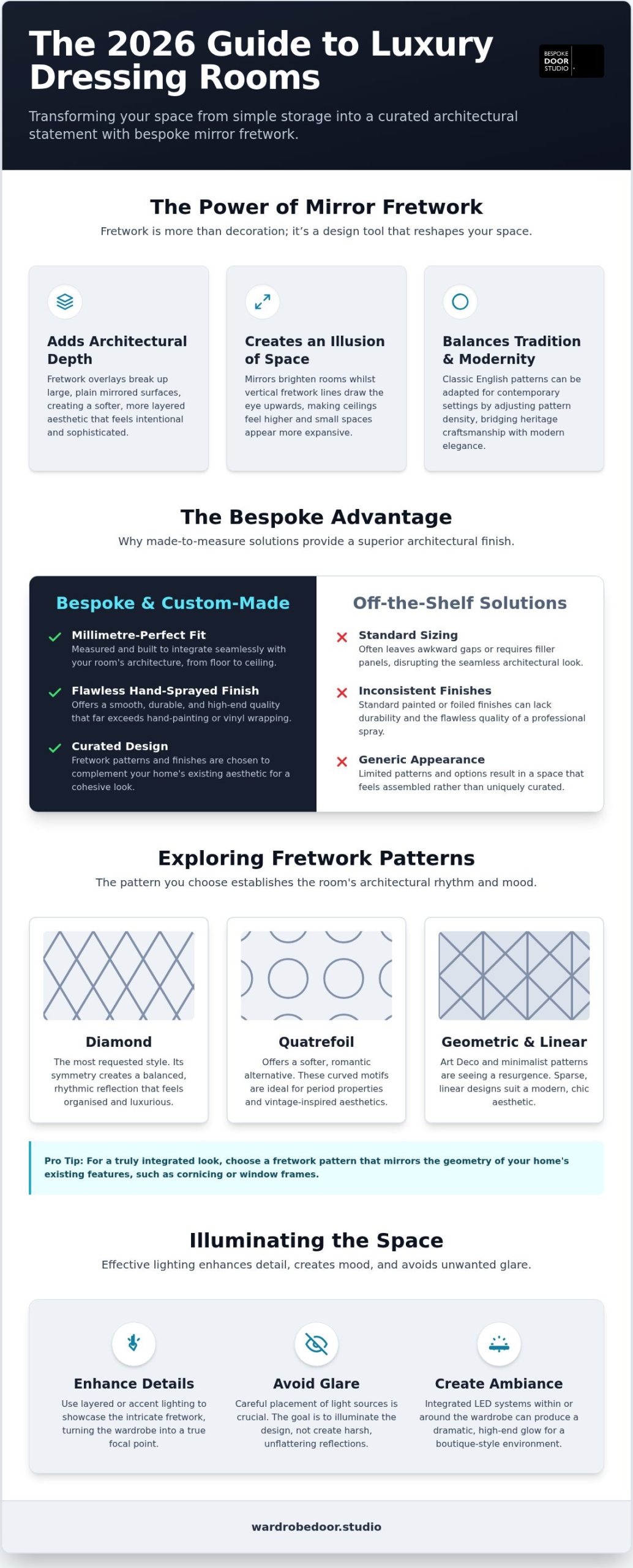
Mirror fretwork is a sophisticated decorative overlay applied directly to mirrored wardrobe panels. It serves as a bridge between structural furniture and interior art. Whilst a standard mirror provides utility, it can often feel cold or visually overwhelming in a private sanctuary. By introducing intricate patterns over the glass, you break up these large reflective surfaces. This creates a softer, more layered aesthetic that feels intentional. These mirror fret dressing room ideas are particularly effective at bridging the gap between functional storage and high-end design.
There’s a distinct psychological shift when you step into a boutique-style environment. A well-designed dressing room acts as a personal retreat, fostering a sense of calm and order. Utilising bespoke fitted wardrobes allows for a seamless architectural finish that off-the-shelf solutions simply cannot replicate. It’s about creating a space that feels curated rather than merely assembled. When every panel is measured to the millimetre, the wardrobe becomes part of the room’s actual structure.
Creating the Illusion of Infinite Space
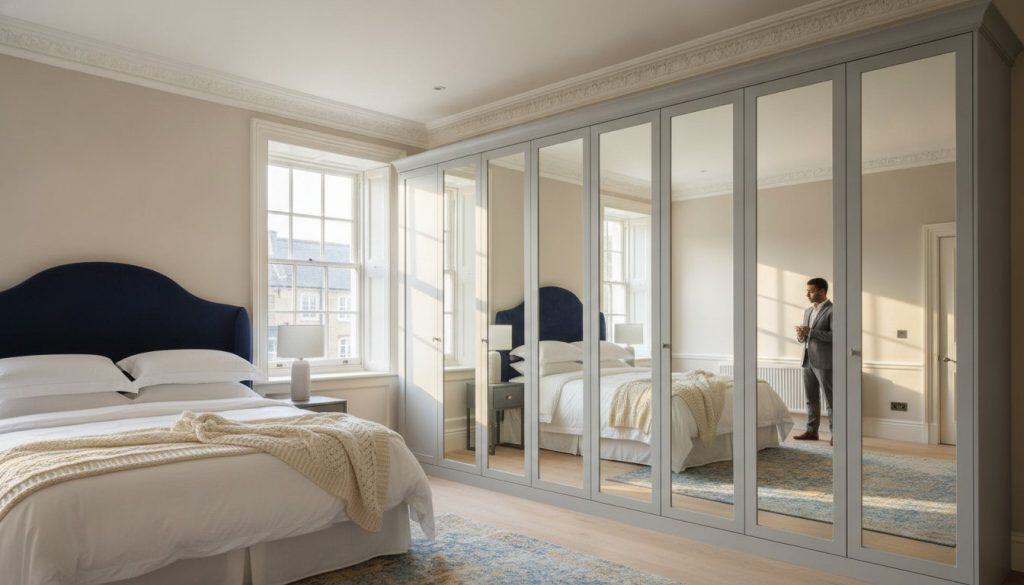
Mirrored surfaces are a classic design choice for brightening windowless or narrow dressing rooms. By reflecting natural light from adjacent hallways or small windows, they instantly lift the mood of the space. Mirror fretwork enhances this effect by adding vertical lines that draw the eye upwards. This clever use of geometry makes the ceiling feel higher and the room feel more expansive. Floor-to-ceiling mirrors can effectively double the perceived floor area, making even the most compact walk-in wardrobe feel like a grand showroom.
Balancing Traditional Charm with Modern Elegance
The Architectural Appeal of Fretwork is deeply rooted in classic English wardrobe design. It evokes a sense of heritage and meticulous craftsmanship. However, these traditional patterns are easily adapted for contemporary, minimalist settings. The key lies in the density of the pattern. A sparse, geometric fretwork design suits a modern aesthetic, whilst a more intricate, interlocking pattern leans towards timeless luxury. Choosing the right density ensures the pattern complements the room’s proportions without cluttering the visual field. It’s this balance of precision and artistry that makes mirror fretwork a staple of the 2026 luxury upgrade.
Exploring Fretwork Patterns: From Classic English to Geometric Chic
Selecting a pattern is the foundational step in refining your mirror fret dressing room ideas. The design you choose does more than decorate; it establishes the room’s architectural rhythm. High-end fretwork requires exceptional technical precision to ensure every line is crisp and every junction is seamless. We achieve this through advanced manufacturing techniques that produce sharp, clean edges, avoiding the imperfections often found in standard decorative overlays. This level of detail ensures the furniture acts as a design statement rather than just a storage solution.
It’s essential to consider the existing features of your home when choosing a pattern. A successful design often mirrors the geometry of your cornicing, skirting, or window frames. This creates a sense of permanence, as if the wardrobes were part of the original building plan. If you’re unsure which direction to take, you might view our full range of custom patterns to see how different densities affect the light and the overall feel of the cabinetry.
The Timeless Appeal of Quatrefoil and Diamond Patterns
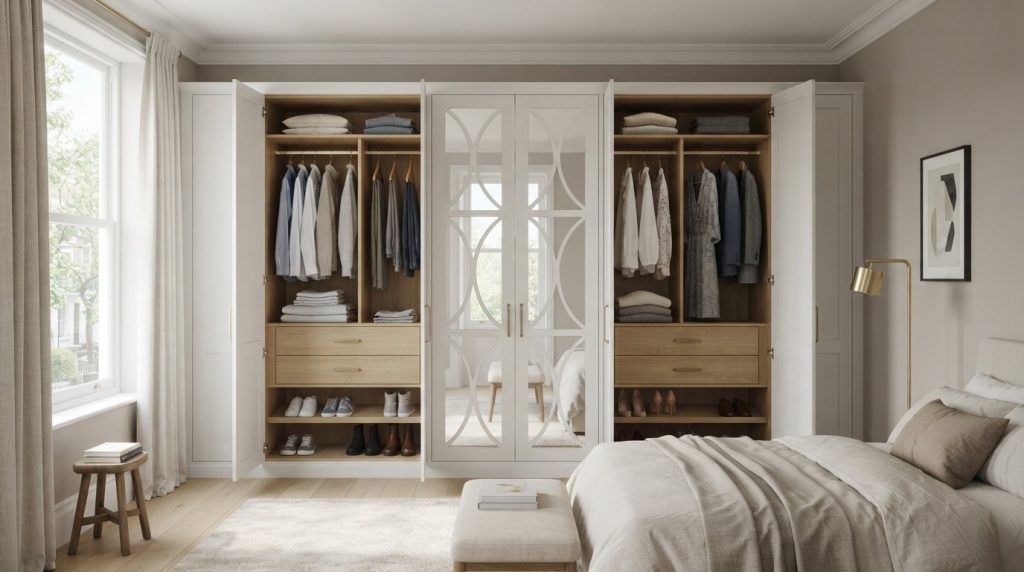
Diamond patterns remain the most requested style for luxury dressing rooms. Their symmetry provides a balanced, rhythmic reflection that feels both organised and expensive. For those seeking a more romantic or vintage-inspired aesthetic, quatrefoil designs offer a softer alternative. These intricate, curved motifs are particularly suited to mirror fret wardrobe doors in period properties, where they complement original plasterwork and traditional architecture whilst adding a layer of contemporary refinement.
Contemporary Geometric and Linear Fretwork
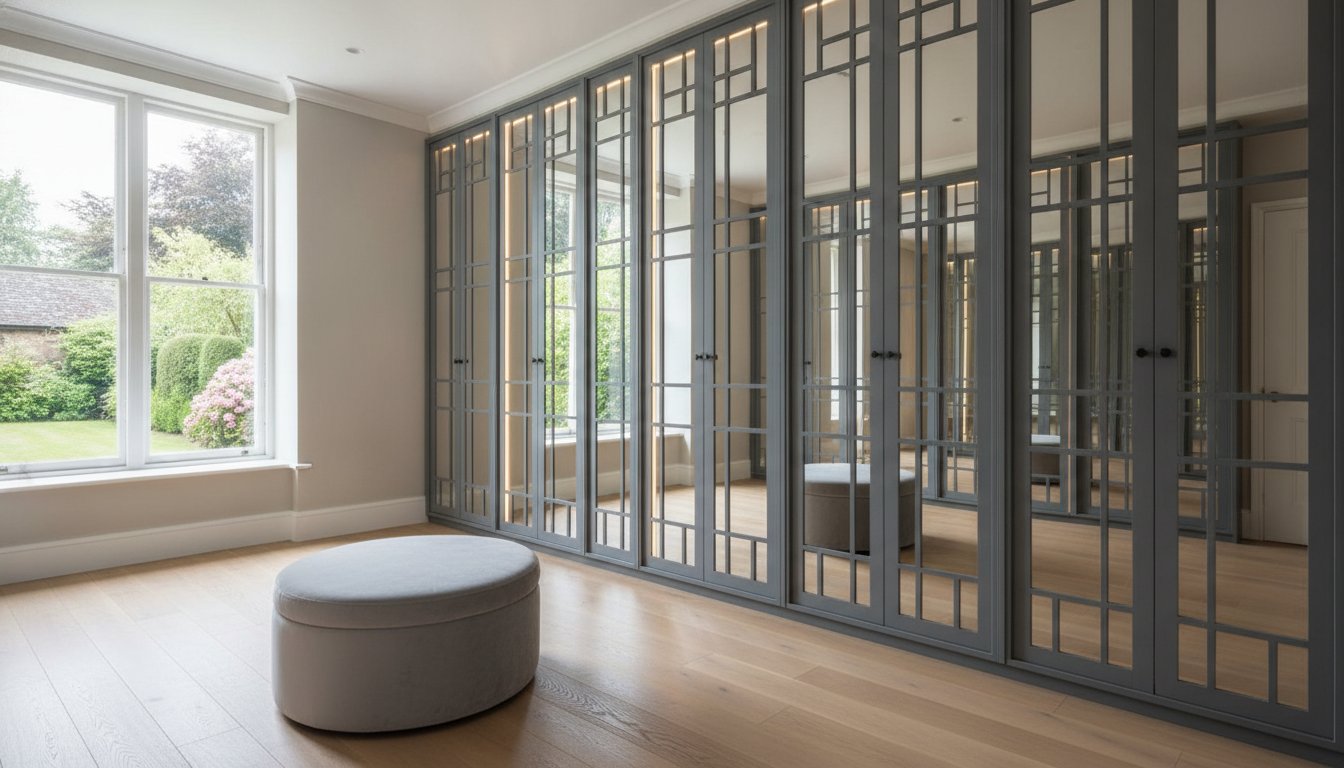
As we look towards 2026 design trends, Art Deco-inspired geometric patterns are seeing a significant resurgence. These designs use bold, interlocking shapes to create a sense of movement and drama within the room. Alternatively, minimalist dressing rooms benefit from clean, linear fretwork. Using “skinny” vertical lines can make a standard-height wardrobe appear much taller, drawing the eye upwards to the ceiling. When working with a smaller space, opt for a lower-density pattern. This allows more of the mirror to be visible, ensuring the room remains bright whilst still benefiting from the decorative texture of the fretwork.
Illuminating the Space: Dressing Room Lighting Ideas for Mirrored Surfaces
Lighting a dressing room involves more than just visibility; it requires a delicate balance between function and theatre. When your design incorporates multiple reflective surfaces, the primary challenge is managing glare whilst ensuring every corner is useful. A successful lighting scheme avoids the flat look of standardised overhead panels. Instead, it uses layered lighting to create depth and visual interest. This approach is fundamental to high-end mirror fret dressing room ideas, as it highlights the texture of the decorative overlays without creating distracting hotspots on the glass panels.
Professional designers prioritise a high Colour Rendering Index (CRI) for all light sources to ensure accurate outfit styling. Standard bulbs often distort colours, making navy appear black or cream look yellow. Utilising high-CRI LEDs ensures that the colours you see in your mirror are the colours that will appear in natural daylight. When your lighting is calibrated correctly, the hand-sprayed finishes of your fretwork also appear more vibrant, revealing the subtle depth and precision of the craftsmanship.
Fretwork provides a unique opportunity for shadow play that flat mirrors cannot offer. When light hits the raised patterns of the overlay, it creates soft, rhythmic shadows across the mirrored surface. This adds a three-dimensional quality to the cabinetry, turning a functional storage unit into a piece of architectural art. By positioning light sources to graze the surface of the doors, you can emphasise these intricate details and add a sense of luxury to the room’s atmosphere.
Task Lighting for Vanity and Dressing Areas
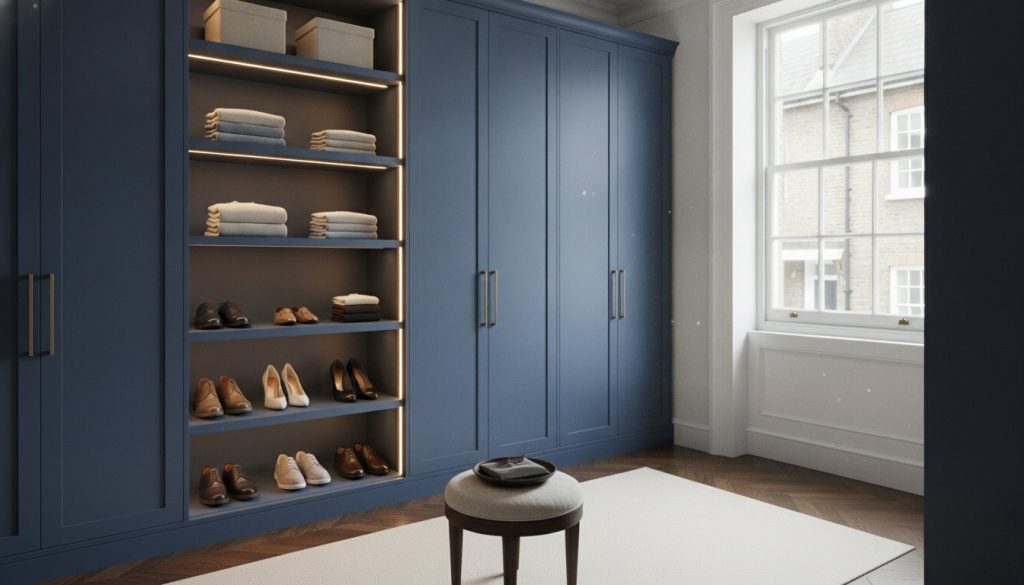
Positioning is everything for effective task lighting. Sconces should be mounted at eye level on either side of a vanity mirror to provide even illumination across the face. This eliminates the harsh shadows caused by vertical downlighting. Within the wardrobes themselves, integrated LED strips are a transformative addition. These can be recessed into the carcass to illuminate your collection without being visible from the room. Dimmable controls are essential; they allow you to transition from the bright, clear light needed for morning preparation to a softer, ambient glow for evening dressing.
Ambient and Accent Lighting Strategies
A central statement chandelier often serves as the visual anchor of a luxury dressing room. It draws the eye and provides a general wash of light that softens the room’s edges. However, avoid relying on it as the sole light source. Recessed ceiling spotlights should be positioned carefully and angled away from mirror faces to prevent direct glare. For a final touch of contemporary elegance, consider toe-kick lighting. These LED strips, installed at the base of your bespoke wardrobes, create a floating effect. This subtle glow makes the cabinetry feel lighter and adds a layer of safety for night-time access.
Maximising Layout and Customisation for Small Dressing Rooms
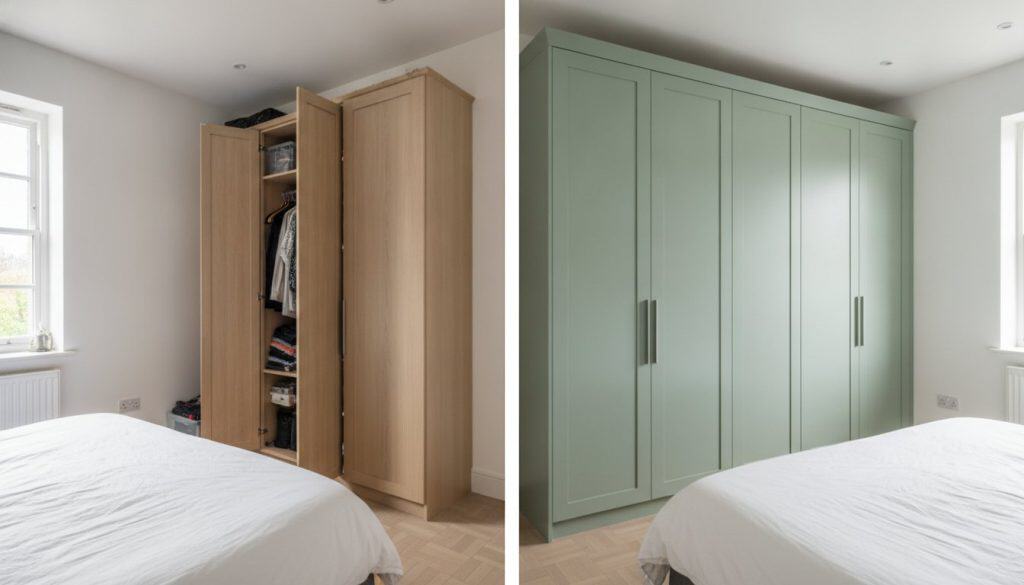
Upgrading a compact dressing room doesn’t always require a full structural renovation. A highly effective strategy involves utilising replacement wardrobe doors made to measure. This approach allows you to retain your existing cabinetry frames whilst completely redefining the exterior aesthetic. It’s a precise, efficient way to implement mirror fret dressing room ideas without the disruption of a complete tear-out. By focusing on the facade, you can achieve a high-end look that feels entirely bespoke to your specific floorplan.
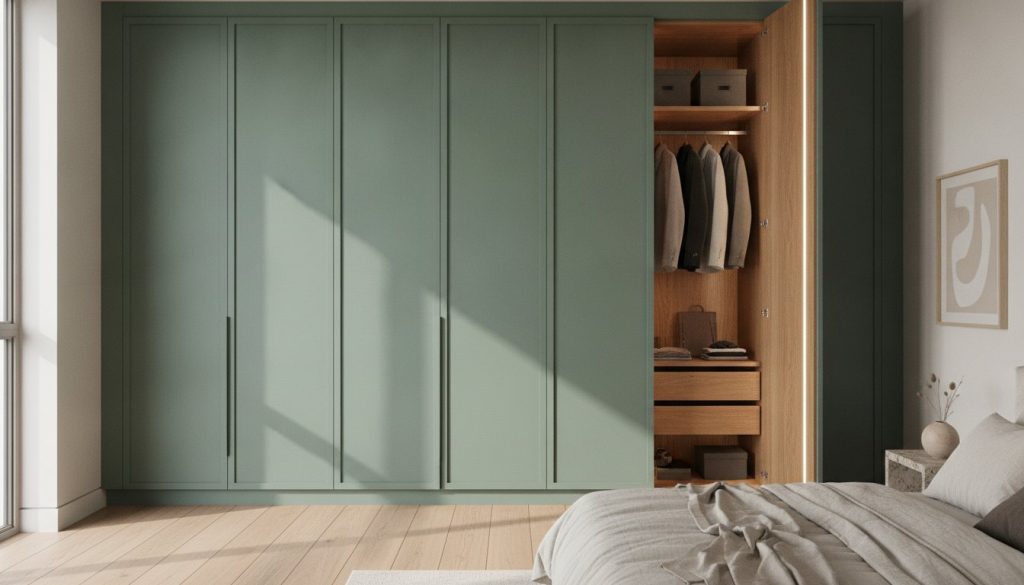
The choice of mirror finish significantly impacts the room’s atmosphere. Clear mirrors provide maximum light reflection, making them the superior choice for very dark or narrow rooms. Conversely, antique mirror glass offers a softer, more muted reflection that adds instant vintage character. Regardless of the finish, meticulous internal organisation is vital. Since mirrored doors draw attention to the wardrobe’s exterior, ensuring the interior remains tidy prevents a cluttered feel when the doors are opened. It’s this attention to detail that separates a standard closet from a luxury showroom.
The Power of Floor-to-Ceiling Mirrored Doors
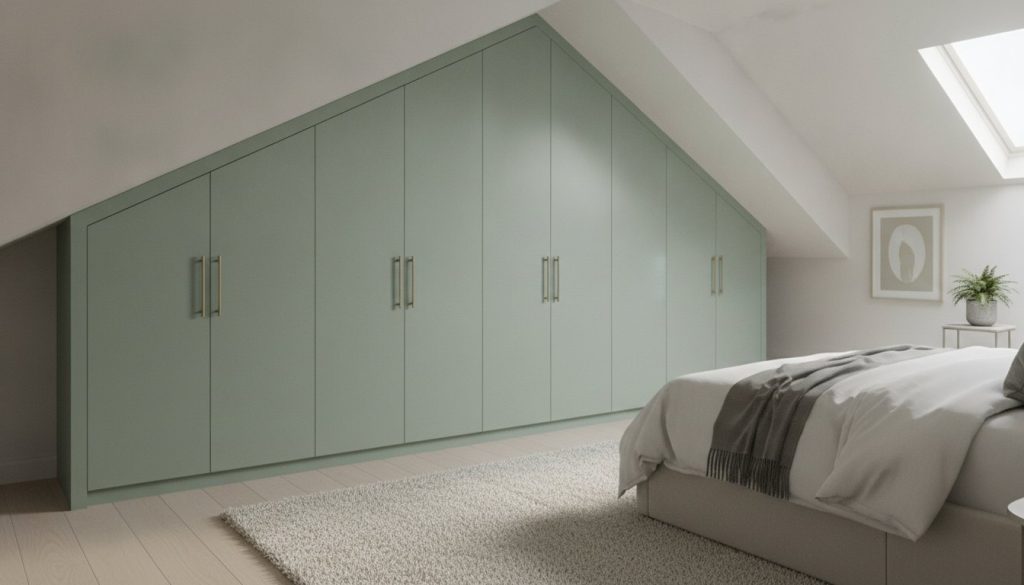
Grand, mirrored panels are excellent for eliminating visual clutter. By hiding storage behind a continuous reflective surface, you create a cleaner architectural line. Bespoke manufacturing is essential here, especially when dealing with sloped ceilings or awkward alcoves. Precision cutting ensures a perfect fit, turning difficult corners into seamless design features. These mirrored doors can also be positioned to reflect a view from a window, effectively bringing the “outside in” and making a small space feel connected to the wider home.
Choosing the Right Hardware and Finishes
Hardware should complement your fretwork pattern rather than compete with it. For intricate designs, choose slim, understated handles that don’t obscure the decorative lines. The metallic accent you select also dictates the room’s warmth; brass and gold tones offer a traditional, inviting feel, whilst chrome or black nickel lean towards a modern, cool aesthetic. Finally, soft-close hinges are a non-negotiable requirement for luxury cabinetry. They provide a silent, weighted movement that reinforces the premium quality of your installation. To start your transformation, explore our range of bespoke finishes and hardware options today.
The Bespoke Advantage: Hand-Sprayed Finishes and Professional Fitting
The final element of a truly exceptional dressing room is the quality of the finish. Whilst the design of your cabinetry provides the structure, the surface treatment dictates the level of luxury. Opting for hand-sprayed finishing ensures a flawless, glass-like surface that is impossible to achieve with a traditional brush or roller. In a controlled factory environment, specialised lacquers are applied in multiple layers, creating a depth of colour and a smoothness that highlights the intricate details of your chosen pattern. This process is essential for high-end mirror fret dressing room ideas, as it prevents the “orange peel” texture often associated with inferior spray methods.
Choosing factory-sprayed MDF over hand-painted wood for fretwork is a practical decision rooted in longevity. Natural timber is prone to expansion and contraction with temperature changes, which often leads to hairline cracks in the paint at joinery points. MDF remains remarkably stable, providing a consistent surface that won’t warp or degrade over time. Modern lacquers are also incredibly durable; they are formulated to resist the scuffs and fingerprints common in high-traffic dressing areas. To ensure the final result meets the highest standards, professional installation is vital. Even a millimetre of misalignment can disrupt the flow of a fretwork pattern, so expert fitting is required to ensure every panel sits perfectly flush.
Custom Colour Palettes for 2026
As we move into 2026, the trend for stark white cabinetry is being replaced by “elevated neutrals.” Designers are increasingly specifying soft greys, warm taupes, and sophisticated “greige” finishes. These shades provide a softer backdrop that feels more integrated into the overall room design. You can coordinate your wardrobe colour with your dressing room wallpaper to create a monochromatic look, or match the fretwork to specific high-end paint brands for a cohesive palette. This level of customisation ensures your wardrobes feel like a bespoke extension of your home’s architectural character.
Ensuring Longevity and Ease of Maintenance
Maintaining mirror fretwork is straightforward if you use the correct techniques. Avoid harsh chemicals or abrasive sponges that could damage the sprayed lacquer. A soft, dry microfibre cloth is usually sufficient for dusting the fretwork, whilst a slightly damp cloth can be used for the mirrored glass behind it. Using moisture-resistant MDF or high-density fibreboard (HDF) as the substrate provides an extra layer of protection against humidity. Investing in quality British craftsmanship means your dressing room will remain a functional sanctuary for years to come, combining traditional reliability with a modern, high-end aesthetic.
Transform Your Space into a 2026 Design Statement
Transitioning your dressing room from a functional storage area to a high-end sanctuary requires a deliberate blend of artistic vision and technical precision. We’ve explored how mirror fretwork serves as an architectural jewel, effectively breaking up large reflective surfaces whilst enhancing the perceived scale of your room. The success of such a transformation rests on the synergy between intricate pattern selection, intelligent layered lighting, and the flawless quality of a hand-sprayed finish. These elements work together to turn standard cabinetry into a curated showroom experience.
Implementing these mirror fret dressing room ideas allows you to honour the unique proportions of your home with a perfect floor-to-ceiling fit. By prioritising bespoke craftsmanship over off-the-shelf alternatives, you ensure that every detail, from the crisp edges of the fretwork to the silent movement of soft-close hinges, reflects a standard of excellence. Our specialist team is trusted by interior designers across the UK to deliver these results, with every component expertly hand-sprayed in England to your exact specifications.
Explore our bespoke mirror fret wardrobe collection and request a consultation to begin your journey toward a sophisticated, personalised luxury upgrade. Your ideal dressing room sanctuary is closer than you think.
Frequently Asked Questions
What is the best lighting for a dressing room with many mirrors?
The best lighting for a dressing room with multiple mirrored surfaces is a layered scheme that prioritises high Colour Rendering Index (CRI) LEDs. You should combine ambient ceiling lights with eye-level task lighting, such as wall sconces, to eliminate harsh facial shadows. Positioning lights to graze the surface of the doors highlights the intricate fretwork patterns whilst avoiding direct glare on the glass. Dimmable controls are also essential for checking outfits in different light conditions.
Are mirror fret wardrobe doors hard to keep clean?
Mirror fret wardrobe doors are remarkably easy to maintain when you use the correct tools. You should use a dry microfibre cloth to dust the hand-sprayed fretwork and a slightly damp cloth with a mild glass cleaner for the mirrored sections. Because our fretwork is manufactured from stable, moisture-resistant MDF and finished with durable lacquers, the surface resists staining and scuffs better than traditional hand-painted timber. Regular light dusting prevents build-up in the pattern’s crevices.
Can I replace my existing wardrobe doors with mirror fret designs?
You can absolutely replace existing wardrobe doors with bespoke mirror fret designs to modernise your space without structural changes. We specialise in manufacturing made-to-measure doors that fit your current carcasses perfectly, regardless of their original brand. This replacement door strategy is a cost-effective way to implement mirror fret dressing room ideas whilst achieving a high-end, bespoke look. It is an ideal solution for those wanting to upgrade to a luxury aesthetic with minimal home disruption.
Should I choose clear or antique mirror for my dressing room fretwork?
Choosing between clear and antique mirror depends on your desired room atmosphere and lighting levels. Clear mirror is the superior choice for small or dark rooms because it provides maximum light reflection and a crisp, modern finish. Antique mirror glass offers a softer, foxed appearance that adds instant character and a vintage feel to a period property. Whilst it reflects less light, it creates a more intimate and atmospheric environment that complements traditional fretwork styles.
What fretwork pattern makes a small dressing room look larger?
Vertical linear patterns or skinny fretwork designs are most effective at making a small dressing room appear larger. These patterns draw the eye upwards, creating the illusion of height and architectural depth. You should also opt for a lower-density pattern, which leaves more of the mirrored surface visible to reflect light and double the perceived floor area. Avoiding overly complex or dense geometric motifs ensures the cabinetry doesn’t feel visually heavy or overwhelming in a compact space.
How do I choose the right colour for my mirror fret wardrobes?
Selecting the right colour involves coordinating your wardrobes with the room’s existing architectural features and wallpaper. Whilst white remains a classic choice, 2026 trends favour elevated neutrals such as warm taupes, soft greys, and sophisticated greige. These shades feel more integrated into a luxury interior than stark white. Because our doors are hand-sprayed in England, we can match your fretwork to specific high-end paint brands to ensure a cohesive and personalised colour palette for your sanctuary.
Is bespoke mirror fretwork more expensive than standard mirrored doors?
Bespoke mirror fretwork represents a higher initial investment than standard, off-the-shelf mirrored doors due to the precision manufacturing and hand-finishing involved. However, the value lies in the perfect floor-to-ceiling fit and the superior durability of factory-sprayed lacquers. Standard doors often leave unsightly gaps or require filler pieces that disrupt the room’s flow. Investing in bespoke cabinetry ensures your dressing room functions as a high-end showroom, increasing both the aesthetic appeal and the long-term value of your home.