Why should a structural necessity like a chimney breast dictate the limits of your bedroom’s elegance and storage potential? It’s a common frustration for those living in period properties, where the struggle to fit a built in wardrobe around chimney breast features often results in wasted space and unsymmetrical layouts. You’ve likely found that off-the-shelf furniture simply cannot accommodate the unique contours of traditional British architecture, leaving you with gaps that collect dust rather than garments.
This 2026 guide demonstrates how bespoke design can transform these challenges into a seamless, high-end storage solution. We will examine professional techniques, from achieving a perfectly flush front to navigating essential building regulations regarding ventilation and flue clearances. You’ll discover how meticulous craftsmanship and hand-sprayed finishes reclaim dead space, ensuring your new installation complements the room’s original character while providing modern functionality. We will show you how to turn an architectural obstacle into a sophisticated focal point that maximises every millimetre of your home.
Key Takeaways
- Identify the specific architectural challenges of period masonry and learn how to reclaim wasted vertical space through bespoke design.
- Discover the technical advantages of a full wraparound built in wardrobe around chimney breast to create a continuous, flush facade across an entire wall.
- Evaluate the necessity of heat-stable materials and hand-sprayed finishes to ensure your installation remains resilient against the thermal shifts of a disused flue.
- Master the professional measuring protocols needed to navigate uneven floorboards and tapering walls for a truly seamless, factory-built fit.
- Explore how sophisticated door profiles, including Skinny Shaker and Mirror Fret designs, can elevate the aesthetic of integrated storage whilst maintaining room proportions.
The Architectural Challenge: Why Chimney Breasts Dictate Bedroom Layouts
The chimney breast structure remains a defining characteristic of British period architecture. Whilst these features once served as the essential heart of the home, they now present a significant hurdle for modern storage requirements. The protruding masonry creates a fragmented wall surface, leaving homeowners with two recessed alcoves that rarely match in dimension or depth. When you attempt to place freestanding furniture here, you’re often left with “dead zones” that are too narrow for standard units but large enough to collect unsightly dust. This architectural fragmentation disrupts the visual flow of a bedroom, making even large spaces feel cluttered and poorly utilised.
Bespoke cabinetry offers a profound psychological shift. By installing a built in wardrobe around chimney breast features, you replace visual noise with a streamlined, intentional facade. This design choice anchors the room, providing a sense of permanence and order that off-the-shelf solutions cannot replicate. It’s about more than just storage; it’s about reclaiming the room’s architectural integrity and creating a space that feels calm and cohesive.
Understanding Alcove Depths and Protrusions
A primary technical conflict arises from the discrepancy between historic masonry and modern garment requirements. Research indicates that standard period alcoves measure between 350 mm and 450 mm deep. However, a standard clothes hanger requires an internal depth of at least 550 mm to 600 mm. This means a standard wardrobe either protrudes awkwardly into the room or fails to house your coats and suits properly. Identifying these “shallow alcoves” early is vital. Professional installers must also account for original skirting boards and ornate coving, which often taper or bow over time. Without meticulous scribing, built-in furniture will never achieve that flush, high-end finish that characterises luxury joinery.
The Evolution of the Period Bedroom
Modern interior design has shifted away from isolated furniture pieces toward integrated, wall-to-wall storage. Today’s bespoke solutions respect original features like picture rails and cornices whilst introducing 21st-century functionality. By using a built in wardrobe around chimney breast masonry, you can create “invisible” storage that blends with the walls. This approach often utilises Skinny Shaker wardrobe doors to provide a contemporary edge without clashing with the home’s heritage. The result is a bedroom that feels larger, more cohesive, and meticulously organised.
Design Strategies: Alcove Fitting vs. Full Wraparound Wardrobes
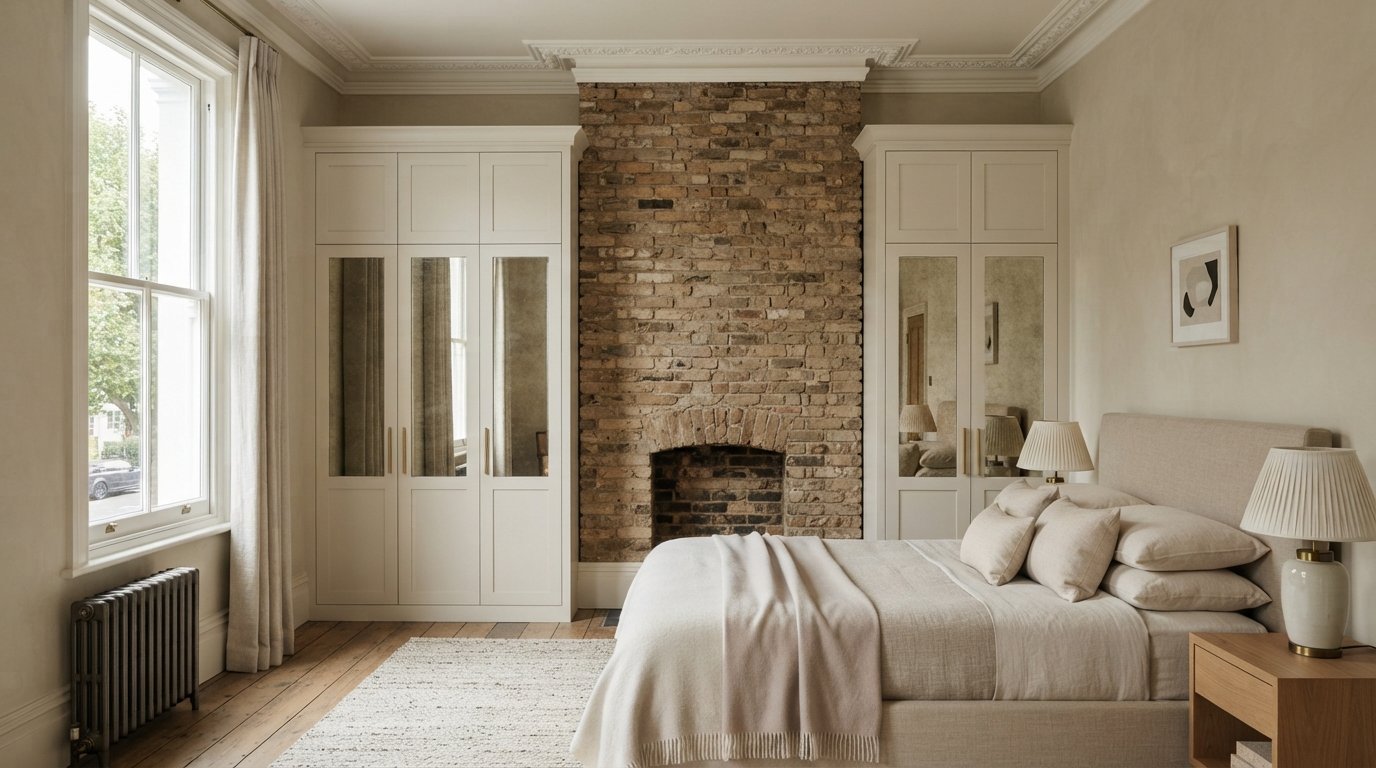
Selecting the correct configuration for a built in wardrobe around chimney breast requires a balance between architectural preservation and storage volume. The Alcove Approach fills the flanking recesses whilst leaving the masonry exposed. This suits rooms where a fireplace remains a focal point or where you wish to retain the original chimney breast structure. Conversely, the Wraparound Strategy creates a continuous, floor-to-ceiling run of doors that spans the entire wall. This monolithic facade eliminates visual clutter, making it the preferred choice for modern, minimalist interiors. A Hybrid Strategy utilises the shallow space directly over the chimney breast for bespoke mirrors or open shelving, bridging the gap between the two deeper alcoves.
Your choice depends heavily on the room’s floor plan. If the space is narrow, a full wraparound might feel overbearing. However, in larger suites, the seamless look often enhances the sense of luxury. Natural light also plays a role; a continuous run of light-coloured doors can brighten a dark room by reflecting light from opposite windows. You should also consider how the layout affects the flow of the room, ensuring that door swings do not obstruct walkways or bedside access.
The Seamless Wraparound Technique
The secret to a successful wraparound lies in the carcass depth. Whilst alcoves typically accommodate 550 mm to 600 mm for hanging rails, the section directly over the chimney breast is much shallower. We utilise this space for bespoke accessory storage, such as velvet-lined drawers for jewellery or racks for ties and belts. When anchoring these units, it is essential to consult the Party Wall etc. Act guidance if you are working on a shared wall. Standard fixings usually don’t trigger formal notices, but precision is required to avoid interfering with active flues. Transitioning between depths requires expert scribing to ensure the door fronts remain perfectly flush across the entire span.
Maximising the Alcoves
Alcoves are the workhorses of the bedroom. By opting for bespoke fitted wardrobes, you ensure that every millimetre of these recesses is utilised for full-depth hanging. We often recommend double hanging rails in these sections to double the storage capacity for shorter items like shirts and trousers. Integrating vertical LED strips within the gables eliminates the dark corners common in deep alcoves, providing a boutique-like experience every time you open the doors. If you are ready to refine your layout, you can explore our bespoke cabinetry options to see how these strategies translate into your home.
Materials and Finishes for High-End Integrated Wardrobes
Selecting materials for a built in wardrobe around chimney breast requires technical foresight. Period homes often experience micro-climates where masonry flues retain heat whilst exterior walls remain cold. This temperature fluctuation is the primary enemy of bespoke joinery. High-density MDF has emerged as the professional standard because it offers superior dimensional stability compared to solid timber. Whilst solid oak or pine might warp or split when subjected to the radiant heat of a chimney, engineered boards remain inert. This ensures your wardrobe doors stay perfectly aligned, preventing the unsightly gaps or sticking that plague lesser installations.
Moisture resistance is equally critical. In many UK period properties, chimney breasts can become cold bridges, leading to condensation if airflow isn’t managed correctly. Using high-specification, moisture-resistant boards provides an essential layer of protection against these environmental shifts. This durability is further enhanced by the choice of high-quality hardware. We utilise heavy-duty, soft-close hinges that allow for fine-tuned adjustments. This precision is vital when you’re fitting a built in wardrobe around chimney breast features, as it accounts for the slight structural movements that occur in historic masonry over decades.
The Superiority of High-Density MDF
Modern bespoke furniture relies on the precision of engineered materials. Choosing sprayed mdf wardrobe doors ensures a flawlessly smooth surface that’s impossible to achieve with natural grain. These boards are manufactured to provide a dense, resilient core for complex machining, allowing for the sharp, clean lines required in luxury design. Unlike cheaper chipboard alternatives, high-density MDF won’t crumble or swell, making it the sustainable choice for long-term durability in UK homes.
The Luxury of a Hand-Sprayed Finish
A luxury wardrobe is defined by its tactile quality. Whilst some providers advocate for brush-painted finishes, these often leave visible strokes and uneven textures that detract from a premium aesthetic. A professional hand-sprayed finish, executed in a controlled environment, results in a factory-perfect satin or matt surface. It’s significantly more durable than vinyl wraps, which often peel when positioned near heat sources like a chimney. This sprayed approach allows for precise colour matching to your existing decor, ensuring the cabinetry feels like a permanent, integrated part of the room’s architecture. It’s easy to clean, resistant to scuffs, and maintains its lustre for years.

Measuring and Planning for a Seamless Installation
Precision is the hallmark of luxury joinery, particularly when installing a built in wardrobe around chimney breast masonry. Period properties are notoriously out of plumb; walls taper, floors pitch, and ceilings often sag towards the centre of the room. To achieve a factory-finished look, your planning phase must be meticulous. We recommend a five-step protocol to ensure the final structure integrates perfectly with your bedroom’s architecture.
- Step 1: Measure the floor-to-ceiling height at a minimum of three points across each alcove and the chimney face. This accounts for uneven joists and ensures your top tracks or cornices remain level.
- Step 2: Calculate the depth discrepancy. Most alcoves offer only 350 mm to 450 mm of depth, whilst standard hanging requires 550 mm. You must decide if your wardrobe will sit flush with the chimney breast or project slightly forward in a “breakfront” style.
- Step 3: Plan for scribing. This is the technical art of tailoring timber infill panels to follow the exact contours of wonky walls. It is what separates a high-end bespoke installation from a basic flat-pack.
- Step 4: Map the door swing. Ensure there is at least 600 mm of clearance to avoid clashes with bedside tables, radiators, or window casements.
- Step 5: Choose your header style. You can either build floor-to-ceiling for maximum volume or leave a shadow gap to preserve original Victorian coving.
The Importance of Technical Drawings
Visualising a complex wraparound design requires more than a simple sketch. Professional technical drawings allow you to see how the door stiles will align across varying depths. This stage is vital for ensuring that internal partitions don’t conflict with the door hinges. It also helps identify potential obstructions, such as active air bricks or radiator pipes, before the manufacturing process begins. By mapping the internal layout against the door positions, you ensure that every drawer and rail is fully accessible and functionally sound.
Professional Installation vs. Supply Only
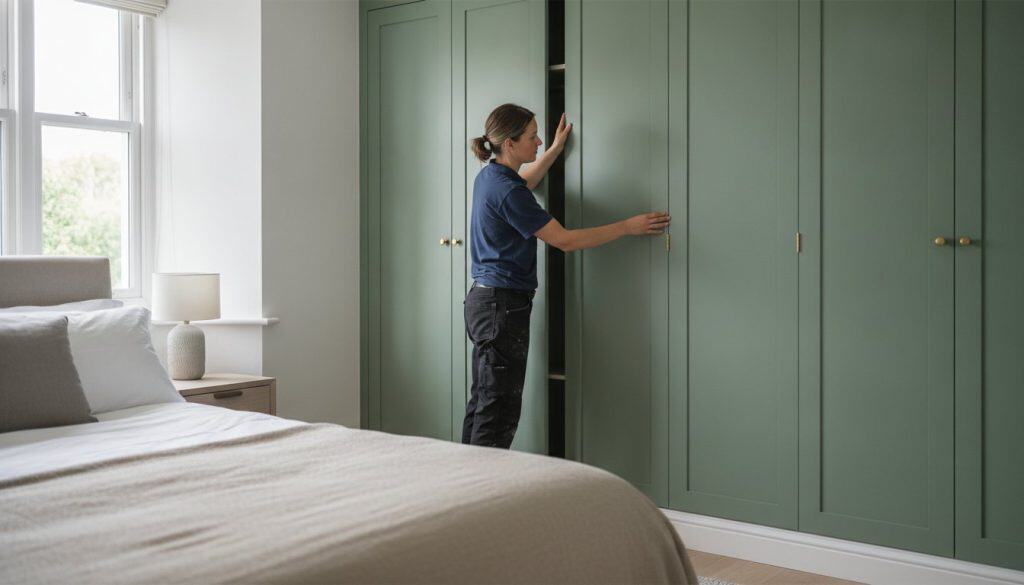
Whilst some experienced DIY enthusiasts may attempt a simple alcove fit, a full chimney breast wraparound usually requires a specialist fitter. The complexity of levelling a multi-depth carcass on a traditional floor requires professional expertise and high-grade laser levels. For those who already have existing frames in place, opting for replacement wardrobe doors made to measure can provide a significant aesthetic upgrade without the need for a full structural overhaul. If you are ready to begin your project, you can book a professional design consultation to ensure your measurements translate into a flawless, high-capacity storage solution.
Elevating the Look: Style Choices for Built-In Wardrobes
The final aesthetic layer is where structural utility meets artistic vision. When you design a built in wardrobe around chimney breast, the door style determines whether the furniture feels like a heavy addition or a seamless extension of the architecture. Choosing the right profile is essential to prevent a wall-to-wall installation from overwhelming the room. High-end ironmongery, such as knurled brass or antique bronze handles, serves as the finishing touch that anchors the bespoke look. These details ensure that the cabinetry doesn’t just provide storage but actively enhances the bedroom’s character.
Selecting a door style that complements your room’s proportions is the secret to a successful integration. For instance, a flat panel door offers a ultra-modern, monolithic look that can make a chimney breast almost disappear. However, many homeowners prefer a design that bridges the gap between period charm and contemporary living. The right choice can make a large installation feel light and intentional rather than imposing.
Skinny Shaker: A Contemporary Classic
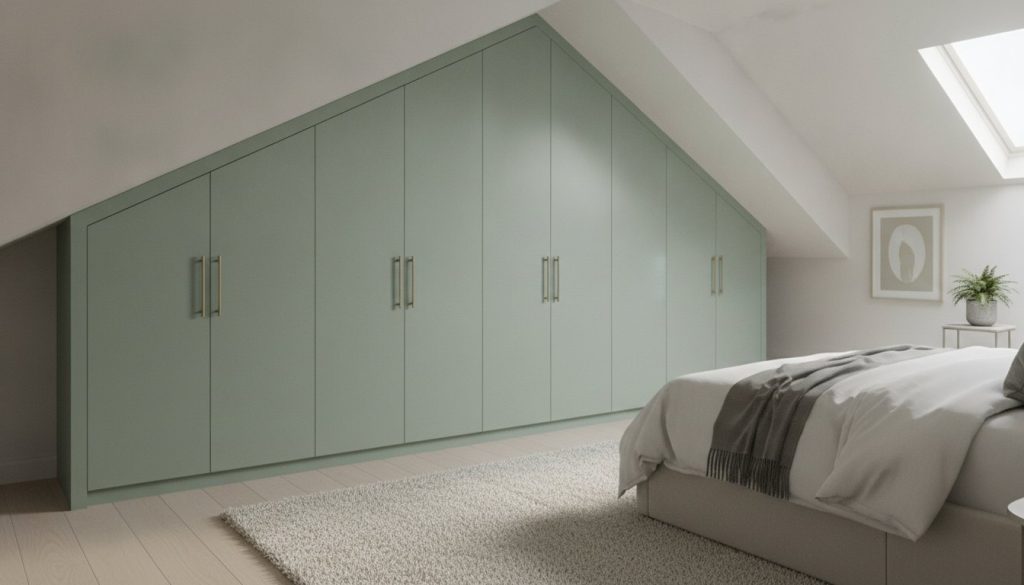
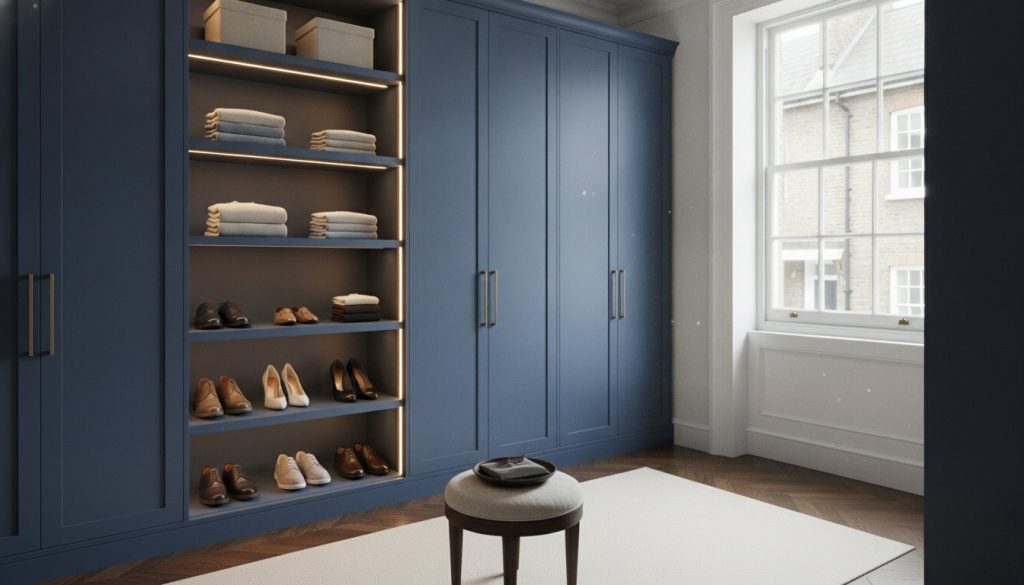
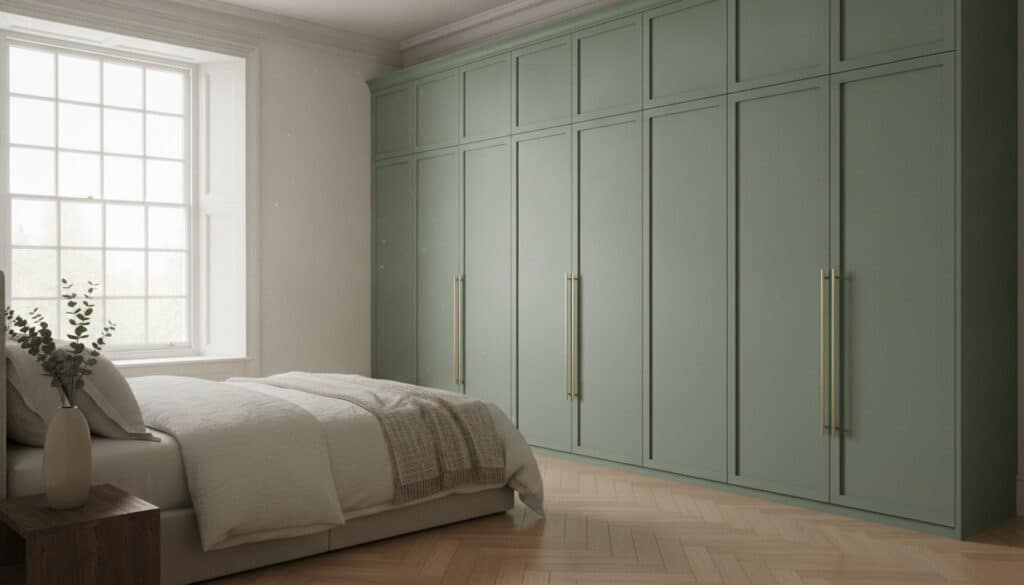
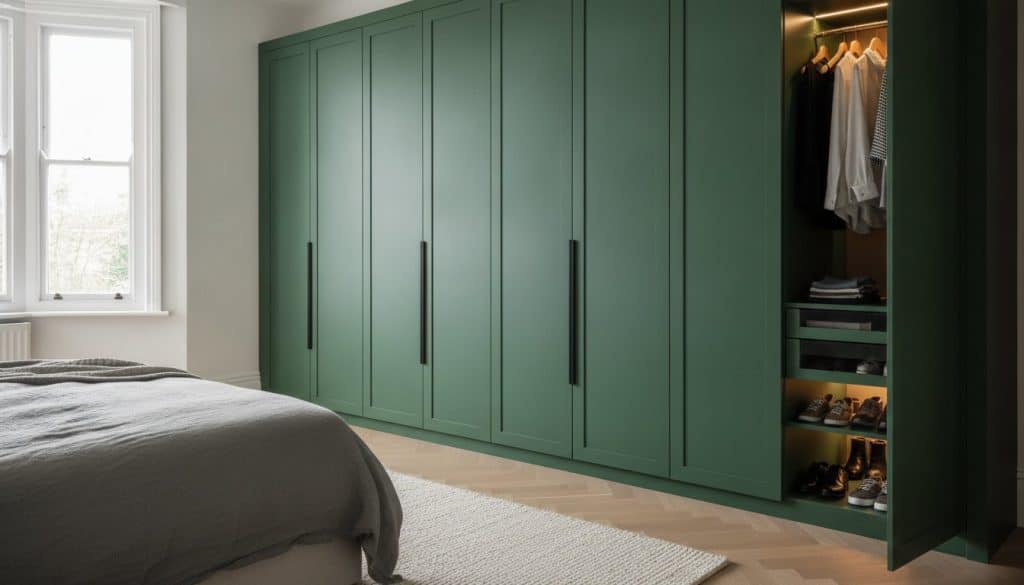
Traditional shaker doors are a staple of British homes, but the 2026 trend leans towards a more refined silhouette. By using skinny shaker wardrobe doors, you modernise the period bedroom whilst respecting its heritage. The narrower rail width creates an elegant, vertical rhythm that makes the ceiling appear higher. It’s a perfect balance for those who find traditional joinery too heavy for smaller rooms. In 2026, we see a shift towards muted, earthy colours like sage green, deep navy, and warm taupe. These hand-sprayed shades add depth to a built in wardrobe around chimney breast whilst maintaining a minimalist, sophisticated aesthetic.
Mirror Fretwork for Spatial Illusion
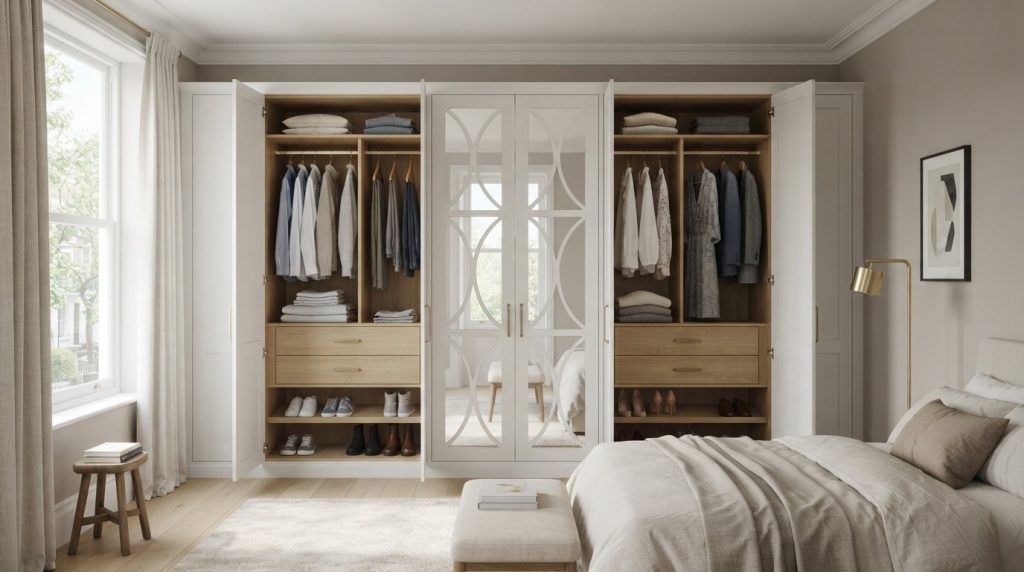
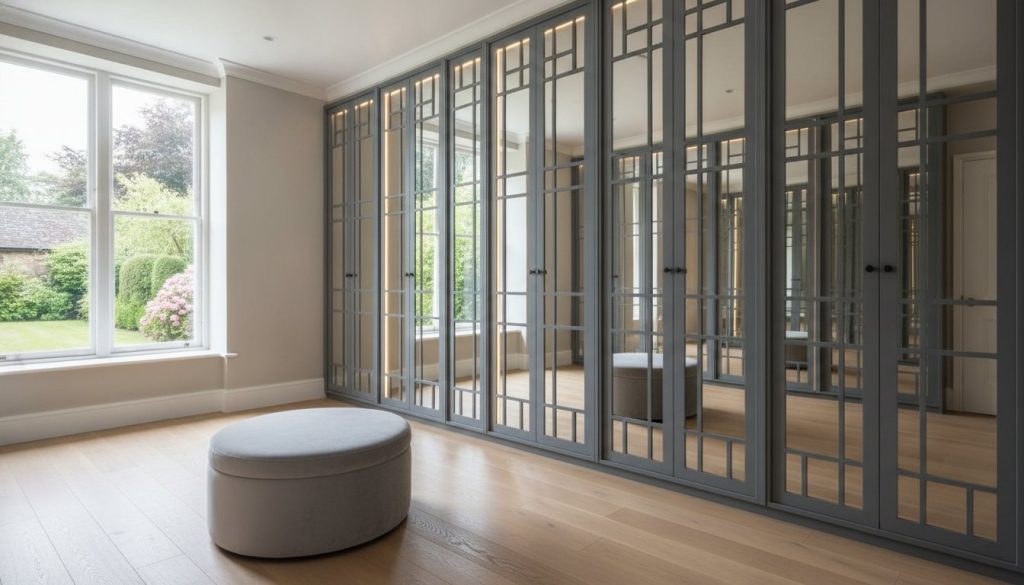
If your room lacks natural light or feels cramped by the chimney breast’s projection, mirror fret wardrobe doors offer a transformative solution. Mirrored panels create a powerful spatial illusion, effectively doubling the perceived depth of the room and masking the bulk of the cabinetry. The addition of intricate fretwork, ranging from classic geometric patterns to traditional English motifs, breaks up the large expanse of glass. This adds a layer of timeless luxury and prevents the mirrors from feeling too stark. By reflecting light from opposite windows, these doors brighten dark alcoves and create an airy, aspirational atmosphere that celebrates the room’s original features.
Transforming Your Architectural Vision into Reality
A chimney breast shouldn’t be viewed as a structural limitation but as an opportunity for bespoke architectural expression. By integrating a built in wardrobe around chimney breast masonry, you effectively reclaim lost volume whilst introducing a level of sophistication that freestanding furniture cannot provide. Success lies in the meticulous combination of technical planning, heat-stable materials, and refined style choices like Skinny Shaker or Mirror Fret profiles.
Our workshop specialises in these complex installations, ensuring every unit is hand-sprayed in England for a superior, enduring finish. We provide bespoke designs tailored to your specific architectural features, complemented by nationwide delivery and professional installation services. This approach guarantees that your storage is as resilient as it is beautiful, respecting the heritage of your home whilst serving your modern lifestyle.
Explore our bespoke wardrobe solutions and start your project today. We look forward to helping you create a bedroom that feels perfectly organised and effortlessly elegant.
Frequently Asked Questions
Can I build a wardrobe directly over a chimney breast?
Yes, you can build shallow cabinetry directly over the face of the chimney breast to create a continuous, flush facade. This technique is often used in a full wraparound built in wardrobe around chimney breast design to hide the masonry protrusion. While the depth is limited, typically between 100 mm and 150 mm, it provides ideal storage for accessories such as ties, jewellery, or slim footwear, ensuring no space is wasted in your bedroom.
How deep should a built-in wardrobe be in a chimney alcove?
For conventional longitudinal hanging, a wardrobe requires an internal depth of at least 550 mm to 600 mm. Since most period alcoves measure between 350 mm and 450 mm deep, your design will likely need to project forward past the chimney breast. Alternatively, you can install pull-out transverse rails if you prefer the cabinetry to sit flush with the masonry, though this reduces the total garment capacity of the unit compared to deeper carcasses.
What is the best way to hide a chimney breast with furniture?
The most effective method is a wall-to-wall bespoke installation that spans the entire width of the room. By running a continuous line of floor-to-ceiling doors across both alcoves and the chimney face, you create a monolithic, streamlined look. This strategy eliminates the visual break caused by the masonry protrusion. Using light-coloured hand-sprayed finishes or mirrored panels further helps the large structure blend into the room’s architecture without feeling overbearing or bulky.
Do I need to leave a gap between the wardrobe and the chimney for ventilation?
Yes, maintaining airflow is crucial to prevent interstitial condensation and black mould, especially on exterior walls. Disused flues must remain ventilated to allow the masonry to breathe. Professional installers often incorporate a 25 mm shadow gap or discrete vents within the plinth and cornice. This ensures that humid bedroom air doesn’t become trapped against cold masonry, protecting both your bespoke cabinetry and the structural integrity of the property over the long term.
Can I use sliding doors for a wardrobe around a chimney breast?
Sliding doors are possible, but they often present aesthetic and functional challenges when dealing with varying depths. A sliding track requires a perfectly straight run, which can be difficult to align across a protruding chimney breast. Most luxury designs favour hinged doors, as they allow for individual access to the shallow central section and the deeper alcoves. Hinged doors also offer a more traditional, high-end appearance that complements period features more effectively than modern sliding tracks.
Is it more expensive to build a wardrobe around a chimney than a flat wall?
Installations involving a chimney breast are generally more complex and time-consuming than those on flat walls. The project requires multiple carcass depths, intricate scribing to wonky masonry, and precise levelling to account for uneven period floors. These technical requirements increase the labour time for both the design phase and the on-site fitting. However, the investment is justified by the significant reclaim of dead space and the seamless, architectural finish achieved through bespoke joinery.
What materials are best for fitted wardrobes in older houses?
High-density MDF is the superior choice for fitted furniture in older properties due to its exceptional dimensional stability. Unlike solid timber, which can warp or split when exposed to the heat fluctuations of a chimney or the dampness of a period wall, engineered boards remain inert. When finished with a professional hand-sprayed coating, these materials provide a flawlessly smooth surface that resists scuffs and ensures your wardrobe doors stay perfectly aligned for many years of use.
Can I install my own bespoke wardrobe doors around a chimney?
You can choose a supply-only option if you possess advanced joinery skills and the necessary tools for complex scribing. However, fitting a built in wardrobe around chimney breast masonry is technically demanding due to the out-of-plumb nature of period walls. Most clients prefer professional installation to ensure the doors are perfectly level and the infill panels follow the wall’s contours precisely. This ensures a factory-perfect finish that preserves the luxury aesthetic and enduring value of the home.