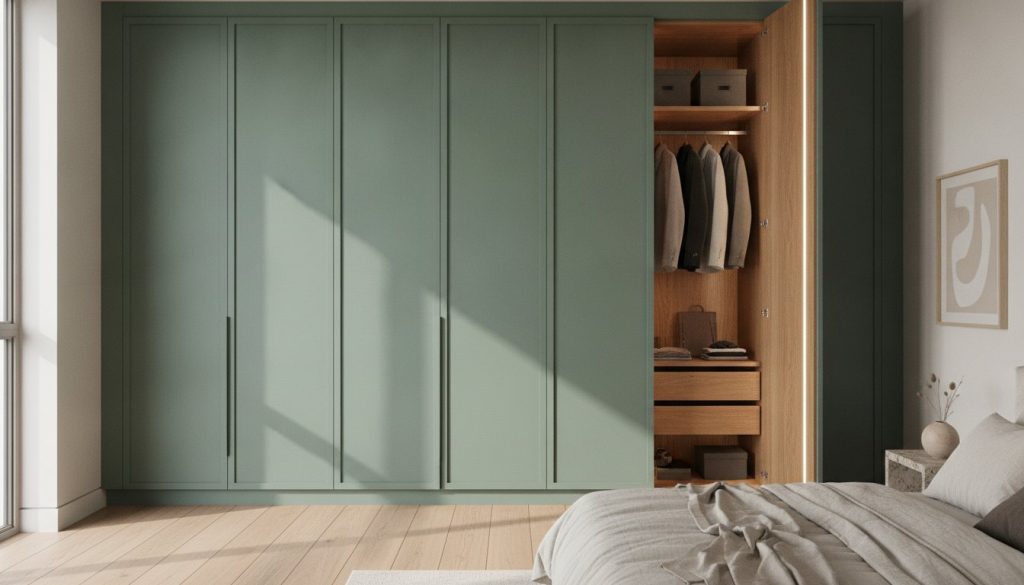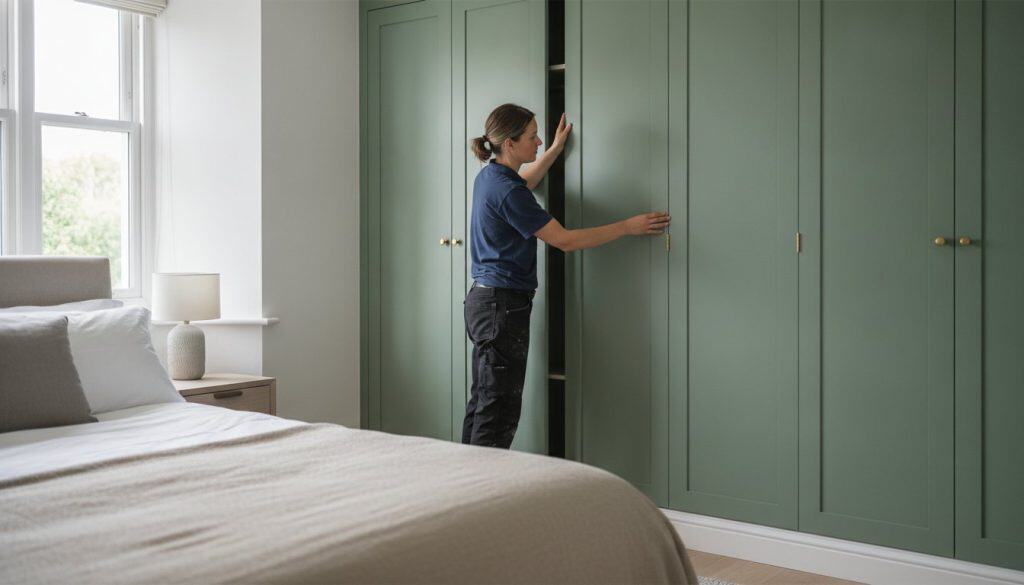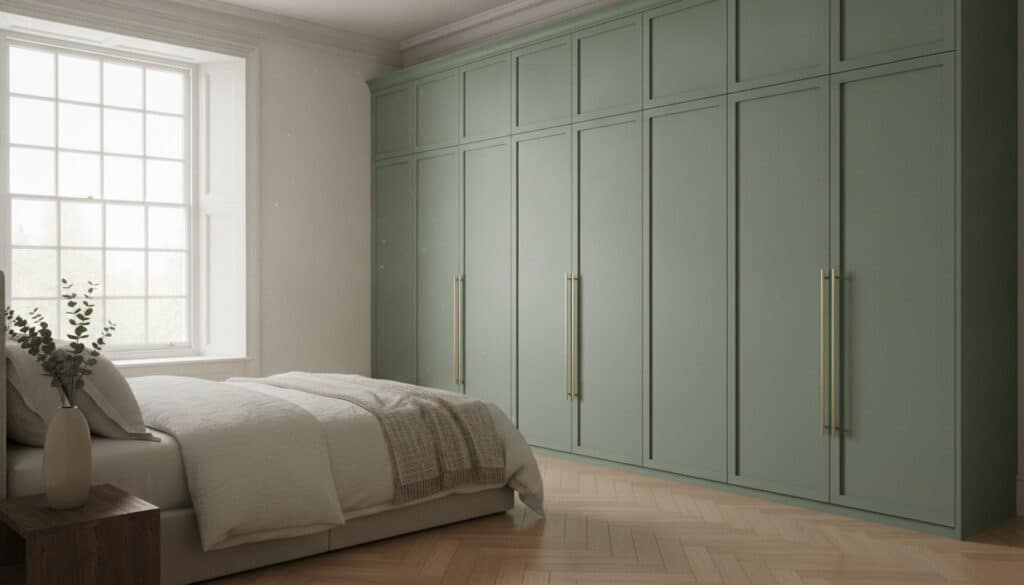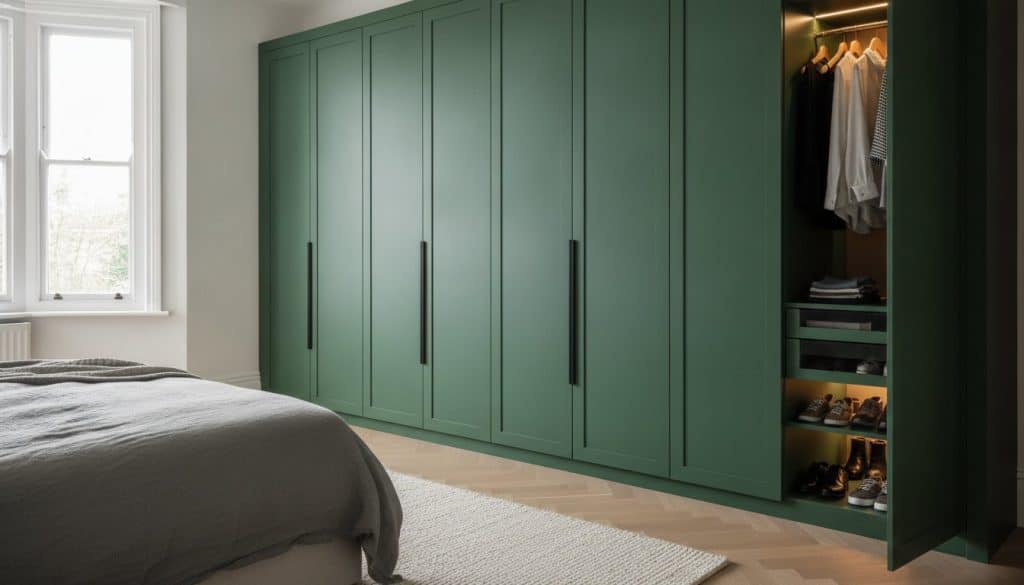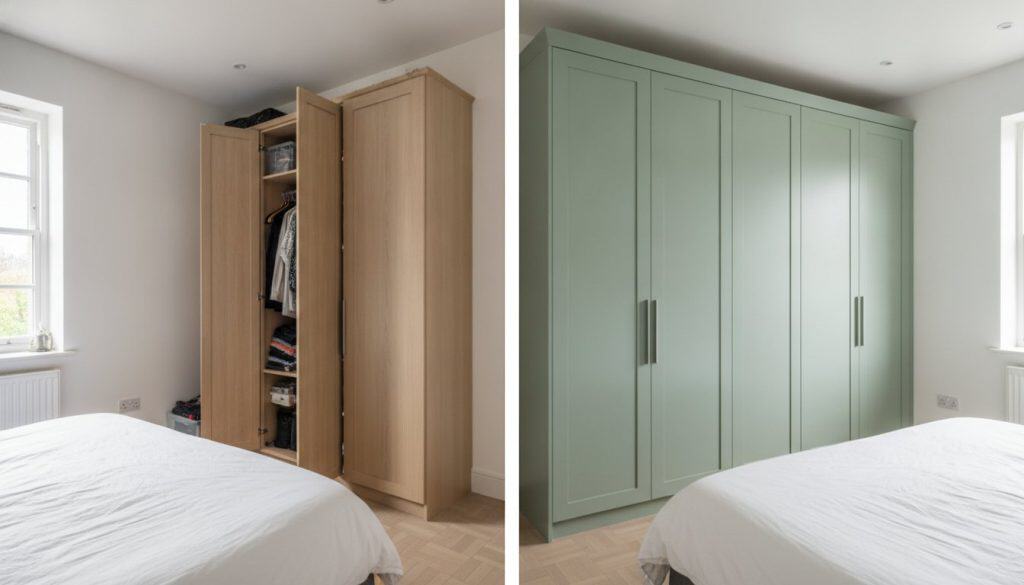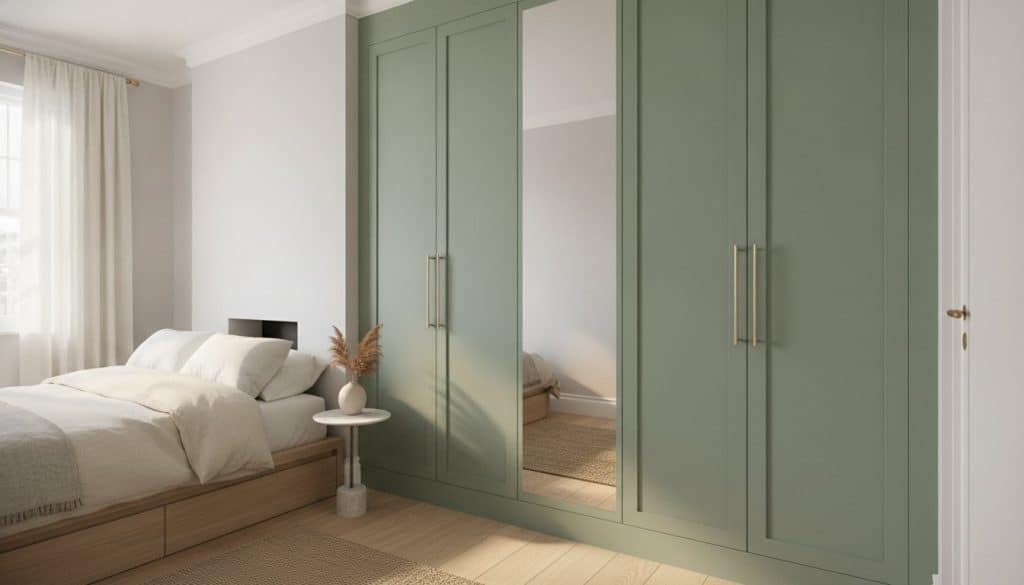
The decision to commit to a permanent furniture installation often feels like a gamble against future interior trends. It’s entirely natural to feel hesitant when considering the potential disadvantages of built in wardrobes, particularly the fear that a significant financial investment might leave you with a dated bedroom within a few years. You aren’t alone in worrying that fixed cabinetry sacrifices the flexibility of freestanding pieces, or that it might create hidden maintenance issues against cold external walls.
This guide demonstrates why these common concerns are frequently misconceptions rooted in low-quality, mass-produced alternatives rather than bespoke British craftsmanship. We’ll explore how high-density materials and hand-sprayed finishes mitigate the risks of aesthetic fatigue, and how a strategic design actually enhances your property’s long-term value. You’ll gain a balanced perspective on the pitfalls of fitted furniture and discover how a truly custom solution offers far more adaptability than the high-street options suggest. By understanding the distinction between structural permanence and aesthetic flexibility, you can invest in your home with absolute confidence.
Key Takeaways
- Distinguish between structural permanence and aesthetic flexibility by understanding the difference between a wardrobe’s carcass and its interchangeable frontage.
- Discover why modern bespoke carcasses and modular internal organisers ensure your storage evolves alongside your lifestyle requirements.
- Evaluate the long-term value of hand-sprayed British craftsmanship compared to the hidden costs of mass-market, laminate-finished alternatives.
- Learn practical strategies to overcome the disadvantages of built in wardrobes, including how replacement doors can facilitate a complete style overhaul.
- Gain the confidence to invest in a bespoke solution that enhances property equity and eliminates the common pitfalls of off-the-shelf modular systems.
The Perceived Disadvantages of Built-in Wardrobes: Fact vs Fiction
Built-in wardrobes are structural, floor-to-ceiling storage solutions engineered to integrate seamlessly with a room’s architecture. Unlike freestanding units that sit within a space, these are permanent installations designed to utilise every millimetre of available area. It’s common for homeowners to hesitate when researching the potential disadvantages of built in wardrobes. The primary concern usually centres on the lack of portability; you cannot simply pack up a fitted unit and take it to your next home. Additionally, the higher initial cost compared to high-street freestanding alternatives can feel like a significant hurdle. However, many of these perceived drawbacks are actually design choices that offer superior long-term benefits when viewed through a professional lens.
Why Permanence is Often Misunderstood
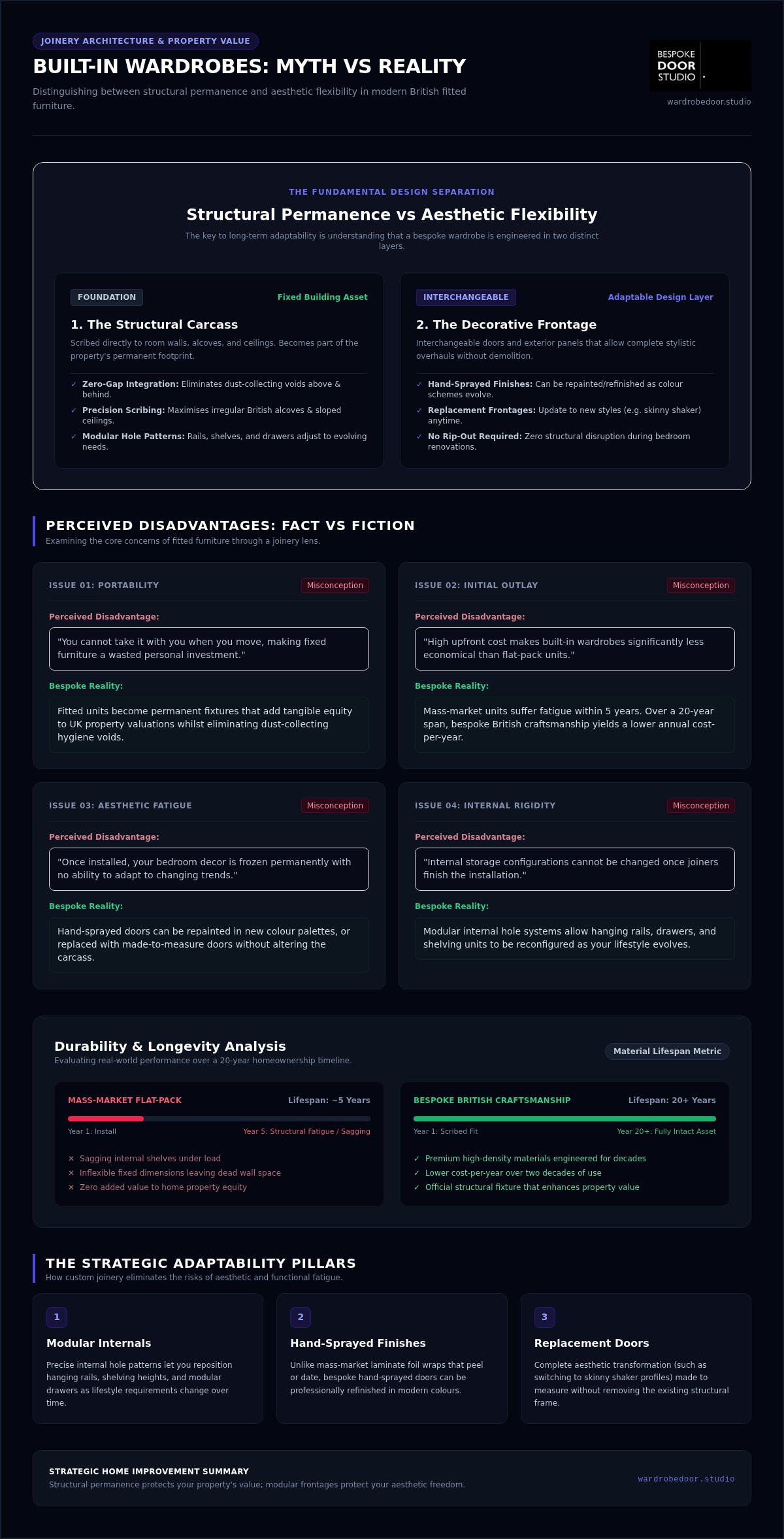
The permanence of fitted furniture is frequently cited as its biggest flaw. Whilst it’s true that the cabinetry remains with the property, this legal status as a fixture is exactly what adds tangible value to a UK home. Freestanding items are merely personal effects, yet a bespoke wardrobe becomes part of the building’s footprint. You might not be able to move the physical wardrobe, but a well-designed internal system allows you to move the layout to suit changing needs. From a practical perspective, the zero-gap nature of floor-to-ceiling storage eliminates the dust-collecting voids found above and behind freestanding units, significantly improving bedroom hygiene.
The Reality of the Initial Financial Outlay
High-quality joinery requires a larger upfront investment than mass-produced flat-pack furniture. To understand the true value, one must look at the lifespan of the materials. A budget freestanding unit often exhibits structural fatigue or sagging shelves within five years. In contrast, a bespoke installation using premium British materials is engineered to last decades. When you calculate the cost-per-year over a twenty-year period, the luxury option often proves more economical. Bespoke fitted wardrobes are an investment in the building’s fabric, often returning their cost in property valuation. By prioritising durability and timeless design, the initial outlay transitions from a simple expense into a strategic home improvement.
Myth-Busting the ‘Inflexibility’ of Bespoke Fitted Storage
A frequent criticism cited amongst the disadvantages of built in wardrobes is the perceived inability to update them. Many homeowners assume that once the cabinetry is scribed to the ceiling and walls, the room’s aesthetic is frozen for a generation. This is a fundamental misunderstanding of contemporary joinery. A high-end installation separates the structural carcass from the decorative elements. This distinction allows for significant visual and functional shifts without the need for structural demolition or messy rip-outs. It’s entirely possible to evolve your storage as your tastes change.
Modular Internals: Adapting to Your Lifestyle
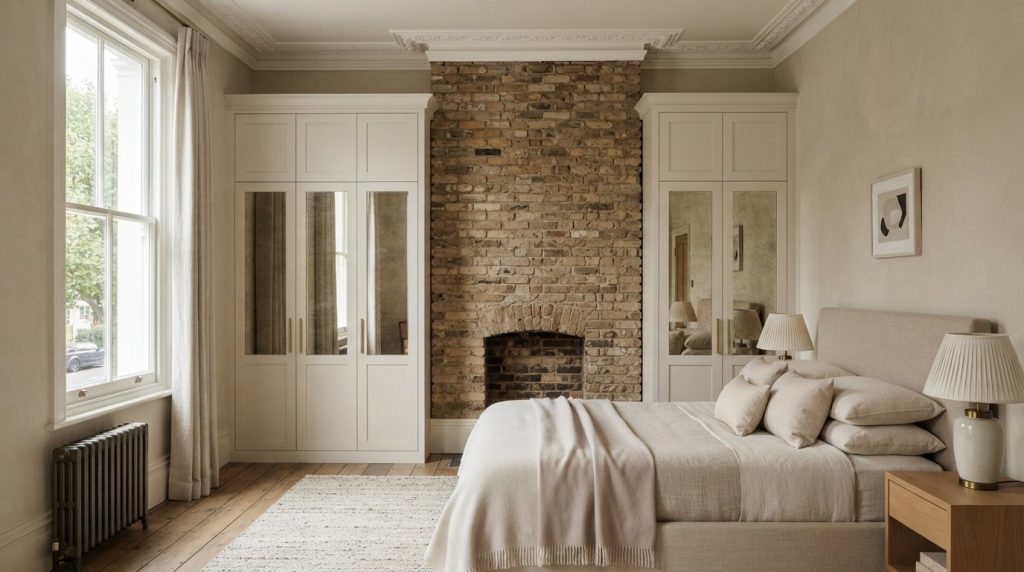
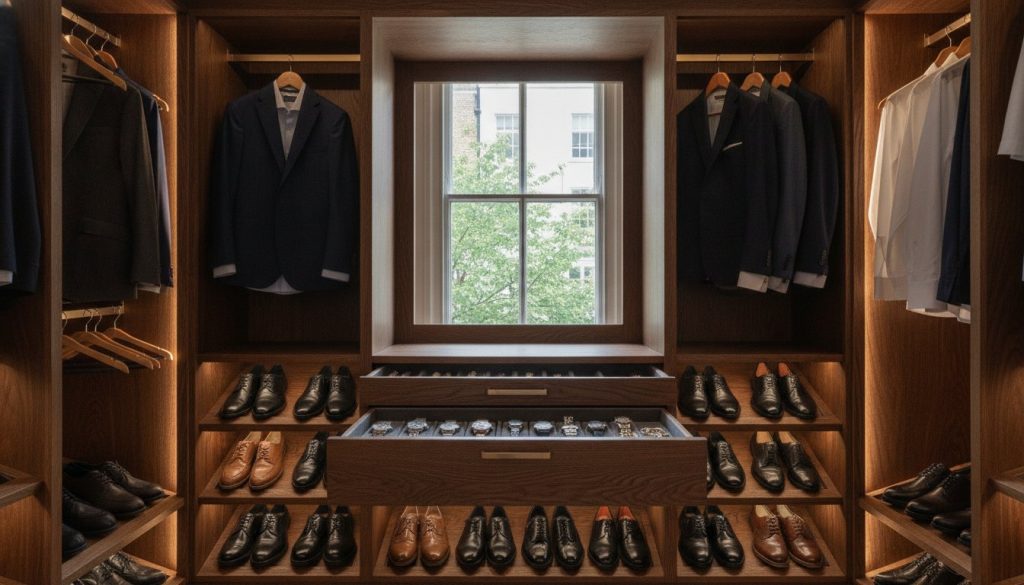
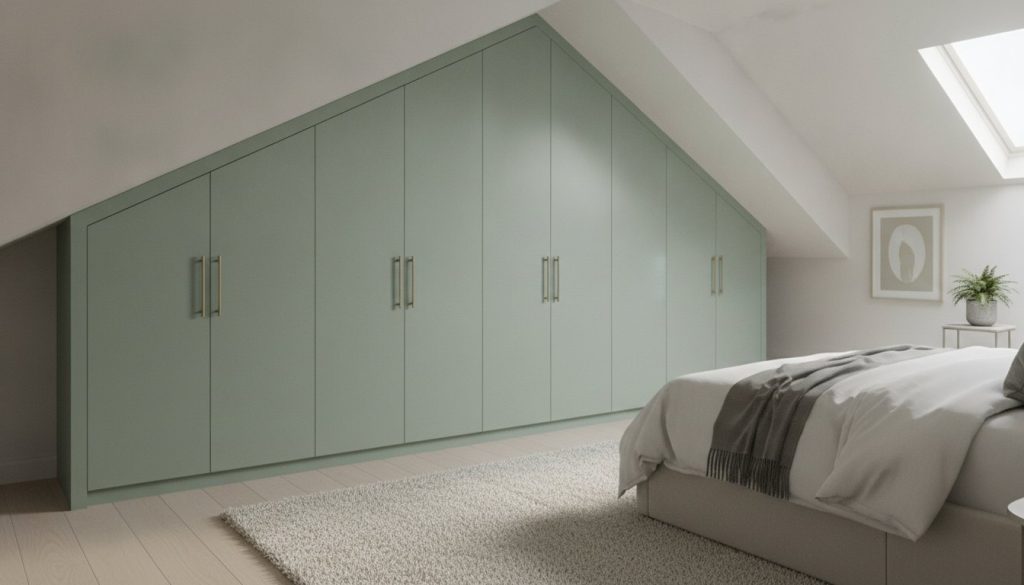
Bespoke carcasses serve as a sophisticated blank canvas for your home. Whilst the outer frame is fixed to the building’s fabric, the internal architecture remains remarkably fluid. Modern joinery systems utilise precise hole patterns, allowing hanging rails, drawers, and shelving to be reconfigured as your lifestyle changes. This modularity effectively debunks the “wasted space” myth often associated with awkward alcoves or sloped ceilings. By scribing the carcass precisely to these irregular British architectural features, you gain storage efficiency that freestanding units simply cannot replicate. It’s about creating a foundation that grows with you rather than a rigid box that limits your options.
Aesthetic Evolution Without the Rip-out
Refreshing your interior doesn’t necessitate a complete bedroom renovation. Opting for timeless designs, such as skinny shaker wardrobe doors, provides a versatile foundation that outlasts fleeting trends. Because our doors feature a professional hand-sprayed finish, they can even be refinished in a new colour should your decor palette evolve. For those seeking a more dramatic transformation, replacement wardrobe doors made to measure offer a strategic route to a brand-new aesthetic. Premium hinges and soft-close hardware ensure these updates remain seamless over decades of use. This adaptability proves that the perceived disadvantages of built in wardrobes are easily mitigated through meticulous planning and quality components.
You can explore the full breadth of these customisable options by visiting our wardrobe design studio to see how we bridge the gap between permanence and flexibility.
The True Cost of Quality: Is the Investment a Disadvantage?
Homeowners frequently list the upfront price as one of the primary disadvantages of built in wardrobes. This perception often stems from a failure to distinguish between mass-market “fitted” kits and genuine bespoke luxury. High-street retailers often supply standard-sized carcasses masked by oversized filler panels, creating a false economy. True bespoke joinery, however, is engineered from the ground up. Whilst the initial investment is higher, it eliminates the hidden costs associated with budget alternatives, such as peeling laminates, failing drawer runners, and sagging shelves that cannot support the weight of a standard wardrobe.
Choosing hand-sprayed finishing is a strategic durability choice rather than a mere aesthetic preference. Unlike factory-applied foils that prone to delamination in humid environments, a hand-sprayed surface provides a robust, repairable seal. Our commitment to British manufacturing further protects your investment. By producing every component in England, we ensure that matching parts and replacement doors remain available for years, a service rarely offered by international flat-pack conglomerates.
Material Matters: MDF vs Solid Wood vs Chipboard
The choice of substrate is critical in mitigating the long-term disadvantages of built in wardrobes. Many budget installers rely on low-density chipboard, which is porous and structurally weak. In the variable UK climate, chipboard can absorb ambient moisture, leading to the “musty” smell often associated with older fitted units. We utilise high-density moisture-resistant fibreboard (MDF) for our painted doors. It provides a superior, stable surface for fine finishes and resists the warping that can affect solid wood in centrally heated homes. This material choice ensures your cabinetry remains as crisp and functional in a decade as it is on the day of installation.
The Professional Installation Factor
Poor installation is the root cause of nearly 90% of complaints regarding fitted furniture. A “kit-fitter” typically forces pre-made boxes into a space, leaving large, unsightly gaps covered by thick plastic strips. In contrast, a bespoke joinery installer scribes every panel to the unique contours of your walls, floor, and ceiling. This level of precision is what allows bespoke fitted wardrobes to utilise every available millimetre of storage. By following the natural lines of the building, professional installation turns architectural quirks into functional assets, ensuring the furniture feels like a natural extension of the room rather than an uncomfortably placed after-thought.
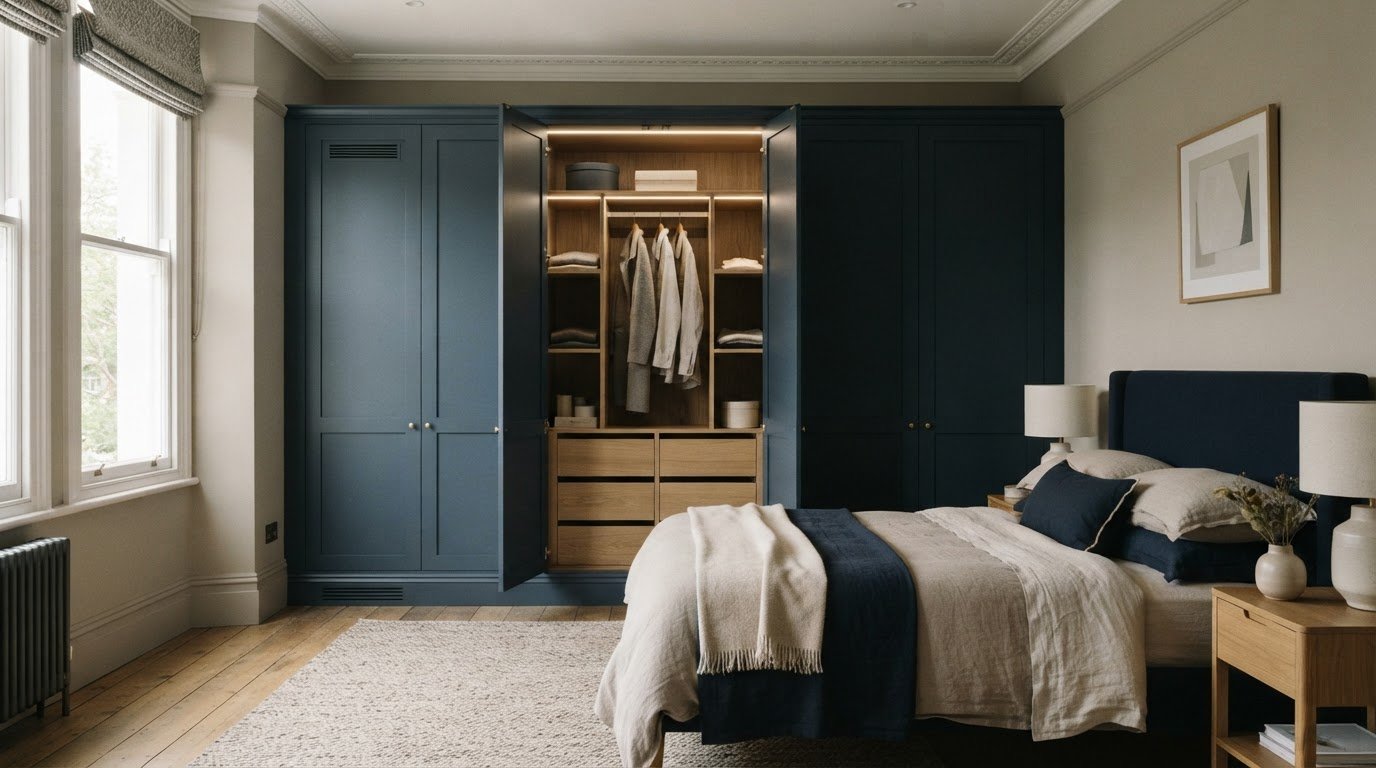
Addressing the ‘Permanence’ Issue: Can You Update a Built-in Wardrobe?
The belief that a fitted installation is a life sentence for your bedroom’s aesthetic is perhaps the most persistent of the disadvantages of built in wardrobes. Homeowners often fear that committing to a specific style today will leave them with an outdated interior in a decade. However, high-quality bespoke carcasses are engineered for a service life of 25 years or more. This longevity allows the structural foundation to remain whilst the decorative frontage evolves. Refacing existing cabinetry is a sophisticated, low-waste strategy that provides a complete visual transformation without the disruption of a full demolition.
This approach isn’t limited to luxury joinery; it is equally effective for upgrading standard modular systems. By utilising made-to-measure doors, you can elevate the appearance of an IKEA PAX frame or an older bespoke unit to a premium, hand-sprayed standard. The process involves precise technical measurements of your existing apertures and hinge positions, ensuring the new components integrate perfectly with the established frames. This method circumvents the environmental and financial costs of a total replacement whilst resolving the “permanence” drawback entirely.
The 3-Step Reface Strategy
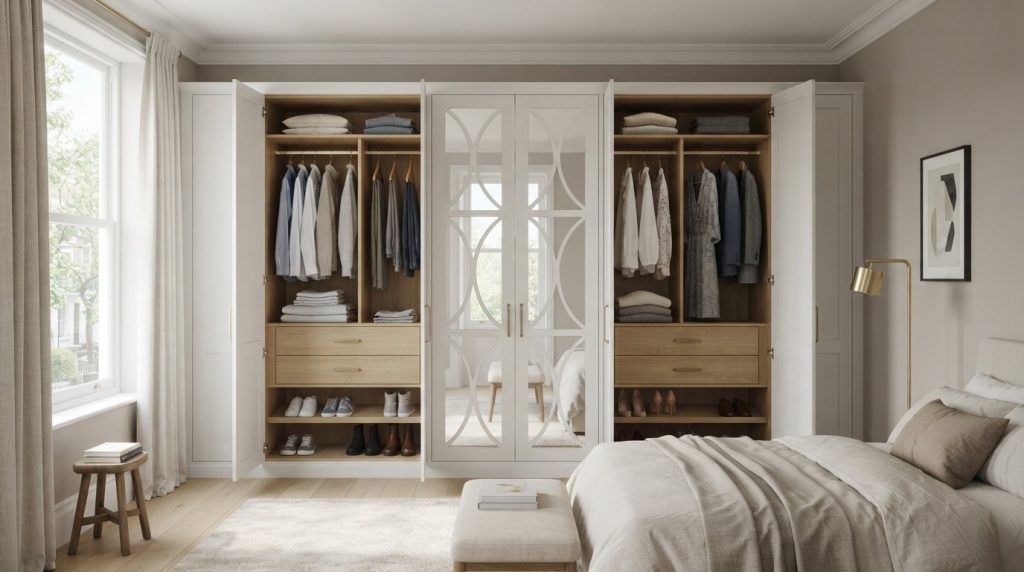
Refreshing your storage follows a logical progression that prioritises structural integrity. First, you must assess the carcasses for any signs of sagging or moisture damage. If the frames are sound, the second step is to select a new design language. Incorporating mirror fret wardrobe doors can instantly brighten a small room and add a layer of intricate, luxury detail. Finally, professional fitting ensures that new doors and contemporary hardware are perfectly aligned, delivering the crisp finish of a brand-new installation for a fraction of the investment.
When a Full Rip-out is Actually Necessary
There are instances where the disadvantages of built in wardrobes become unavoidable due to poor original craftsmanship. If a previous installer failed to provide the necessary 50mm standoff air void against an external wall, mould growth may have compromised the cabinetry. Structural failure in low-density chipboard frames or a fundamentally inefficient layout that wastes valuable floor space are also clear signals for a fresh start. In these cases, keeping a poorly designed carcass is a false economy. Planning a new project allows you to implement superior materials and modern ventilation routes, ensuring your new investment is truly “future-proof”.
Explore our range of bespoke replacement doors to revitalise your existing cabinetry with a professional, hand-sprayed finish.
Designing Out the Drawbacks: The Wardrobe Door Studio Approach
The perceived disadvantages of built in wardrobes, such as a lack of flexibility or the fear of a dated aesthetic, are effectively engineered out of every project we undertake. At Wardrobe Door Studio, we view fitted furniture as a dynamic architectural feature rather than a static storage box. By combining high-density materials with advanced modular carcasses, we ensure your investment remains both functional and beautiful for decades. Our approach centres on the belief that luxury should be adaptable. We provide the structural foundation of a permanent fixture whilst maintaining the aesthetic freedom to update your room’s character whenever you choose.
For trade professionals and experienced DIY enthusiasts, our ‘Supply-Only’ service offers a sophisticated bridge to bespoke luxury. This pathway allows you to access our premium components and hand-sprayed doors without the full installation package. It provides a strategic, cost-effective route to high-end joinery for those who have the technical skill to manage the fitting themselves. In a world increasingly dominated by disposable, flat-pack furniture, we offer a sustainable alternative rooted in durability and precision engineering.
British Craftsmanship as a Guarantee
Dealing directly with a UK-based manufacturer offers a level of accountability and quality control that mass-market importers simply cannot match. Our hand-sprayed finishing process, conducted entirely in England, creates a deep, resilient coating that far outlasts standard factory-applied foils. This commitment to regional manufacturing is our hallmark of quality. It provides the peace of mind that comes from knowing every door and carcass is crafted to meet the specific demands of British architecture, from uneven period alcoves to minimalist modern developments. Professional design consultations further ensure that every millimetre of space is utilised, preventing the “wasted volume” issues common in off-the-shelf systems.
Your Next Steps to Bespoke Luxury
Transitioning from a generic storage solution to bespoke luxury begins with a clear vision for your space. Whether you are planning a complete bedroom renovation or a strategic reface of existing frames, our expert team provides the guidance needed to avoid common joinery pitfalls. For those managing larger developments or professional commissions, our range of trade supplier wardrobe doors offers the technical precision and aesthetic variety required for high-specification projects. We invite you to book a consultation or browse our luxury door styles today to discover how our British-made solutions can transform your home into a sanctuary of organised elegance.
Investing in Future-Proof Storage
The perceived disadvantages of built in wardrobes often dissipate when you prioritise bespoke precision over mass-market compromises. We’ve explored how structural permanence actually serves as a capital asset to your home, whilst modular internals and replacement door options ensure your aesthetic remains remarkably fluid. By choosing high-density materials and professional installation, you eliminate the risks of structural failure and moisture issues commonly associated with budget alternatives.
Our commitment to luxury craftsmanship is rooted in our regional heritage. Every component is hand-sprayed and finished in England, providing a resilient surface that outlasts factory-applied foils. With our bespoke made-to-measure precision and expert installation across the UK, we bridge the gap between traditional reliability and contemporary design. This meticulous approach ensures your wardrobe is a timeless addition to your interior architecture rather than a fleeting trend.
Explore our bespoke wardrobe door collections and transform your space today. You can move forward with absolute confidence, knowing your home is equipped with storage that is as adaptable as it is enduring.
Frequently Asked Questions
What are the main disadvantages of built-in wardrobes compared to freestanding ones?
The primary disadvantages of built in wardrobes are the higher upfront investment and their status as permanent property fixtures. Unlike freestanding units, you cannot relocate them to a new house. However, this permanence is balanced by their ability to reclaim up to 40% more storage space by utilising floor-to-ceiling heights. Whilst freestanding furniture is portable, it often leaves awkward gaps that accumulate dust and reduce the room’s overall aesthetic symmetry.
Do built-in wardrobes cause damp or mould issues in UK homes?
Built-in wardrobes do not inherently cause damp; issues only arise from poor design against cold external walls. Professional installers prevent mould by maintaining a 50mm standoff air void and incorporating ventilation gaps in the plinths and cornices. Using moisture-resistant high-density fibreboard (MDF) also ensures the cabinetry remains stable. When these technical specifications are met, the furniture protects your clothing while maintaining the structural health of your property.
Can I take my built-in wardrobe with me if I move house?
You cannot take a built-in wardrobe with you because it is legally classified as a fixture under UK conveyancing law. Once cabinetry is scribed and attached to the walls, it becomes part of the building’s fabric. Whilst this limits portability, it significantly enhances the “move-in ready” appeal of your home. The investment stays with the property, often providing a tangible uplift in equity that freestanding furniture simply cannot offer.
Are fitted wardrobes a good investment for increasing house value?
Professionally installed bespoke wardrobes are excellent investments that can boost perceived property value by 5% to 15%. Estate agents frequently report that integrated storage makes bedrooms appear larger and more organised, which expedites property transactions. By converting awkward alcoves or chimney breasts into functional assets, you are essentially increasing the usable square footage of the room, a feature highly prized in the competitive UK housing market.
How difficult is it to update the look of a built-in wardrobe later on?
Updating the aesthetic is remarkably straightforward when the original carcasses are of high quality. You don’t need to rip out the entire installation to achieve a contemporary look; instead, you can simply replace the doors and hardware. Choosing hand-sprayed finishes allows for future colour changes, whilst made-to-measure doors facilitate a complete style evolution. This flexibility ensures your storage remains a timeless element of your interior design for decades.
Why are bespoke wardrobes more expensive than high-street options?
Bespoke wardrobes command a premium because they use superior materials like moisture-resistant MDF rather than the low-density chipboard found in high-street kits. Every component is hand-sprayed in England and precisely scribed to your room’s unique contours. This level of craftsmanship eliminates unsightly filler panels and ensures structural longevity. You are investing in a durable architectural feature tailored specifically to your home’s dimensions rather than a mass-produced, standard-sized box.
Can you change the doors on a fitted wardrobe without replacing the frame?
You can absolutely change the doors on a fitted wardrobe without disturbing the structural frames. This process, known as refacing, is an efficient way to modernise your bedroom whilst retaining sound cabinetry. We provide made-to-measure doors in styles like skinny shaker or mirror fret that fit perfectly onto existing bespoke or modular carcasses. It’s a sustainable, cost-effective strategy that resolves one of the most common disadvantages of built in wardrobes.
How long should a high-quality bespoke fitted wardrobe last?
A high-quality bespoke fitted wardrobe should easily last 20 to 25 years or more. Premium carcasses made from 18mm high-density board are engineered to resist sagging and structural fatigue over decades of use. Whilst mass-market flat-pack units often fail within seven years, our hand-sprayed finishes and robust hardware ensure your installation remains functional and beautiful. The longevity of the structural foundation provides a reliable base for future aesthetic updates.