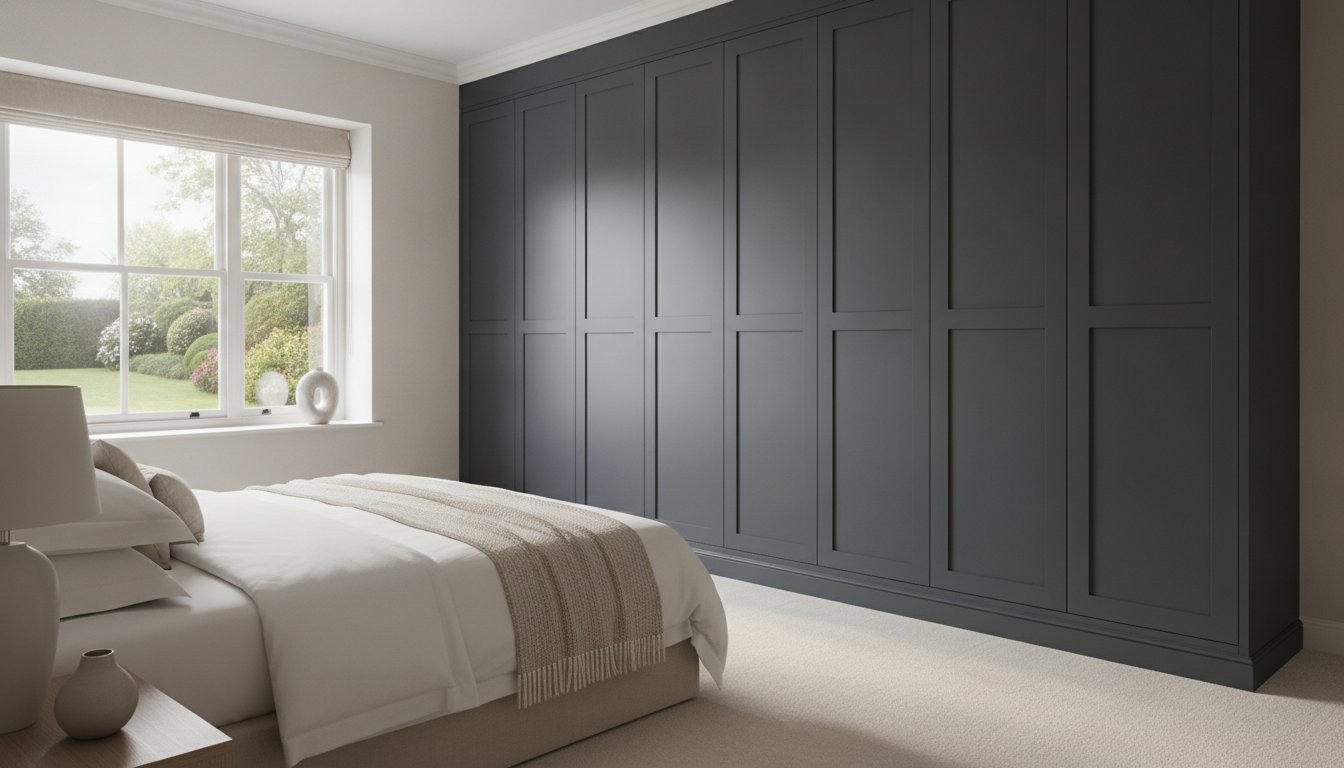
The most sophisticated bedroom renovations in 2026 don’t start with a sledgehammer; they begin with the precision of high-end refacing. Many homeowners feel that their outdated, bulky wardrobes anchor their entire aesthetic in the past, yet they rightfully fear the disruption and “cheap” finish often associated with quick fixes. Changing wardrobe doors for a new look is a deliberate design strategy that leverages the structural integrity of your existing furniture to deliver a bespoke, luxury result. You don’t have to sacrifice quality for convenience when you choose British craftsmanship tailored to your exact specifications.
In this guide, we’ll show you how to transform your space using hand-sprayed finishes and architectural styles like Skinny Shaker or Mirror Fret designs. We’ll explore why handleless push-to-open systems have seen a 300% surge in popularity and how to ensure your made-to-measure doors fit with millimetre accuracy. You’re about to discover a path to a refined, modern bedroom that avoids the high cost of a full renovation whilst achieving a flawless, designer finish.
Key Takeaways
- Learn how changing wardrobe doors for a new look provides a sustainable and sophisticated alternative to disruptive full-scale bedroom renovations.
- Explore how architectural styles like Skinny Shaker and Mirror Fretwork can manipulate light and space to redefine your interior aesthetic.
- Recognise why made-to-measure precision is essential for overcoming common installation challenges such as sloped ceilings or irregular wall surfaces.
- Compare the enduring value of professional hand-sprayed finishes against inferior factory-produced options for a truly bespoke result.
- Acquire a structured five-step checklist to guide your transition from an initial design concept to a completed luxury wardrobe transformation.
The Art of Changing Wardrobe Doors for a New Look
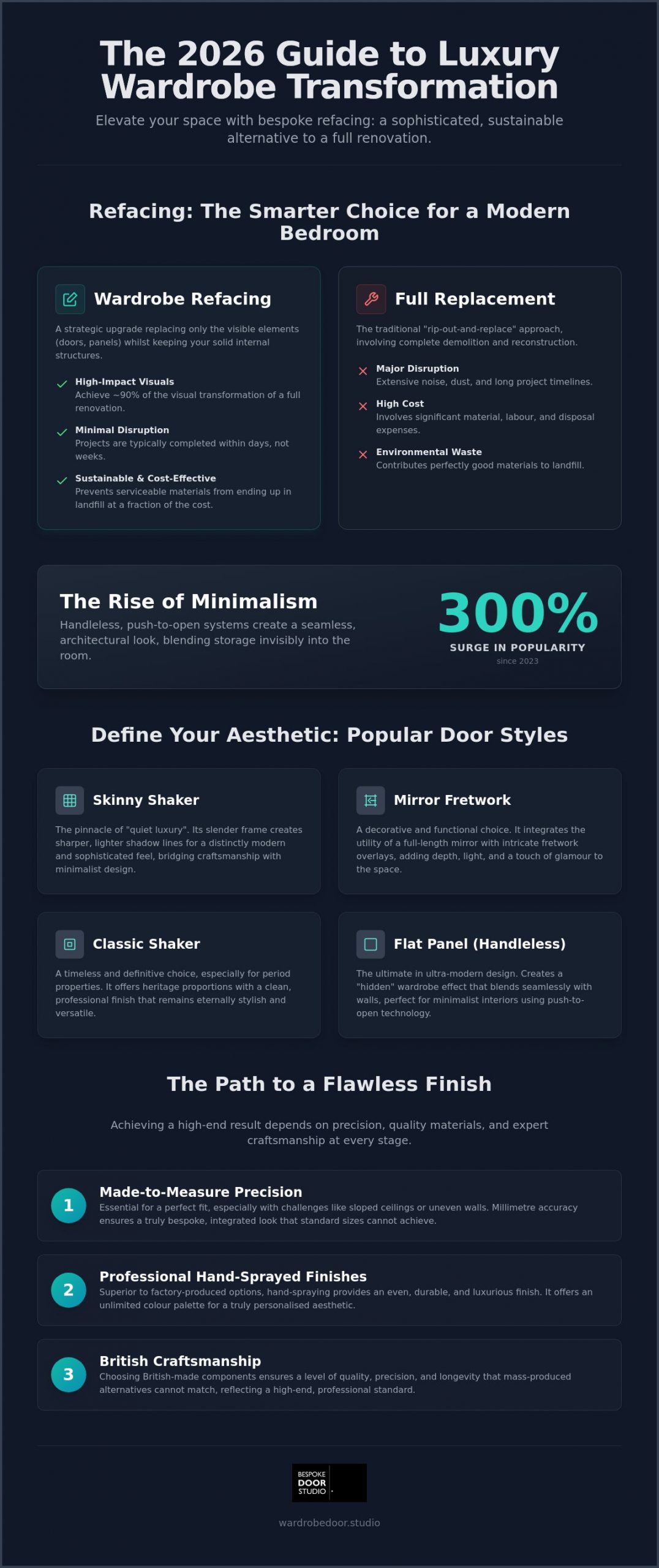
Refacing is the strategic decision to replace only the visible elements of your storage—the doors, hinges, and end panels—whilst retaining the existing structural carcasses. It’s a sophisticated approach that acknowledges that the internal framework of a wardrobe often outlives its aesthetic appeal. By changing wardrobe doors for a new look, homeowners achieve roughly 90% of the visual transformation seen in a full renovation for a significantly reduced investment. This isn’t a compromise; it’s an intelligent design choice that prioritises high-impact results over unnecessary demolition.
Luxury refacing goes beyond simple utility. It involves the use of bespoke materials and professional finishes to elevate furniture that has lost its lustre. In 2026, the trend has shifted towards “quiet luxury,” where the focus is on the tactile quality of the surface and the precision of the fit. Instead of settling for mass-produced components, this method allows for a completely personalised aesthetic that feels intentional and permanent.
Refacing vs. Replacing: Making the Right Choice
The decision to reface hinges on the quality of your current cabinetry. If your internal carcasses are level, sturdy, and free from structural damage, they provide a perfectly viable foundation for a luxury upgrade. The history of the wardrobe shows how these pieces have evolved from simple chests to complex built-in systems, yet the core requirement for stability remains constant. Choosing to reface is the most sustainable path available. It prevents serviceable materials from entering landfill and keeps home disruption to a minimum. Most projects are completed in a fraction of the time required for a full fit-out, allowing you to enjoy your refreshed bedroom within days.
The 2026 Shift Towards Bespoke Details
Modern interior design has moved decisively away from the “rip-out-and-replace” culture of previous decades. Instead, we’re seeing a rise in the “curated bedroom,” where wardrobes are treated as architectural features. This shift has rendered off-the-shelf, standard-sized doors obsolete. Discerning homeowners now demand bespoke, made-to-measure solutions that align perfectly with their room’s unique dimensions. Changing wardrobe doors for a new look now involves selecting British-made components that offer a level of precision and longevity that mass-produced alternatives simply cannot match. This movement focuses on hand-sprayed finishes and meticulous craftsmanship, ensuring that every edge reflects a high-end, professional standard.
Defining Your Aesthetic: From Skinny Shaker to Mirror Fretwork
Selecting the right profile is the cornerstone of any bedroom transformation. While the structural integrity of your furniture remains unchanged, the door style dictates the room’s entire atmosphere. Changing wardrobe doors for a new look allows you to transition from dated, heavy woodgrains to the refined lines of contemporary British design. This process is about more than a simple update; it is a calculated opportunity to redefine your architectural identity.
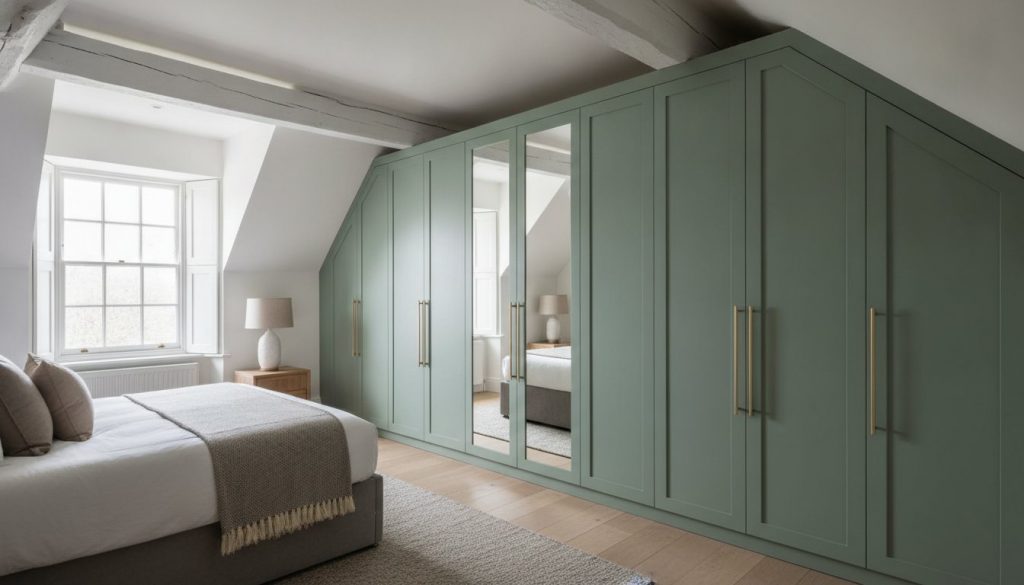
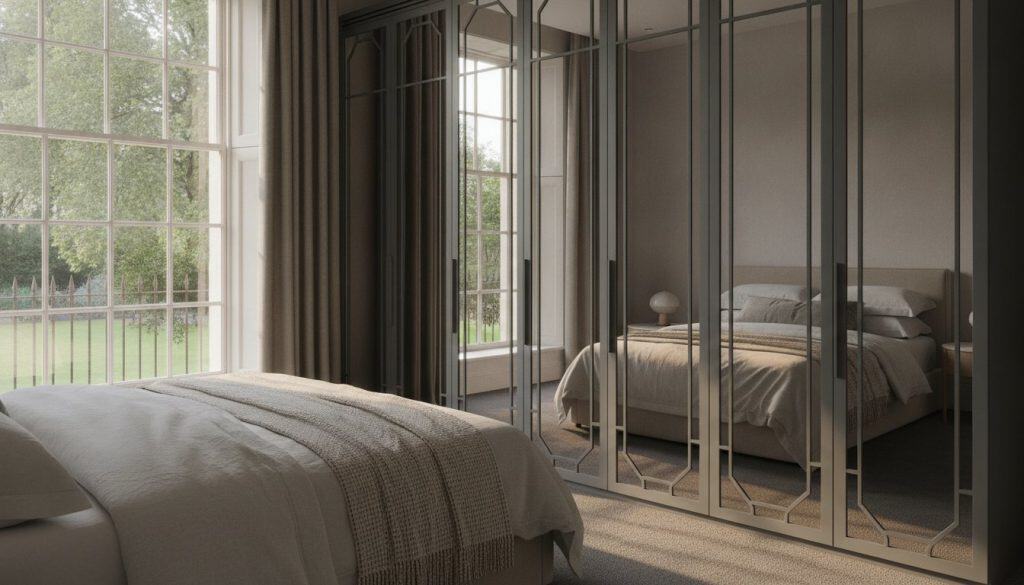
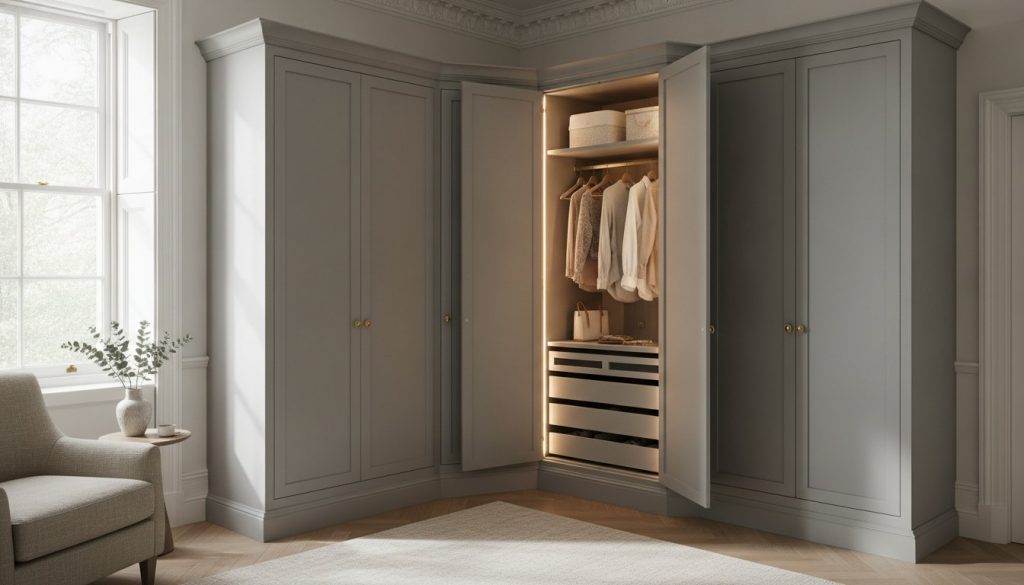
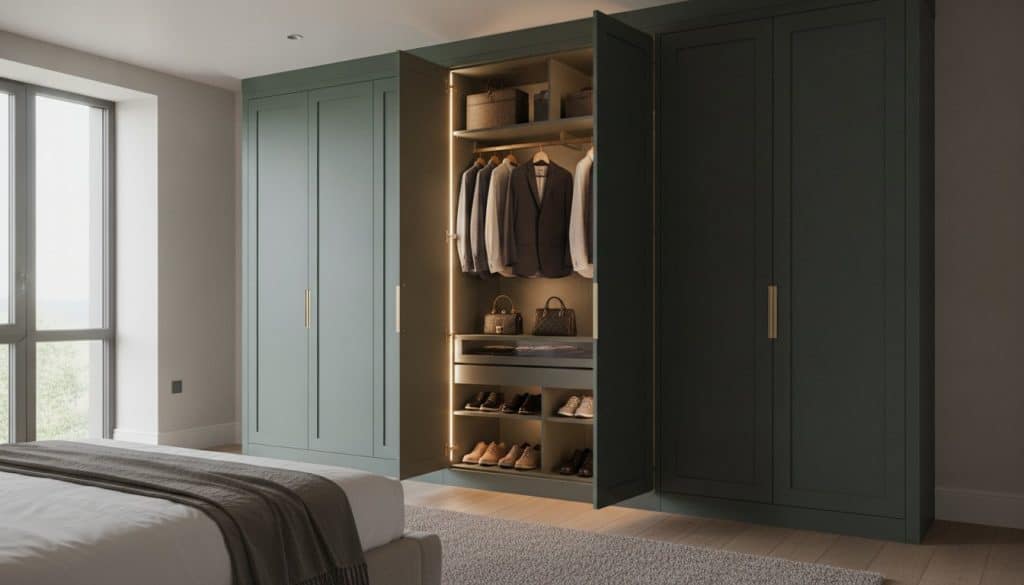
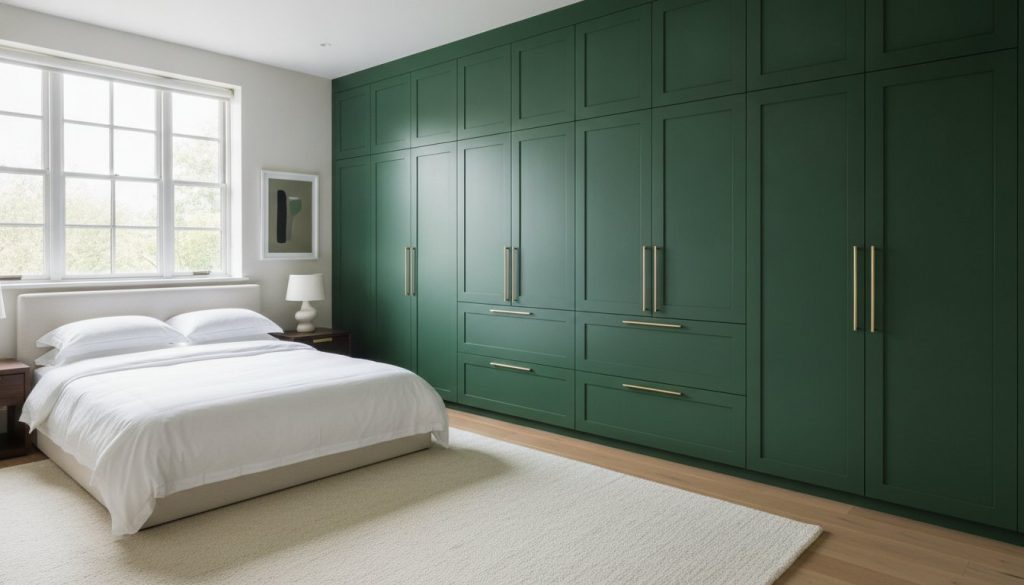
Skinny shaker wardrobe doors represent the pinnacle of “quiet luxury” in 2026. Unlike the broader frames of traditional cabinetry, the skinny variant features a slender rail profile. This creates a sharper shadow line that feels significantly lighter and more modern. Conversely, mirror fret wardrobe doors offer a more decorative solution, integrating the utility of a full-length mirror with the decorative intricacy of fretwork overlays.
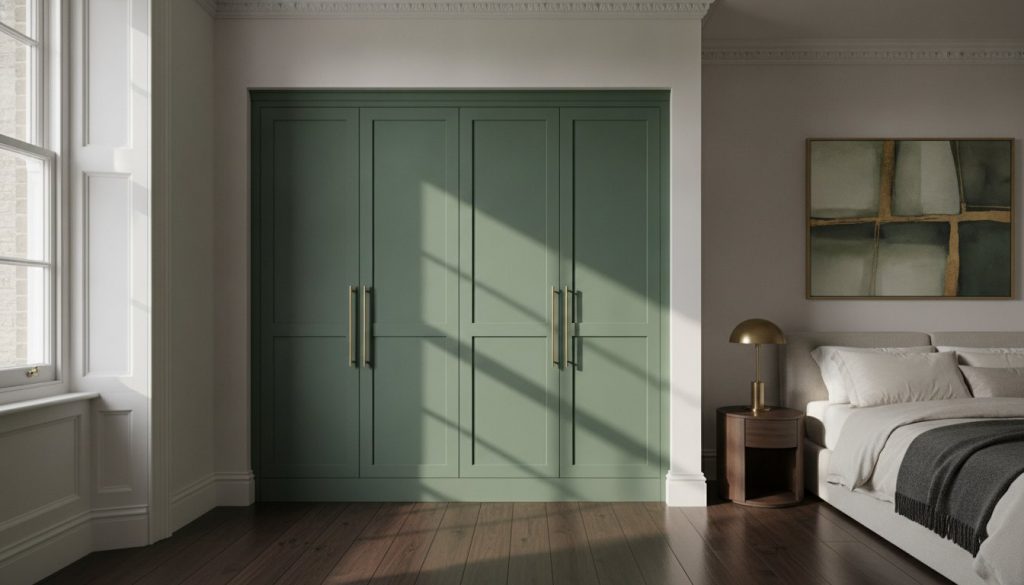
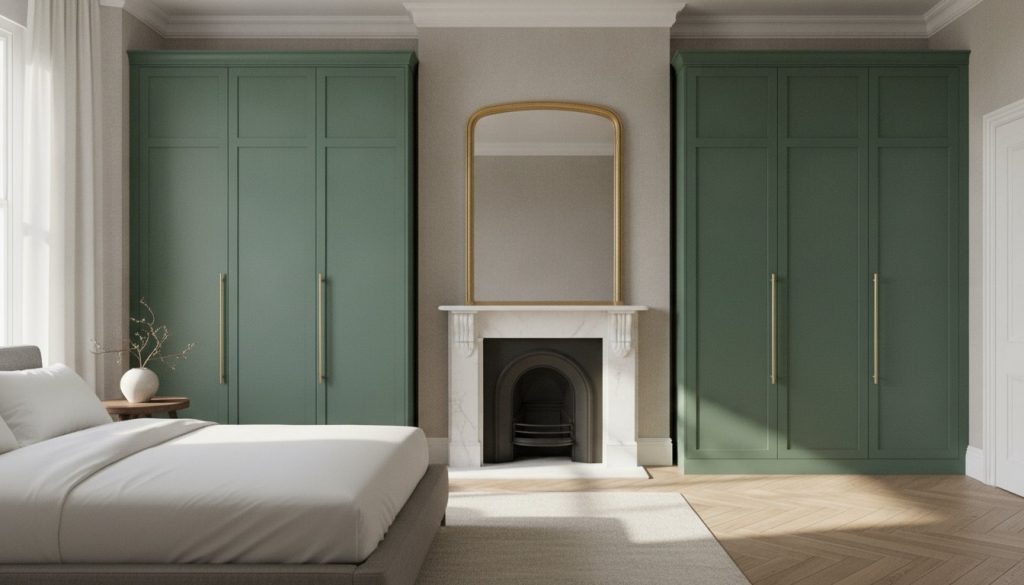
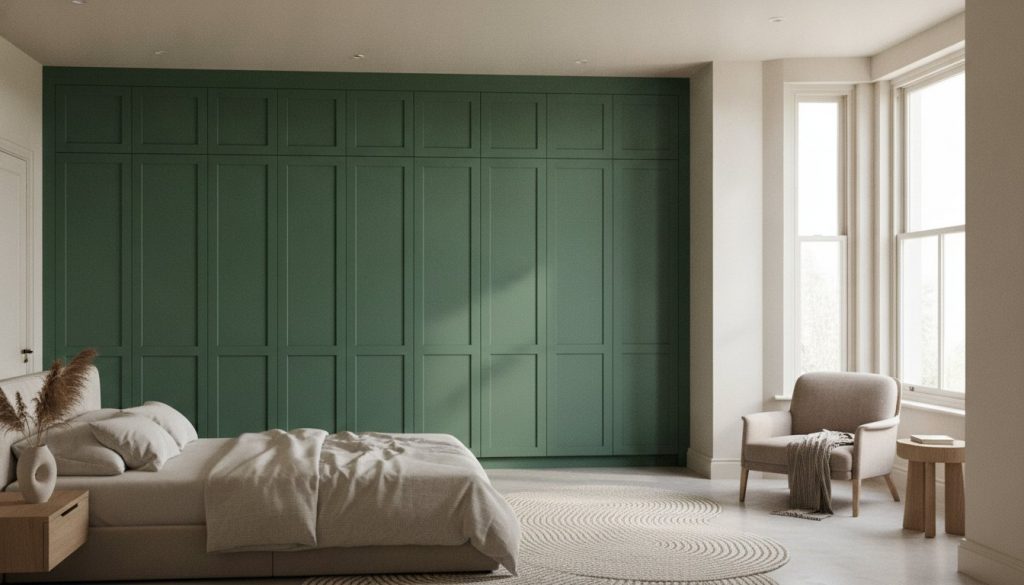
For those seeking a timeless aesthetic, the Classic Shaker remains a definitive choice for period properties. It provides a sympathetic nod to heritage proportions whilst maintaining a clean, professional finish. In ultra-modern interiors, flat panel doors can create a “hidden” wardrobe effect. By removing external hardware and utilising push-to-open technology, which has seen a 300% increase in popularity since 2023, you can create a wall of colour that blends seamlessly with your bedroom walls.
Modern Minimalism with Skinny Shaker Designs
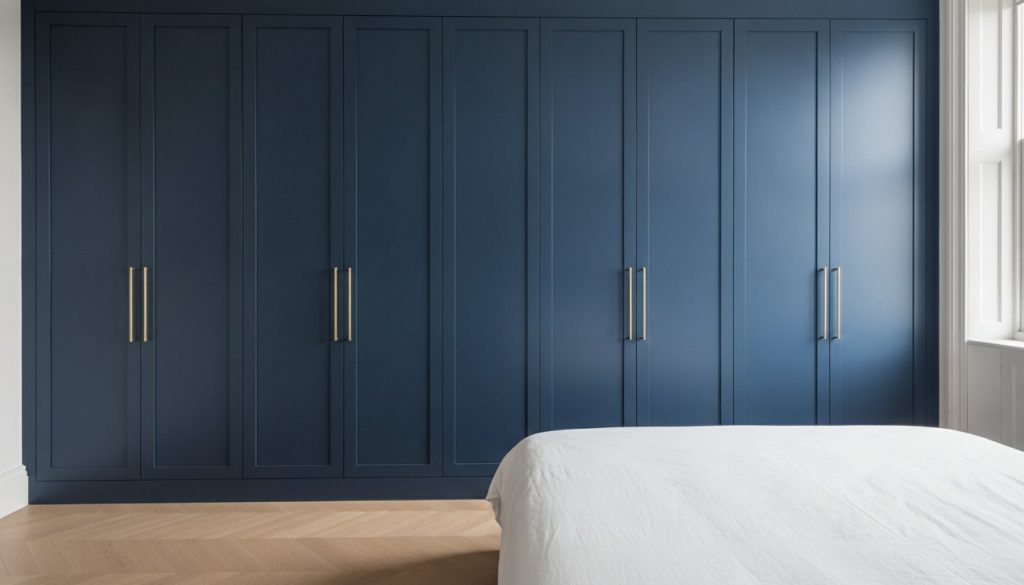
The skinny shaker is defined by its narrower frames, typically offering a sleeker profile than its traditional counterparts. High-end UK interior designers have made this style a favourite for 2026 because it bridges the gap between artisanal craftsmanship and minimalist aesthetics. To achieve a sophisticated result, opt for warm neutrals or deep, moody hues. Soft stone, taupe, and navy are currently the leading colour choices, providing a grounded feel that complements the slimline frame. If you’re ready to refine your space, you can explore our full range of luxury finishes to see these colours in person.
The Luxury Appeal of Mirror Fretwork
Fretwork overlays transform a standard mirrored surface into a sophisticated design statement. These patterns break up large reflective areas, making them feel more like high-end cabinetry than a simple utility. When choosing a pattern, consider the existing lines in your room. Geometric modernism suits contemporary spaces, whereas traditional English fretwork adds a layer of heritage to more classic environments. Beyond the aesthetic, these doors are highly practical in smaller rooms under 12 square metres. They bounce light across the space whilst providing the functionality of a dressing mirror. Ultimately, changing wardrobe doors for a new look ensures that your storage contributes to a cohesive, high-end environment.
The Technical Superiority of Made-to-Measure Replacements
Precision is the invisible hallmark of luxury. Whilst aesthetics often drive the initial desire for a refresh, changing wardrobe doors for a new look relies entirely on technical precision to succeed. The difference between a professional renovation and a DIY attempt is found in the millimetres. High-end interiors demand a level of fitment that standard retail components simply cannot provide. By opting for replacement wardrobe doors made to measure, you ensure that every line is intentional and every gap is uniform.
The material composition is equally critical. We utilise high-density fibreboard (HDF) as our primary substrate because it offers superior stability compared to standard chipboard. HDF provides a denser, smoother surface that is essential for achieving a flawless finish. Stability is further enhanced by the thickness of the door itself. Whilst mass-market retailers often provide 15mm or 18mm alternatives, a true luxury feel requires 18mm or 22mm door thicknesses. This extra substance provides an architectural weight and a reassuringly solid sound when the door closes, anchoring the wardrobe as a permanent feature of the room.
Why Standard Sizes Often Fail
Standard “big-box” doors are designed for a perfect world that rarely exists in British housing. Walls are seldom perfectly plumb, and floors often have subtle inclines. A 5mm discrepancy in a standard door size creates a “gap problem” that immediately ruins the built-in aesthetic, leaving unsightly shadows or uneven lines. Older wardrobe carcasses also frequently feature non-standard hinge hole positions. Forcing a standard door onto these frames often results in misaligned panels that catch or sag over time. Additionally, most standard doors are foil-wrapped; a process where a thin plastic film is heat-shrunk over the board. This material is prone to peeling and cannot match the depth of a professional lacquer.
The Engineering Behind Bespoke Doors
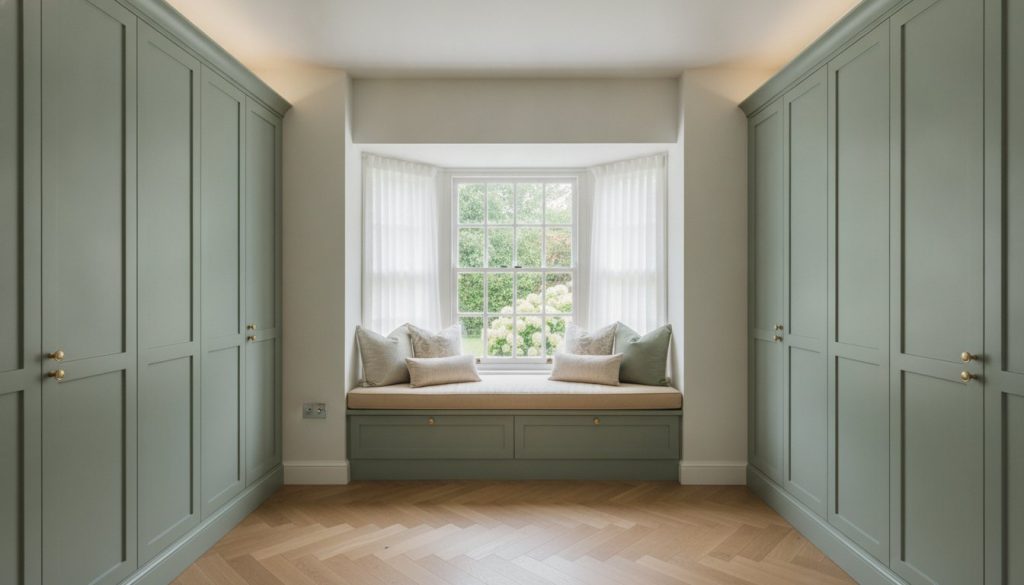
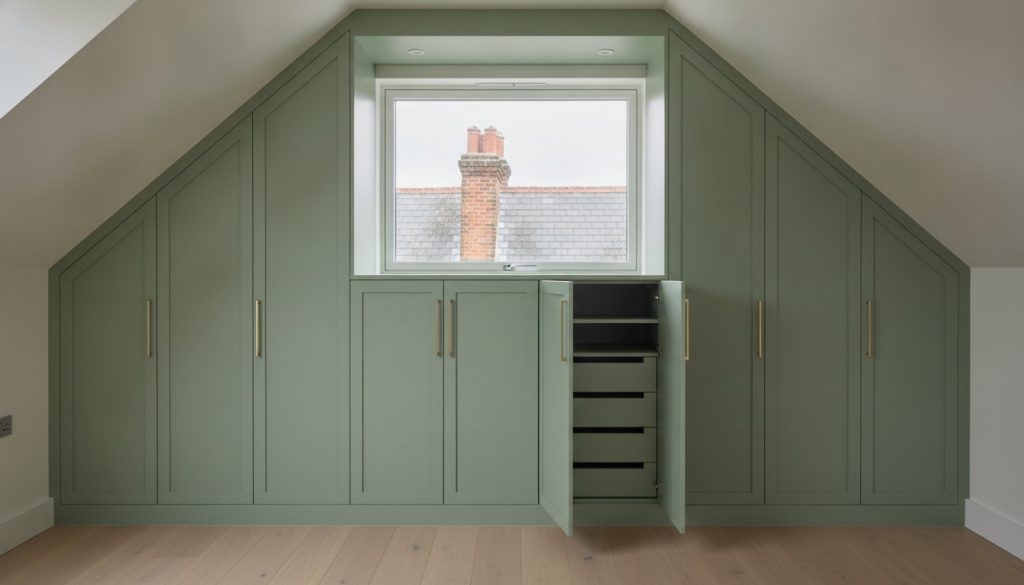
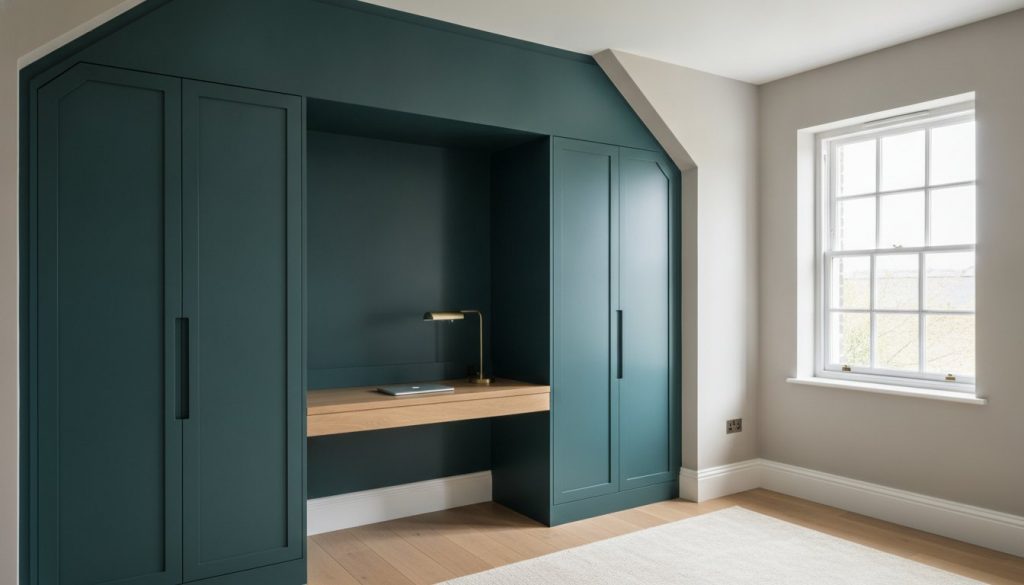
Bespoke manufacturing replaces guesswork with engineering. Every door is produced using precision CNC cutting technology, ensuring millimetre-perfect accuracy across every dimension. This level of control allows for sophisticated design choices, such as extending doors to provide floor-to-ceiling coverage. This eliminates the need for bulky, unsightly plinths or filler panels that often clutter standard designs. The process begins with detailed technical drawings that account for your room’s specific quirks, including sloped ceilings or irregular alcoves. This rigorous planning ensures a perfect fit the first time, providing a seamless transition when changing wardrobe doors for a new look.
Achieving a Designer Look with Hand-Sprayed Finishes
The surface of your furniture is the most tactile element of your bedroom design. Whilst the profile provides the structure, the finish provides the soul. Changing wardrobe doors for a new look is only truly successful if the final coating matches the architectural ambition of the project. A high-end renovation demands more than just a new colour; it requires a finish with depth, durability, and a flawless texture that mass-produced alternatives simply cannot replicate.
Many commercial providers rely on foil-wrapping, where a thin vinyl skin is heat-applied to a board. Whilst initially attractive, these finishes often possess a “plastic” sheen and are prone to delamination near heat sources or in humid environments. In contrast, professional hand-sprayed finishing utilises high-quality lacquers that bond with the substrate. This creates a surface that is not only more resilient but also entirely repairable. If a sprayed door is scratched, it can be sanded and refinished, whereas a foil-wrapped door must be discarded. This commitment to longevity is a core pillar of luxury refacing.
Customisation is where this process truly excels. We provide meticulous colour matching to prestigious palettes such as Farrow & Ball or Little Greene. This allows you to coordinate your cabinetry perfectly with your interior walls or create a bold, contrasting statement piece. If you’re ready to select your perfect shade, you can order a hand-sprayed colour sample to experience the quality firsthand.
The Process of Professional Spraying
Achieving a glass-smooth surface requires a rigorous multi-stage priming process. We apply several layers of high-build primer, sanding between each coat to eliminate any imperfections in the grain. This level of detail is only possible in a controlled-environment spray booth, where temperature and dust levels are strictly monitored. This method is vastly superior to hand-painting with a brush, which inevitably leaves visible strokes and an uneven thickness. You can also tailor the mood of your room by selecting the exact sheen level, ranging from a sophisticated Matt to a luminous High Gloss.
British Manufacturing and Quality Control
Our doors are hand-sprayed in England, ensuring that every component meets our exacting quality control standards whilst reducing the carbon footprint associated with international shipping. We specifically use High-Density Fibreboard (HDF) as our substrate for painted finishes. Unlike solid wood, which naturally expands and contracts with seasonal temperature changes, HDF remains perfectly stable. This prevents the unsightly cracking at the joints that often plagues traditional timber doors. British-made quality is the intersection of traditional craft and modern spray technology.
The Professional Path to a Wardrobe Transformation
Transitioning from an initial design concept to a completed master suite requires more than just a keen eye for aesthetics; it demands a methodical approach to technical execution. Changing wardrobe doors for a new look is a journey that bridges the gap between your existing cabinetry and a high-end bespoke fitted wardrobe aesthetic. Whilst the prospect of a bedroom refresh is exciting, the success of the project relies on a structured progression from structural audit to final fitment.
In contrast to the “quick-fix” culture often promoted on social media, luxury refacing is a deliberate engineering process. It’s about ensuring that every component—from the HDF substrate to the hand-sprayed lacquer—functions in harmony with your room’s architecture. Following a professional roadmap ensures that the final result feels like a permanent, intentional part of your home rather than a temporary update.
Your 5-Step Wardrobe Transformation Checklist
- Conduct a structural audit: Examine your existing carcasses for stability. Ensure the internal shelving and side panels are secure and free from damp or significant warping.
- Identify your style profile: Determine whether your space suits the minimalist lines of a Skinny Shaker, the decorative depth of Mirror Fretwork, or the seamless appearance of Flat Panels.
- Secure professional measurements: Avoid the pitfalls of “standard” sizes. Obtain millimetre-perfect dimensions to account for settled floors or irregular wall angles.
- Select a curated colour: Choose a hand-sprayed finish that complements your room’s specific lighting conditions. Consider how the shade will transition from morning sunlight to evening warmth.
- Arrange professional installation: Ensure that your investment is protected by expert fitting. This is the final step in changing wardrobe doors for a new look that guarantees longevity.
Why Professional Installation Matters
Executing the final fitment is often where DIY projects falter. Older wardrobe frames have often settled over time, resulting in carcasses that are no longer perfectly square. Aligning large, heavy doors on these frames requires specialist tools and a deep understanding of technical hinge adjustments. A professional installer possesses the expertise to manipulate these components, ensuring perfectly uniform gaps and a smooth, silent closing action. This precision prevents the doors from catching or sagging, which is a common failure in amateur installations. Choosing a professional service provides a comprehensive guarantee that covers the entire process, offering peace of mind that your bedroom’s new aesthetic is built to endure. If you’re ready to begin your transformation, we invite you to consult with our specialists who understand the nuances of luxury British craftsmanship.
Redefining Your Bedroom with Precision Craftsmanship
Transforming your bedroom doesn’t require the upheaval of a full structural renovation. By focusing on the intersection of technical precision and artistic finish, you can achieve a result that feels entirely bespoke. We’ve explored how made-to-measure HDF doors and professional hand-sprayed lacquers solve the common pitfalls of standard retail options. Changing wardrobe doors for a new look is a sophisticated investment in your home’s enduring value, provided you prioritise the quality of British manufacturing over mass-produced alternatives.
At Wardrobe Door Studio, we specialise in the meticulous production of Skinny Shaker and Mirror Fret designs. Every component is hand-sprayed in England to your exact colour specification, ensuring a depth of finish that factory-wrapped doors cannot match. Our end-to-end service manages everything from the initial design concept to the final professional installation, giving you absolute confidence in the finished aesthetic. Book a Design Consultation with Wardrobe Door Studio to begin your journey toward a refined, modern sanctuary. Your dream bedroom is closer than you think.
Frequently Asked Questions
Can you change wardrobe doors on existing frames?
Yes, you can certainly replace doors on existing carcasses provided the internal frames remain structurally sound and level. Most wardrobes utilise standard depths that accommodate modern hinge systems, making the process of changing wardrobe doors for a new look a highly effective way to refresh a room. This approach allows you to retain your current storage layout whilst completely transforming the external aesthetic.
Is it cheaper to replace wardrobe doors or buy a whole new wardrobe?
Replacing only the doors is significantly more cost-effective than investing in entirely new cabinetry. By retaining the existing internal carcasses, you avoid the substantial costs associated with manufacturing new frames and the intensive labour required for a full “rip-out” and installation. This strategy allows you to allocate your budget toward premium materials and hand-sprayed finishes that deliver a designer result.
Can I get bespoke wardrobe doors made to fit IKEA Pax frames?
Bespoke doors can be manufactured to the precise dimensions required for IKEA Pax frames, offering a high-end alternative to mass-market options. This allows you to combine the utility of standard carcasses with the luxury of Skinny Shaker or Mirror Fretwork styles. It is an ideal solution for homeowners who want to upgrade the perceived value of their furniture without the expense of a fully bespoke fit-out.
What is the best material for replacement wardrobe doors?
High-Density Fibreboard (HDF) is widely considered the superior material for luxury replacement doors, particularly those with a sprayed finish. Unlike solid timber, which can expand and contract with seasonal temperature changes, HDF remains perfectly stable and resists cracking at the joints. Its dense composition provides a glass-smooth surface that is essential for achieving a professional, high-end lacquer finish.
How do I measure my existing wardrobes for new doors?
You should measure the height and width of your existing doors rather than the frame openings to ensure a perfect match. It is also vital to record the exact centre-point of the hinge holes from the top and bottom edges of the door. Whilst homeowners can take preliminary measurements, we always recommend a professional technical survey to ensure millimetre-perfect accuracy before production begins.
What is the difference between foil-wrapped and hand-sprayed doors?
Foil-wrapped doors utilise a thin plastic film heat-shrunk over the board, whereas hand-sprayed doors feature multiple layers of professional lacquer. Sprayed finishes offer a much greater depth of colour and can be matched to specific palettes like Farrow & Ball. Unlike foil, which can peel or delaminate over time, a sprayed surface is durable and can be easily repaired if it sustains a scratch.
Can I change my hinged wardrobe doors to sliding ones?
It is possible to convert hinged wardrobes to sliding systems, though this typically requires the installation of a new track and may slightly reduce the usable internal depth. When changing wardrobe doors for a new look, most designers prefer to upgrade the existing hinged mechanism with soft-close technology. This maintains the furniture’s original architectural proportions whilst providing a modern, silent user experience.
How long does it take to replace wardrobe doors professionally?
A professional installation for a standard set of wardrobe doors typically takes between 2 to 4 hours to complete. Because the bespoke manufacturing and hand-spraying are handled off-site in a controlled environment, the time spent in your home is kept to an absolute minimum. This efficiency is one of the primary reasons refacing has become the preferred choice for high-end bedroom renovations in 2026.