Why do most luxury wardrobes feel like a compromise the moment you hang your first coat? You likely agree that there’s nothing more frustrating than investing in beautiful exterior doors only to find the interior lacks the precision your clothing collection deserves. Standard layouts often leave evening gowns crumpled and shoe collections in disarray, failing to respect the specific dimensions of your lifestyle. Achieving a truly functional bespoke wardrobe internal configuration is far more than a simple arrangement of shelves; it’s a technical audit of your personal inventory.
In this 2026 guide, you’ll learn how to master the art of interior design through expert insights into ergonomic layouts, technical specifications, and high-end finishes. We’ll show you how to eliminate inaccessible top shelves and poorly organised storage by utilising every centimetre of floor-to-ceiling height. You can expect a detailed look at how to synchronise internal aesthetics with your choice of Skinny Shaker or Flat Panel doors, ensuring your storage is as sophisticated as it is practical. We’ll also examine the latest trends in integrated LED lighting and the shift towards warm, quiet luxury materials that define the modern dressing room.
Key Takeaways
- Conduct a comprehensive technical audit of your garment types to ensure your storage reflects your specific lifestyle and inventory volumes.
- Apply precise ergonomic measurements to eliminate dead space and accommodate varied clothing lengths, from floor-length dresses to short-hang shirts.
- Understand the importance of luxury materiality and why high-quality internal finishes are essential to match the aesthetic of hand-sprayed doors.
- Master the art of bespoke wardrobe internal configuration by tailoring layouts to individual user behaviours and shared dressing requirements.
- Discover how professional technical drawings translate your storage needs into a perfectly engineered and highly functional interior.
The Principles of Bespoke Wardrobe Internal Configuration
The concept of storage has evolved significantly since the early history of the wardrobe, moving from simple wooden chests to the complex, integrated systems we see today. A high-end bespoke wardrobe internal configuration is no longer just a set of shelves; it’s a technical audit of your personal collection. Standard off-the-shelf units often fail because they assume every user has a uniform volume of shirts or dresses. This results in wasted vertical space or, worse, expensive garments being forced into cramped compartments that damage their structure. Precision-engineered storage requires a transition from a “one size fits all” mindset to a strategy that prioritises your specific inventory.
Luxury fashion collections demand varied hanging heights and depths. Whilst a standard unit might offer a single rail, a bespoke layout balances aesthetic symmetry with functional storage zones. This ensures that the internal architecture matches the elegance of your hand-sprayed doors whilst providing a dedicated home for everything from tailored suits to delicate knitwear. It’s about logic and longevity. By mapping out your requirements before manufacturing begins, you create a space that feels effortless to use every morning.
The Inventory-Led Design Approach
Effective design begins with a meticulous garment audit. You should count your long-hang items, such as evening gowns and coats, against short-hang items like shirts and trousers. This data dictates the rail placement and prevents the common issue of “dead space” at the base of the wardrobe. Don’t forget to account for accessory volumes. Handbags require specific shelf heights to maintain their shape; jewellery needs shallow, lined drawers; and hats often require deeper compartments. A professional plan also leaves room for future growth, ensuring your organisation remains intact as your collection expands.
Zoning Your Wardrobe for Daily Life
Ergonomic Planning: Calculating Hanging Heights and Shelf Depths
Precision is the hallmark of a luxury interior. A well-executed bespoke wardrobe internal configuration relies on millimetre-perfect ergonomics to ensure that every garment is housed with respect to its form. When measurements are imprecise, you often encounter “dead space” at the bottom of rails. This unused volume is a common failure in mass-produced units, where a single hanging height is expected to accommodate everything from floor-length coats to waist-length jackets. In a custom design, every vertical centimetre is synchronised with your specific physical height and your garment inventory.
Calculating the ideal shelf depth is equally critical. Whilst a standard wardrobe depth is 600mm to accommodate coat hangers, a shelf that matches this depth can often become a graveyard for forgotten items. Clothes pushed to the back are lost from sight and eventually forgotten. Effective design utilises a mix of fixed and adjustable shelving to prevent this. Adjustable systems provide a future-proofed solution, allowing you to reconfigure your storage as your collection evolves over time. If you are beginning a bedroom renovation, exploring bespoke fitted wardrobes can help you visualise how these technical specifications translate into a physical, high-functioning space.
Standard Hanging Specifications
To avoid crumpled hems and wasted space, we categorise hanging into three distinct tiers. Full-length hanging requires a clearance of 1600mm to 1800mm, which is essential for evening gowns, maxi dresses, and long winter coats. Half-length hanging typically needs between 900mm and 1100mm, providing ample room for shirts, blouses, and trousers folded over a hanger. For those with extensive professional wardrobes, double hanging is the most efficient strategy. By stacking two half-length rails vertically, you effectively double your storage capacity within the same footprint, keeping suits and shirts perfectly organised.
Shelving and Drawer Dimensions
The width of your shelving should be dictated by the items they hold rather than arbitrary standards. For folded knitwear, we recommend a width of 300mm to 350mm per stack; this prevents columns of jumpers from toppling over or becoming messy. Drawer depths should also vary based on their contents. Shallow drawers of approximately 150mm are ideal for delicates, socks, and ties, whilst bulkier items like heavy woollen jumpers require a depth of 250mm. Integrating pull-out trays at chest height adds a high-end boutique aesthetic, offering a dedicated space for watches, jewellery, and belts that remains visible and accessible at all times.
Luxury Materiality: Beyond Standard Wardrobe Carcasses
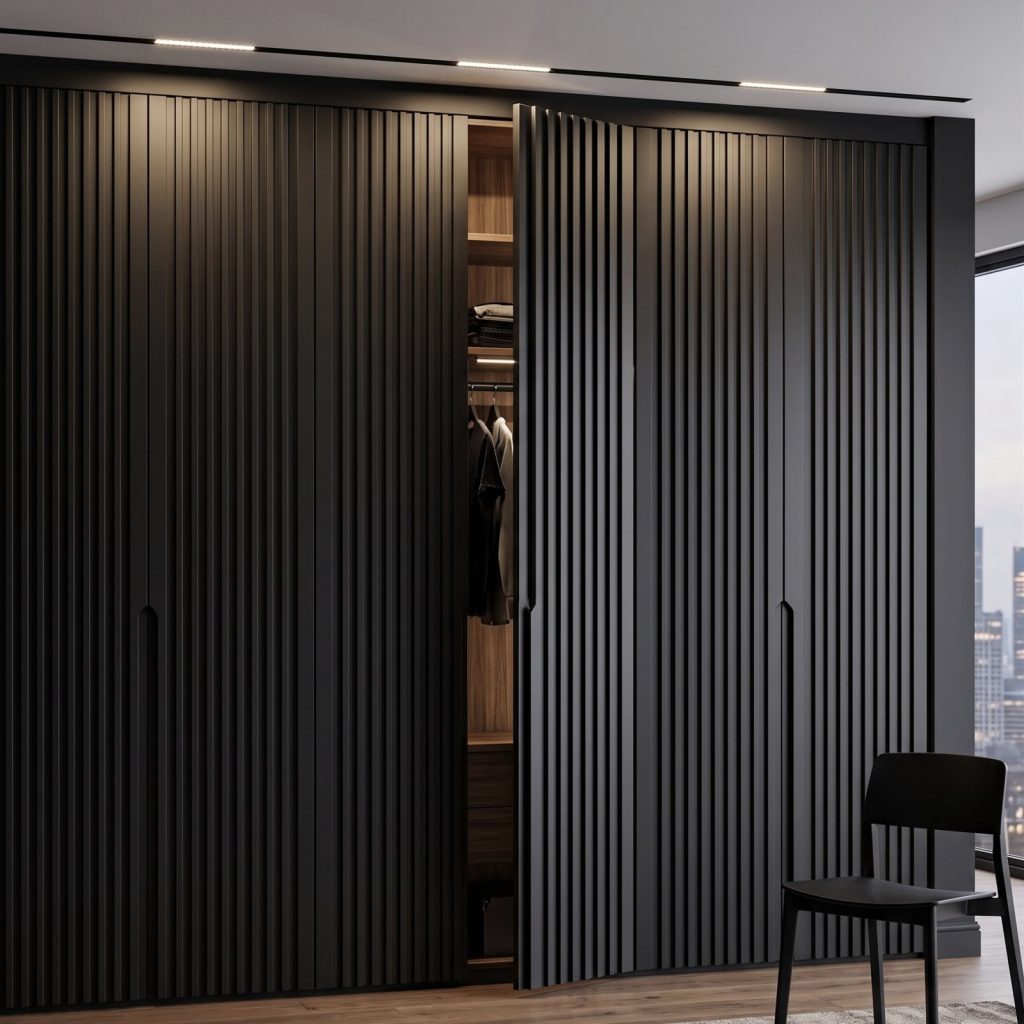
The true measure of a luxury installation is revealed the moment the doors are opened. Whilst the exterior facade often commands the most attention, the tactile and visual quality of the interior defines the daily user experience. Achieving a sophisticated bespoke wardrobe internal configuration requires a departure from the generic materials found in mass-market retail. Standard melamine-faced chipboard (MFC) is the common baseline for many providers; however, it often lacks the density and refined finish required for a high-end project. High-density fibreboard or premium birch plywood provides a more substantial feel and superior structural performance, ensuring the internal architecture remains as impressive as the exterior hand-sprayed doors.
Colour-matching the internal carcass to the external finish is a hallmark of meticulous design. In many standard units, a white or oak-effect interior is paired with a coloured door, creating a jarring visual break. A luxury configuration eliminates this compromise. By selecting a hand-sprayed finish for both the internal and external surfaces, you create a seamless, monolithic look that exudes quality. This level of detail transforms the wardrobe from a mere storage unit into a curated piece of furniture that complements the wider interior design of the room.
The Benefits of Hand-Sprayed Internals
Specifying a hand-sprayed finish for your wardrobe internals offers unparalleled aesthetic control. Unlike the pre-finished boards used in budget installations, hand-spraying allows for a consistent satin or matt finish across every shelf, divider, and drawer front. This method eliminates the visible seams associated with edge-banded alternatives, which often peel or discolour over time. You gain the freedom to specify any colour from a vast architectural palette, allowing for a truly unique interior that reflects your personal style whilst providing a durable surface that withstands the rigours of daily use.
Structural Integrity and Longevity
The longevity of your storage depends on the quality of the underlying carcass. We utilise 18mm carcasses as the professional standard for bespoke wardrobes, providing the necessary rigidity to support heavy winter coats and extensive shoe collections without bowing. A critical but often overlooked component is the solid back panel. Unlike the flimsy, pinned-on backs found in flat-pack furniture, a solid back panel is rebated into the carcass. This adds significant lateral stability and creates a dust-proof seal, ensuring your garments remain protected in a stable, precision-engineered environment. High-quality materials and traditional construction methods ensure that your investment maintains its integrity for decades rather than years.

Curating Your Layout: Configuration Strategies for Every Wardrobe
Architectural challenges like sloped ceilings in loft conversions or deep Victorian alcoves often render standard furniture useless. Precision-engineered internals allow you to reclaim these awkward voids, turning a slanted corner into a perfectly angled shoe display or a hidden storage nook for luggage. To truly elevate the space, integrated LED lighting should be woven into the fabric of the layout. Motion-sensor rails and illuminated shelving not only improve visibility in deep corners but also serve to highlight the craftsmanship of the internal finish, creating a gallery-like atmosphere for your clothing collection.
Specialist Shoe and Accessory Storage
Specialist storage is where a bespoke configuration truly outshines off-the-shelf alternatives. For footwear, angled shoe shelves provide a clear visual overview, whilst pull-out racks can save significant horizontal space in narrower units. Luxury leather goods require dedicated handbag cubbies to prevent handles from deforming and surfaces from scuffing against other items. For the ultimate in personalisation, jewellery trays with bespoke inserts and integrated watch winders can be built directly into the carcass. This ensures your most valuable accessories are both secure and beautifully presented every time you open the doors.
The Walk-In Wardrobe Experience
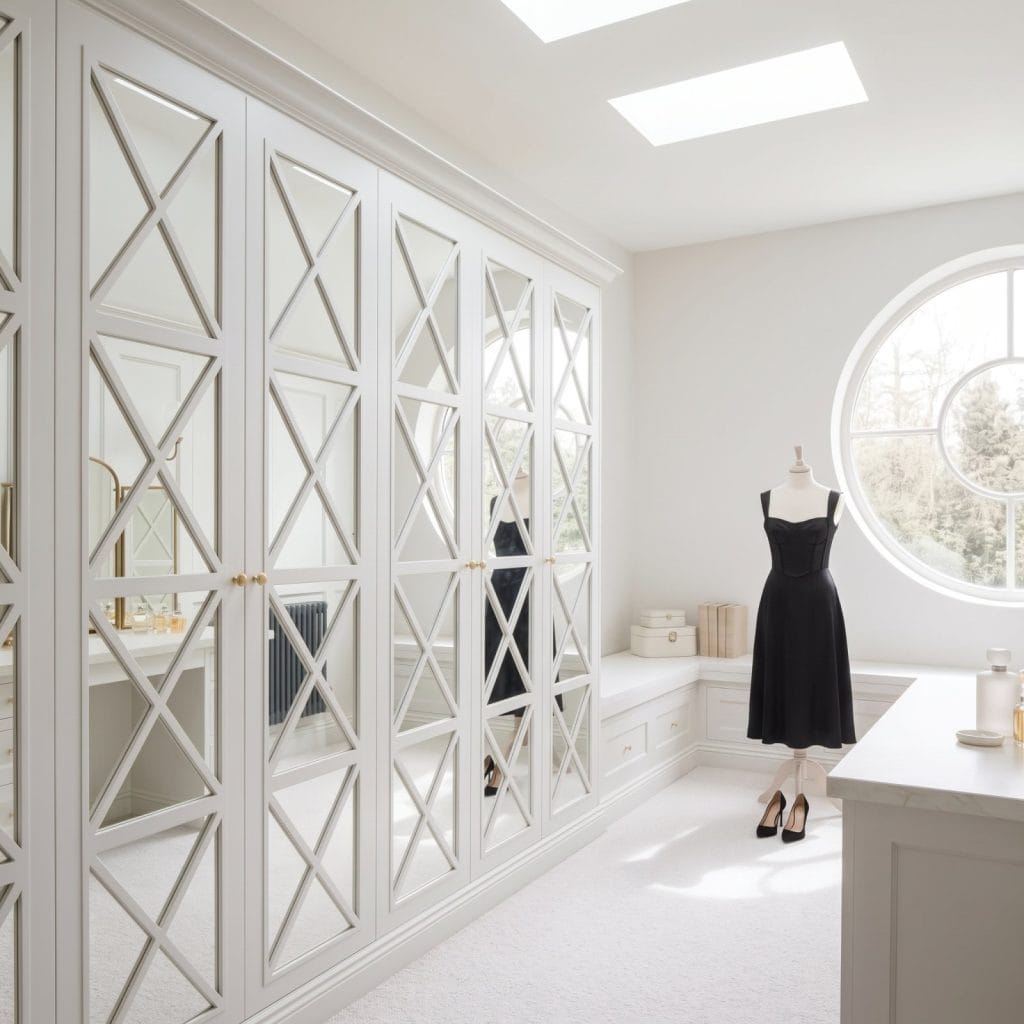
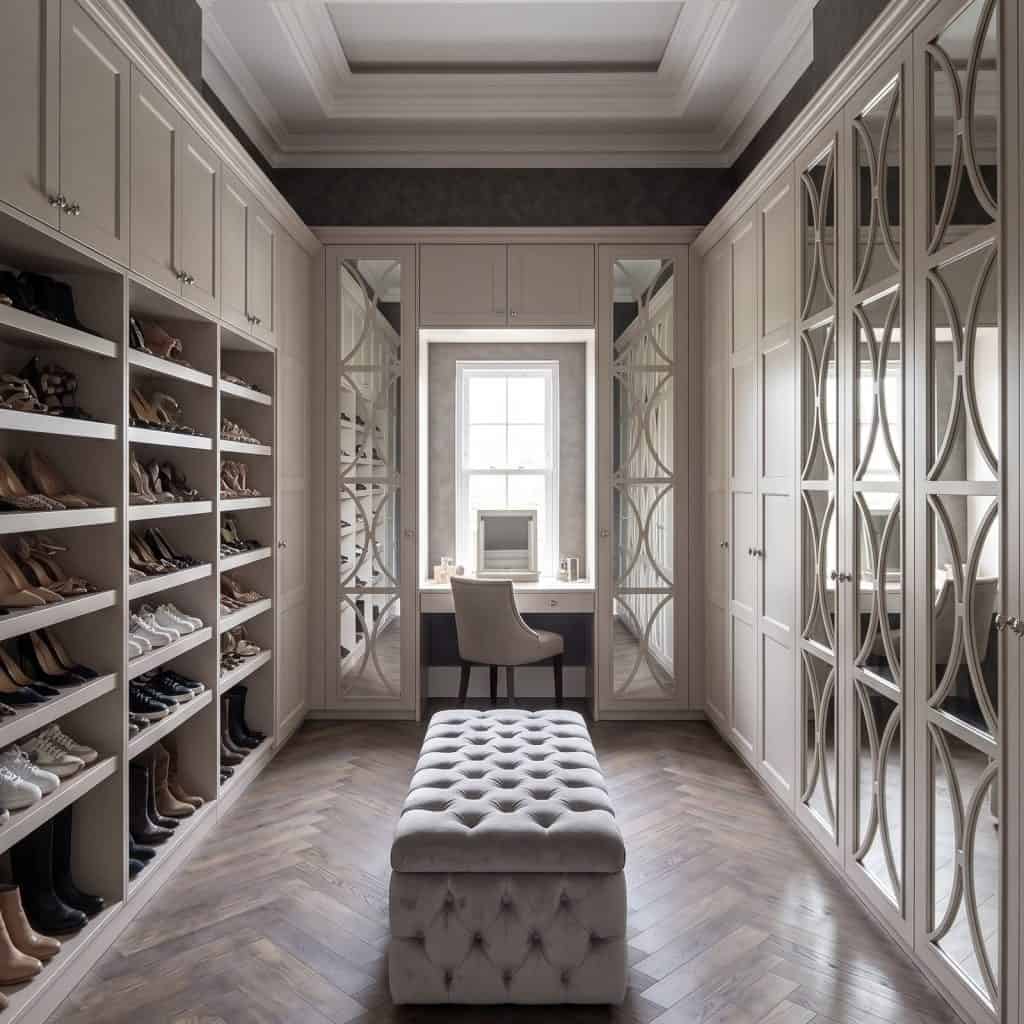
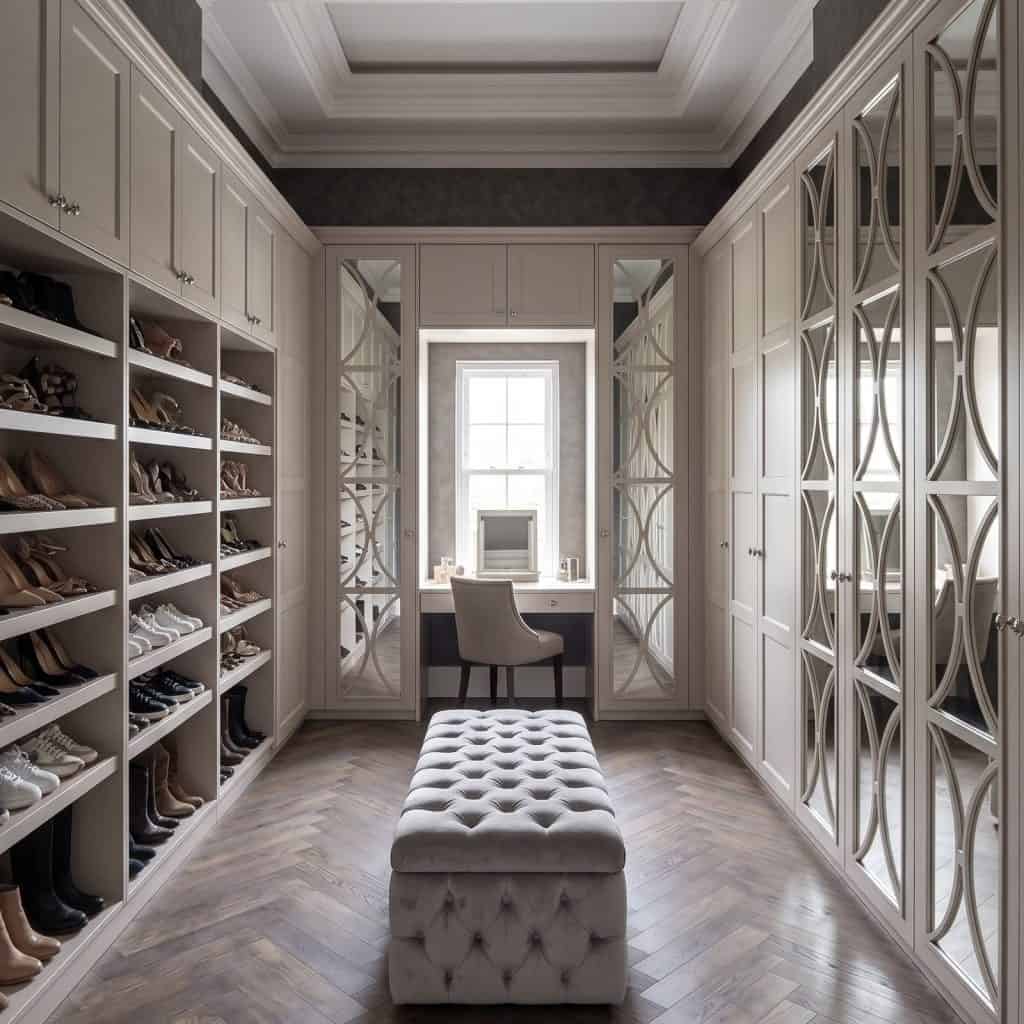
A walk-in dressing room represents the pinnacle of the storage experience. Here, the use of open-fronted carcasses allows for an immediate inventory check, creating a boutique-inspired environment that feels both expansive and organised. If space permits, a central island serves as a focal point for both organisation and flow, providing additional drawer space for delicates and a surface for coordinating outfits. When planning such a comprehensive project, it’s vital to link your internal layout to the wider technical requirements of your bespoke fitted wardrobes. If you are ready to transform your storage into a precision-engineered masterpiece, you can start your design journey with our professional team today.
Precision Engineering: The Wardrobe Door Studio Design Process
The transition from an initial storage concept to a physical installation requires a rigorous commitment to technical accuracy. At The Wardrobe Door Studio, our design process functions as a bridge between your personal garment inventory and a finalised architectural drawing. Every bespoke wardrobe internal configuration we produce is the result of a meticulous data-gathering phase, where we translate the specific volumes of your collection into a precision-engineered layout. This methodical approach ensures that the finished interior is not merely a collection of shelves, but a high-functioning system designed to endure decades of daily use.
Our British manufacturing heritage plays a vital role in achieving this level of detail. By maintaining control over the entire production cycle within our regional workspace, we ensure a higher degree of precision than mass-produced imports can offer. This local expertise allows for a seamless synergy between our hand-sprayed doors and the high-quality internal carcasses they protect. Whether you are a homeowner seeking a refined personal sanctuary or a developer managing a premium residential project, our process remains rooted in the principles of traditional craftsmanship enhanced by modern digital tools.
From Consultation to Completion
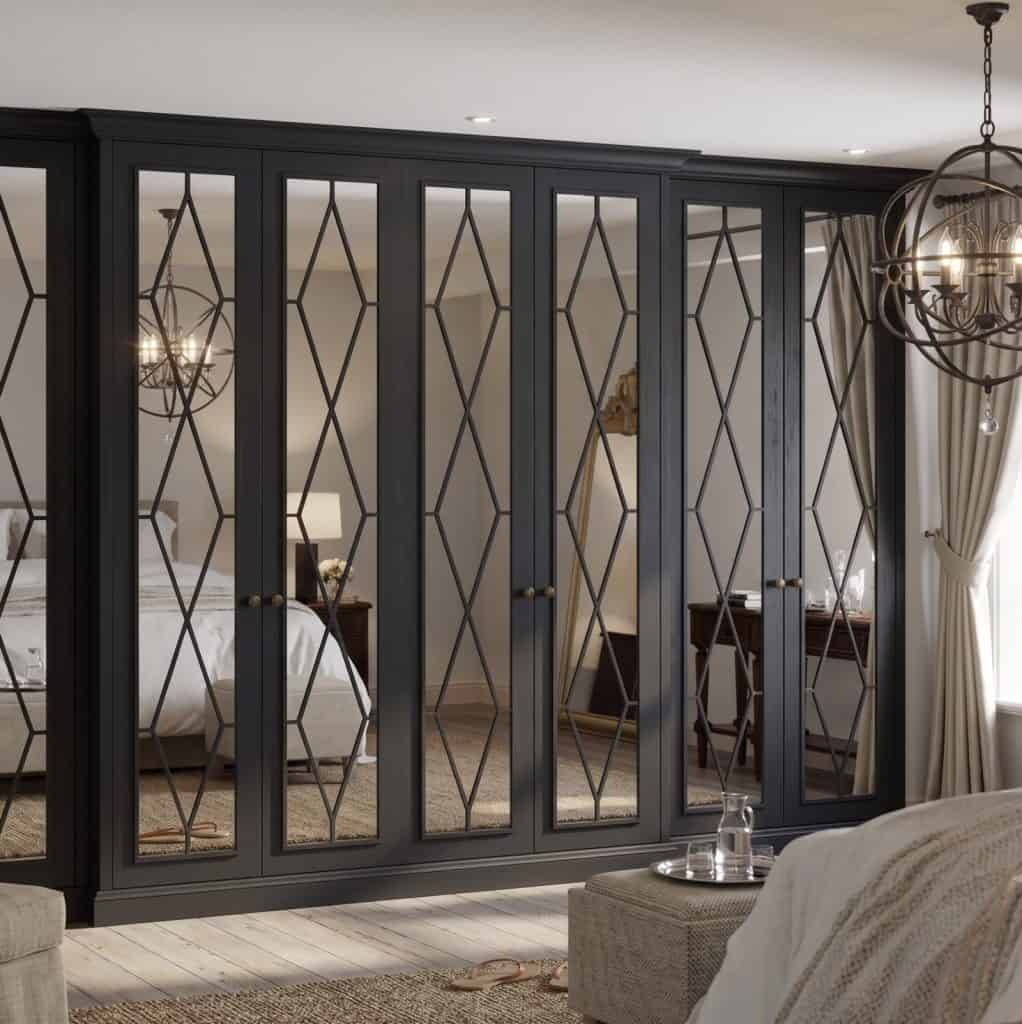
The journey begins with a comprehensive site survey to identify structural constraints, such as chimney breasts or uneven floor levels, which might impact the internal layout. During our professional design consultations, we refine these findings into a technical plan that maximises every available millimetre. We place significant emphasis on aesthetic continuity, ensuring your internals perfectly complement the intricate details of our mirror fret wardrobe doors or our minimalist flat-panel designs. This holistic view prevents the interior from feeling like an afterthought, creating a unified luxury experience from the moment you approach the wardrobe.
Trade and Professional Specifications
We provide extensive support for trade professionals who require exact standards for complex installations. Contractors can order wardrobe carcasses made to measure, ensuring a perfect fit within bespoke alcoves or walk-in dressing rooms. Our technical team provides precision drilling and clear assembly instructions for supply-only projects, reducing on-site adjustment time and ensuring structural integrity. We frequently partner with interior designers to execute highly specific internal briefs, adapting our manufacturing capabilities to meet the unique requirements of their clients whilst maintaining our signature standard of quality and durability.
Elevating Your Storage Strategy for 2026
Masterful storage is a technical achievement that balances aesthetic elegance with ergonomic precision. By conducting a thorough garment audit and applying specific hanging specifications, you eliminate the compromises found in standard units. Every successful bespoke wardrobe internal configuration relies on the synergy between high-quality carcasses and hand-sprayed finishes to ensure lasting value. Our components are hand-sprayed in England and delivered via our national delivery and installation service, offering trade-trusted precision engineering to homeowners and professionals alike.
It’s time to transform your dressing room into a curated sanctuary. Start your journey towards a perfectly organised home with our bespoke design service. Your clothing collection deserves a space that is as meticulously crafted as the garments themselves.
Frequently Asked Questions
What is the ideal depth for a bespoke wardrobe internal configuration?
The standard external depth for a luxury wardrobe is 600mm, which provides enough clearance for coat hangers to sit comfortably without touching the doors. If you’re opting for sliding doors, we recommend increasing this to 650mm to ensure that garments don’t catch on the door tracks. For shallower alcoves, bespoke internal components can be adapted, though you may need to consider forward-facing rails if the depth falls below 500mm.
How high should I set my hanging rails for long dresses?
You should allow between 1600mm and 1800mm of vertical clearance for full-length hanging. This height ensures that evening gowns, maxi dresses, and long winter coats don’t trail on the floor or the base of the carcass. It’s often beneficial to place these rails in the end sections of your layout to maintain a balanced visual symmetry across the rest of your storage zones.
Should I choose drawers or shelves for my wardrobe interior?
A sophisticated layout utilises both, but drawers are generally superior for visibility and ergonomics at lower levels. Drawers allow you to see the entire contents from above, whereas items on deep shelves often become lost at the back. We suggest using shelves for high-level storage of bulky items like luggage or seasonal bedding, whilst reserving drawers for daily essentials like knitwear and delicates.
Can I configure my wardrobe internals to include a TV or dressing table?
Integration is a hallmark of modern custom design. A bespoke wardrobe internal configuration can easily accommodate a recessed dressing table or a hidden media centre behind pocket doors. It’s essential to plan for integrated power points and cable management during the technical drawing phase to ensure the finished result remains clean and free from visible wiring.
What is the best material for luxury wardrobe carcasses?
We recommend 18mm high-density fibreboard or premium birch plywood for the highest standard of structural integrity. These materials offer significantly better weight-bearing capacity than standard retail chipboard, ensuring your shelves won’t bow under the weight of heavy collections. Choosing a material that can be hand-sprayed allows you to match the internal finish perfectly to your exterior doors for a seamless look.
How do I organise a shared wardrobe for two people?
The most effective strategy is to zone the space based on individual garment volumes rather than a simple 50/50 split. A successful bespoke wardrobe internal configuration for couples accounts for differing needs; one person might require more double-hanging for shirts, whilst the other needs more vertical space for dresses. Using distinct internal finishes or dedicated accessory drawers can also help maintain personal organisation within a shared space.
Is it possible to change the internal configuration later?
Yes, provided you specify adjustable shelving systems and modular rails during the initial design. Precision-drilled carcasses allow you to move shelves and hanging rods as your wardrobe grows or your lifestyle changes. This future-proofed approach ensures your investment remains functional for decades, allowing for easy updates without the need for structural alterations.
Do I need internal lighting for my bespoke wardrobe?
Whilst not strictly necessary, integrated lighting is highly recommended for both its practical and aesthetic benefits. Motion-sensor LED strips recessed into hanging rails or shelf dividers illuminate dark corners and make selecting garments effortless in low light. Lighting also serves to highlight the craftsmanship of your bespoke wardrobe internal configuration, creating a high-end boutique atmosphere every time you open the doors.